Every chemistry textbook defines a redox reaction the same dry way: electrons move from one species to another, one thing gets oxidized, another gets reduced. True, and useless if you can’t picture it happening anywhere.
Here’s the fix. Twelve reactions you’ve already witnessed — some this week — broken down into what’s actually being oxidized, what’s being reduced, and why the label “redox” applies at all. Group them by where you’d find them: around the house, inside your own cells, and in the factories and kitchens that supply both. Each one gets a one-line explanation and the simplified half-reactions, so if you’re studying for an exam you can see the electron bookkeeping instead of just memorizing a name. A reference table on oxidation-reduction chemistry covers the formal rules if you want the theory first; this list assumes you already have it and want to see it work.
Table of Contents
- What Makes a Reaction “Redox” in the First Place
- Household & Everyday
- Rusting Iron
- A Battery Going Dead
- Chlorine Keeping Pool Water Clean
- Hydrogen Peroxide Fizzing on a Cut
- Tarnished Silver
- Biological & Medical
- Cellular Respiration
- Photosynthesis
- The Breathalyzer Test
- Industrial & Food Science
- Firework Colors
- A Cut Apple Turning Brown
- Black-and-White Film Photography
- Thermite Welding Rail Tracks
- Oxidizing Agent, Reducing Agent, and Reaction Type at a Glance
What Makes a Reaction “Redox” in the First Place {#what-makes-it-redox}
Two things have to happen in the same reaction, simultaneously, tied to each other: something loses electrons (oxidation) and something else gains them (reduction). Neither happens alone — you can’t oxidize one substance without reducing another, which is why chemists write two half-reactions for every redox process instead of one. Track the oxidation numbers before and after. If an element’s number goes up, it was oxidized. If it goes down, it was reduced. That’s the whole test. Everything below passes it.
Household & Everyday {#household-everyday}
Rusting Iron {#rusting-iron}
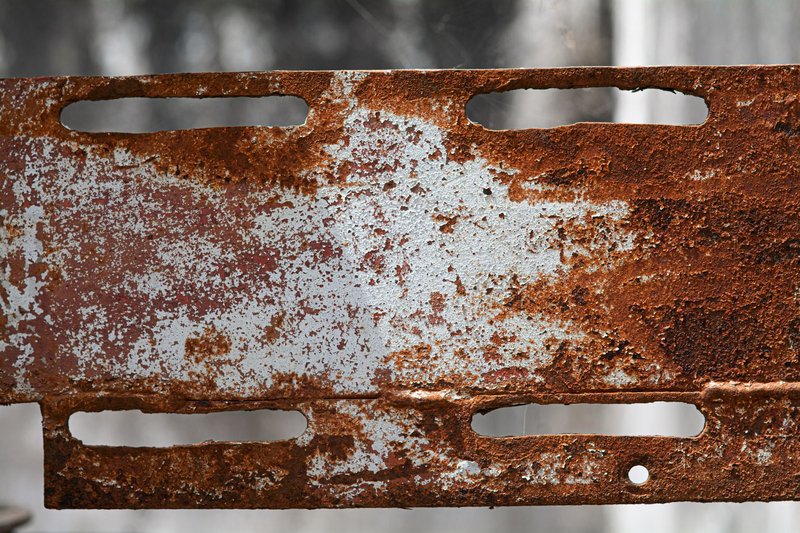
A car left in a coastal town rusts through in five winters; the same car in Arizona can last twenty. That difference is a redox reaction running at two different speeds, driven by how much water and dissolved oxygen the metal sees.
Iron gives up electrons to oxygen, and the oxygen, now reduced, combines with water to form the reddish-brown hydrated oxide you call rust:
- Oxidation: Fe → Fe²⁺ + 2e⁻ (further oxidized to Fe³⁺ in the final rust)
- Reduction: O₂ + 2H₂O + 4e⁻ → 4OH⁻
Type: Combination. Rust isn’t decorative damage — it’s the reason corrosion costs the U.S. economy hundreds of billions of dollars a year in replaced infrastructure, pipes, and vehicle parts.
A Battery Going Dead {#battery-going-dead}
Every battery is a redox reaction wearing a metal can. In a standard alkaline cell, zinc powder at the negative terminal gives up electrons, and manganese dioxide at the positive terminal accepts them. The electron traffic between the two is the current your flashlight runs on.
- Oxidation (anode): Zn → Zn²⁺ + 2e⁻
- Reduction (cathode): MnO₂ + H₂O + e⁻ → MnOOH + OH⁻
Type: Combination. Once the zinc is used up, the reaction can’t run anymore — which is the entire reason non-rechargeable batteries die and rechargeables (where the reaction reverses under an applied current) don’t.
Chlorine Keeping Pool Water Clean {#chlorine-pool}
Chlorine gas dissolved in water doesn’t just kill bacteria as one species — it splits itself into two, one oxidized and one reduced, in the same breath. That’s a disproportionation: the same element in the same reaction goes two directions at once.
- Chlorine (0) → hypochlorous acid, chlorine at +1 (oxidized)
- Chlorine (0) → chloride ion, chlorine at −1 (reduced)
Type: Disproportionation. The hypochlorous acid is the actual disinfectant — it’s what oxidizes and disables microbial cell walls. The EPA’s guidance on chlorination for water disinfection walks through why concentration and contact time both matter for this to work.
Hydrogen Peroxide Fizzing on a Cut {#hydrogen-peroxide}
The fizz is oxygen gas escaping, and it’s proof the peroxide is disproportionating on contact with the enzyme catalase in your blood and tissue.
- Reduction: H₂O₂ + 2H⁺ + 2e⁻ → 2H₂O
- Oxidation: H₂O₂ → O₂ + 2H⁺ + 2e⁻
Type: Decomposition (specifically a disproportionation of the peroxide oxygen, which starts at −1 and splits to −2 in water and 0 in O₂). It’s also why peroxide loses potency once opened — the same reaction happens slowly with light and air even without a wound to trigger it.
Tarnished Silver {#silver-tarnish}
Silver doesn’t rust, but it does dull. Trace hydrogen sulfide in the air — from eggs, rubber, coal smoke, even some wool — reacts with the metal surface to form a thin black layer of silver sulfide.
- Oxidation: Ag → Ag⁺ + e⁻
- Reduction happens at oxygen, which combines with the freed hydrogen from H₂S to form water, letting sulfide bond to the oxidized silver
Type: Combination. Polish removes the sulfide layer mechanically or chemically reverses it — either way, you’re undoing a redox reaction that happened without anyone spilling a thing.
Biological & Medical {#biological-medical}
Cellular Respiration {#cellular-respiration}
Every breath you take is in service of one redox reaction: pulling electrons off glucose and handing them, through a long relay called the electron transport chain, to oxygen.
- Oxidation: glucose carbon, starting near an average oxidation state of 0, ends up as CO₂ at +4
- Reduction: O₂ (0) → H₂O, oxygen at −2
Type: Combination (a controlled, stepwise combustion). The reason cyanide kills within minutes is that it blocks the last electron handoff to oxygen in this exact chain — the reaction stops, and so does energy production in every cell.
Photosynthesis {#photosynthesis}
Run the respiration equation backward and you get photosynthesis — which is why plants are, chemically speaking, un-burning sugar using sunlight as the energy source instead of releasing it.
- Oxidation: water’s oxygen (−2) → O₂ (0) — this is where the oxygen you breathe actually comes from
- Reduction: CO₂ carbon (+4) → glucose carbon (closer to 0)
Type: Combination. It’s the only large-scale process on Earth that runs the respiration redox reaction in reverse, which is the entire reason atmospheric oxygen exists at breathable concentrations.
The Breathalyzer Test {#breathalyzer}
A roadside breathalyzer is a redox reaction with a built-in color indicator. Breath passes over crystals of potassium dichromate, orange and in the +6 chromium state. Ethanol in the breath reduces the chromium to green Cr³⁺, and the device measures how much orange faded to calculate blood alcohol content.
- Oxidation: ethanol → acetic acid (or acetaldehyde as an intermediate)
- Reduction: dichromate, Cr at +6 → Cr³⁺
Type: Combination. The color change is dramatic enough to read with the naked eye, which is why older field tests used dichromate crystals directly before electronic sensors took over — the chemistry behind how the body processes alcohol is the same oxidation happening in your liver, just slower.
Industrial & Food Science {#industrial-food}
Firework Colors {#fireworks}

The pop is a decomposition reaction; the color is a redox reaction riding along on top of it. An oxidizer like potassium perchlorate strips electrons from a metal fuel, and the energy released kicks electrons in that metal to a higher orbital. When they fall back down, they emit light at a wavelength specific to the metal — strontium for red, copper for blue-green, barium for green.
- Oxidation: metal fuel (Mg, Al, or similar) → metal cation + electrons
- Reduction: perchlorate’s chlorine, at +7, drops toward −1, releasing oxygen that sustains the burn
Type: Combination. Copper is notoriously hard to get a clean blue from because the flame temperature has to sit in a narrow range — too hot and the color washes toward white.
A Cut Apple Turning Brown {#apple-browning}
Slice an apple and leave it on the counter, and you’re watching an enzyme-catalyzed redox reaction in real time. The enzyme polyphenol oxidase, released when cells rupture, catalyzes the oxidation of phenolic compounds in the flesh into quinones — the brown pigments you see.
- Oxidation: catechol (a phenol) → o-quinone + 2H⁺ + 2e⁻
- Reduction: O₂ + 4H⁺ + 4e⁻ → 2H₂O
Type: Combination. Lemon juice slows it down not by blocking the enzyme directly but by dropping the pH and by giving ascorbic acid something else to oxidize first, buying the apple time before the quinones form.
Black-and-White Film Photography {#photography}
Light hitting a strip of film triggers a reduction reaction on a microscopic scale: silver halide crystals absorb photons, and the energy reduces silver ions to metallic silver, forming a latent image too faint to see. The darkroom developer amplifies that same reduction until it’s visible.
- Reduction: Ag⁺ + e⁻ → Ag⁰
- Oxidation: the developer molecule (commonly hydroquinone) gives up the electron
Type: Decomposition (the silver halide breaks down into metallic silver and free halide). Every gelatin silver print in a museum archive exists because of this reaction, which is also why old film degrades faster in humid storage — stray oxidation keeps happening at a low level long after the photo was taken.
Thermite Welding Rail Tracks {#thermite}
Aluminum wants to bond with oxygen more than iron does, and thermite exploits that difference violently. Powdered aluminum reacts with iron oxide, and aluminum rips the oxygen away from the iron, releasing enough heat to produce molten iron on the spot — hot enough to fuse two rail segments without moving them to a foundry.
- Oxidation: Al → Al³⁺ + 3e⁻
- Reduction: Fe³⁺ + 3e⁻ → Fe⁰
Type: Displacement. Rail crews still use this reaction in the field today because it’s self-contained — no external power, no furnace, just a crucible and a fuse.
Oxidizing Agent, Reducing Agent, and Reaction Type at a Glance {#reference-table}
| Example | Oxidizing Agent | Reducing Agent | Reaction Type |
|---|---|---|---|
| Rusting iron | O₂ (with water) | Fe | Combination |
| Battery discharge | MnO₂ | Zn | Combination |
| Pool/bleach disinfection | Cl₂ (self) | Cl₂ (self) | Disproportionation |
| Hydrogen peroxide antiseptic | H₂O₂ (self) | H₂O₂ (self) | Decomposition |
| Silver tarnish | O₂ / sulfur source | Ag | Combination |
| Cellular respiration | O₂ | Glucose | Combination |
| Photosynthesis | CO₂ | H₂O | Combination |
| Breathalyzer | Potassium dichromate | Ethanol | Combination |
| Fireworks | Perchlorate/nitrate oxidizer | Metal fuel | Combination |
| Apple browning | O₂ | Catechol (polyphenol) | Combination |
| Black-and-white photography | Silver halide (Ag⁺) | Developer / light-excited electron | Decomposition |
| Thermite welding | Fe₂O₃ | Al | Displacement |
Notice how few of these are the single-displacement reactions most textbooks lead with. Real-world redox chemistry runs mostly on combination and decomposition reactions — which is worth remembering the next time an exam question tries to trick you into assuming “redox” means “one metal kicking another out of a solution.”