An allele is just one version of a gene, and the fastest way to understand that is to stop reading definitions and start looking at cases. Below is a working reference, sorted by allele type, so you can jump straight to the category you’re studying instead of wading through three paragraphs of genotype theory first.
| Example | Allele Type | Pattern |
|---|---|---|
| Pea flower color | Dominant/recessive | One dominant copy wins |
| Widow’s peak | Dominant/recessive | One dominant copy wins |
| ABO blood type | Multiple allele | Three alleles, codominance possible |
| Human MN blood group | Codominant | Both alleles show up |
| Roan cattle coat | Codominant | Both alleles show up |
| Cystic fibrosis | Recessive, disease-linked | Two copies needed |
| Sickle cell trait/disease | Codominant, disease-linked | Carrier vs. affected |
| Huntington’s disease | Dominant, disease-linked | One copy is enough |
| Coat color in cats/dogs | Multiple allele + epistasis | Several genes interact |
Table of Contents
- Single-Gene Dominant and Recessive Examples
- Codominant Allele Examples
- Multiple-Allele Examples
- Disease-Linked Allele Examples
- Alleles Beyond Humans
- Alleles at Work: Forensics, Breeding, and CRISPR
- From One Allele to a Whole Population
Single-Gene Dominant and Recessive Examples

This is the pattern Gregor Mendel worked out with pea plants in the 1860s, and it’s still the cleanest way to see how one allele can mask another.
Pea flower color. Mendel crossed purple-flowered and white-flowered pea plants and got purple offspring, every time, in the first generation. The purple allele (P) is dominant; the white allele (p) is recessive.
| Genotype | Phenotype |
|---|---|
| PP or Pp | Purple flowers |
| pp | White flowers |
One dominant copy is enough to paint every flower purple — the recessive allele doesn’t disappear, it just doesn’t get a vote unless it’s paired with another copy of itself.
Widow’s peak. The V-shaped hairline sits on a dominant allele. Two copies of the recessive allele give you a straight hairline instead.
| Genotype | Phenotype |
|---|---|
| WW or Ww | Widow’s peak |
| ww | Straight hairline |
Attached vs. free earlobes. Same logic, different anatomy — free earlobes are usually dominant, attached earlobes recessive, though the trait turns out to be influenced by more than one gene, which is a good early lesson that textbook simplicity and lab-bench reality don’t always match.
Codominant Allele Examples
Codominance is where neither allele backs down. Instead of one masking the other, both get expressed at once, side by side.
Roan cattle coat. A roan calf isn’t a blend of red and white hair — it’s red hairs and white hairs, individually, mixed across the same coat. The red allele and white allele are both fully switched on in the same animal.
| Genotype | Phenotype |
|---|---|
| RR | Solid red |
| RW | Roan (red and white hairs together) |
| WW | Solid white |
Human MN blood group. Less famous than ABO but a textbook codominance case: the M and N alleles code for different surface proteins on red blood cells, and a person with one of each allele expresses both proteins simultaneously.
| Genotype | Phenotype |
|---|---|
| MM | Type M |
| MN | Type MN (both proteins present) |
| NN | Type N |
Multiple-Allele Examples
Most traits people learn first involve just two alleles. ABO blood type breaks that pattern — there are three alleles in the population (IA, IB, and i), even though any one person only carries two of them.
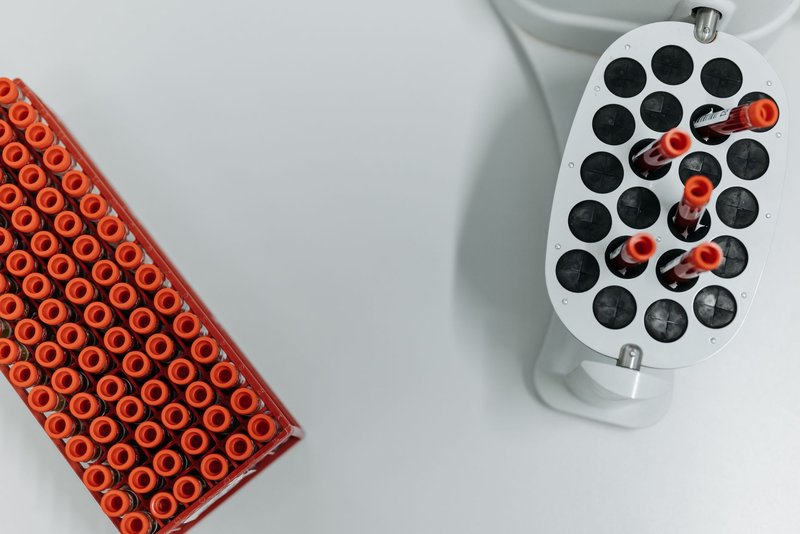
ABO blood type. IA and IB are both dominant over i, but codominant with each other, which is why type AB exists at all.
| Genotype | Phenotype |
|---|---|
| IAIA or IAi | Type A |
| IBIB or IBi | Type B |
| IAIB | Type AB |
| ii | Type O |
The takeaway that trips people up on exams: type O isn’t “no alleles,” it’s two copies of the recessive i allele doing nothing to mask each other.
Rabbit coat color. A four-allele series (C, cch, ch, c) controls the difference between full color, chinchilla, Himalayan (dark points, like a Siamese cat), and albino — a hierarchy where each allele dominates every allele listed after it but not the ones before.
Disease-Linked Allele Examples
This is where allele examples stop being classroom trivia and start explaining actual medical genetics.
Cystic fibrosis. Caused by mutations in the CFTR gene, which normally regulates salt and water movement across cell membranes. It’s recessive — you need two copies of a mutated allele to have the disease.
| Genotype | Phenotype |
|---|---|
| Two working CFTR alleles | Unaffected |
| One working, one mutated | Unaffected carrier |
| Two mutated CFTR alleles | Cystic fibrosis |
Sickle cell disease. This is the example everyone should learn but few textbooks explain well, because it’s codominant and disease-linked at once. Carriers with one sickle allele (HbS) and one normal allele (HbA) make both normal and sickled hemoglobin — a condition called sickle cell trait, which is usually symptom-free and even offers some malaria resistance. Only two copies of HbS produce full sickle cell disease. The CDC’s sickle cell data puts the U.S. carrier rate at roughly 1 in 13 Black or African American births.
| Genotype | Phenotype |
|---|---|
| HbA HbA | Unaffected |
| HbA HbS | Sickle cell trait (carrier) |
| HbS HbS | Sickle cell disease |
Huntington’s disease. The reverse of cystic fibrosis in structure — dominant instead of recessive. One copy of the mutated huntingtin allele is enough to eventually cause the disease, which is why Huntington’s tends to appear in every generation of an affected family rather than skipping around like a recessive condition would. For background on how dominant and recessive inheritance actually gets sorted out at the chromosome level, MedlinePlus Genetics breaks down the mechanics without the jargon. To explore more examples of genetic diseases and their inheritance patterns, see our disease reference.
Alleles Beyond Humans
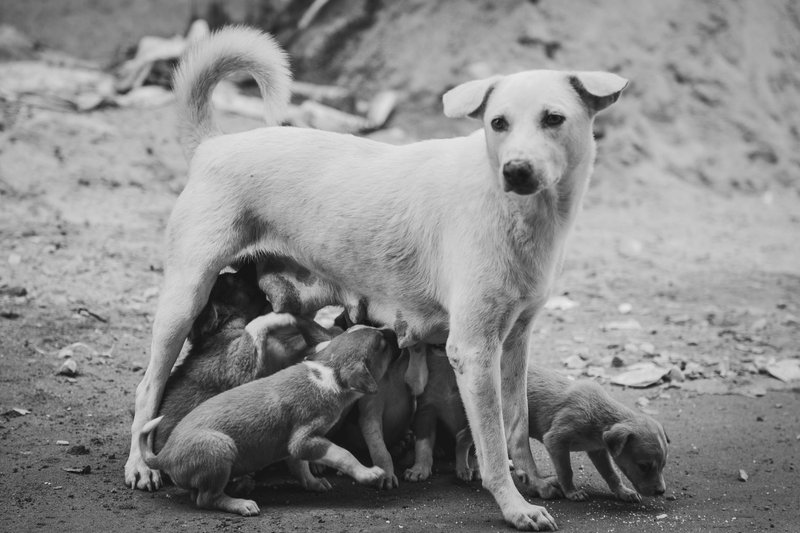
Textbooks lean hard on humans and garden peas, but alleles run the same rules everywhere DNA shows up.
Dog coat color. A litter of Labrador puppies can produce black, chocolate, and yellow siblings from the same two parents, because coat color in dogs isn’t one gene — it’s at least two (B/b for black-versus-brown pigment, E/e for whether that pigment gets deposited in the coat at all). A dog can carry the black allele and still be born yellow if a separate gene switches pigment deposition off entirely.
Cat coat color and the orange gene. The orange allele sits on the X chromosome, which is why calico and tortoiseshell cats — a patchwork of orange and black — are almost always female. Male cats only carry one X, so they get either the orange allele or they don’t; they can’t be a mosaic of both the way a female with two X chromosomes can.
Crop traits in agriculture. Commercial corn breeding runs on the same allele math as pea flowers, just applied at scale — genes controlling kernel color, drought tolerance, and pest resistance get tracked and combined across thousands of plants to stack useful dominant alleles into a single hybrid line.
Alleles at Work: Forensics, Breeding, and CRISPR
Allele examples aren’t confined to biology class. Three applied fields lean on the same concept directly.
Forensic DNA profiling. Crime labs don’t sequence someone’s entire genome to identify them — they compare short tandem repeats (STRs), specific short DNA sequences that repeat a variable number of times depending on which alleles a person inherited. The FBI’s CODIS database matches profiles built from 20 core STR locations, and the odds of two unrelated people sharing the same allele combination across all of them are astronomically small.
CRISPR gene editing. Rather than waiting generations for a favorable allele to appear through natural mutation, CRISPR lets researchers cut a specific DNA sequence and swap in a chosen allele directly — used experimentally in agriculture to introduce disease-resistant alleles into crop lines in a single step instead of over a decade of selective breeding.
Selective breeding. Every dog breed, dairy cow line, and heirloom tomato variety is the product of generations of humans choosing which alleles get passed on, by deciding which individuals get to reproduce. It’s the same mechanism as natural selection, aimed by a breeder’s preference instead of the environment.
From One Allele to a Whole Population
Every example above describes one individual’s genotype. Zoom out and the same alleles become a population-level question: what fraction of everyone’s cystic fibrosis alleles are the mutated version? What fraction of a rabbit population carries the albino allele?
That fraction is called allele frequency, and it’s the number population geneticists actually track — not whether one particular person is a carrier, but how common each allele is across an entire species or region, and whether that frequency is shifting generation to generation. It’s the natural next question once you can recognize an allele example when you see one, and it’s why sickle cell trait, unusually high in populations with historical exposure to malaria, isn’t a random coincidence but a frequency shaped by selection pressure over centuries.
The examples above cover the four patterns you’ll actually encounter — one dominant allele winning outright, two alleles showing up side by side, three or more alleles competing across a population, and a single altered allele causing disease. Once you can sort a new example into one of those four buckets, the definition stops being something you memorize and starts being something you can just see.