TLDR
Two categories delivered winners in 1918: Physics went to Max Planck for founding quantum theory, and Chemistry went to Fritz Haber for synthesizing ammonia from thin air. Literature, Peace, and Medicine went unawarded. The First World War is the reason — the Swedish committees judged that no candidate’s work cleared the bar that year, and travel to Stockholm was practically impossible anyway. Both winners also didn’t get their medals until the following year’s ceremony, since the 1918 event never happened.
Table of Contents
- Physics: Max Planck
- Chemistry: Fritz Haber
- The three that didn’t happen
- Why the medals arrived a year late
- Haber’s split legacy
- The literature shortlist nobody talks about
By late 1918, the Nobel committees had a war to contend with, a continent under blockade, and a shrinking pool of scientists still publishing instead of serving. Two prizes still went out. Three didn’t. Here’s the full picture.
Physics: Max Planck

Max Planck won the 1918 Nobel Prize in Physics “in recognition of the services he rendered to the advancement of Physics by his discovery of energy quanta.” That’s committee language for: he broke classical physics open. In 1900, Planck had proposed that energy isn’t emitted in a smooth continuous stream but in discrete packets — quanta — to explain why hot objects radiate the way they do. He reportedly saw it as a mathematical trick to make the numbers work, not a claim about reality. It took Einstein’s 1905 paper on the photoelectric effect to show quanta were real, and another two decades before quantum mechanics became its own field. Planck spent the war years in Berlin, still teaching, while two of his sons served at the front — one of them, Erwin, would later be executed by the Nazis for his role in the 1944 plot against Hitler.
Chemistry: Fritz Haber
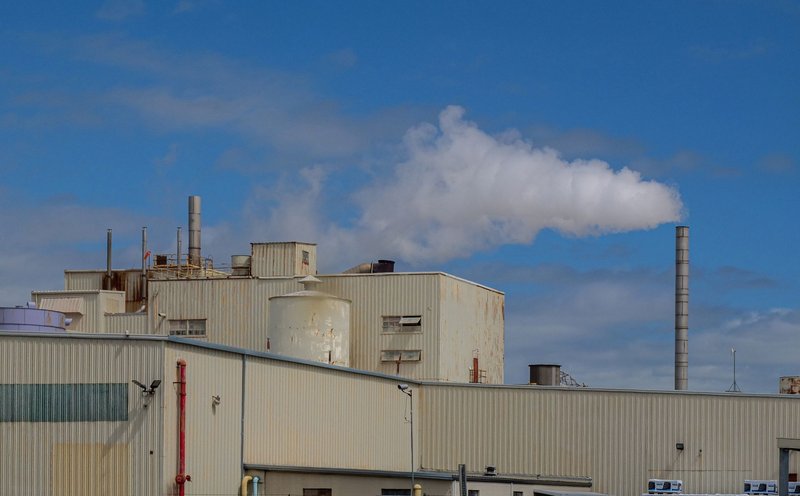
Fritz Haber took the Chemistry prize for the Haber-Bosch process — a method for synthesizing ammonia directly from nitrogen and hydrogen gas under high pressure. Before Haber, nitrogen fertilizer depended on mined deposits like Chilean saltpeter, a supply chain that was already running out. His process turned atmospheric nitrogen, which is functionally infinite, into fertilizer feedstock. Depending on the estimate, close to half the nitrogen in human bodies today traces back to the Haber-Bosch process one way or another. It’s one of the rare inventions that actually changed how many people the planet can feed.
It’s also the same chemist who ran Germany’s chemical weapons program during the war he was still living through when the prize was announced.
The three that didn’t happen
No Nobel Prize was given in Literature, Peace, or Physiology or Medicine in 1918. This wasn’t unheard of — the Nobel Foundation’s own statutes allow committees to withhold a prize if no candidate meets the standard, and they’d already done it multiple times before 1918. But four straight years of world war made the pattern harder to ignore. The Peace Prize, unsurprisingly, sat empty for most of the war years entirely; nominating a peace laureate mid-conflict was a nonstarter. Medicine and Literature went unawarded for more practical reasons: travel across a warring continent was dangerous, communication between committees and candidates’ home countries was disrupted, and the pool of internationally visible, uncontroversial candidates had thinned.
Why the medals arrived a year late
Neither Planck nor Haber picked up a medal in 1918. The Nobel Foundation didn’t hold its usual December ceremony in Stockholm that year at all — the war made an international gathering impractical, and Sweden, though neutral, wasn’t insulated from the disruption. Both men were formally presented with their prizes in June 1919, at a ceremony that combined the 1918 and 1919 laureates. So technically, Planck and Haber are “1918 Nobel laureates” who received their medals as part of the 1919 class. The distinction shows up constantly in trivia and in Wikipedia’s own template listings, and it’s the detail most casual summaries skip.
Haber’s split legacy
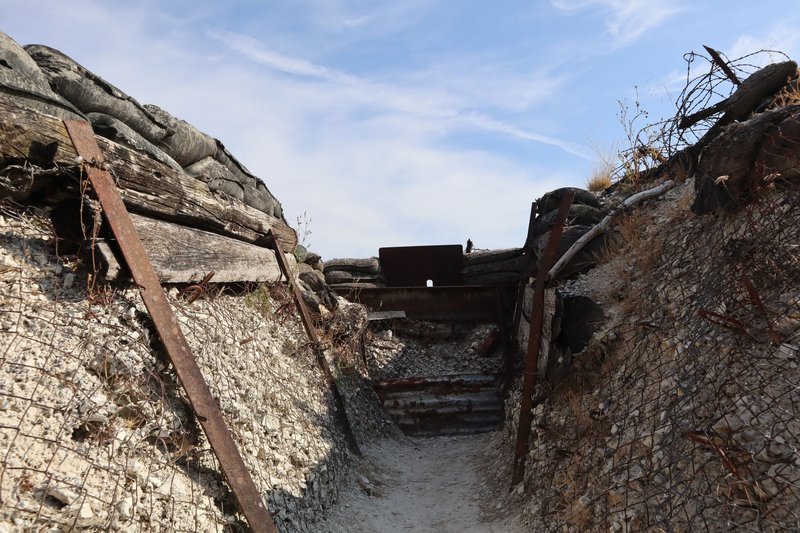
The uncomfortable part of Haber’s story is that the same chemist being celebrated for feeding the world had, a few years earlier, personally overseen the first large-scale use of chlorine gas as a weapon, at the Second Battle of Ypres in 1915. He saw poison gas as a way to end trench-warfare stalemates faster and, by his own reasoning, save lives overall. His wife, chemist Clara Immerwahr, was horrified by his work and died by suicide days after the Ypres attack. National Geographic has covered how uneasily this sits alongside the Chemistry committee’s citation, which mentions nothing about weapons at all — only the ammonia synthesis. Haber’s Nobel is often cited as the starkest example in the prize’s history of a laureate’s peacetime contribution and wartime conduct pulling in opposite directions, and it’s a big part of why his name still generates debate more than a century later.
The literature shortlist nobody talks about
The Literature prize didn’t just go unawarded quietly — there was a shortlist. Records later made public show 17 nominees were considered for 1918, including Norwegian novelist Knut Hamsun and Russian writer Maxim Gorky, both of whom would eventually win or nearly win Nobel recognition in other years (Hamsun took the prize in 1920). None of the 1918 candidates satisfied the committee that year, and the seat stayed empty. It’s a detail that rarely makes it past specialist Wikipedia pages, but it’s the clearest evidence that 1918 wasn’t a case of “no one was nominated” — it was a case of the committee holding the line even with names that history would later vindicate.
Two prizes, two very different kinds of impact, and three empty seats that tell you as much about 1918 as the winners do. That’s the shape of the year: a physicist who rewired how we understand energy, a chemist whose invention still feeds billions and whose other work still complicates his name, and a continent too consumed by war to fill out the rest of the card.