Table of Contents
- Why “Physical Chemistry” Isn’t Really One Subject
- Thermodynamics
- Quantum Chemistry
- Chemical Kinetics
- Statistical Thermodynamics
- Spectroscopy
- Electrochemistry
- Photochemistry
- Surface Chemistry
- Catalysis
- Comparison Table
- Where This Leaves You
- FAQ
Why “Physical Chemistry” Isn’t Really One Subject
Ask a chemistry student what physical chemistry covers and you’ll usually get a shrug, followed by “math.” That’s fair — it’s the branch of chemistry that explains why reactions happen and how fast, using the tools of physics: energy, motion, probability, electric fields. But treating it as one subject is where most study guides go wrong. Physical chemistry is really nine overlapping fields stitched together, each with its own equations, its own instruments, and its own corner of industry.
The branches of physical chemistry are thermodynamics, quantum chemistry, chemical kinetics, statistical thermodynamics, spectroscopy, electrochemistry, photochemistry, surface chemistry, and catalysis. Some of these get taught as standalone university courses; others show up as a single chapter buried inside a bigger one. Below, each gets a real definition, a concrete example, and the industry or research area where it actually earns its keep — not a quiz bank, not a lead-gen form.
Thermodynamics
What it studies: Energy changes during chemical and physical processes, and whether a reaction happens on its own or needs a push.
Thermodynamics answers the question every reaction eventually has to face: will this go forward without outside help? A campfire burns on its own once lit because the reaction releases more energy than it costs — the process is exothermic and spontaneous. Turning water into hydrogen and oxygen, on the other hand, needs a constant supply of electricity, because the reaction runs the other way on energy terms.
Where it’s applied: every industrial process that involves heat exchange, from power plant turbines to the refrigerant cycle in your kitchen fridge. Chemical engineers use thermodynamic data — enthalpy, entropy, Gibbs free energy — to decide whether a proposed industrial reaction is even worth building a plant for, before a single reactor gets welded together.
Quantum Chemistry
What it studies: How electrons behave inside atoms and molecules, and what that behavior means for bond strength, molecular shape, and color.
This is the branch that explains why water is bent instead of straight, why stereoisomers behave differently despite the same atomic composition, why diamond is hard and graphite is slippery, and why chlorophyll absorbs red and blue light but reflects green. None of that comes from classical physics — it comes from solving (or approximating) the Schrödinger equation for electrons distributed as probability clouds rather than fixed points.
Where it’s applied: drug design leans on quantum chemistry software to predict how a candidate molecule will fit into a protein’s binding site before anyone synthesizes it in a lab. Materials scientists use the same math to predict whether a new battery electrode or solar-cell coating will actually behave the way its structure suggests.
Chemical Kinetics
What it studies: How fast a reaction runs, and what factors — temperature, concentration, catalysts — speed it up or slow it down.
Thermodynamics tells you a reaction can happen. Kinetics tells you whether it happens in a millisecond or over geological time. Diamond turning into graphite is thermodynamically favorable, but the reaction is so slow at room temperature that your ring will outlast you. Rusting iron, by contrast, is thermodynamically favorable and fast enough to matter within a season.
Where it’s applied: pharmaceutical companies use kinetics to set the shelf life of a drug — how long before a tablet degrades past its stated potency. Food scientists use it to predict how quickly packaged food spoils under different storage temperatures, which is why the “keep refrigerated” label isn’t arbitrary.
Statistical Thermodynamics
What it studies: How the microscopic behavior of individual molecules — their positions, energies, and motion — adds up to the measurable, bulk properties of a material, like pressure or heat capacity.
Regular thermodynamics treats a gas as a single blob with a temperature and a pressure. Statistical thermodynamics asks what billions of individual molecules are doing and calculates the bulk properties from that swarm using probability. It’s the bridge between quantum mechanics, which describes one particle, and classical thermodynamics, which describes a beaker full of them.
Where it’s applied: it underlies how researchers calculate the heat capacity of new materials — like battery electrodes — from atomic-scale models before ever building a physical prototype, saving months of lab work per material candidate.
Spectroscopy
What it studies: How matter absorbs, emits, or scatters electromagnetic radiation — light, infrared, radio waves, X-rays — and what that interaction reveals about structure.
Every molecule has a spectroscopic fingerprint. Infrared spectroscopy detects the bonds present in a sample by which frequencies of infrared light it absorbs; nuclear magnetic resonance (NMR) maps out a molecule’s carbon-hydrogen skeleton; UV-visible spectroscopy is why a color-changing pH strip works at all. Astronomers even use spectroscopy to figure out what a star is made of, from light that’s travelled thousands of years to reach a telescope.
Where it’s applied: forensic labs use infrared and mass spectroscopy to identify unknown substances from trace samples. Pharmaceutical quality control runs every batch of a drug through spectroscopic testing to confirm it’s actually the compound on the label, at the right purity.
Electrochemistry
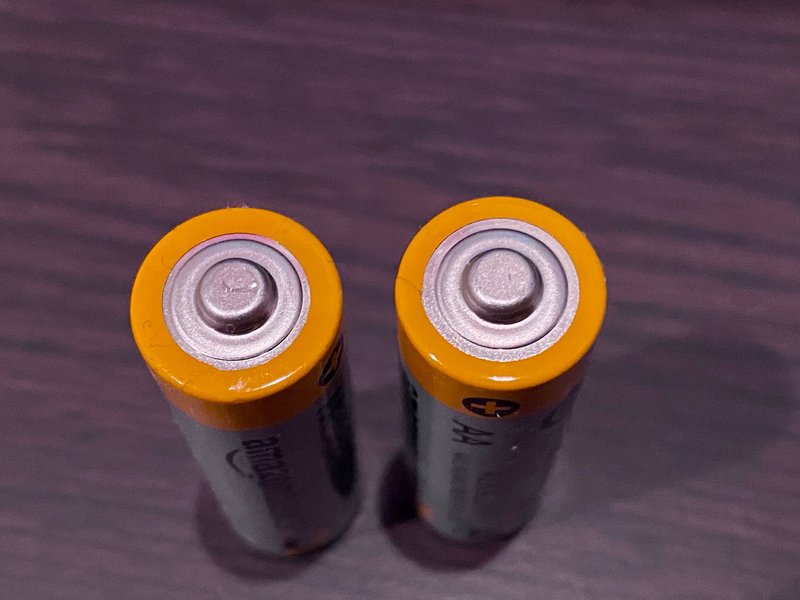
What it studies: The relationship between chemical reactions and electricity — how a reaction can generate current, and how current can drive a reaction that wouldn’t happen on its own.
A battery is electrochemistry doing useful work: a chemical reaction inside the cell pushes electrons through an external circuit, and you get power for your phone. Run the process backward with an external power source and you get electrolysis — used to extract pure aluminum from ore, or to split water into hydrogen and oxygen.
Researchers studying lithium-ion batteries track the entropy changes inside an electrode as it charges and discharges, work published in the Journal of Physical Chemistry C, because those entropy signatures reveal exactly how lithium ions are packing into the material — information that shapes how battery makers design longer-lasting cells. Where it’s applied: batteries, corrosion prevention on bridges and pipelines, electroplating, and industrial electrolysis for metal refining.
Photochemistry
What it studies: Chemical reactions triggered by light — what happens when a molecule absorbs a photon and gets kicked into an excited, more reactive state.
Photosynthesis is the original photochemical reaction: chlorophyll absorbs light and uses that energy to split water and build sugar. Sunscreen works on the same principle in reverse — the active ingredients absorb UV photons and dissipate that energy as harmless heat before it can damage skin cells. Photography, before digital sensors took over, relied entirely on light-triggered reactions in silver halide crystals.
Where it’s applied: researchers are chasing “artificial photosynthesis” — using light-driven reactions to split water into hydrogen fuel — as a route to storable solar energy. Photochemistry also underpins UV-curable coatings and dental resins that harden the instant a dentist’s light hits them.
Surface Chemistry
What it studies: What happens at the boundary where two phases meet — solid and gas, solid and liquid, or liquid and gas — where molecules behave differently than they do in the bulk material.
A solid’s interior atoms are surrounded on all sides; its surface atoms aren’t, which makes them more reactive and gives surfaces their own chemistry. This is why powdered aluminum can be explosive while a solid aluminum block is inert — surface area, and the exposed atoms that come with it, changes everything. Soap works by using surface chemistry to let water molecules bond with oil, which they’d otherwise ignore.
Surface science drives the design of solar cells, fuel cells, and gas sensors, and it’s central to research groups like Princeton’s Surface Science and Catalysis lab, where interface chemistry gets applied to everything from battery electrodes to microelectronics fabrication. Where it’s applied: semiconductor manufacturing, where surface reactions etch and deposit the layers that make a computer chip; and battery research, where the solid-electrolyte interface determines how long a cell lasts.
Catalysis
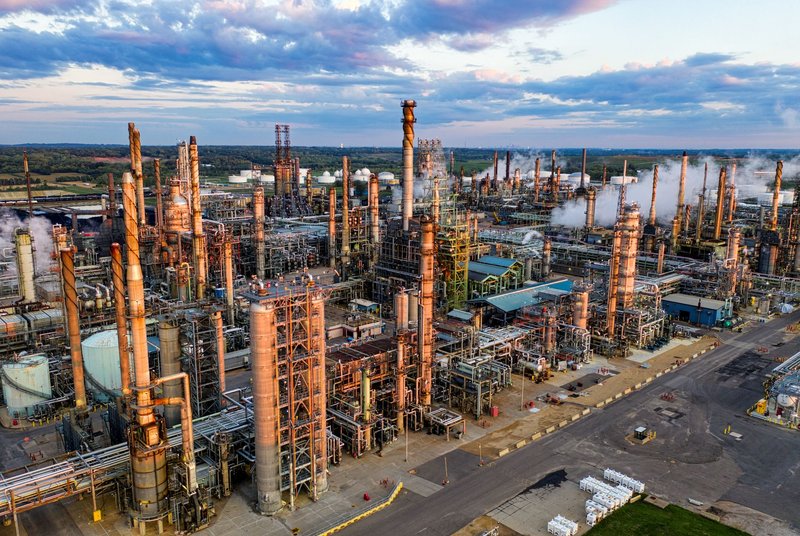
What it studies: How catalysts — substances that speed up a reaction without being consumed by it — lower the energy barrier a reaction has to clear.
A catalyst doesn’t change whether a reaction is thermodynamically favorable; it just gives the reaction a faster route to the same destination, the way a tunnel gets you through a mountain instead of over it. The catalytic converter under a car does exactly this, converting toxic exhaust gases into less harmful ones fast enough to matter during a five-minute drive.
Catalysis overlaps heavily with surface chemistry, since most industrial catalysts work by holding reactant molecules on a solid surface where they’re positioned to react — a mechanism studied in detail in journals like Physical Chemistry Chemical Physics. Where it’s applied: petroleum refining, ammonia production for fertilizer, and the plastics industry all depend on catalysts to make reactions economically viable at industrial scale.
Comparison Table
| Branch | What It Studies | Everyday Example | Where It’s Used |
|---|---|---|---|
| Thermodynamics | Energy flow and reaction spontaneity | A campfire burning without help | Power plants, refrigeration |
| Quantum Chemistry | Electron behavior and bonding | Why chlorophyll looks green | Drug design, materials science |
| Chemical Kinetics | Reaction speed and rate factors | Iron rusting over a season | Drug shelf life, food safety |
| Statistical Thermodynamics | Microscopic behavior producing bulk properties | Gas pressure from molecular motion | Predicting material properties |
| Spectroscopy | Light-matter interaction | A color-changing pH strip | Forensics, drug quality control |
| Electrochemistry | Chemistry-electricity conversion | A phone battery | Batteries, corrosion control, metal refining |
| Photochemistry | Light-triggered reactions | Sunscreen absorbing UV | Solar fuel research, UV coatings |
| Surface Chemistry | Reactions at phase boundaries | Soap lifting oil off skin | Semiconductors, battery interfaces |
| Catalysis | Lowering a reaction’s energy barrier | A car’s catalytic converter | Fuel refining, fertilizer production |
Where This Leaves You
None of these branches work in isolation — a battery researcher is doing electrochemistry, statistical thermodynamics, and surface chemistry in the same afternoon without necessarily labeling it that way. The split into nine branches is a teaching convenience more than a hard boundary. What matters is recognizing which lens a given problem needs: if you’re asking “will this happen,” reach for thermodynamics; “how fast,” kinetics; “what does it look like at the atomic level,” quantum chemistry; “how do I speed it up cheaply,” catalysis.
FAQ
Is physical chemistry hard? It’s demanding in a specific way: it leans harder on math than organic or inorganic chemistry, since concepts like thermodynamics and quantum chemistry are built on calculus and differential equations. Students who are comfortable with math often find it more logical and less memorization-heavy than organic chemistry; students who aren’t tend to find it the toughest branch.
What’s the difference between physical chemistry and physical organic chemistry? Physical chemistry is the broad discipline covering how matter behaves at the atomic and molecular level, across every branch listed above. Physical organic chemistry is a narrower subfield that applies physical chemistry’s tools — kinetics, thermodynamics, spectroscopy — specifically to organic molecules, to work out how their structure controls their reactivity.
Quantum chemistry vs. quantum mechanics — what’s the difference? Quantum mechanics is the underlying physics: the mathematical framework describing how particles behave at atomic scales. Quantum chemistry is quantum mechanics applied specifically to chemical problems — bonding, molecular structure, reactivity — using that framework as a tool rather than studying it for its own sake.
What are some everyday examples of physical chemistry? A battery discharging is electrochemistry. Soap cutting through grease is surface chemistry. A car’s catalytic converter is catalysis. Sunscreen absorbing UV light is photochemistry. Ice melting on a warm day is thermodynamics. None of these require a lab coat to observe.
Which branch should JEE/NEET aspirants prioritize? Chemical kinetics, chemical equilibrium, and thermodynamics carry the most weight across these exams and tend to appear in multiple questions per paper. Electrochemistry and surface chemistry show up reliably too, but usually in fewer questions — worth solid coverage, not necessarily first priority when time is short.