Search “Afghan scientists” and you get a Wikipedia category page with six names on it, plus a handful of orphaned subcategories nobody bothered to link together. Anthropologists in one bucket, medical doctors in another, mathematicians somewhere else entirely. It’s not that Afghanistan hasn’t produced scientists — it’s that the record of them is scattered across a dozen disconnected stubs.
Pull the pieces together and a pattern shows up fast: most of these careers didn’t happen in Afghanistan. They happened after Afghanistan — in Lyon, Strasbourg, Berlin, Guelph, Surrey. The 1979 Soviet invasion emptied Kabul University’s science faculty almost overnight, and the 2021 Taliban takeover did it again to a generation that had only just rebuilt. What’s left is a body of work built mostly in exile, by people who kept doing the science anyway.
Here are ten scientists born in Afghanistan whose work is worth knowing, in fields from nuclear physics to archaeology to veterinary medicine.
In This List
- Nouria Salehi — Nuclear Physicist and Biophysicist
- Zemaryalai Tarzi — Archaeologist
- Shakardokht Jafari — Medical Physicist
- Abdul Qayum Wardak — Nuclear Physics and Mathematics
- Amena Karimyan — Astronomer and Civil Engineer
- Nazir Peroz — Computer Scientist
- Mohammad Sediq Afghan — Mathematician and Philosopher of Mathematics
- Nasrin Husseini — Veterinary Researcher
- Sayed Askar Mousavi — Anthropologist
- Mohammad Hashim Kamali — Legal Scholar
1. Nouria Salehi — Nuclear Physicist and Biophysicist
Nouria Salehi trained at Kabul University before leaving to finish a PhD in biophysics at Claude Bernard University in Lyon. She migrated to Australia in 1981 and spent her career in nuclear medicine — the branch of physics that uses radioactive tracers to image and treat disease rather than just study atoms in the abstract.
What sets Salehi apart from a standard academic bio is what she did with the credential once she had it. She co-founded the Afghan Australian Development Organisation and used her physics background to help rebuild diagnostic imaging capacity in Afghan hospitals, work that eventually earned her the Order of Australia. It’s a career that reads less like “scientist emigrates” and more like “scientist emigrates, then spends the next three decades sending the expertise back.”
2. Zemaryalai Tarzi — Archaeologist
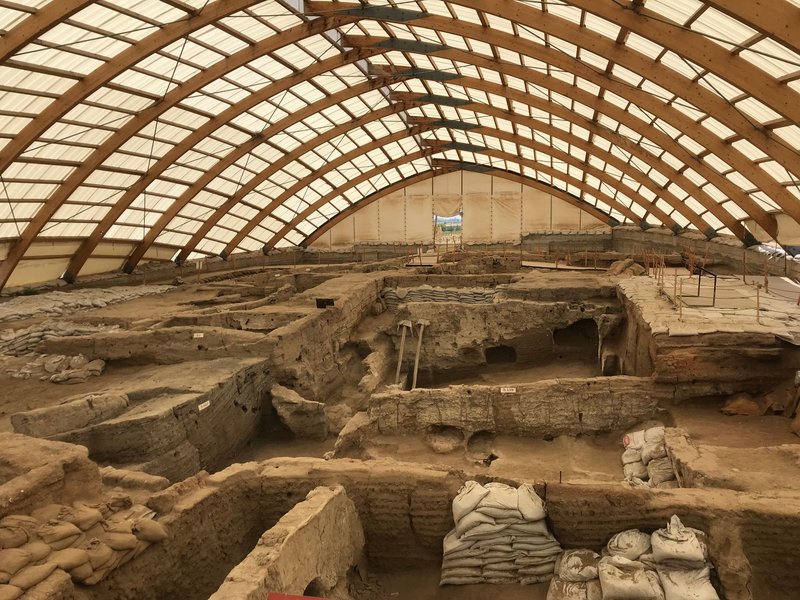
Tarzi was born in Kabul in 1939 and became director general of Afghanistan’s Institute of Archaeology by his mid-thirties, running excavations at Bamiyan and Hadda through the 1970s. He was the one repairing the two giant Bamiyan Buddhas before the Taliban destroyed them in 2001.
The 1979 Soviet invasion pushed him into exile in France, where he took a professorship at the University of Strasbourg — but he kept coming back. Between 2003 and 2013 he led French archaeological missions to Bamiyan again, this time hunting for a legend: a third, reclining Buddha statue, some 300 meters long, that ninth-century Chinese pilgrim accounts describe but no modern excavation has fully confirmed. His team has since uncovered Buddhist monastery remains dating to the third century, along with clay heads and fragments from monuments that collapsed centuries ago. Smithsonian’s coverage of the search captures just how much of Bamiyan’s archaeological record still sits underground.
3. Shakardokht Jafari — Medical Physicist
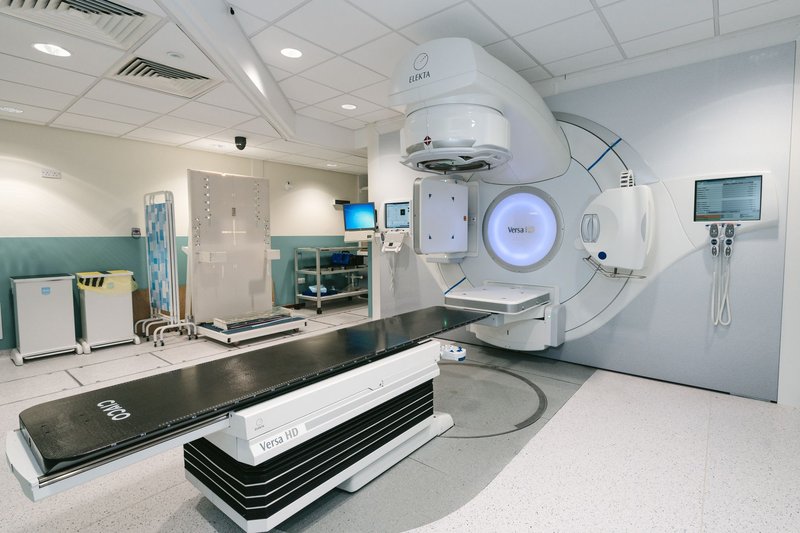
Jafari was born in Daykundi province in 1977 and became the first Afghan woman to hold a PhD in medical physics, completed at the University of Surrey in 2015. Her research problem was blunt and practical: radiotherapy clinics in low-resource settings often can’t verify the radiation dose a patient actually receives, because the standard dosimetry equipment is too expensive.
Her fix was to use glass jewelry beads — the cheap kind sold for craft projects — as radiation dosimeters, calibrated precisely enough to measure dose with clinical accuracy. She later founded TrueInvivo to commercialize the system. The University of Surrey’s profile of her work traces how a materials-cost problem turned into a piece of hardware now used to make cancer treatment safer in exactly the settings that needed it most.
4. Abdul Qayum Wardak — Nuclear Physics and Mathematics
Born in Wardak province in 1923, Wardak represents the science faculty Afghanistan had before the exodus. He earned degrees in mathematics and nuclear physics, joined Kabul University’s Faculty of Science in 1960, and became dean of the Science Faculty in 1972 — the kind of institutional post that only exists when a university has a functioning science department to run.
He’s a useful data point against the assumption that Afghan science only exists in diaspora. Kabul University trained working physicists and mathematicians on its own campus well into the 1970s, before war repeatedly gutted the faculty that people like Wardak had built.
5. Amena Karimyan — Astronomer and Civil Engineer
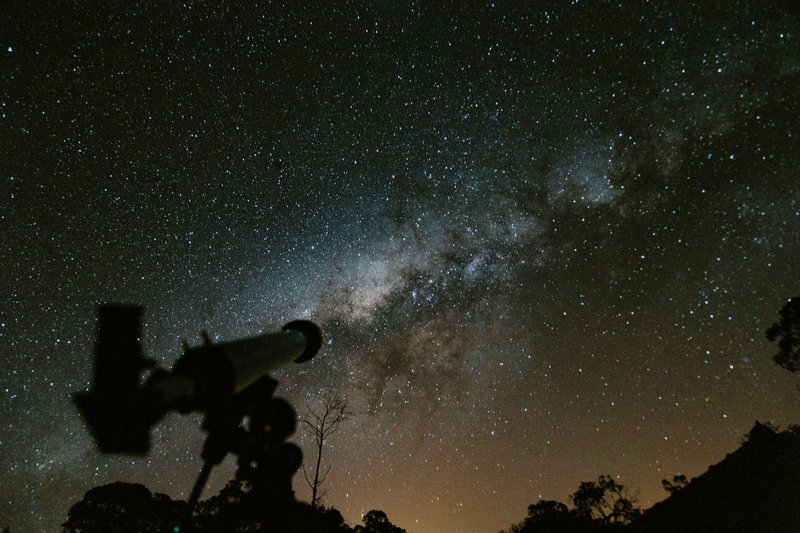
Karimyan was born in Herat in 1996 and trained as a civil engineer, which makes her route into astronomy an unusual one — she came to it as an advocate before she came to it as a credentialed astronomer. In 2019 she founded the Kayhana Astronomical Group to get young Afghan women access to telescopes and astronomy education that university programs weren’t offering them.
BBC named her one of its 100 most inspiring women in 2021, the same year the group’s work in Afghanistan became far harder to continue in person. Karimyan is one of two scientists on this list who made that BBC list that year — a coincidence that says less about BBC’s taste and more about how many capable Afghan women were doing serious work right as the ground shifted under them.
6. Nazir Peroz — Computer Scientist
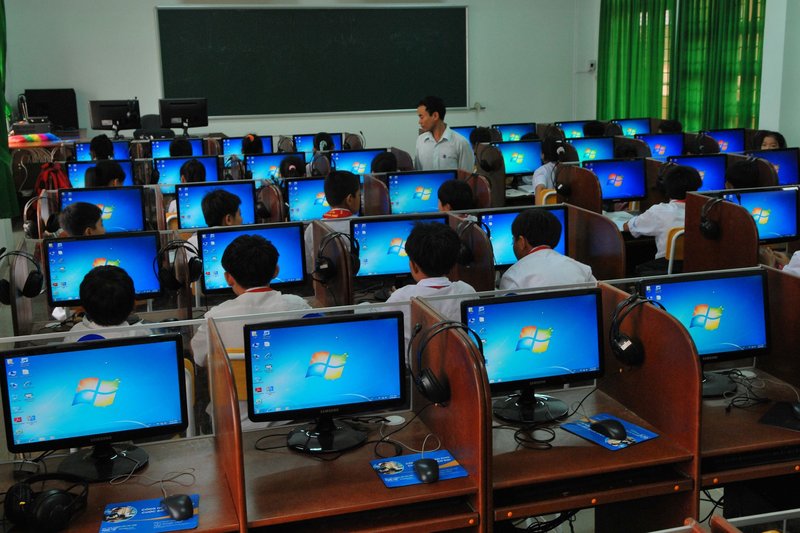
Peroz was born in Kabul in 1955 and built his career in Germany, where he’s spent two decades on a specific, unglamorous problem: getting functioning IT infrastructure into universities in countries that don’t have it. Between 2003 and 2014 he set up five IT centers at Afghan universities — Kabul, Herat, Nangarhar, Balkh, and Kandahar — and in 2007 launched a master’s program in computer science at TU Berlin specifically for Afghan lecturers, so the expertise could be trained locally rather than permanently imported.
It’s capacity-building rather than headline research, but it’s the kind of work that determines whether the next generation of Afghan scientists has lab equipment and network access at all.
7. Mohammad Sediq Afghan — Mathematician and Philosopher of Mathematics
Born in Kabul in 1958, Sediq Afghan works at the intersection of mathematics and philosophy — the foundational questions about what mathematical objects actually are and how proof works, rather than applied calculation. He now heads the International Center for Mathematical Philosophy in Kabul.
He’s one of the few people on this list still working inside Afghanistan rather than from exile, and the United Nations Assistance Mission in Afghanistan formally recognized his standing in the field as a philosopher of mathematics — an unusually specific honor for an unusually specific discipline.
8. Nasrin Husseini — Veterinary Researcher
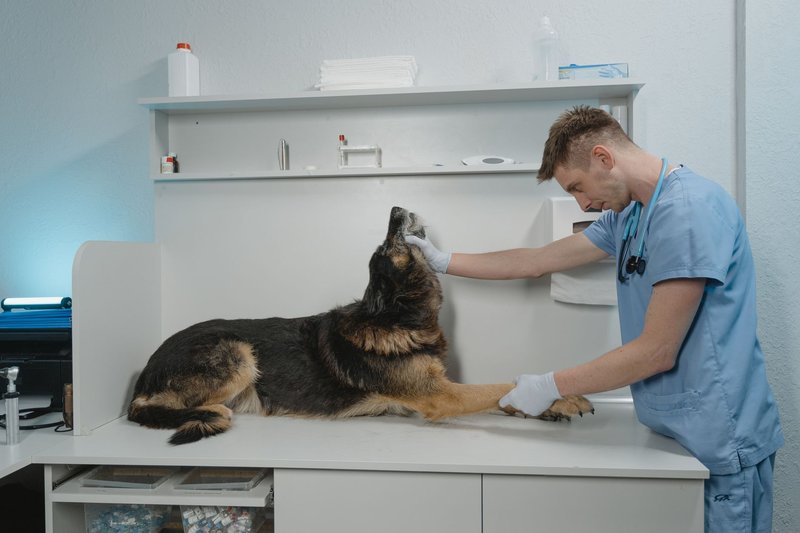
Husseini spent part of her childhood as a refugee in Iran before returning to Afghanistan after 2001, where she was in the second graduating class of women from Kabul University’s veterinary medicine program in 2010 — a program that, a decade earlier, would not have admitted her at all. She now works as a refugee advocate and researcher at the University of Guelph in Canada, studying animal and public health alongside her advocacy work.
BBC’s 2021 100 Women list included her alongside Karimyan; the University of Guelph’s writeup of the honor notes she’s been displaced twice now — once as a child, once as an adult after the 2021 takeover — and has kept her research going through both.
9. Sayed Askar Mousavi — Anthropologist
Mousavi was born in Kabul in 1956 into a Sayyid family and studied development studies at the University of East Anglia before earning a doctorate at Oxford’s St Antony’s College. His defining work, The Hazaras of Afghanistan, published by Cambridge University Press, remains one of the few academic studies of Afghanistan’s second-largest ethnic group — a Shi’a, Farsi-speaking population that had been chronically underdocumented in Western scholarship before his book.
He was also active in Afghan Mujahideen cultural circles in Iran during the Soviet occupation, editing publications aimed at Afghan refugee communities — putting his academic training to work for the same displaced population he was studying.
10. Mohammad Hashim Kamali — Legal Scholar
Kamali was born in Nangarhar province in 1944 and built one of the most cited bodies of work in Islamic legal scholarship anywhere in the world. After a law degree from Kabul University and a stint as a public prosecutor for the Afghan Ministry of Justice, he completed graduate work at the London School of Economics and a PhD at the University of London, then spent decades as a professor of Islamic law at the International Islamic University Malaysia.
His textbook Principles of Islamic Jurisprudence is standard reading in law faculties well beyond Malaysia. Kamali later returned to advise on Afghanistan’s own legal framework, chairing its Constitution Review Commission in 2003 — bringing forty years of comparative legal scholarship back to bear on the country’s founding document.
The Pattern Underneath the List
Look at the list again and the shape is hard to miss: eight of ten left Afghanistan to do their most significant work, and four of ten are women who trained or built careers after the fields they entered had, in living memory, been closed to them entirely. Wardak, dean of a functioning Kabul University science faculty in 1972, and Sediq Afghan, running a mathematics institute out of Kabul today, are the exceptions that prove how narrow the window for staying has actually been.
None of this is unique to Afghanistan — plenty of countries export their scientific talent faster than they can retain it. But the compression here is unusual: two separate exoduses in one working lifetime, 1979 and 2021, each one scattering a cohort of scientists just as they were hitting their stride. Science magazine’s reporting on researchers who stayed after the 2021 takeover makes clear the choice those who remain are still making, year to year, between continuing the work and getting out.