TLDR
The Netherlands built a modern economy on a resource base most people would call thin: no mountains, almost no forest, and a land area smaller than Maryland. What it has is an enormous gas field it just shut down, some of the most productive farmland on Earth, a few overlooked minerals like salt and peat, and — increasingly — the wind blowing off the North Sea. This post walks through each one, what changed recently, and what’s replacing what’s running out.
Table of Contents
- A small country that punched above its resource weight
- Natural gas: the Groningen story, and why it just ended
- Farmland: the resource nobody expects
- Fisheries and the North Sea
- The overlooked minerals: salt, peat, and limestone
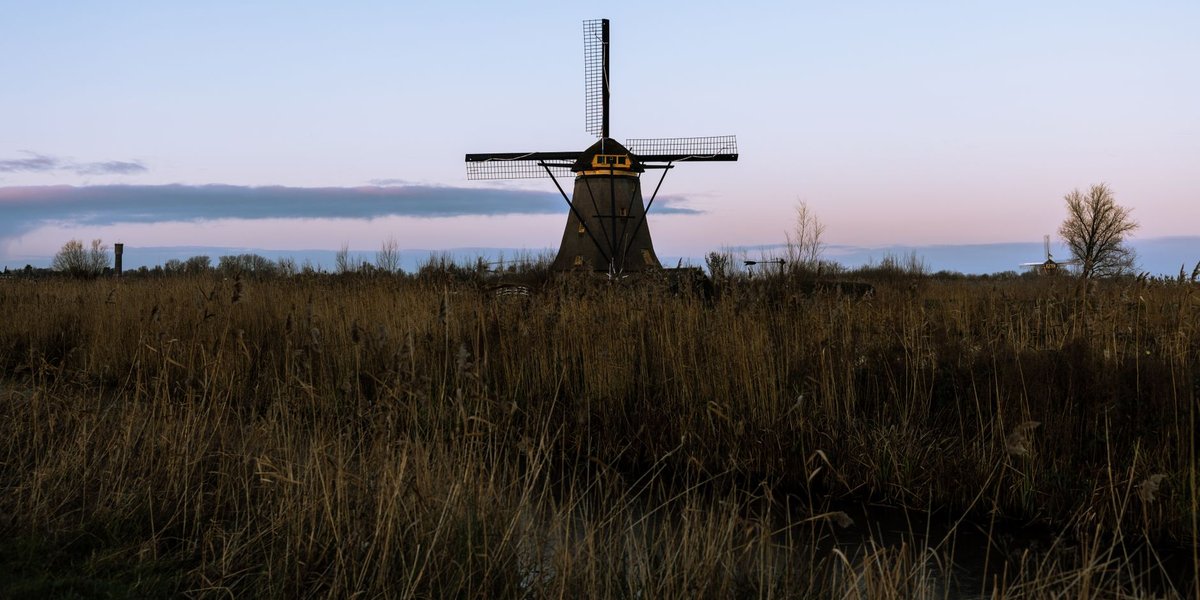
- Land itself, engineered: polders and reclamation
- What’s replacing the gas: offshore wind and the North Sea grid
- Resources at a glance
- FAQ
A small country that punched above its resource weight
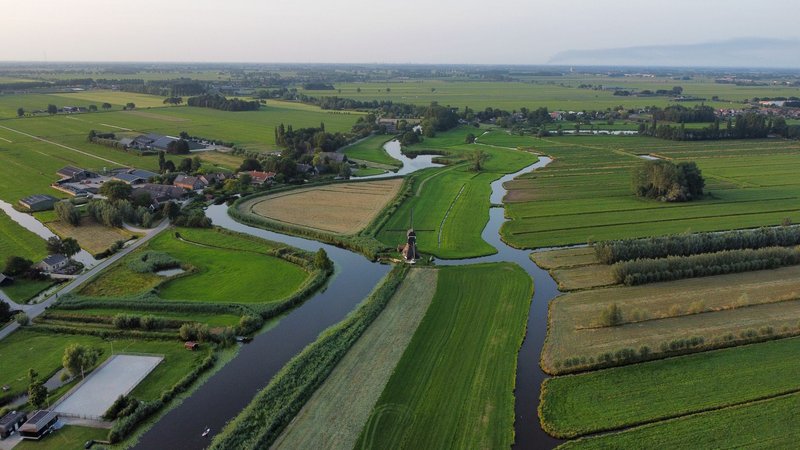
The Netherlands covers about 41,850 square kilometers, a third of it below sea level, and it has no coal seams worth mining, no metal ore deposits to speak of, and barely any forest cover left. By the usual resource checklist — timber, ore, fossil fuel reserves — it should be a minor player.
Instead it became, for decades, one of Europe’s biggest gas producers and, more improbably, the world’s second-largest exporter of agricultural products by value, trailing only the United States. That’s not an accident of soil quality. It’s the result of a country that has spent 800 years treating land and water as engineering problems rather than fixed facts of geography, and a few genuine geological breaks — chief among them, one of the largest gas fields ever found in Europe.
That field is now closed. What’s left, and what’s replacing it, is the actual story of Dutch natural resources today — not the one still printed in most reference articles.
Natural gas: the Groningen story, and why it just ended
Gas is the resource that defines the Dutch economy of the last sixty years, and understanding it means understanding both the boom and the shutdown, because most existing write-ups stop at the boom.
The Groningen field, discovered in 1959 near the northern city of the same name, turned out to be one of the ten largest natural gas fields on the planet — early estimates put recoverable reserves around 2,800 billion cubic meters. Production ramped up through the 1960s and 70s and, for a long stretch, gas revenue functioned as a de facto national dividend, funding infrastructure and welfare spending and giving rise to the term “Dutch disease” after the currency effects of that windfall on the rest of the export economy.
The field’s fatal flaw showed up slowly. Decades of extraction caused the rock layer above the reservoir to compact, and that compaction started triggering earthquakes — not the dramatic tectonic kind, but shallow, low-magnitude tremors that nonetheless cracked foundations and damaged tens of thousands of homes across the province. The strongest, a magnitude 3.6 quake near Huizinge in 2012, became the turning point: public pressure over structural damage and resident safety built for a decade afterward.
The government began cutting production caps through the 2010s, and extraction from Groningen stopped entirely on October 1, 2023, with the closure made legally permanent on April 19, 2024. Seismologists have flagged that induced tremors can continue for years after extraction ends, since stress built up over sixty years of production doesn’t release the moment the taps close — so the Groningen story isn’t fully finished even with the field shut down.
The Netherlands still produces gas — smaller offshore fields in the North Sea remain active, and roughly a quarter of all discovered oil and gas fields in the North Sea basin sit within Dutch jurisdiction — but the era of one dominant onshore field carrying the national energy balance is over.
Farmland: the resource nobody expects
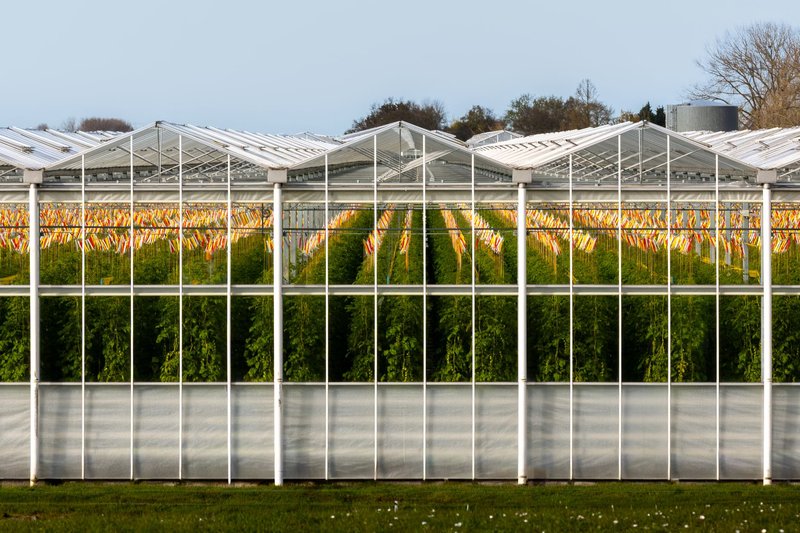
Ask most people to name a natural resource and farmland doesn’t usually come to mind, but land use is exactly where the Netherlands overperforms. About 66% of the country’s total area is used for agriculture — a figure most larger, resource-rich nations can’t touch — split roughly between grassland (dairy and livestock) and arable and horticultural land (crops, bulbs, and the greenhouse belt around Westland).
The scale of the output relative to the footprint is the actual story. The Netherlands earned roughly $51.8 billion from agricultural exports in 2023, and in 2022 that figure ran above €122 billion — supporting something like 11% of Dutch GDP from a country you could drive across in under three hours. It’s also the source of a genuinely odd statistic: the Netherlands produces around 90% of the European Union’s potatoes, and its greenhouse sector alone covers more than 10,000 hectares of glass, most of it clustered near Rotterdam.
None of this happened because Dutch soil is unusually fertile. Much of the country’s most productive farmland is reclaimed polder soil, engineered and drained rather than naturally arable — which is really an argument for treating land management itself as the resource, not the dirt underneath it.
Fisheries and the North Sea
The North Sea has supplied Dutch fishing fleets for centuries, and towns like Urk and IJmuiden still run active fleets pulling in herring, plaice, sole, and shrimp. It’s a smaller share of the modern economy than gas or agriculture, but it’s historically significant — Dutch herring curing techniques from the medieval period underpinned some of the earliest long-distance Dutch trade — and it remains a real regional industry today, tightly regulated under EU fishing quotas that periodically create friction between Brussels and Dutch fishing communities over catch limits.
The overlooked minerals: salt, peat, and limestone
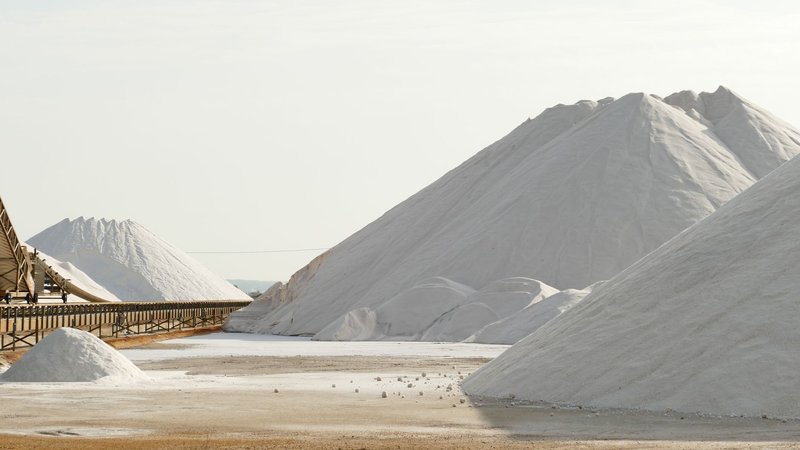
Outside gas, the Dutch mineral inventory is short but not empty, and most competing articles either skip these entirely or reduce them to a one-line mention.
Salt has been extracted commercially since the late 1800s, with major operations at Hengelo and Delfzijl. Salt production at Delfzijl dates to 1959, tied to a chlorine electrolysis plant built there in 1956, and the industry consolidated over time — Akzo Nobel ran the salt business for decades before it was spun off in 2021 into a standalone company, Nobian, now one of Europe’s largest salt and chlor-alkali producers. Dutch rock salt feeds directly into the country’s large chemical manufacturing sector.
Peat shaped the country before gas ever did. For centuries, peat cut from the eastern and northern bogs was the primary domestic fuel source, and peat extraction is part of why so much of the Netherlands sits below sea level today — draining and cutting peatland caused the ground itself to subside. Commercial peat harvesting has mostly wound down, but the legacy is written into the landscape.
Limestone, along with sand and gravel, remains the backbone of the domestic construction materials industry — quarried mainly in the southern province of Limburg, the one part of the country with any real hills. None of it is glamorous, but a country building on reclaimed, waterlogged ground needs a constant supply of aggregate, and it produces most of that domestically.
Beyond these, the Netherlands imports the overwhelming majority of its raw industrial materials — metals, ores, and most construction-grade minerals come from elsewhere, which is part of why Rotterdam is Europe’s largest port: much of what the Netherlands manufactures runs on resources shipped in, not dug out locally.
Land itself, engineered: polders and reclamation
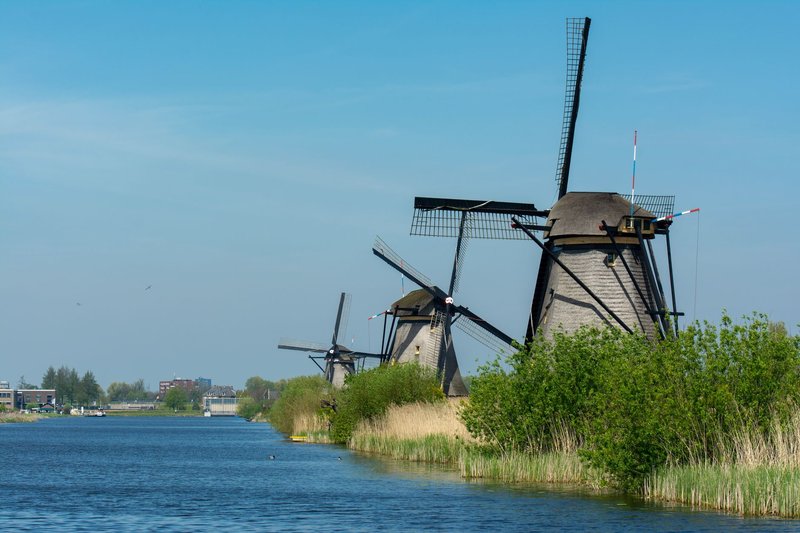
This is the resource almost no reference article treats as a resource: the land itself, much of it manufactured. Roughly a sixth of the country’s total surface area sits on reclaimed ground — polders drained using dykes, canals, and pumping systems refined over centuries. The Afsluitdijk, a 32-kilometer barrier dam completed in 1932, alone enabled the reclamation of about 1,620 square kilometers behind it, transforming a saltwater inlet into farmable, livable land.
Treating reclamation as a resource-management asset rather than a historical curiosity matters more now, not less. Rising sea levels and increased storm intensity mean the pumps, dykes, and drainage networks that created the polders in the first place now have to work harder to keep that land usable — the Netherlands is, in effect, still actively managing the resource it built.
What’s replacing the gas: offshore wind and the North Sea grid
With Groningen closed, the North Sea is doing double duty — it’s still producing gas from smaller offshore fields, and it’s now the site of the country’s biggest energy bet: offshore wind.
The Dutch government has been approving large-scale offshore wind zones through the mid-2020s, including the Nederwiek site aimed at roughly 1 gigawatt of capacity, and longer-term plans involve artificial islands in the North Sea functioning as hubs that collect power from multiple wind farms before sending it onshore. In a small but telling sign of how directly the transition intersects with the old industry, the N05-A gas platform became one of the first Dutch offshore installations to run its own operations entirely on wind power, drawing electricity via a subsea cable from a German wind farm rather than burning gas to power the rig that extracts more gas.
It’s not a clean swap yet — the country still imports gas and has faced supply pressure since Groningen’s closure — but the shift in where new energy investment is going is unambiguous. The resource base that carried the Dutch economy through the late 20th century is being replaced, quite literally, by what blows across the same water the gas platforms sit in.
Resources at a glance
| Resource | Scale | Economic role |
|---|---|---|
| Natural gas (Groningen) | ~2,800 bcm recoverable; extraction ended Oct 2023, closed permanently Apr 2024 | Decades of major export revenue and domestic energy; now offshore fields only |
| Farmland / horticulture | ~66% of land area in agricultural use | #2 global agricultural exporter by value; ~$51.8B in exports (2023) |
| Offshore gas (North Sea) | ~23% of all North Sea fields are Dutch-jurisdiction | Domestic supply as Groningen output ends |
| Salt | Major mines at Hengelo and Delfzijl since late 1800s | Feeds domestic chemical and chlor-alkali industry (Nobian) |
| Peat | Historically extensive; mostly depleted/protected today | Former primary fuel source; shaped land subsidence |
| Limestone, sand, gravel | Quarried mainly in Limburg | Domestic construction materials supply |
| Offshore wind | Multiple GW-scale zones in development (e.g., Nederwiek) | Primary post-gas energy transition asset |
| Reclaimed land (polders) | ~1/6 of national land area | Enables the farmland and settlement base itself |
FAQ
What is the Netherlands’ most important natural resource? Historically, natural gas from the Groningen field — it funded decades of public spending and made the country a major European gas exporter. With that field permanently closed as of April 2024, agricultural land and offshore wind potential are now the two resources carrying the most economic weight.
Why did the Netherlands close the Groningen gas field? Decades of gas extraction caused ground compaction that triggered increasingly frequent earthquakes across Groningen province, damaging tens of thousands of homes. Sustained public pressure after a 2012 magnitude 3.6 quake near Huizinge led the government to wind down production through the 2010s and stop extraction entirely in October 2023.
Does the Netherlands have any mineral resources besides gas? Yes, though modest by global standards: rock salt (mined at Hengelo and Delfzijl), peat (historically significant, now largely depleted), and limestone, sand, and gravel quarried mainly in the southern province of Limburg for domestic construction.
Is farmland really considered a natural resource for the Netherlands? Functionally, yes. A large share of Dutch arable land is reclaimed polder soil rather than naturally occurring farmland, and that engineered land base is what makes the country the world’s second-largest agricultural exporter by value despite its size.
What is replacing natural gas in the Dutch economy? Offshore wind is the leading candidate, with multiple gigawatt-scale wind zones approved in the North Sea and plans for artificial energy-hub islands. The country still relies on imported gas and smaller domestic offshore fields to cover the gap left by Groningen’s closure.