TLDR
“Endemic” doesn’t mean endangered, rare, or native. It means a species exists nowhere else on Earth. By that stricter bar, Massachusetts has surprisingly few true endemics: a freshwater copepod that hasn’t been seen since the 1950s, a moth confined to one plant in the southeastern part of the state, and a handful of coastal plain plants and one turtle population found almost nowhere else. Most “endemic species of Massachusetts” lists you’ll find online are actually endangered-species lists wearing the wrong label — this one isn’t.
What “Endemic” Actually Means (and Why Google Gets It Wrong)
Type “endemic species of Massachusetts” into a search engine and you’ll get pages of endangered-species databases. That’s not laziness on Google’s part — it’s a genuinely blurry distinction that most sources don’t bother to untangle.
Endemic means a species occurs naturally in one place and nowhere else. Not “mostly here.” Not “most of its population is here.” Nowhere else, full stop.
Native just means a species evolved in or arrived in a region without human introduction. Black bears are native to Massachusetts. They’re also native to Maine, Vermont, and about 40 other states, so they’re not endemic to any of them.
Endangered or threatened describes conservation status — how close a species is to disappearing — and has nothing to do with where else it might live. The piping plover is endangered in Massachusetts. It also nests from North Carolina to Canada. Endangered, not endemic.
A species can be all three, two, one, or none of these at once. A Nantucket shadbush is both endemic to a narrow coastal strip and imperiled. A gray squirrel is native and common — neither endemic nor endangered. The confusion matters because most Massachusetts “endemic species” content you’ll find is really an endangered species list with the word swapped in.
Why True Endemics Are So Rare Here in the First Place
Massachusetts is a bad candidate for endemism, geologically speaking. Endemic species usually evolve where something isolates a population for a long time — an island, a mountain range, a river system cut off from its neighbors. Massachusetts has none of that in the classic sense. It’s a stretch of temperate coastline connected by unbroken forest and coastal plain to New York, Connecticut, and Rhode Island. Species that live here mostly live in those places too.
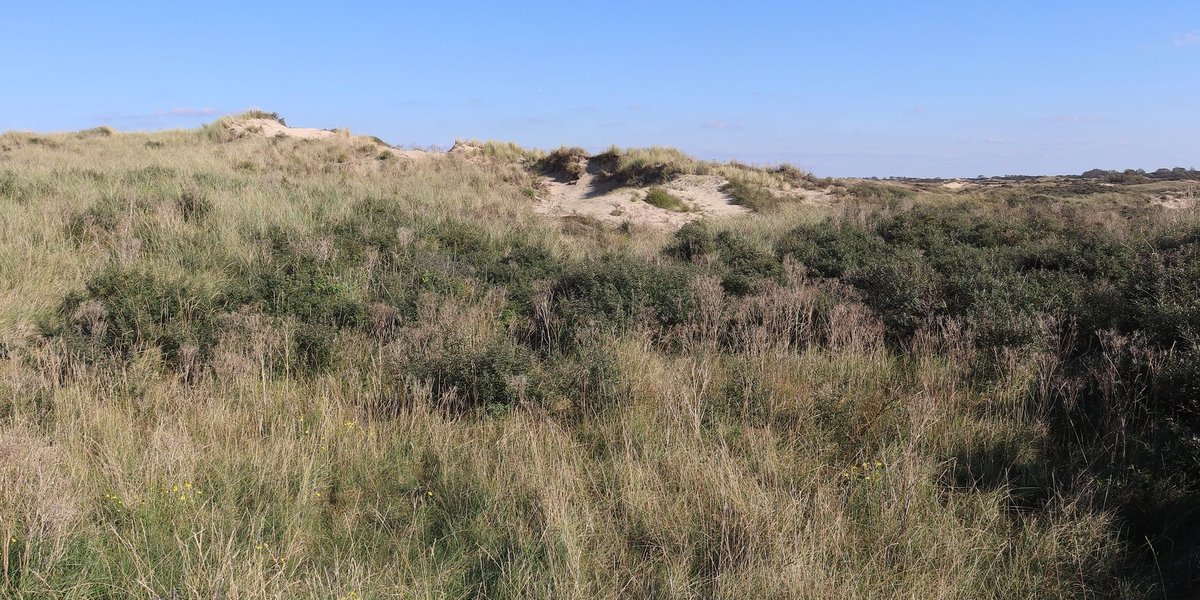
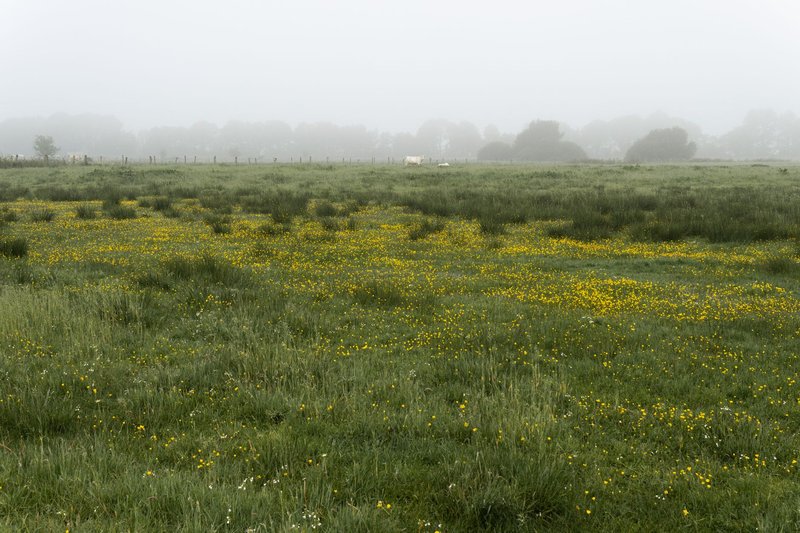
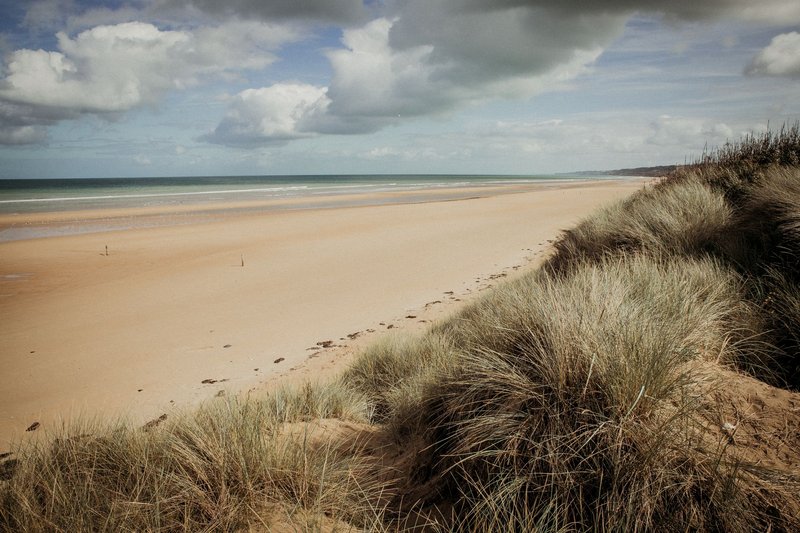
The exceptions come from two unusual features. First, the sandplains and coastal plain pondshores of Cape Cod, Martha’s Vineyard, and Nantucket — glacial outwash deposits left behind when the last ice sheet retreated roughly 18,000 years ago, forming acidic, nutrient-poor, sandy soil that almost nothing wants to grow in. Second, the offshore isolation of the islands themselves, which cut plant populations off from the mainland gene pool long enough for local forms to diverge. Both mechanisms show up repeatedly in the species below.
Species Genuinely Unique to Massachusetts
Epischura massachusettsensis — The Copepod
This is the closest thing Massachusetts has to a textbook endemic, and almost nobody’s heard of it. Epischura massachusettsensis is a freshwater copepod — a millimeters-long crustacean — first described in 1906 by biologist Arthur Sperry Pearse from nine female specimens collected in a pond near Wellesley. It belongs to a genus researchers consider one of the few animal examples of Tertiary relict endemism in North America, meaning its lineage has been isolated in these ponds for an extraordinarily long time, not just since the last ice age.
Here’s the part that should get more attention than it does: nobody has confirmed a sighting since the 1950s. The IUCN Red List classifies it as Data Deficient rather than extinct, because nobody’s looked hard enough to declare it gone — which is its own quiet indictment of how little monitoring this species has ever gotten. If it’s still out there, it’s in a Massachusetts pond and nowhere else on the planet.
Water-Willow Stem Borer Moth — A Life Built Around One Plant
Papaipema sulphurata is a grayish, hairy-bodied moth with a wingspan around 32 to 38 millimeters, and its entire life cycle is welded to a single host plant: water-willow (Decodon verticillatus), a wetland shrub with arching stems. The larvae tunnel directly into those stems, feed internally through the summer, and pupate in August. Adults fly in September and October, then the eggs overwinter and the cycle starts again.
The moth is narrowly endemic to southeastern Massachusetts — Bristol and Plymouth Counties, Cape Cod, Martha’s Vineyard, and Nantucket — everywhere water-willow grows thick along the region’s acidic ponds. The U.S. Fish & Wildlife Service lists it as state-threatened, with no federal protection status at all, which means its entire global population sits under Massachusetts law and nothing else.
Nantucket Shadbush — A Shrub That Didn’t Leave the Islands
Amelanchier nantucketensis is a low, spreading shrub in the rose family, a relative of the shadbushes you’ll see blooming white across New England every April — except this one stayed put on sandy, sun-baked ground: old fields, grasslands, pine barrens, and roadside sandplains from Nova Scotia down through Long Island, with its heaviest concentration on Nantucket and Martha’s Vineyard.
What sets it apart from its more common cousins is a trait called andropetaly — pollen forming directly on the margins of its small, spoon-shaped flower petals, an uncommon enough phenomenon that it shows up in the species description. It spreads by underground stolons, forming dense colonies rather than solitary shrubs, and it’s rare enough globally that the Center for Plant Conservation has it on their National Collection of Endangered Plants, with Harvard’s Arnold Arboretum as its custodian.
Sandplain Gerardia — Down to a Few Thousand Plants
Agalinis acuta is a small annual herb, four to eight inches tall, with a light-green angular stem and a handful of branches — easy to miss even where it grows. It needs sandy, open ground with sparse competing vegetation: coastal grasslands, pine-oak scrub, the exact conditions Cape Cod and the islands specialize in.
The recovery numbers here are genuinely worth knowing. In 1988, when the species was federally listed as endangered, surveyors counted 1,218 plants across 10 sites. By 2017, that had climbed to 41,382 plants across 13 sites — real progress, driven partly by reintroduction from seed. As of 2024 there were still fewer than 23 known populations worldwide, 11 of them in Massachusetts, concentrated in Barnstable, Dukes, and Plymouth Counties. It’s historically documented in Nantucket and Worcester Counties too, though it hasn’t been seen there in decades.
Plymouth Gentian — A Pondshore Specialist
Sabatia kennedyana grows along the shores of acidic, nutrient-poor coastal plain kettle ponds — the same glacial outwash habitat that shapes so much of this list — in a scattered, disjunct range running from Nova Scotia down through Massachusetts, Rhode Island, and the Carolinas, skipping almost everything in between. Its flowers are striking enough to be the reason people go looking for it: nine to eleven pale-to-bright pink petals with white bases and a yellow eye thinly rimmed in red, on plants that can reach three feet tall and spread into wide colonies by rhizome.
It’s rated endangered in Rhode Island but only “uncommon and of special conservation concern” in Massachusetts — a reminder that a species can sit at different points on the endangerment scale in each state it touches, while still needing this exact pondshore habitat to survive anywhere.
Northern Red-Bellied Cooter — A Turtle 200 Miles From Home
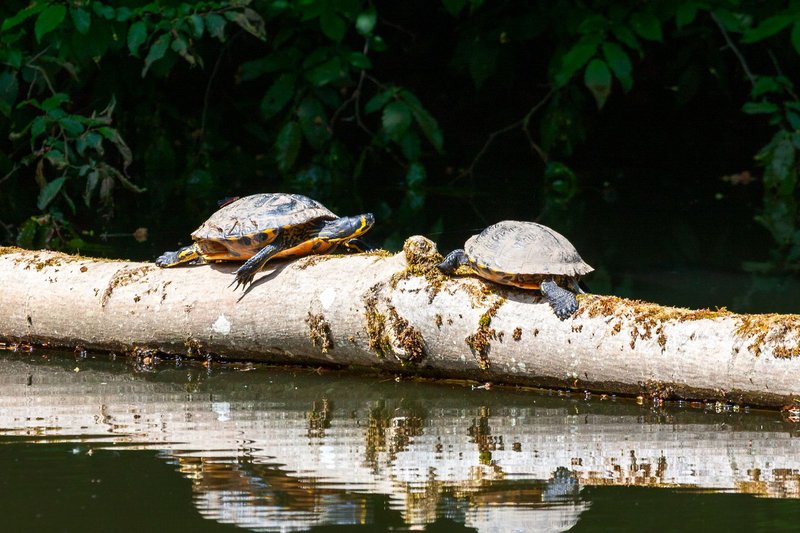
This one bends the definition of endemic, but it earns its spot. The Massachusetts population of the northern red-bellied cooter (Pseudemys rubriventris) is a disjunct population — cut off from the species’ main range, which runs from Virginia to New Jersey, by roughly 200 miles of unsuitable habitat. It survives in a cluster of ponds in Plymouth County and nowhere else in New England.
When it was listed under the Endangered Species Act in 1980, biologists could find the turtle in only 12 ponds, holding an estimated 200 individuals total — one of the smallest known populations of any reptile in the country at the time. A headstarting program run through Massachusetts schools since the 1980s has since released more than 4,400 hatchlings back into the wild, expanding the range to additional ponds and rivers. It’s not endemic to Massachusetts in the strict genetic sense — it’s the same species found further south — but this specific, isolated population exists here and here alone.
The Pattern Behind All of These
Notice where every one of these species turns up: acidic coastal plain ponds, sandy glacial outwash, and the offshore islands. That’s not a coincidence, it’s the entire mechanism. Massachusetts doesn’t have mountain ranges or river canyons to isolate species the way endemism usually works elsewhere. What it has is one narrow, harsh, sandy habitat type running from Plymouth County out through Cape Cod to Nantucket and Martha’s Vineyard, shaped by a glacier that left 18,000 years ago and never came back.
That’s also why this list is short and fragile. Every species on it depends on the same threatened habitat type, and coastal development, groundwater drawdown, and fire suppression on sandplains all hit that habitat at once. If you want the fuller picture of what’s declining statewide — including species that are endangered but not endemic — the Massachusetts Natural Heritage & Endangered Species Program maintains the authoritative list, and it’s worth understanding the difference now that you know what “endemic” actually means.