Ask most people to name a Romanian Nobel laureate and you’ll get a blank stare, or maybe a guess at Elie Wiesel. Ask a Romanian and you’ll often get “three” — a number that was true for exactly eight years, between 2009 and 2014, and stuck around in article after article that never got updated.
TLDR
Romania has produced four Nobel laureates, all born on Romanian soil but none holding Romanian citizenship at the time they won:
- George Emil Palade — Physiology or Medicine, 1974, for uncovering the inner machinery of the cell
- Elie Wiesel — Peace, 1986, for bearing witness to the Holocaust
- Herta Müller — Literature, 2009, for writing life under Ceaușescu’s dictatorship
- Stefan Hell — Chemistry, 2014, for breaking the resolution limit of light microscopes
No Romanian citizen has ever won. All four left the country — through emigration, deportation, or a childhood exit — before the work that earned the prize was even possible.
Table of Contents
- Why “Three” Is the Wrong Number
- George Emil Palade — Medicine, 1974
- Elie Wiesel — Peace, 1986
- Herta Müller — Literature, 2009
- Stefan Hell — Chemistry, 2014
- Why No Romanian Citizen Has Won
- The Near Misses
Why “Three” Is the Wrong Number
Most of the articles still circulating about Romania’s Nobel laureates were written before October 2014, when Stefan Hell shared the Chemistry Prize for building a microscope that could see past the physical limit of visible light. Before that, the count really was three — Palade, Wiesel, and Müller — and a lot of listicles and reference pages simply never got a fourth entry added. Search “Romania’s Nobel Prize winners” today and you’ll still find pages confidently stating three, a decade out of date.
There’s a second wrinkle that adds to the confusion: every one of the four was a naturalized citizen of another country by the time they won. Romania supplied the birthplace, the early education, and in three cases the reason they left. It didn’t supply the passport.
George Emil Palade — Medicine, 1974 {#george-emil-palade}
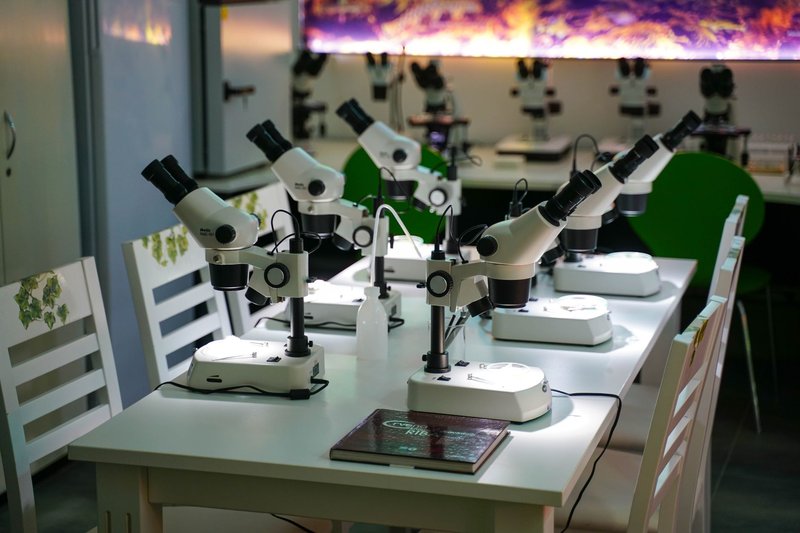
Palade was born in Iași in 1912, the son of a philosophy professor, and trained as a doctor at the University of Bucharest, graduating in 1940 into a country about to be swallowed by war and then communism. In 1946 he left for the Rockefeller Institute in New York and never practiced medicine in the conventional sense again — he became a cell biologist instead, and a genuinely transformative one.
Working with electron microscopes at a resolution no one had managed before, Palade mapped the inside of the cell like a cartographer mapping an unexplored coastline. He identified ribosomes, worked out that they were where proteins get built, and traced how the endoplasmic reticulum and Golgi apparatus move those proteins around. According to the Nobel Prize’s official biography of Palade, this body of work effectively created modern cell biology as a discipline — before him, cells were structures you could stain and look at; after him, they were systems you could explain.
He shared the 1974 Physiology or Medicine prize with Albert Claude and Christian de Duve, becoming Romania’s first Nobel laureate. He never returned to live in Romania.
Elie Wiesel — Peace, 1986 {#elie-wiesel}
Wiesel was born in 1928 in Sighet, a Transylvanian town that has belonged to Romania for most of the last century. In 1944, at fifteen, he and his family were deported to Auschwitz. His mother and younger sister died there; his father died in Buchenwald months before liberation. Wiesel survived, and in 1958 published La Nuit — Night — a memoir so spare it reads more like testimony than literature, and one that became the entry point for millions of readers into what the Holocaust actually did to a person, not just a population.
He spent the rest of his life doing the same work in a different form: speaking, teaching, and pressing governments — including his adopted country, the United States — to act against genocide while it was still happening rather than mourning it afterward. The Holocaust Encyclopedia entry on Wiesel, maintained by the U.S. Holocaust Memorial Museum, credits him with turning personal testimony into a moral vocabulary that later human-rights movements borrowed directly. He won the 1986 Peace Prize “for being a messenger to mankind,” and gave the entire prize money to a foundation fighting hatred and indifference.
Wiesel’s connection to Romania is the most fraught of the four: the country that shaped his childhood was also complicit, through wartime alliance with Nazi Germany, in the deportation that killed his family.
Herta Müller — Literature, 2009 {#herta-muller}

Müller was born in 1953 in Nițchidorf, a village in the Banat region settled generations earlier by ethnic Germans, and grew up speaking German at home in a country run in Romanian. That double distance — from the language of power and, later, from the regime itself — became the engine of her writing.
In the 1970s she joined Aktionsgruppe Banat, a small circle of German-language writers pushing back against censorship, and lost her factory translating job after refusing to inform for the Securitate, Ceaușescu’s secret police. She emigrated to West Germany in 1987, two years before the regime she’d been writing against collapsed. Her novels — dense, image-driven, often built around surveillance, hunger, and fear — turned that experience into a body of work the Nobel committee’s citation describes as depicting “the landscape of the dispossessed” with “the concentration of poetry and the frankness of prose.”
She won the Literature Prize in 2009, becoming only the second Romanian-born laureate and the first not connected to science.
Stefan Hell — Chemistry, 2014 {#stefan-hell}
Hell was born in Arad in 1962, part of Romania’s Banat German minority, and left with his family for West Germany in 1978 — a decade before the fall of communism, and for the same reason a lot of that community left: to get out while there was still a way out.
His scientific problem, decades later, was a physical one rather than a political one: light microscopes have a hard resolution limit, set by the physics of light itself, below which you simply cannot distinguish two points. Hell got around it with a technique called STED — stimulated emission depletion — using one laser to excite fluorescent molecules and a second, doughnut-shaped beam to switch off fluorescence everywhere except a spot far smaller than light’s theoretical limit should allow. According to the Nobel Prize’s official summary of the 2014 Chemistry Prize, the technique let researchers watch processes inside living cells — how nerve cells communicate, how proteins involved in Parkinson’s and Alzheimer’s clump together — at a scale that used to be invisible by definition, not just by instrument quality.
He shared the 2014 prize with American scientists Eric Betzig and W.E. Moerner, becoming Romania’s fourth laureate and, at the time, its most recent.
Why No Romanian Citizen Has Won {#why-no-citizen-has-won}
Line the four up and a pattern jumps out immediately: every one of them left Romania, and every one of them did the work that won the prize somewhere else. Palade in an American lab. Wiesel as a stateless survivor who became a naturalized American citizen. Müller in West Germany after being pushed out by a regime that banned her books. Hell in a German university system built for exactly the kind of long-run, well-funded basic research that produces a Nobel-caliber discovery.
That’s not really a coincidence, and it’s not really about talent leaving Romania — plenty of serious scientists, writers, and scholars have worked and stayed. It’s about the infrastructure a Nobel-level career tends to require: decades of stable, well-resourced research institutions, or publishing environments free enough that a writer isn’t literally banned. Communist Romania supplied neither for most of the twentieth century, and the postwar generation with the most obvious talent — including several names below — did their most Nobel-worthy work either abroad or not at all.
The Near Misses {#the-near-misses}
Wikipedia’s nomination archive data, drawn from the Nobel Foundation’s own records, turns up a handful of Romanian nominees who came close and never won — a detail almost none of the roundup articles on this topic bother to mention.
Mircea Eliade, the historian of religion and novelist, was nominated for the Literature Prize in both 1957 and 1968. He spent most of his career at the University of Chicago, where his work on comparative mythology and the “history of religions” as a discipline shaped how the subject is still taught.
Lucian Blaga, poet and philosopher, was nominated in 1956 — reportedly at Eliade’s own suggestion, put forward formally by scholars in France and Italy. The nomination went nowhere fast: Romania’s communist government objected to Sweden directly, and Blaga’s poetry remained banned inside the country until 1962, six years after the nomination and a year after his death.
Nichita Stănescu, arguably the most important Romanian poet of the postwar era, picked up the Herder Prize in 1975 and a Nobel nomination in 1979. He wrote almost his entire body of work from inside Romania, under conditions considerably more restrictive than most laureates ever face.
None of the three won. But their nominations complicate the tidy “talent had to leave” story — Blaga and Stănescu both wrote their nominated work at home, under a government actively working against them, which is arguably a harder version of the same accomplishment.
Whatever the next Romanian Nobel is, in whichever field, it’ll join a short list built almost entirely by people who had to leave to get it — a fact that says less about Romania’s talent than about what talent needs in order to turn into a Nobel Prize.