Every “biology topics” list you’ve hit so far reads like a phone book — hundreds of bare titles with no context, dumped there by an essay-writing service hoping you’ll pay for the paper afterward. Scroll through the top results for this search and you’ll find the same 200 titles reshuffled across five sites, none of them telling you why any single topic is worth your time.
This one’s organized differently. Topics are grouped by subdiscipline, every entry comes with an actual hook instead of a bare title, and there’s a dedicated section on where biology research money and attention are concentrated right now, not just what’s been copy-pasted since 2015. Whether you need a research paper topic, a five-minute presentation idea, or you’re just trying to remember why mitochondria matter, there’s something here for you.
Table of Contents
- How to Actually Pick One
- What’s Trending in Biology Research Right Now
- Cell & Molecular Biology
- Genetics & Genomics
- Human Biology & Physiology
- Microbiology
- Immunology
- Neurobiology
- Ecology & Environmental Biology
- Evolutionary Biology
- Marine Biology
- Botany & Plant Biology
- Zoology & Animal Behavior
- Biotechnology & Synthetic Biology
- Where to Go From Here
How to Actually Pick One
Match the scope to the assignment. “Genetics” is a semester of work. “Why cystic fibrosis carriers show up more often in populations with a history of cholera” is a paper you can finish in three weeks.
Check what you can actually cite before you commit. If PubMed and Google Scholar return three usable papers total, the topic’s too narrow for a research paper — though it might be perfect for a five-minute presentation, where depth of sourcing matters less than a clear story.
Pick something you’d bring up unprompted at dinner. Topics you’re not actually curious about turn into first-draft-and-done papers that read exactly like that. The ones you keep thinking about after you close the laptop are the ones that survive a second pass of editing.
Read one abstract before you lock it in. If you can’t summarize the core finding in a sentence after ten minutes of reading, the topic’s either too dense for your timeframe or you need to narrow the angle further.
What’s Trending in Biology Research Right Now
“Trending” here doesn’t mean recycled headlines. It means where grant money, publication counts, and lab hours are actually concentrated in 2026.
CRISPR is past the proof-of-concept stage. Clinical reviews tracking the CRISPR-Cas9 therapeutic pipeline now cover trials spanning hemoglobin disorders, transthyretin amyloidosis, Duchenne muscular dystrophy, and HIV reservoir elimination — a much wider field than the single approval (Casgevy, for sickle cell disease, cleared by the FDA in December 2023) that made headlines a few years back.
Synthetic biology has moved from “can we engineer this organism” to “can we manufacture at scale.” The open research questions now sit more in throughput, quality control, and cost per batch of engineered microbes than in basic proof of concept.
The gut-brain axis is one of the most heavily funded corners of microbiome science. The National Institute on Aging is funding research into whether reversing harmful shifts in gut bacteria could help delay Alzheimer’s disease — a research angle that barely existed as a serious NIH priority a decade ago.
Climate-driven ecology has shifted from “will this happen” to “how fast, and to whom.” IUCN Red List assessments now list climate change as a contributing threat for close to one in five species classified as threatened, with coral, freshwater fish, and Arctic seal populations serving as the current bellwethers.
Cell & Molecular Biology
Good for anything from an intro bio unit through an upper-level cell biology elective. Many of these topics require a chemistry foundation — Chemistry Topics: The Complete List covers the underlying chemistry.
- Mitochondrial DNA and maternal inheritance — Mitochondria carry their own DNA, passed down almost exclusively through the egg cell, which is why mitochondrial disease and ancestry tracing both follow the maternal line.
- How CRISPR-Cas9 actually works — The system started as a bacterial immune defense against viruses, and understanding the mechanics of the guide RNA and Cas9 enzyme explains why gene editing became so fast and cheap.
- Telomeres and the Hayflick limit — Cells stop dividing once their telomeres shorten past a threshold, and that limit is one of the leading biological explanations for why tissues age even when individual cells don’t get “sick.”
- Apoptosis versus necrosis — Programmed cell death is a controlled, tidy process the body uses on purpose; necrosis is the messy, inflammatory kind that happens when cells are damaged, and the difference matters for everything from cancer to stroke recovery.
- Misfolded proteins and prion disease — A protein doesn’t have to be mutated to cause disease; it just has to fold wrong, and prion diseases like CJD show how a shape error alone can be infectious.
- The endosymbiotic theory — Mitochondria and chloroplasts were once free-living bacteria that got absorbed by a host cell, and the evidence — their own DNA, double membranes, bacterial-style ribosomes — is still sitting inside every one of your cells.
- mRNA vaccine delivery mechanics — Getting fragile mRNA into human cells intact required solving a delivery problem first, and the lipid nanoparticle technology that cracked it is now being adapted for cancer vaccines.
- Induced pluripotent stem cells — Mature skin cells can be reprogrammed back into a stem-cell-like state with just four transcription factors, a discovery that sidestepped the ethical fight over embryonic stem cells entirely.
- Cell cycle checkpoints and cancer — Healthy cells pause at several checkpoints to check for DNA damage before dividing; most cancers work by disabling one or more of those checkpoints.
Genetics & Genomics
Works for a straightforward high school genetics unit or a much deeper dive into genomic medicine. For a quick foundation in DNA basics, 10 Interesting Facts About DNA is a good starting point.
- Epigenetics and gene switching — Chemical tags on DNA can turn genes on or off without altering the sequence itself, and some of those tags can be triggered by diet, stress, or trauma and passed to offspring.
- CRISPR gene drives in mosquitoes — Gene drives force a genetic trait to spread through nearly an entire population instead of the usual 50/50 odds, and field trials targeting malaria-carrying mosquitoes are already underway.
- What polygenic risk scores can and can’t tell you — These scores combine hundreds of small genetic variants into a single risk estimate, but they’re built almost entirely from data on people of European ancestry, which limits how well they work for everyone else.
- Twin studies and heritability estimates — Comparing identical and fraternal twins raised together and apart is still the cleanest way researchers separate genetic influence from environment, even for traits as fuzzy as personality.
- Ancient DNA and human migration — Sequencing DNA pulled from bones thousands of years old has rewritten the timeline of when humans interbred with Neanderthals and Denisovans.
- Gene therapy for inherited blindness — Luxturna, approved for a rare inherited retinal disease, works by delivering a corrected gene directly into retinal cells with a viral vector, restoring functional vision in patients who were losing it.
- The reference human genome and gene count — The National Human Genome Research Institute’s reference sequence put the total gene count near 20,000 protein-coding genes, far fewer than scientists predicted before sequencing wrapped.
- Pharmacogenomics and drug dosing — Genetic variation in liver enzymes explains why the same dose of a blood thinner or antidepressant can be too much for one patient and too little for another.
- The germline editing controversy — The 2018 case of a Chinese researcher who edited the genomes of twin embryos triggered an international debate over where gene editing crosses from therapy into unregulated human enhancement.
- Chromosomal disorders and prenatal screening — Conditions like trisomy 21 arise from an extra chromosome copy during cell division, and modern noninvasive prenatal testing can detect the risk from a blood draw as early as ten weeks.
Human Biology & Physiology
Solid territory for anyone who wants biology that maps directly onto their own body.
- The vagus nerve and the gut-brain connection — This single nerve carries far more signals from gut to brain than brain to gut, which is part of why digestive issues and mood disorders show up together so often.
- Fast-twitch versus slow-twitch muscle fiber — Sprinters and marathoners have measurably different ratios of these fiber types, and the split is set largely by genetics rather than training alone.
- The lymphatic system beyond immune defense — Beyond fighting infection, this network drains excess fluid from tissues, and when it’s damaged — after cancer surgery, for example — the resulting swelling (lymphedema) can be permanent.
- How the suprachiasmatic nucleus runs your circadian rhythm — A cluster of roughly 20,000 neurons in the hypothalamus syncs nearly every organ system to a roughly 24-hour cycle using light input from the eyes.
- The measurable biology of the placebo effect — Placebos trigger real, trackable changes in brain chemistry, including measurable dopamine release in Parkinson’s patients given a sugar pill they believed was medication.
- Blood type biology and transfusion compatibility — ABO blood types come down to sugar molecules on red blood cell surfaces, and mismatching them triggers an immune attack severe enough to be fatal within minutes.
- Bone remodeling over a lifetime — The adult skeleton fully replaces itself roughly once a decade through a constant cycle of cells breaking down old bone and building new bone in its place.
- Fever as an adaptive response — A fever isn’t a malfunction; it’s the immune system deliberately raising body temperature because many pathogens replicate more slowly in a warmer environment.
- Thyroid hormone feedback loops — The hypothalamus, pituitary, and thyroid run a tightly wired feedback loop, and a small disruption anywhere in that chain can throw off metabolism, heart rate, and mood at the same time.
Microbiology
- The human microbiome’s real role in digestion — Gut bacteria break down fiber compounds human enzymes can’t touch, producing short-chain fatty acids that feed colon cells and influence inflammation throughout the body.
- How bacteria develop antibiotic resistance — Resistance spreads through mechanisms like efflux pumps that flush out drugs, biofilms that physically shield colonies, and horizontal gene transfer that lets bacteria trade resistance genes like a passed note.
- Bacteriophages as an antibiotic alternative — These viruses that infect only bacteria are being revived as a treatment option for infections that no longer respond to standard antibiotics, particularly in Eastern European medicine, where the practice never stopped.
- Extremophiles and astrobiology — Microbes that thrive in boiling hydrothermal vents or acidic mine drainage give astrobiologists a working model for what kind of life could survive on Europa or Mars.
- The microbiology behind fermentation — Kombucha, kimchi, and sourdough all rely on specific, competing microbial communities, and the balance between them determines whether the batch turns out tangy, funky, or spoiled.
- Why the flu vaccine changes every year — Influenza’s surface proteins mutate constantly through a process called antigenic drift, forcing researchers to predict which strains will dominate months before flu season starts.
- Quorum sensing in bacterial infection — Bacteria release signaling molecules to sense their own population density and coordinate an attack — like releasing toxins — only once their numbers are high enough to overwhelm a host.
- Soil microbiomes and plant health — A single gram of healthy soil can hold billions of microorganisms, many of which trade nutrients with plant roots in exchange for sugars, a relationship agriculture is only now learning to farm deliberately.
- Hospital-acquired antibiotic-resistant infections — Pathogens like MRSA and C. diff spread efficiently in hospital settings specifically because those environments apply constant antibiotic pressure, selecting hard for resistant strains.
Immunology
- Autoimmune disease mechanisms — Conditions like lupus and rheumatoid arthritis start when the immune system loses the ability to distinguish the body’s own proteins from foreign ones, and researchers still don’t fully agree on what triggers that failure.
- T-cells, B-cells, and how mRNA vaccines use both — mRNA vaccines don’t just trigger antibody-producing B-cells; they also train T-cells to recognize and destroy infected cells directly, which is part of why the immune response is so durable.
- The hygiene hypothesis and rising allergy rates — Reduced early-childhood exposure to microbes in industrialized countries is one of the leading explanations for why allergy and asthma rates have climbed steadily since the mid-20th century.
- Cytokine storms — An immune response can overshoot and start attacking healthy tissue along with the pathogen, and this overreaction is a major reason certain infections turn from manageable to life-threatening within days.
- Checkpoint inhibitor immunotherapy — Some cancers hijack a natural “off switch” that stops T-cells from attacking normal tissue; checkpoint inhibitor drugs block that switch, letting the immune system see the tumor again.
- How herd immunity thresholds are calculated — The percentage of a population that needs immunity to stop an outbreak depends directly on how contagious the pathogen is, which is why measles requires roughly 95% coverage and flu requires far less.
- Allergies as a misdirected parasite defense — The IgE antibody response responsible for allergic reactions evolved to fight parasitic worms, and one theory holds that allergies happen when that same defense system misfires against pollen or peanuts instead.
Neurobiology
- Neuroplasticity after brain injury — The adult brain can reroute functions to undamaged regions after a stroke or injury, and rehabilitation therapies are built directly around exploiting that rewiring window.
- Memory consolidation during sleep — Specific sleep stages replay and strengthen the day’s new memories, moving information from short-term storage in the hippocampus into longer-term cortical networks.
- Depression and neurotransmitters beyond serotonin — The old “chemical imbalance” explanation for depression has been substantially revised; current research looks at neuroplasticity, inflammation, and stress hormone signaling alongside neurotransmitter levels.
- What mirror neurons actually explain — Mirror neurons fire both when an animal acts and when it watches the same action performed by another, but claims that they explain empathy or language on their own have been walked back by more recent research.
- The blood-brain barrier and drug delivery — This selective barrier keeps most pathogens and toxins out of the brain, which also makes it one of the biggest obstacles to delivering effective drugs for brain tumors and neurodegenerative disease.
- Optogenetics — Inserting light-sensitive proteins into specific neurons lets researchers switch individual brain circuits on or off with a beam of light, a level of precision electrical stimulation never offered.
- The default mode network — A specific set of brain regions activates when your mind wanders and quiets down when you focus on a task, and its activity patterns are now used to study conditions from ADHD to Alzheimer’s.
- Shared and distinct pathways in Alzheimer’s and Parkinson’s — Both diseases involve misfolded proteins accumulating in the brain, but the specific proteins involved — amyloid-beta and tau versus alpha-synuclein — and the regions they damage first are different.
Ecology & Environmental Biology
- Keystone species and ecosystem collapse — Removing sea otters from a Pacific kelp forest lets sea urchin populations explode unchecked, and the urchins can strip an entire kelp forest bare within a few years.
- Trophic cascades in Yellowstone — Reintroducing wolves in the 1990s changed elk grazing behavior enough to let willow and aspen recover along riverbanks, which in turn changed the physical shape of some of the park’s rivers.
- Why invasive species outcompete natives — Invasive species often arrive without the predators, parasites, or diseases that kept their population in check back home, freeing up energy they’d otherwise spend on defense.
- Ocean acidification and shell-building organisms — As oceans absorb more atmospheric carbon dioxide, the water becomes more acidic, making it measurably harder for mollusks, corals, and some plankton to build and maintain calcium carbonate shells.
- Climate-driven species range shifts — Species are shifting toward the poles and up in elevation as their historical ranges warm, and researchers use these shifts as one of the clearest fingerprints of climate change in real time.
- Colony collapse disorder in pollinators — Commercial honeybee colonies have suffered unexplained mass die-offs linked to a combination of pesticide exposure, parasitic mites, and habitat loss, with no single cause fully explaining the pattern.
- Wetlands as carbon sinks — Acre for acre, coastal wetlands like mangroves and salt marshes can store more carbon than tropical rainforests, making their destruction a disproportionately large source of emissions.
- Why biodiversity hotspots cluster where they do — Regions like the tropical Andes and Southeast Asia’s islands combine high species counts with heavy habitat loss, which is exactly the combination that defines a biodiversity hotspot.
- Coral bleaching mechanics — Heat stress causes corals to expel the symbiotic algae living in their tissue that supply most of their food and color, and a coral that stays bleached too long starves.
- Rewilding case studies — Large-scale rewilding projects, from European bison reintroduction to Scottish peatland restoration, are testing how much a damaged ecosystem can recover once human management steps back.
Evolutionary Biology
- Convergent evolution — Wings evolved independently in insects, birds, bats, and pterosaurs, and eyes evolved independently dozens of times across the animal kingdom — proof that similar environmental pressures can produce similar solutions from completely different starting points.
- Sexual selection and costly traits — A peacock’s tail makes it slower and more visible to predators, yet the trait persists because it signals genetic fitness to potential mates strongly enough to outweigh the survival cost.
- Competing theories for the Cambrian explosion — The sudden appearance of most major animal body plans roughly 540 million years ago is still debated, with leading explanations ranging from a spike in atmospheric oxygen to the evolutionary arms race triggered by the first predators.
- Antibiotic resistance as observable evolution — Bacterial populations can shift from mostly susceptible to mostly resistant within days of antibiotic exposure, making resistance one of the few examples of natural selection you can watch happen in a lab.
- What recent fossil finds changed about human evolution — Discoveries like Homo naledi and Denisovan remains have complicated the old single-line model of human ancestry into a much messier, overlapping family tree.
- Allopatric versus sympatric speciation — Most new species form after a geographic barrier splits a population, but sympatric speciation — where a population splits without any physical separation — happens too, and cichlid fish in African lakes are the textbook case.
- Coevolution between flowers and pollinators — Orchids and their specific pollinator species have shaped each other’s anatomy over millions of years, sometimes down to a flower spur and an insect tongue matched almost exactly in length.
- Vestigial structures as evolutionary evidence — Human tailbones, whale pelvic bones, and blind cave fish with nonfunctional eye sockets are all remnants of traits that mattered to an ancestor but stopped paying for themselves.
- The evolution of lactase persistence — Most adult mammals can’t digest lactose, but a genetic mutation that keeps lactase active into adulthood spread rapidly in populations with a long history of dairy farming.
Marine Biology
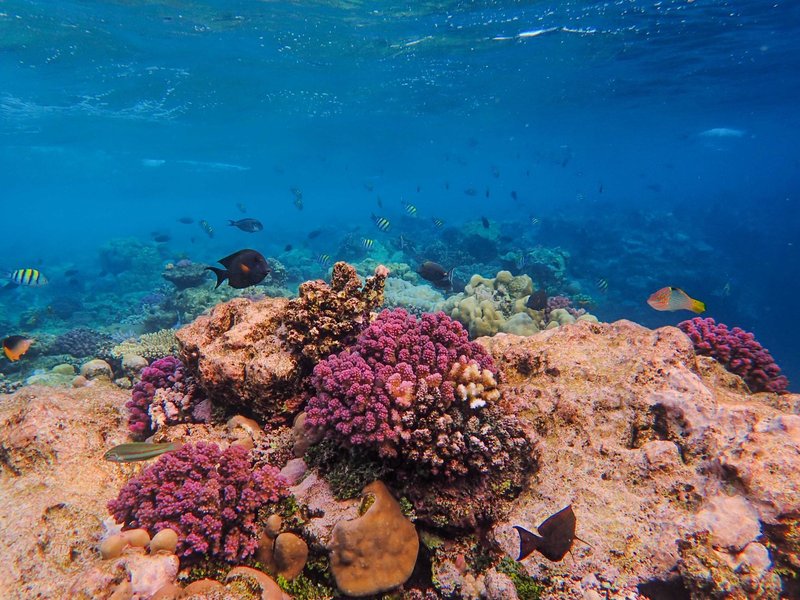
- Hydrothermal vent ecosystems — Entire food webs at deep-sea vents run on chemosynthesis instead of sunlight, with bacteria converting hydrogen sulfide into energy at the base of a chain that supports tube worms and vent crabs thousands of meters down.
- Cephalopod camouflage and problem-solving — Octopuses change skin color and texture in under a second using specialized pigment cells, and lab studies have shown them solving multi-step puzzles that most invertebrates aren’t expected to manage.
- Shark electroreception — Sharks can detect the faint electrical fields generated by another animal’s muscle contractions, letting them locate prey buried under sand without seeing or smelling it.
- Why coral reefs punch above their weight in biodiversity — Reefs cover less than 1% of the ocean floor but support roughly a quarter of all known marine species, a ratio that makes them one of the densest concentrations of life on the planet.
- Whale fall ecosystems — A single whale carcass sinking to the seafloor can support a distinct community of scavengers and specialized bacteria for decades, cycling through stages as the body is stripped down layer by layer.
- Bioluminescence mechanisms — Marine organisms produce light through several unrelated chemical pathways, and depending on the species it’s used to lure prey, startle predators, or find a mate in total darkness.
- Measured effects of microplastics on marine life — Researchers have documented microplastic particles in the digestive tracts of fish, shellfish, and plankton, with laboratory studies linking exposure to reduced feeding and reproduction in several species.
- Sea turtle navigation — Sea turtles can sense the earth’s magnetic field and use it to return to the same nesting beach where they hatched, sometimes decades later and after migrations spanning thousands of miles.
- Kelp forests as carbon storage — Fast-growing kelp forests capture carbon at rates competitive with land forests, and some of that carbon gets exported to the deep ocean when kelp fragments break off and sink.
Botany & Plant Biology
- Engineering more efficient photosynthesis — Photosynthesis wastes a meaningful share of captured energy through a process called photorespiration, and researchers are testing genetically modified crops designed to route around that inefficiency and boost yield.
- Plant communication through mycorrhizal networks — Underground fungal networks connect the root systems of separate plants, allowing them to share nutrients and, in some documented cases, warning signals about insect attacks.
- How carnivorous plants trap insects — Venus flytraps count touches on trigger hairs before snapping shut, requiring a second touch within about 20 seconds to avoid wasting energy on false alarms like raindrops.
- Seed dormancy and germination triggers — Some seeds need a specific stimulus — a cold winter, a wildfire, or passing through an animal’s digestive tract — before they’ll germinate at all, timing their growth to conditions favorable for survival.
- How plant hormones control growth — Auxins direct plants to grow toward light, gibberellins trigger stem elongation, and the interaction between plant hormone classes governs nearly every visible growth decision a plant makes.
- CRISPR in drought-resistant crop breeding — Gene editing is being used to shorten the years-long process of breeding drought tolerance into staple crops like rice and wheat, work that’s become more urgent as growing regions get drier.
- Allelopathy — Some plants release chemical compounds into the soil that actively suppress the growth of nearby competitors, a strategy black walnut trees are especially well known for.
- Photoperiodism and seasonal tracking — Plants measure the length of uninterrupted darkness, not daylight, to determine when to flower, which is why a single stray light source can throw off a greenhouse crop’s bloom schedule.
Zoology & Animal Behavior
- Tool use in crows and problem-solving in octopuses — New Caledonian crows manufacture hooked tools from twigs to extract insect larvae, a level of tool crafting that puts them in league with primates on standard cognition tests.
- Magnetoreception in migratory animals — Birds and sea turtles appear to sense the earth’s magnetic field directly, and the leading theory involves a light-sensitive protein in the eye that responds to magnetic orientation.
- Eusociality in bees and ants — Colonies function almost like a single organism because most individuals forgo their own reproduction to support a single queen, a strategy that only makes evolutionary sense once you account for how closely related colony members are.
- The structure of whale song — Humpback whale songs follow patterns with rules resembling syntax, change over years, and can spread across entire populations, suggesting a form of cultural transmission among whales.
- Hibernation and torpor biology — Hibernating mammals can drop their body temperature and heart rate to a fraction of normal for months, and researchers studying that process are looking for clues relevant to human medicine, including organ preservation.
- Camouflage and mimicry strategies — Some species rely on background-matching camouflage, while others use mimicry to actively impersonate a dangerous species, like the harmless king snake’s resemblance to the venomous coral snake.
- Parental care strategies across species — Parental investment ranges from zero, in species that abandon eggs entirely, to years of care in elephants and great apes, and the variation tracks closely with how vulnerable the offspring are at birth.
- The biology of dog domestication — Genetic and archaeological evidence points to wolves self-domesticating around human settlements over thousands of years, with selection favoring the calmest individuals long before humans were deliberately breeding for traits.
- Bioacoustics in animal navigation — Species from bats to dolphins use echolocation to build a working picture of their surroundings from sound alone, and researchers are still mapping how finely some species can distinguish detail through it.
Biotechnology & Synthetic Biology
- Engineered microbes for biofuel production — Synthetic biologists are modifying bacteria and algae to convert waste biomass directly into usable fuel compounds, aiming to sidestep the land-use problems of crop-based biofuels.
- The cellular agriculture process behind lab-grown meat — Lab-grown meat starts with animal muscle cells grown in a nutrient-rich bioreactor rather than inside a living animal, and current research is focused mainly on cutting production costs enough to compete with conventional meat.
- Gene drives for invasive species eradication — The same gene drive technology being tested against malaria mosquitoes is being explored for eradicating invasive rodents on islands, where they’re a leading cause of native bird extinctions.
- Biosensors for real-time monitoring — Engineered biological sensors can detect specific pathogens or pollutants and report the result almost instantly, a much faster turnaround than sending samples to a lab.
- 3D bioprinting of tissue — Bioprinters layer living cells in precise patterns to build tissue scaffolds, and while full organ printing is still out of reach, printed skin and cartilage are already in clinical testing.
- CRISPR-based diagnostics — Diagnostic platforms built on CRISPR, like SHERLOCK, can detect a specific pathogen’s genetic material in a sample within an hour, a speed advantage that mattered enormously during COVID-19 testing shortages.
- The engineered biology behind vertical farming — Vertical farms pair controlled indoor environments with crop varieties bred or edited for compact growth and faster cycles, squeezing more harvests out of a fraction of the land.
- De-extinction and reviving lost traits — Projects aiming to bring back traits from extinct species, like the woolly mammoth’s cold tolerance, work by editing those traits into a living relative’s genome rather than cloning the extinct animal directly.
Where to Go From Here
Don’t try to read every list on the internet before you commit to something. Pick one topic from here that made you want to know more after reading a single sentence about it, pull up two or three real sources, and see if it holds up after twenty minutes of actual reading.
If it does, you’ve got your topic. If it doesn’t hold your attention that long, that’s useful information too — better to find out now than three pages into a draft.