Table of Contents
- TLDR
- Why Romania Has More Caves Than Anywhere Else in Europe
- Apuseni Mountains: the cave capital
- Bucegi and Piatra Craiului: caves you can pair with a hike
- Gorj County: the caves everyone skips (and shouldn’t)
- Comparison: which cave for which trip
- Pairing caves with the rest of your itinerary
- Getting there from Cluj, Bucharest, or Brașov
- What to actually bring
TLDR
Romania has more than 12,000 documented caves — more than any other country in Europe — but only a handful are set up for visitors, and they cluster in three regions. If you only have time for one: Bear’s Cave (Peștera Ursilor) in the Apuseni Mountains gets you the most dramatic formations with the least effort. If you want something no other country can offer, it’s Scărișoara, a 3,000-year-old underground glacier you walk into on a summer afternoon. Bring a jacket regardless of the season — cave interiors sit around 10°C (50°F) year-round, and no amount of August heat outside changes that.
Why Romania Has More Caves Than Anywhere Else in Europe
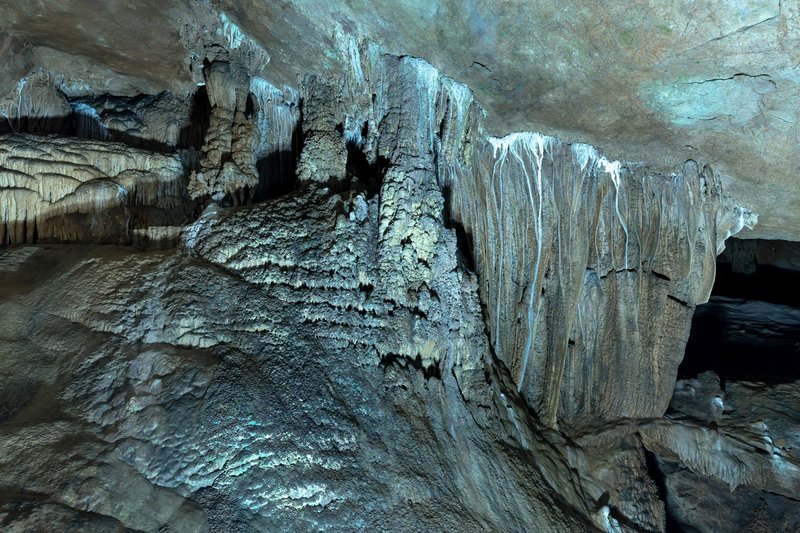
The short answer is limestone. The Apuseni, Bucegi, and Southern Carpathians sit on some of the most extensive karst terrain in Europe — soft, water-soluble rock that rainwater slowly dissolves into underground channels over tens of thousands of years. Romania’s speleological society has catalogued over 12,000 of these systems, and the Apuseni range alone holds an estimated 1,500 — most never developed for tourism, some not even fully mapped.
That scale is also why the existing “best caves” lists online feel thin. Most name-drop the same three or four caves with a photo and a sentence. What follows groups the ones actually worth visiting by region, so you can build a route instead of chasing pins on a map.
Apuseni Mountains: the cave capital
The Apuseni range straddles Bihor, Alba, and Cluj counties and holds every cave most people have actually heard of. It’s also the easiest region to build a multi-cave day around, since several of these sit within an hour of each other.
Bear’s Cave (Peștera Ursilor)
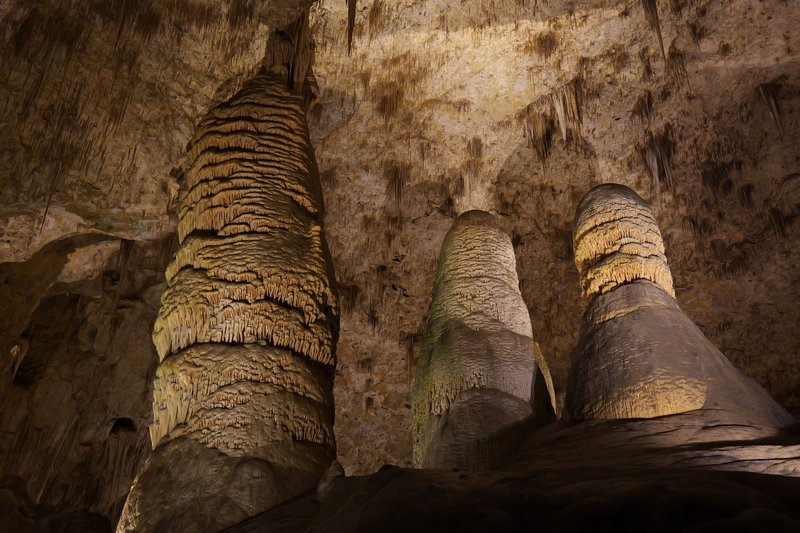
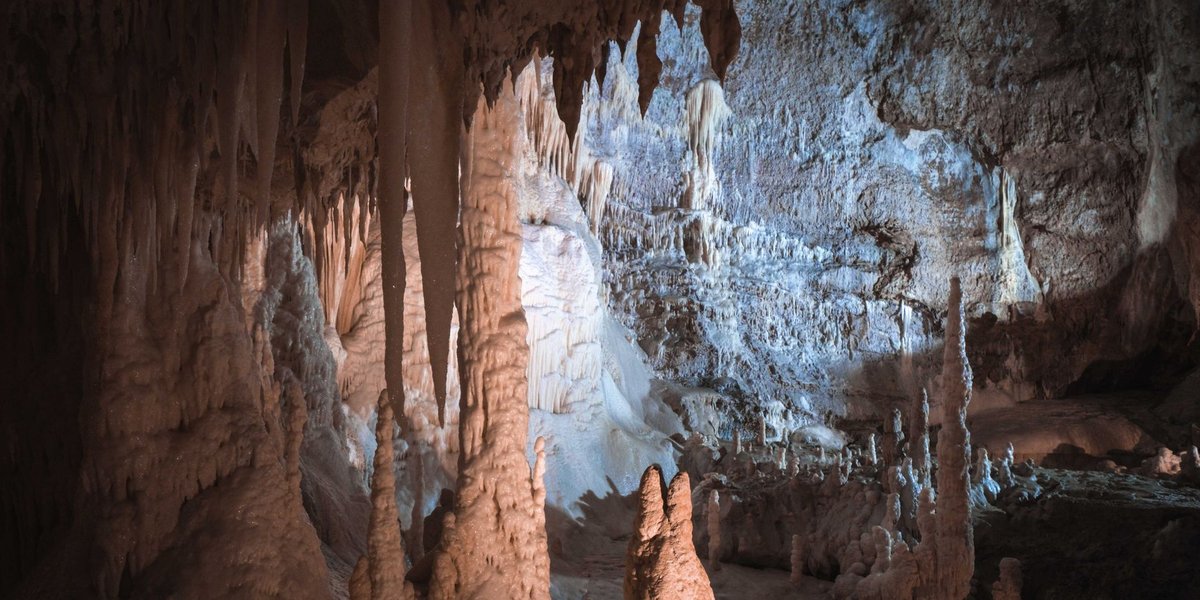
Near Chișcău, Bihor County. A quarry crew found this one by accident in 1975, dynamiting for limestone and breaking straight into a chamber full of cave bear bones — the site has since produced remains from well over a hundred individual bears, along with a skull cast in calcite where it fell. It opened to the public in 1980 and is now the most-visited show cave in the country, open Tuesday through Sunday, 10:00 to 17:00. The guided route runs through galleries of stalactites and flowstone rather than the fossil chamber itself, which stays closed to protect it. Go early or expect to queue behind a tour bus in July and August.
Scărișoara Ice Cave
Near Gârda de Sus, Alba County. This is the one that makes Romania’s cave list different from every other country’s. A shaft drops into a chamber holding an ice block estimated at more than 3,000 years old — one of the largest and oldest cave glaciers in Europe. Entry runs about 13 lei, groups of up to 50 go down on the hour, and the visit itself lasts 30 to 40 minutes. No advance booking, no family discount, and the temperature inside stays close to freezing regardless of what it’s doing outside — this is the one cave on this list where the jacket isn’t optional.
Meziad Cave
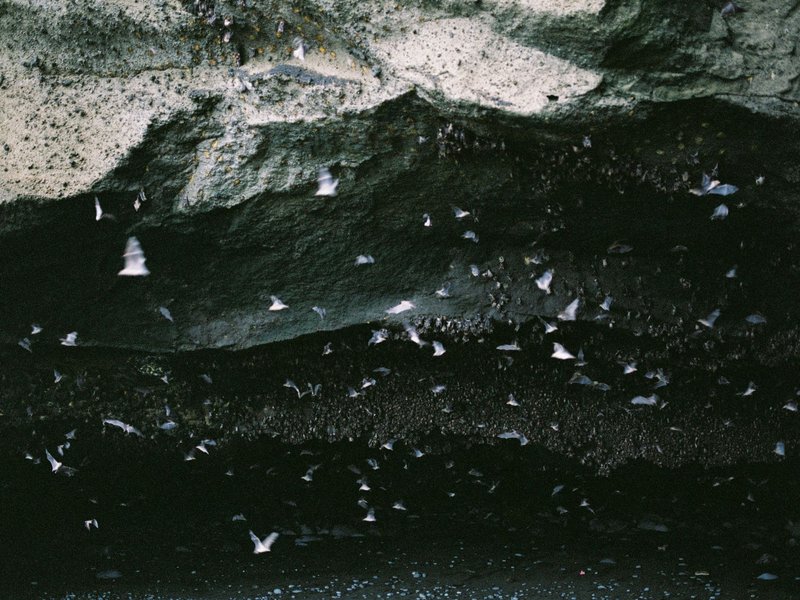
Bihor County, roughly 40 minutes from Bear’s Cave. Meziad briefly held the title of longest cave in Romania before Comarnic Cave overtook it in 1934, and it’s kept a different kind of record since: one of the country’s largest hibernating bat colonies, split across two chambers the guides call the Bats’ Rooms — one used in summer, one in winter, so the colony never has to share space with cave tourism traffic. Underground sites like this one are exactly what the international bat treaty EUROBATS flags as critical and chronically under-protected, since a colony can be disturbed by a single ill-timed visit during hibernation. Go with a licensed guide and you won’t be anywhere near the roosting chambers during the sensitive months.
Wind Cave (Peștera Vântului)
Near Șuncuiuș, on the Crișul Repede river. At almost 52 kilometers of mapped passages, this is the longest cave in Romania by a wide margin — and it’s not open to casual visitors. It’s caver-only, reachable with a permit and a caving club, named for the strong, seasonally reversing draft you can feel at the entrance. There’s been talk for years of developing a show-cave section, but for now this is the entry on the list for readers asking “where’s the real wild caving,” not the family day trip.
Cetățile Ponorului and Coiba Mare
Two more inside Apuseni Nature Park, best visited as a hiking add-on rather than a standalone stop. Cetățile Ponorului has the largest cave entrance in the country, opening into a natural amphitheater carved by a sinking river over roughly 5 kilometers. Coiba Mare’s entrance is even more theatrical — 47 meters tall and 74 meters wide — and its underground river vanishes after 386 meters before resurfacing downstream at a spring called Izbucul Tăuz. Neither has a ticket booth; both require a marked trail and reasonably fit legs.
Bucegi and Piatra Craiului: caves you can pair with a hike
Ialomița Cave (Peștera Ialomiței)
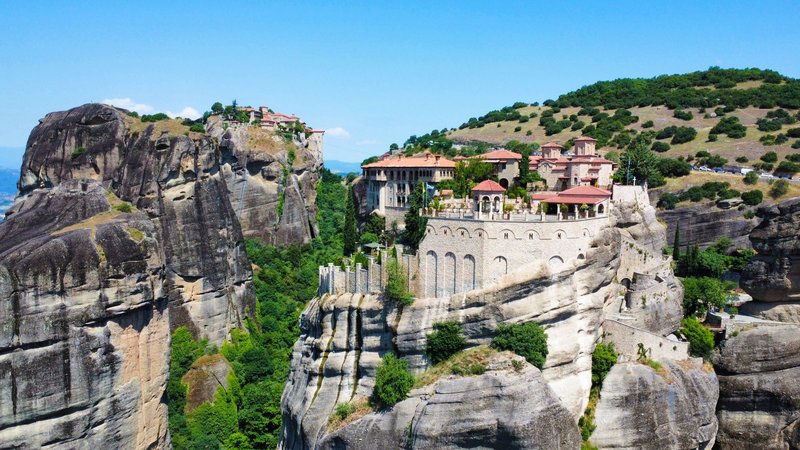
Moroeni, Dâmbovița County, at 1,530 meters altitude inside Bucegi Natural Park. A small monastery sits at the entrance, and admission is effectively donation-based rather than ticketed. What makes this one worth the detour is the setting more than the formations — you’re already up in Bucegi hiking country, and the cave mouth opens right onto the trail network, so it slots naturally into a day that also includes a ridge walk or a cable car up from Bușteni.
Dâmbovicioara Cave
On the Piatra Craiului side, near Bran. Ticket runs 15 lei, and the hours shift by day — 9:30 to 17:00 Monday through Thursday, 9:30 to 16:00 Friday, and a longer 9:00 to 19:00 window on weekends, which matters if you’re trying to fit it in after Bran Castle on a Saturday. It’s a shorter, easier visit than Bear’s Cave or Scărișoara, which makes it the better choice if you’ve got kids who are already tired from the castle.
Gorj County: the caves everyone skips (and shouldn’t)
Gorj sits further south, off the usual Transylvania loop, which is exactly why these two barely show up on other lists — despite one of them being a genuine first for the country.
Women’s Cave (Peștera Muierilor)
Baia de Fier. This was the first cave in Romania to get electric lighting for tourism, and it’s earned the attention: excavations here turned up cave bear remains alongside a human skull, giving the site real paleontological weight beyond the usual stalactite tour. Peer-reviewed dating work on European cave bear remains puts the species’ extinction around 24,000 to 28,000 years ago — sites like Muierilor are part of the evidence base for that timeline, not just a scenic backdrop.
Polovragi Cave
A short drive from Muierilor, also in Gorj. The full system runs past 10 kilometers, but only about 800 meters are open to the public — a compact, well-lit loop that pairs naturally with Muierilor as a two-cave day since they’re close enough to hit both before lunch.
Comparison: which cave for which trip
| Category | Cave | Why |
|---|---|---|
| Best ice cave | Scărișoara | A 3,000-year-old glacier you can walk into without technical gear |
| Best for families | Bear’s Cave | Well-lit, well-marked, short enough for kids, open year-round |
| Best show cave overall | Meziad Cave | Real scale, real bat colony, still an easy guided walk |
| Best for serious cavers | Wind Cave (Peștera Vântului) | 52 km of passages, permit and club required, no boardwalk in sight |
| Best paired with a hike | Ialomița Cave | Sits directly on the Bucegi trail network |
| Most underrated | Women’s Cave | Fossil history most visitors never hear about, a fraction of the crowds |
Pairing caves with the rest of your itinerary
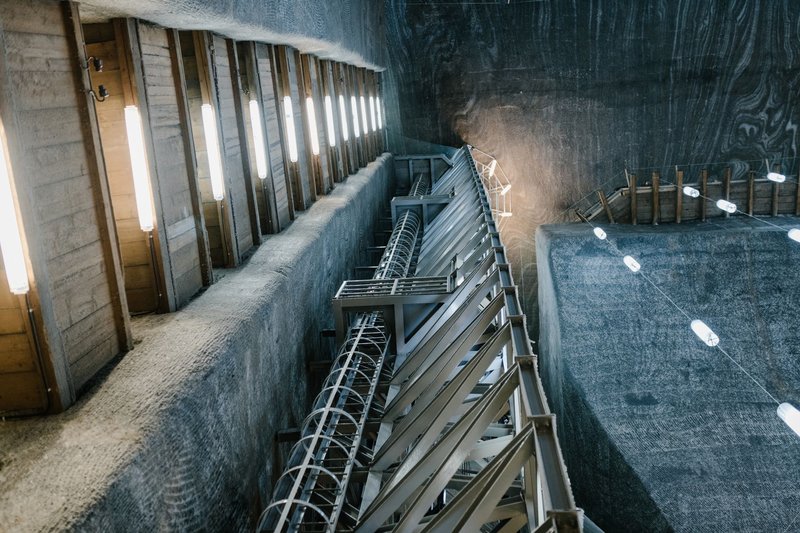
If you’re routing through the Apuseni region, don’t skip Turda Salt Mine even though it’s not technically a cave — it’s the same underground-Romania instinct taken to its logical extreme. The Rudolf Mine chamber, 42 meters down, has a Ferris wheel, bowling lanes, and a boating lake, alongside an Echo Chamber where sound reportedly reverberates up to 20 times. It’s open daily, 9:00 to 17:00, last entry at 16:00, and it’s close enough to Cluj-Napoca to slot in the same day as an Apuseni cave run.
Bran Castle is the other obvious pairing, especially if you’re already routing toward Dâmbovicioara Cave — the two are close enough that “castle in the morning, cave after lunch” is a realistic plan rather than a stretch.
Getting there from Cluj, Bucharest, or Brașov
From Cluj-Napoca, the Apuseni cluster (Bear’s Cave, Scărișoara, Meziad) is the natural target — figure 1.5 to 2.5 hours by car depending on which cave, since the roads through the mountains are winding rather than fast. Public transport here is thin; a rental car or an organized day tour is the realistic option for most of these.
From Brașov, Dâmbovicioara Cave and Ialomița Cave are both within striking distance of a Bucegi or Piatra Craiului day, roughly an hour to 90 minutes depending on the route and season.
From Bucharest, Ialomița Cave is the closest option at around two hours, while Gorj’s caves (Women’s Cave, Polovragi) sit further southwest — closer to 3.5 hours, better done as an overnight than a day trip.
What to actually bring
Every developed cave on this list sits around 10°C inside no matter the season, so a layer you’d wear on a cool spring evening is non-negotiable even in the middle of a Romanian heatwave. Wear shoes with actual grip — cave floors are often damp stone or uneven boardwalk, not the flat concrete you’d expect from a museum. And if you’re heading to Bear’s Cave in July or August specifically, go early: it’s the most-visited cave in the country, tour groups arrive on a schedule, and there’s no advance booking to beat the line with.