TLDR
Tuvalu isn’t a caving destination, and there’s a reason for that: it’s built from coral, not the volcanic rock or limestone karst that usually produces cave systems. The one exception that matters is the Fire Caves of Nanumanga, an underwater chamber 37 to 46 meters below the surface off Nanumanga island. Divers found it in 1986 while chasing a local legend about a house beneath the sea, and what they found — soot-blackened walls and burned coral fragments — points to human fire use in a cave that’s been underwater for at least 8,000 years. That’s older than the accepted timeline for when people reached this part of the Pacific, and nobody’s fully explained it. You can’t casually visit. And if you’ve seen “Falemauga Caves” mentioned alongside Tuvalu, that one’s actually in Samoa — more on that mix-up below.
Table of Contents
- What the Fire Caves of Nanumanga Are
- The 1986 Discovery and the Legend That Led to It
- The Fire Evidence, and Why It’s a Problem
- Why Tuvalu Barely Has Any Caves
- Can You Actually Dive or Visit the Caves?
- Not to Be Confused With: Falemauga Caves in Samoa
What the Fire Caves of Nanumanga Are
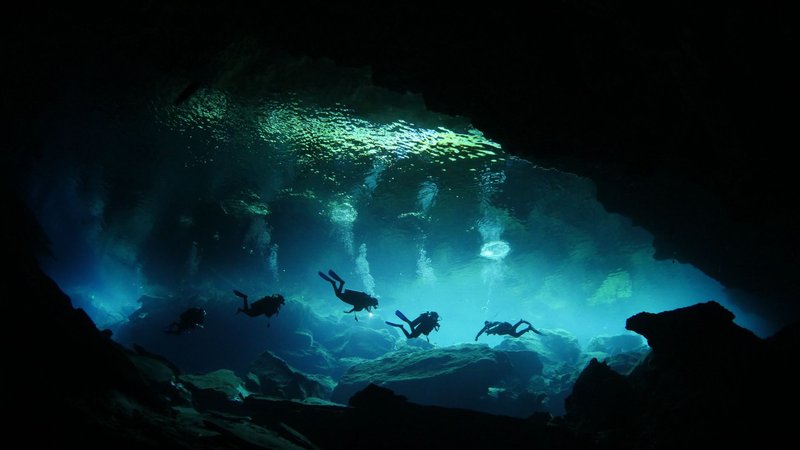
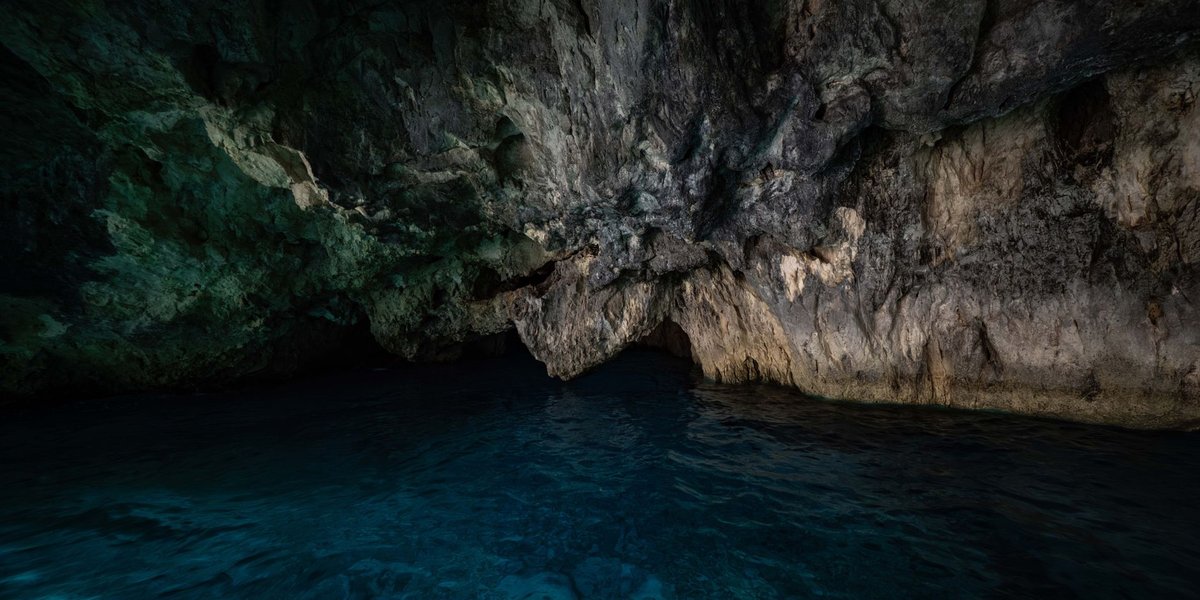
Nanumanga is one of Tuvalu’s nine islands, a low coral atoll roughly 700 kilometers northwest of the country’s more famous capital atoll, Funafuti. Cut into the coral cliff on its northern shore, at a depth of 37 to 46 meters, is a cave system large enough to walk through — if you could walk through water. Divers describe multiple chambers connected by tunnels, with air pockets in places and a floor scattered with coral debris.
It’s the only documented cave system in Tuvalu with any real profile. There’s no second contender in the country’s geology — nothing comparable shows up in surveys of the other eight islands, which is itself a clue about how these atolls formed (more on that below). When people search “caves in Tuvalu,” this is what they’re actually asking about, whether they know the name or not.
The 1986 Discovery and the Legend That Led to It
Nanumanga has an old local story about a “house under the sea” — a submerged structure somewhere off the reef edge. In 1986, two scuba divers decided to test it rather than dismiss it, and diving down the coral wall, they found an entrance leading into a genuine cave system dozens of meters below the surface.
That’s a good story on its own. What made it a scientific one is what they found inside.
The Fire Evidence, and Why It’s a Problem
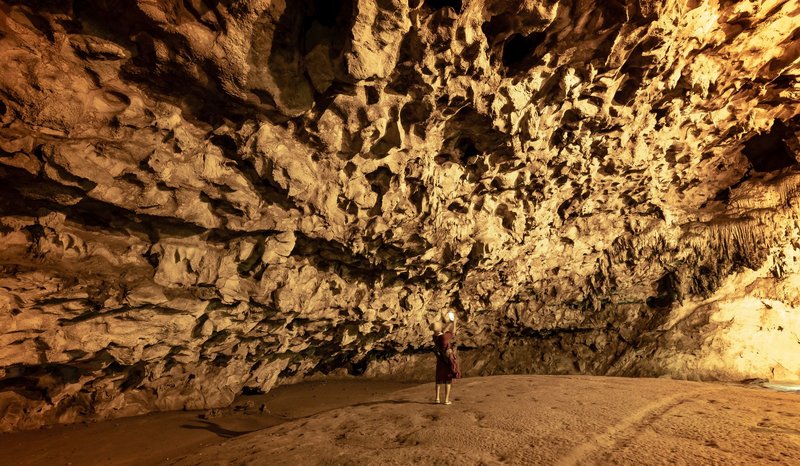
The walls and ceiling of the cave carry dark, sooty patches. The floor has fragments of charred coral. Neither happens naturally at that depth — fire needs oxygen and dry air, and this cave has been full of seawater for millennia. The only way soot gets on a cave ceiling 40 meters underwater is if someone put it there while the cave was still dry and above sea level.
Sea level reconstructions put the last point at which this cave could have been dry land at more than 8,000 years ago. That means someone was burning fires inside it, at minimum, that long ago — which is where the real controversy sits. The accepted archaeological picture of Pacific settlement centers on the Lapita expansion, the seafaring culture whose pottery shows up across Vanuatu, Fiji, and Tonga starting around 3,000 years ago, spreading east from the Bismarck Archipelago. Micronesia, the region Tuvalu sits closer to culturally and geographically, has its own separate settlement routes, but even the earliest of those estimates fall well short of 8,000 years. The National Science Foundation has funded research specifically aimed at refining the timing of human settlement across different Pacific regions, because the dates keep shifting as new sites turn up — and Nanumanga is one of the more inconvenient data points on that list.
Nobody has resolved it. It could mean people reached this stretch of the Pacific thousands of years before any currently accepted model allows for. It could mean the sea-level dating on the cave itself needs revisiting. Either way, it’s the actual hook of this story, and it’s the part most casual write-ups skip past on their way to describing the dive.
Why Tuvalu Barely Has Any Caves
Caves usually form one of two ways: water dissolving limestone bedrock over a long stretch of geological time (karst caves, the kind you find in places like Kentucky or Slovenia), or lava tubes left behind by flowing volcanic rock (the kind common in Hawaii). Tuvalu has neither situation in any real supply.
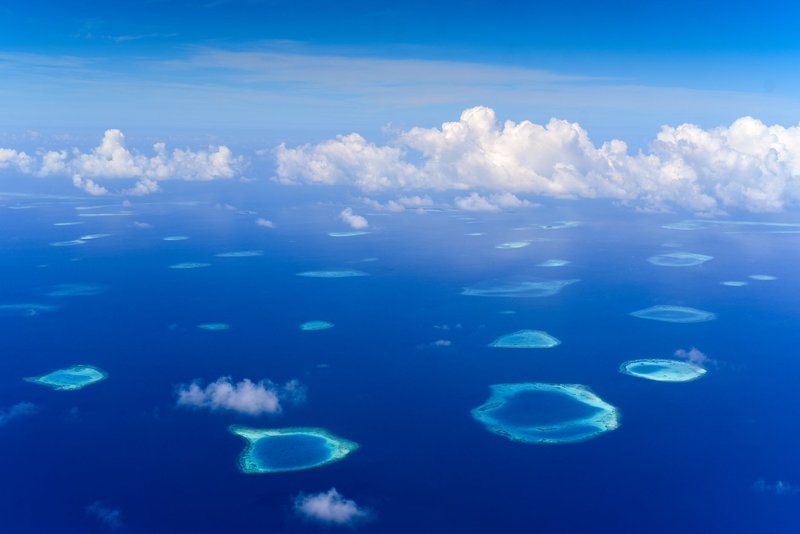
Tuvalu’s islands are reef atolls, not the tops of active or recently active volcanoes. The pattern is the classic one Charles Darwin first described: a volcanic island forms, a fringing coral reef grows around its shore, and over millions of years the volcano itself subsides and erodes away entirely, leaving only the ring of reef and the low coral islets built on top of it. A geological study of nearby Funafuti atoll found that these islets are built up episodically, from storms depositing large coral blocks and rubble onto the reef flat over roughly the last 1,100 years — young, loose, and shallow, nothing like the thick, ancient limestone beds that dissolve into cave networks over millions of years elsewhere.
That’s why Nanumanga’s cave is such an outlier: it required an unusual combination of an eroded reef wall, a submerged air pocket, and a sea level low enough, at some point in the past, to leave it dry. It’s not the kind of formation you’d expect to find twice on the same nine-island chain, and so far nobody has.
Can You Actually Dive or Visit the Caves?
Not casually, no. Tuvalu has essentially no dive tourism infrastructure — no resort dive shops, no established charter operators built around this site, and the country receives only a few thousand visitors a year total, most of them for government or aid work rather than tourism. Getting to Nanumanga itself typically means a boat trip from Funafuti, since inter-island flights are limited.
The depth is the bigger obstacle. At 37 to 46 meters, the cave sits at or beyond the standard recreational scuba limit of 40 meters, which puts a real dive inside it into technical-diving territory: specialized gas mixes, decompression planning, and cave-diving certification, not a resort checkout dive. Any account describing it as an easy add-on for casual divers is skipping over what that depth and setting actually require. Realistically, this is a site for organized scientific or technical-diving expeditions, not a stop on a Pacific island-hopping trip.
Not to Be Confused With: Falemauga Caves in Samoa
If you’ve seen “Falemauga Caves” turn up in a search near “Tuvalu caves,” that’s a geography mix-up worth clearing up directly: Falemauga Caves are lava-tube caverns on Upolu island, part of Samoa, roughly 9 kilometers inland from the capital, Apia. They’ve been documented since the 1940s in the Journal of the Polynesian Society as a genuine, walkable lava-tube system — the kind of cave Tuvalu’s coral geology simply can’t produce.
Samoa is volcanic. Tuvalu is coral. Different island, different country, different type of cave entirely — and if a “Tuvalu caves” list includes Falemauga, that’s a sign it was assembled without much scrutiny. The Fire Caves of Nanumanga remain the one cave story that’s actually, correctly, Tuvalu’s.