TLDR
Albania punches well above its size on natural resources. It’s one of the world’s top chromite producers, sits on the Patos-Marinza field — the largest onshore oil deposit in mainland Europe — and generates the overwhelming majority of its electricity from hydropower, not fossil fuels. Add copper, nickel, decent farmland, and a mining sector that’s become the test case for the country’s anti-corruption push, and you get an economy still shaped, for better and worse, by what’s under its mountains.
Table of Contents
- Chromite: Albania’s signature export
- Oil and natural gas
- Hydropower and the electricity grid
- Copper and nickel
- Arable land and agriculture
- Timber and forests
- Fisheries and coastal waters
- Water resources
- What resource wealth actually means for the economy
Chromite: Albania’s signature export
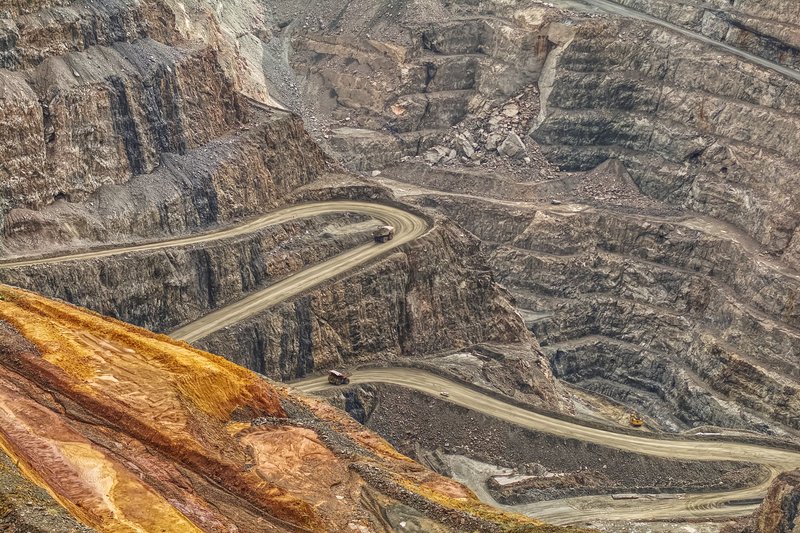
Albania’s northeastern mountains sit on some of the highest-grade chromite deposits on the planet. In the 1980s the country was briefly the world’s largest chromite producer, mining over a million tons a year before the industry collapsed alongside the communist state that built it. It never fully recovered its old volume, but it never left the top tier either — Albania now ranks among the world’s leading chromite producers, trailing giants like South Africa, Turkey, and Kazakhstan on raw tonnage but beating almost everyone on ore quality.
That quality is the actual story. Albanian chromite regularly runs above 38% Cr2O3, which puts it in the “direct shipping ore” category — high-grade enough to sell straight to steelmakers without the extra processing lower-grade ore needs. AlbChrome, the dominant operator around Bulqizë and Batra, has consolidated most of the country’s chromite mining and processing under one roof, turning what used to be a fragmented Soviet-era operation into something closer to an integrated export business. Chromium still makes up the majority of Albania’s domestic mining output by value, more than copper and nickel combined.
Oil and natural gas
Albania is the only country in mainland Europe with a major onshore oil field, and it’s not a small one. The Patos-Marinza field in the southwest — discovered under Italian occupation in the 1920s and expanded heavily during the communist era — is Europe’s largest onshore oil deposit outright. Output has never matched the scale of offshore North Sea fields, and decades of underinvestment left much of the infrastructure dated, but Canadian operator Bankers Petroleum (now part of China’s Geo-Jade Petroleum) has spent years modernizing extraction with steam-injection techniques designed for the field’s notoriously heavy, viscous crude.
Natural gas plays a smaller domestic role, but Albania’s geography matters more than its production numbers here. The Trans Adriatic Pipeline (TAP) crosses the country on its way from Azerbaijan’s Shah Deniz field to Italy, making Albania a transit link in Europe’s push to diversify gas supply away from Russia — a role that’s grown more strategically loaded since 2022. The country also has real offshore exploration potential in the Adriatic and Ionian seas that so far remains mostly untapped.
Hydropower and the electricity grid
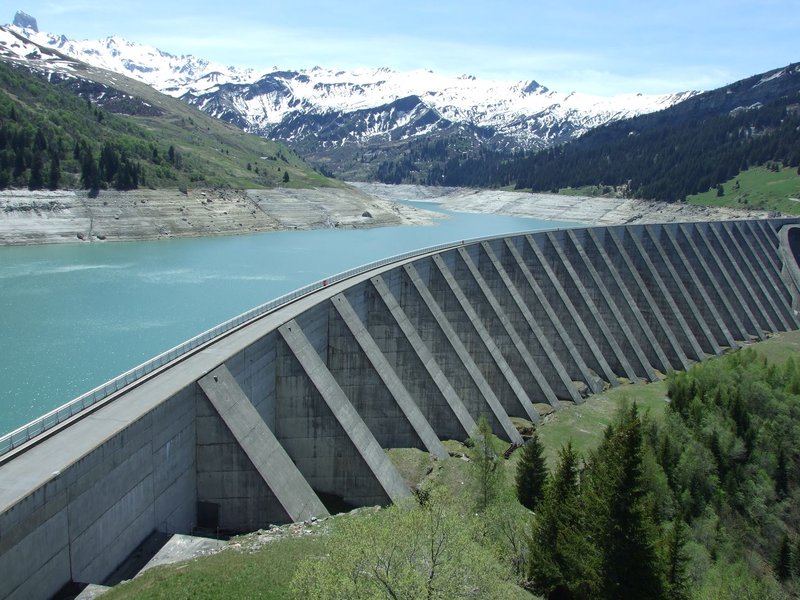
This is where Albania looks genuinely unusual next to its neighbors. The country’s electricity generation is overwhelmingly hydropower — rivers like the Drin, fed by steep terrain and heavy Balkan rainfall, do almost all the work. According to IRENA’s country energy profile, renewables already cover close to half of Albania’s final energy consumption, and the government’s revised national energy plan targets nearly 60% by 2030 — with solar and wind meant to fill the gap hydropower alone can’t cover.
The catch is that hydropower dependence cuts both ways. In wet years, Albania exports surplus electricity to neighbors. In drought years, it imports at a premium, because there’s very little thermal backup to fall back on. That volatility has pushed both the government and private investors toward solar projects in the south, where sun exposure is strong and land is cheap, as a hedge against the next dry summer.
Copper and nickel
Copper mining in Albania centers on the Mirdita ophiolite belt in the north, geology so distinctive that it’s studied internationally as a textbook example of ancient oceanic crust pushed up onto land. The same belt hosts most of the country’s chromite too, which is part of why the north has been mining country for a century straight. Nickel and nickel-silicate deposits run along the eastern border, from the northeast down through the southeast, though extraction there has been smaller-scale and less consistently exploited than chrome or copper.
Neither metal generates the export volume chromite does, but both matter for a specific reason: they’re the minerals Albania keeps citing in its pitch to become a more serious player in Europe’s critical raw materials supply chain, as the EU looks to reduce dependence on Chinese-processed metals for the energy transition. A complete list of Albania’s minerals offers a detailed breakdown of the country’s full endowment.
Arable land and agriculture
Roughly a quarter of Albania’s land is farmable, concentrated in the western lowlands and the Myzeqe plain south of Tirana, where alluvial soil and a Mediterranean climate support olives, grapes, citrus, and vegetables. It’s not a resource that makes headlines the way chromite or the Patos-Marinza field does, but it’s arguably more important to daily life — agriculture still employs a large share of the rural workforce, and small family farms remain the backbone of food production outside the coastal tourism belt.
Albanian olive oil and wine production have both picked up serious momentum in the last decade, helped by EU proximity and a wave of younger producers returning from abroad with capital and export ambitions. The land is there; what’s changed is who’s farming it and where the product ends up.
Timber and forests
Forests cover roughly a third of Albania, concentrated in the mountainous interior — beech, oak, and pine dominate at different elevations. Illegal logging was a genuine crisis through the 2000s and early 2010s, bad enough that Albania imposed a nationwide logging moratorium in 2016 that’s been renewed repeatedly since. The forests aren’t a major commercial export resource today the way they were in past decades; they’re now managed more as a conservation and watershed-protection asset, since deforested slopes in this terrain erode fast and silt up the same rivers the hydropower sector depends on.
Fisheries and coastal waters
Albania’s roughly 220-mile Adriatic and Ionian coastline supports a modest but real fishing industry, plus lagoon fisheries at spots like Karavasta and Butrint that have been worked for centuries. It’s a smaller piece of the resource picture than minerals or energy, but the lagoons in particular are ecologically significant — Karavasta Lagoon is a Ramsar-listed wetland and one of the last major nesting sites in the Mediterranean for the Dalmatian pelican, a species the IUCN still lists as Near Threatened.
Water resources
Beyond powering the grid, Albania is genuinely water-rich by regional standards — heavy precipitation, steep rivers, and large natural lakes including Shkodër (shared with Montenegro) and Ohrid (shared with North Macedonia), one of the oldest lakes on Earth. That abundance is a quiet strategic asset in a part of Europe where water stress is a growing concern for neighbors with drier climates or heavier agricultural demand. It’s also the resource most directly tied to everything else on this list: the same rivers that irrigate the Myzeqe plain are the ones spinning the turbines that keep the lights on.
What resource wealth actually means for the economy
None of this adds up to an economy defined purely by extraction — Albania’s energy sector, hydrocarbons and hydropower combined, accounts for a mid-single-digit share of GDP, not the outsized share you’d see in a true resource economy like Azerbaijan or Kazakhstan. But mining and energy carry weight beyond their GDP line because of where the money and the corruption risk have historically overlapped.
That’s the reason Albania joined the Extractive Industries Transparency Initiative, the international standard requiring governments to publish what companies actually pay them for extraction rights. EITI reporting has pushed Albania toward publishing beneficial-ownership data for mining licenses and disclosing commodity trading revenue that used to stay opaque — reforms that matter as much for the country’s EU accession case as for the mining sector itself. Brussels has been explicit that governance in exactly these kinds of resource-rich, historically corruption-prone sectors is part of what gets assessed on the path to membership.
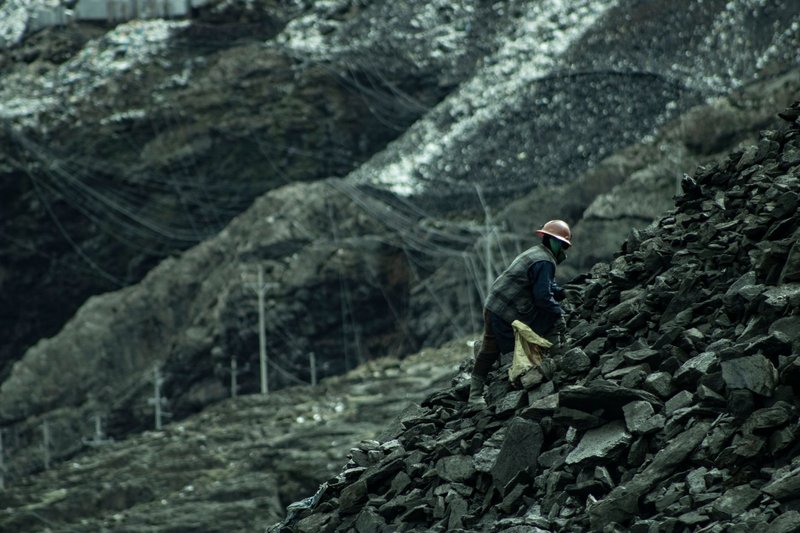
The environmental side of that ledger is still being written. Chromite and copper mining around Bulqizë and the Mirdita belt have left real legacy pollution, and the 2016 logging moratorium exists precisely because unmanaged extraction outran the country’s ability to regulate it. Albania’s resource story going forward isn’t really about finding more chromite or squeezing more oil out of Patos-Marinza — it’s about whether the transparency and environmental reforms of the last decade hold once EU accession pressure, and the scrutiny that comes with it, eventually eases.