Oregon’s wealth has always been the kind you can stand in. Half the state is forest. Two-thirds of its electricity comes from rivers. It mines a gritty mineral so rare that, for a stretch of the 20th century, Oregon was the only place in the United States producing it commercially.
Most pages on this topic scatter the facts across economy articles, agency portals, and university degree pages. Here’s the whole picture in one place, sorted by resource, with the numbers that actually mean something.
Table of Contents
- Quick Facts
- Forests and Timber
- Water and Hydropower
- Fisheries
- Minerals and Mining
- Agriculture and Soil
- Conservation: The Rules That Keep It Going
- Why It Matters
Quick Facts
| Resource | The headline number |
|---|---|
| Forests | About 30 million acres — roughly half the state is forested |
| Timber rank | Long-running leader in U.S. softwood lumber production |
| Hydropower | Around two-thirds of Oregon’s electricity comes from dams |
| Rivers and streams | More than 100,000 miles of flowing water |
| Signature mineral | Emery — Oregon was once the sole U.S. commercial source |
| Top farm products | Greenhouse/nursery crops, hay, grass seed, cattle, wine grapes |
| Key law | The Oregon Forest Practices Act of 1971 |
Forests and Timber
Start with the trees, because Oregon does.
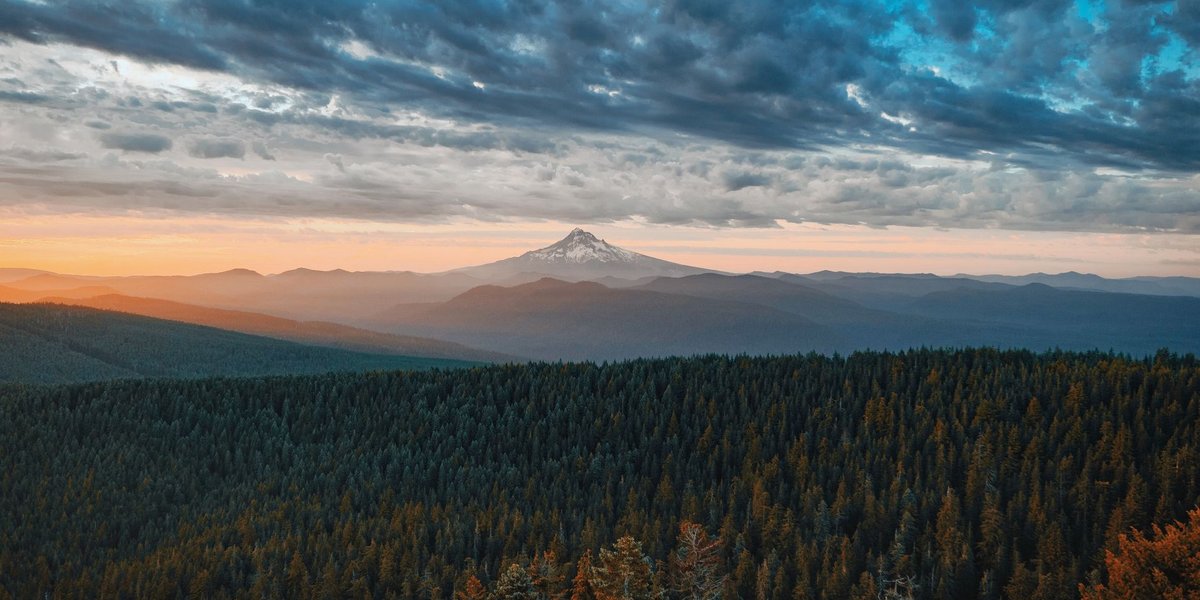
About half of Oregon is covered in forest — roughly 30 million acres — and the western slope grows some of the most productive timberland on the continent. The wet maritime climate west of the Cascades, all that fog and rain rolling in off the Pacific, pushes Douglas fir to commercial size faster than almost anywhere else in the country. East of the Cascades the forests shift to ponderosa pine in a drier, more open landscape.
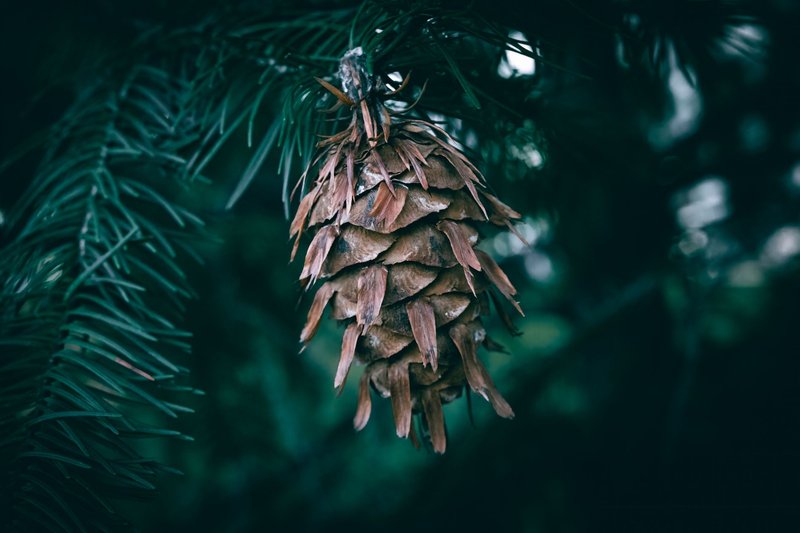
This is the resource that built the state’s identity. Oregon has been a national leader in softwood lumber production since the 1930s, when it overtook Washington, and timber towns from Coos Bay to Roseburg grew up around mills that turned those firs into framing for the country’s houses. When you walk through a stick-built home almost anywhere in the U.S., there’s a decent chance you’re standing inside an Oregon tree.
The industry isn’t what it was at its mid-century peak. Mechanization, mill closures, and the spotted owl fights of the early 1990s reshaped it. But timber and wood products still anchor rural Oregon’s economy, and the state remains near the top of national lumber output. The U.S. Forest Service manages large blocks of that forestland, which means decisions about Oregon timber get made partly in Washington, D.C.
Water and Hydropower
If forests are Oregon’s identity, water is its engine.
The state holds more than 100,000 miles of rivers and streams, and the big one is the Columbia, carving the border with Washington. Dam it, and you get electricity at a scale that reshaped the Pacific Northwest. Bonneville Dam, finished in 1938, was the first federal dam on the Columbia, and the network that followed turned falling water into the region’s dominant power source.
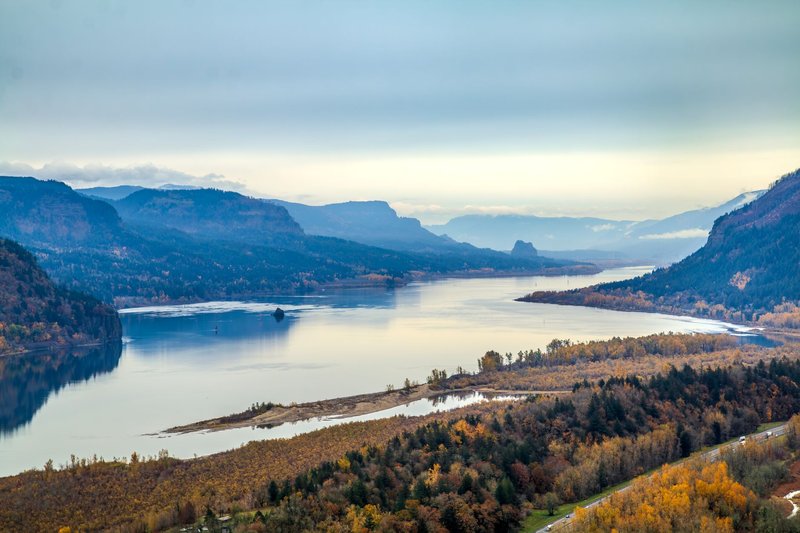
Hydroelectricity supplies roughly two-thirds of the electricity generated in Oregon, a share most states can’t touch. According to the U.S. Energy Information Administration, that hydro backbone makes Oregon’s grid one of the lowest-carbon in the nation before you even count the wind farms going up along the Columbia Gorge. Cheap, clean power has its own gravitational pull: it’s part of why energy-hungry data centers have planted themselves in places like The Dalles.
Water here is also a fight, not just a faucet. The same dams that generate power block salmon runs, and the same rivers irrigators want in the dry eastern basins are the rivers fish and tribes depend on. The Klamath Basin near the California line has spent decades as a flashpoint over who gets the water in a drought year.
Fisheries
Oregon’s 360-odd miles of coastline open onto some of the richest fishing grounds in the country.
Dungeness crab is the marquee catch — it routinely tops the list as the state’s most valuable commercial fishery, hauled in by a fleet that works the winter ocean in some genuinely brutal conditions. Pink shrimp, groundfish like rockfish and sole, albacore tuna, and oysters round out a working seafood economy spread across ports from Astoria to Brookings.
Then there’s salmon, which is less a fishery than a keystone. Chinook, coho, and steelhead are woven into the state’s ecology, its tribal treaty rights, and its identity. Many runs are listed as threatened or endangered, and a large share of Oregon’s water and dam policy ultimately circles back to keeping salmon alive. The National Oceanic and Atmospheric Administration tracks the protected populations and the recovery plans, and those plans shape what happens upstream for hundreds of miles.
Minerals and Mining
Oregon will never be confused with Nevada or Montana on a mining map. It has no major gold or copper industry. What it has instead is a quietly weird mineral portfolio.
The everyday workhorses come first: sand, gravel, and crushed stone — the unglamorous construction aggregates that, by sheer tonnage and dollar value, make up most of Oregon’s mineral output every year. Boring, essential, and the same story in most states.
The interesting part is the specialties. Oregon has been the only U.S. commercial producer of emery, the natural abrasive grit you’ve felt on an emery board or sandpaper — and like other non-foliated metamorphic rocks, it owes its bite to a dense, unlayered crystalline structure rather than any visible banding. It also produces industrial minerals like diatomite (fossilized algae used in filters and abrasives), perlite, pumice, and zeolites. And then there’s natural gas: the Mist Gas Field in the northwest corner was for decades Oregon’s only commercial gas field, and it later found a second life as an underground storage reservoir, pumping gas into depleted formations to bank it for winter demand. The U.S. Geological Survey catalogs this mix of construction aggregate and oddball industrial minerals year by year.
Agriculture and Soil
Drive Oregon and the farmland changes character every hour.
The Willamette Valley, a flat, fertile trough between the Coast Range and the Cascades, is the agricultural heart. The volcanic and alluvial soils plus a long mild growing season make it freakishly versatile: it grows the overwhelming majority of the country’s grass seed, a huge share of its hazelnuts, plus berries, hops, Christmas trees, and the cool-climate Pinot Noir grapes that put Oregon wine on the global map.
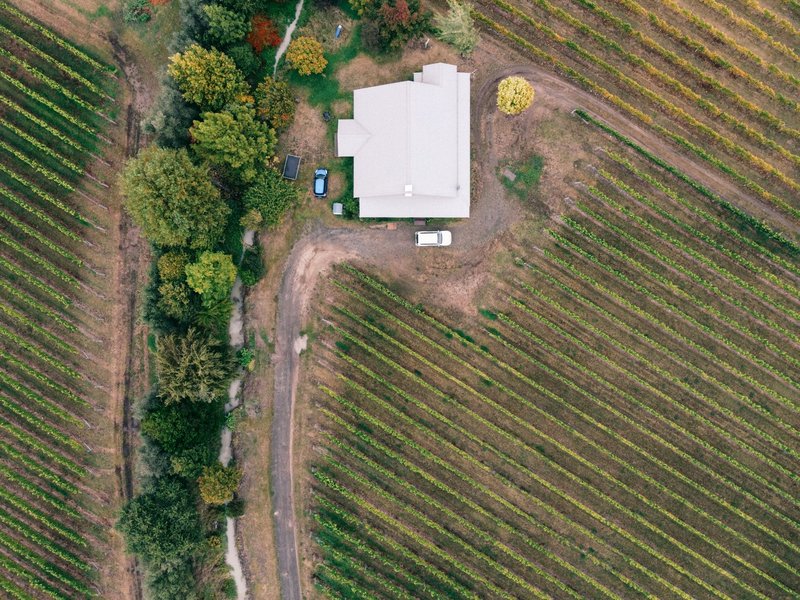
Head east over the Cascades and agriculture flips to a drier model: vast wheat fields across the Columbia Plateau, cattle ranching on the high desert, potatoes and onions in irrigated basins, and hay almost everywhere there’s water to grow it. Across all of it, the state’s leading farm earners tend to be greenhouse and nursery products, hay, grass seed, cattle, milk, and wine grapes. Oregon’s roughly 16 million acres of farmland and ranchland represent a soil-and-climate resource as real as any forest or ore body — it just renews itself one season at a time.
Conservation: The Rules That Keep It Going
A resource is only renewable if you don’t strip it faster than it grows back. Oregon learned this early and wrote it down.
In 1971 the state passed the Oregon Forest Practices Act, the first comprehensive forest-practices law in the United States. It set rules for how timber gets cut on private land: reforestation requirements after harvest, buffers along streams to protect water and fish, limits on clearcut size, and standards for roads and slopes. Other states later followed the template.
That law sits inside a broader, often contentious framework. Oregon’s landmark 1973 land-use planning system drew hard lines around farm and forest zones to stop sprawl from eating the resource base. Federal endangered species rules govern salmon and the northern spotted owl. None of it is settled — loggers, ranchers, environmentalists, and tribes have been arguing the details for fifty years. But the underlying idea, that you manage a renewable resource for the long haul instead of cashing it out, is baked into how Oregon works.
Why It Matters
Oregon’s natural resources aren’t a museum exhibit. They’re a working economy and a daily argument.
The forests still frame American homes. The rivers still light up the Northwest and, increasingly, run its server farms. The crab boats still go out, the vineyards still ripen, and somewhere in the northwest corner there’s a depleted gas field quietly storing winter fuel underground. What ties it together is geography: a wet, mountainous, volcanic, ocean-facing state got dealt an unusually rich hand of forests, water, soil, and odd minerals — and then spent a century figuring out how to use it without using it up. That second part, the figuring-out, is the resource Oregon is still developing.