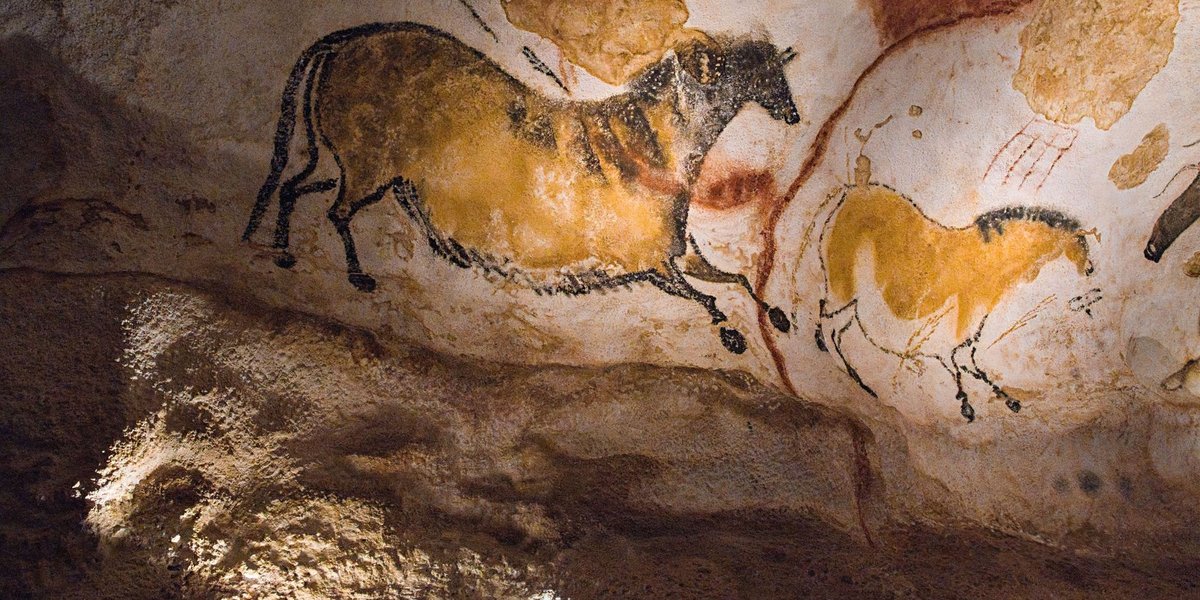
Somalia’s most important caves aren’t really in Somalia. They’re in Somaliland, the self-declared republic in the north that broke away in 1991 and runs its own government, currency, and passport while the rest of the world still files it under “Somalia.” Get that geography straight first, because it explains nearly everything about these sites — why they survived, why so few people have seen them, and why the most stunning Neolithic gallery in the Horn of Africa still has no UNESCO plaque.
What’s hidden in the rock shelters around Hargeisa is some of the best-preserved prehistoric painting on the African continent. Cattle with lyre-shaped horns. Human figures with arms raised. Pigments that have held their color for more than five thousand years because the granite overhangs kept the sun and rain off them. This is the real reason to care about caves here.
Table of Contents
- Somalia or Somaliland? The distinction that matters
- Laas Geel: the crown jewel
- Dhagah Kureh and Dhagah Nabi Galay
- Dhambalin: the painted sheep
- Dhaymoole and Shimuhshimuh
- A rough timeline of discovery
- Why it isn’t a UNESCO World Heritage Site yet
- How to actually visit
Somalia or Somaliland? The distinction that matters
Search engines and casual readers use “Somalia” and “Somaliland” interchangeably, and the sites themselves get labeled both ways. So here’s the clean version.
Somaliland declared independence from Somalia in 1991 after the collapse of the Siad Barre regime. No country formally recognizes it, but on the ground it functions as a separate state with its own elections, security forces, and a capital at Hargeisa. The cave complexes — Laas Geel, Dhagah Kureh, Dhagah Nabi Galay, Dhambalin, Dhaymoole, Shimuhshimuh — all sit inside Somaliland’s borders.
That political limbo has been weirdly good for the art. Hargeisa and its surroundings have stayed comparatively stable while southern Somalia dealt with decades of conflict. The sites avoided both the looting and the bulldozers. The flip side: a place no one recognizes can’t easily nominate its heritage for international protection, which is exactly the bind Laas Geel is in.
Laas Geel: the crown jewel
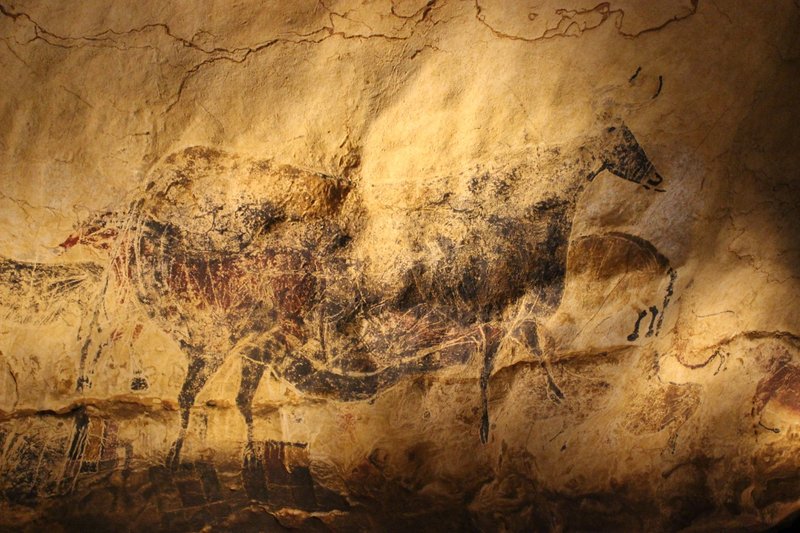
Laas Geel — the name means “source of water for camels” in Somali — sits about 50 kilometers northeast of Hargeisa, where two seasonal riverbeds meet. The complex is a cluster of around twenty granite rock shelters, and the paintings inside them are extraordinary: an estimated 5,000 to 5,500 years old, painted somewhere between roughly 3,500 and 2,500 BCE during the Neolithic.
The dominant subject is cattle. Long-horned, humpless cows rendered in red, white, orange, and black, many wearing what look like decorative collars or trappings around the neck — a detail that tells archaeologists these were domesticated, prized animals, not wild game. Cattle this central to the art means cattle this central to the people: Laas Geel records a herding society at the moment animal domestication was reshaping the Horn of Africa.
Around the cows stand human figures with arms raised, plus dogs, a giraffe, and what may be antelope. The pigments survive in startling condition because the overhangs shield them and the local climate is bone-dry. Some panels look like they were finished last season, not five millennia ago.
The site was documented in late 2002 by a French archaeological team led by Xavier Gutherz, in what became one of the most significant African rock-art finds in decades. Local herders had known about the shelters for generations — they sometimes sheltered livestock in them and reportedly considered them haunted, which may have helped keep them undisturbed. “Discovery,” as so often, means the moment outsiders wrote it down.
Dhagah Kureh and Dhagah Nabi Galay
Travel pieces tend to stop at Laas Geel. The complete picture includes several more sites, and a couple of them carry claims that are arguably bigger.
Dhagah Nabi Galay, near Las Khorey in the Sanaag region to the east, is best known for an inscription that has been described as among the oldest writing in East Africa — pre-Islamic script carved into the rock alongside older imagery. The site mixes painted and engraved panels and remains far less studied than Laas Geel, partly because it’s harder to reach.
Dhagah Kureh belongs to the same broader cluster of painted and inscribed shelters that researchers have catalogued across the region. These sites collectively push the story past a single famous gallery into something that looks like a whole landscape of rock art, used and reused over a long span.
Dhambalin: the painted sheep
Dhambalin, found in 2007 by Somali archaeologist Sada Mire, sits south of Berbera and earns its own footnote in the textbooks. It contains what is considered the earliest known depiction of a sheep in Somali rock art, alongside cattle, and notably some hunting scenes with human figures using bows.
Mire’s work matters here beyond the find itself. As one of the few Somali archaeologists working on this heritage, she’s been central to documenting and advocating for these sites in a region where outside researchers can’t easily operate. Dhambalin’s paintings, like Laas Geel’s, are vivid and well-preserved, with the same dry-climate luck protecting the color.
Dhaymoole and Shimuhshimuh
The map keeps filling in. Dhaymoole and Shimuhshimuh are among the additional rock-art shelters recorded across Somaliland, and they reinforce the same pattern: granite overhangs, herding imagery, and pigment that the climate has graciously preserved. None of them draws the visitor numbers Laas Geel does, and most have seen only limited formal study. For anyone treating this as more than a single stop, they’re the proof that Laas Geel is the headline, not the whole story.
A rough timeline of discovery
- ~3,500–2,500 BCE — The Laas Geel cattle panels are painted during the Neolithic, recording a herding society.
- For generations — Local herders use and avoid the shelters, keeping them largely undisturbed.
- November–December 2002 — A French team led by Xavier Gutherz documents Laas Geel for the wider world.
- 2007 — Sada Mire identifies the Dhambalin shelter and its early sheep depiction.
- 2010s–today — Additional sites recorded; Somaliland develops basic visitor access while pushing, so far without success, for international heritage recognition.
Why it isn’t a UNESCO World Heritage Site yet
By any normal standard, Laas Geel is World Heritage material — exceptional preservation, deep antiquity, scientific importance. So why no listing?
The answer is bureaucratic, not archaeological. Only the recognized state party to the World Heritage Convention can nominate sites within its territory, and that party is Somalia, governed from Mogadishu. Somaliland, which actually controls the land, isn’t a UNESCO member and can’t file on its own. Somalia’s federal government has its own priorities and limited reach into a region it doesn’t administer. The result is a stalemate where the most qualified candidate in the Horn of Africa sits unlisted because of a sovereignty dispute that has nothing to do with the paintings.
Protection on the ground is thin as a consequence. There’s a basic visitor framework and local guardianship, but none of the funding, monitoring, or international attention a World Heritage inscription would bring. As National Geographic and other outlets covering the region have noted, that gap leaves world-class heritage dependent largely on a dry climate and local goodwill.
How to actually visit
Reference pages won’t tell you this part, so here’s the practical layer.
Getting there. Laas Geel is the realistic stop for most visitors — roughly a 30-to-45-minute drive from Hargeisa, the last stretch on rough track that wants a 4×4. Fly into Hargeisa (Egal International Airport), usually via Addis Ababa, Dubai, or Djibouti.
Permits and guides. You need a permit, obtained in Hargeisa through the Ministry of Tourism or your tour operator, and for travel outside the city Somaliland generally requires an armed escort (a Special Protection Unit officer). This sounds dramatic; in practice it’s a routine, inexpensive formality arranged through your guide. A licensed local guide for the site itself is mandatory and worth it — the panels reward someone pointing out what you’d otherwise walk past.
Cost and time. Budget modestly for the permit, guide, vehicle, and escort combined; it’s a half-day trip from Hargeisa. The eastern sites near Las Khorey are a serious multi-day expedition by comparison and not casual additions.
Best season. Aim for the drier months, roughly November through February or the early-year window, and avoid the main rainy seasons (the gu rains around April–June) when tracks turn difficult.
One ground rule. Don’t touch the paintings, and follow your guide on photography. Skin oils and flash do cumulative damage, and at a site with no UNESCO budget behind it, visitor restraint is a real part of how these survive. For current safety and entry specifics, check your government’s travel guidance — the UK Foreign Office maintains an updated Somalia/Somaliland page — before you book anything.
Five thousand years of color held onto bare granite, an hour from a capital most people couldn’t place on a map. That’s the find. The paperwork around who owns it is a footnote; the cattle on the wall are the point.