A single thunderstorm can move more soil off a bare hillside than a decade of gentle weather. That’s water erosion in a sentence: rain and runoff peeling the planet’s surface apart, grain by grain, and carrying it somewhere it doesn’t belong. It carved the Grand Canyon over millions of years, and it can strip an entire season’s topsoil off a farm field in one afternoon.
Most explainers stop at “rain washes away soil.” That’s true and useless. What you actually want to know is which kind of water erosion you’re looking at, what’s feeding it, and — if it’s costing you land or money — which fix is worth the price. So that’s how this is built: the five types side by side, the four levers that control how bad it gets, and a straight comparison of every prevention method by cost, lifespan, and where it actually works.
Table of Contents
- What Water Erosion Actually Is
- The Five Types of Water Erosion
- What Causes Water Erosion
- The Effects: From Your Backyard to the Gulf of Mexico
- How to Prevent Water Erosion: Agricultural Methods
- How to Prevent Water Erosion: Structural Methods
- Control Methods Compared: Cost, Lifespan, Best Use
- Water vs. Wind Erosion
- Frequently Asked Questions
What Water Erosion Actually Is
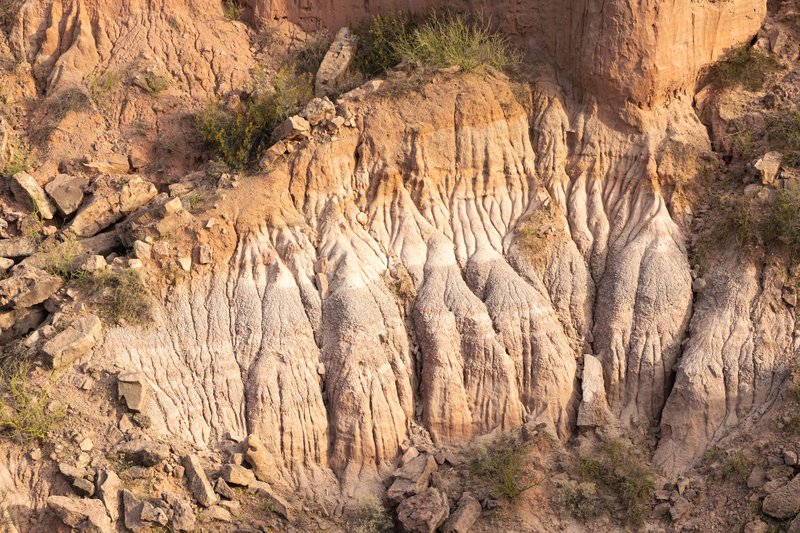
Water erosion is the detachment and transport of soil particles by moving water. Two things have to happen. First, something has to knock a soil particle loose — usually the physical impact of a raindrop or the drag of flowing water. Second, water has to carry that loose particle away. Detach, then transport. When both happen at scale, you get erosion; when soil stays put or water just sits, you don’t.
The distinction matters because it tells you where to intervene. Stop the detachment (cover the soil so raindrops never hit it directly) or stop the transport (slow the water down so it drops its load) and erosion stalls. Almost every control method on this page is doing one of those two jobs.
Geologically, this is the same process that builds canyons and riverbanks over deep time. But the kind that wrecks farmland and floods basements works on a timescale of single storms, and that’s the version most people are dealing with.
The Five Types of Water Erosion
Erosion isn’t one thing — it’s a sequence that escalates as water gathers force. Soil scientists name five stages, and they tend to appear in this order as runoff builds on a slope.
Splash erosion is the starting gun. A raindrop hits bare soil at roughly 20 miles per hour and explodes, flinging soil particles up to a couple of feet in every direction. On a slope, more lands downhill than up. Splash does little on its own, but it’s what loosens and seals the surface, setting up everything that follows. You can see its aftermath as a thin crust on bare ground after rain dries.
Sheet erosion is the quiet killer. Once the surface is sealed and water can’t soak in, a thin, nearly invisible film of runoff slides downhill and carries the loosened particles with it. It removes soil evenly across a whole field, which is exactly why it goes unnoticed — there’s no dramatic channel, just the slow lightening of topsoil color and a creeping drop in fertility. Farmers often don’t catch sheet erosion until yields tell them.
Rill erosion is where it becomes visible. The sheet flow concentrates into tiny channels — rills — usually a few inches deep, the kind you can still smooth over with a single pass of a tiller. Hundreds of them can score a slope after one heavy storm. Rills are the warning shot.
Gully erosion is rills that won an argument with the landscape. Once channels deepen past what normal tillage can erase — think knee-deep to taller-than-you — you’ve got a gully. Gullies concentrate huge volumes of water, undercut their own walls, and march uphill over time. They’re the expensive problem: they fragment fields, swallow equipment access, and often need engineered repair.
Tunnel erosion is the one most lists skip. Water moves through the soil along subsurface cracks or old root channels, hollowing out tunnels underground while the surface looks fine — until it collapses into a sinkhole or a sudden gully. It’s common in dispersive, sodium-heavy soils and is genuinely dangerous because there’s no surface warning.
The progression is the useful takeaway: splash and sheet are cheap to fix, rills are a manageable alarm, and gullies and tunnels are what you get when you ignored the first three.
What Causes Water Erosion
Whether a slope loses soil or holds it comes down to four interacting variables. The same field can be stable or hemorrhaging topsoil depending on how these line up.
Rainfall intensity. It’s not how much rain falls, it’s how hard. A gentle all-day soak mostly infiltrates. A short, violent downpour delivers more energy than the soil can absorb, so the excess runs off — and fast-moving runoff carries far more sediment. Erosion risk scales with the erosivity of the rain, which climbs steeply with intensity. This is why a single severe thunderstorm can out-erode months of drizzle.
Slope. Steeper and longer slopes both make erosion worse, and they compound. Steeper ground means faster runoff, and water’s carrying capacity rises sharply with speed — double the velocity and you can move far more than double the sediment. Longer slopes give that water more distance to accumulate volume and momentum before it reaches the bottom. A short, gentle grade sheds water harmlessly; a long, steep one turns it into a cutting tool.
Soil texture and structure. Sandy soils have big pores and drink water fast, so they often resist runoff but, once moving, their loose grains wash away easily. Clay soils hold together but seal up and shed water. Silty soils — and fine, loose particles generally — are the most erodible: light enough to lift, weakly bound, and quick to seal. Soils rich in organic matter clump into stable aggregates that resist both detachment and crusting, which is why building organic matter is itself an erosion defense.
Vegetation cover. This is the master variable, because it’s the one you control most directly. Plant canopy intercepts raindrops before they hit the ground, killing splash erosion at the source. Roots bind soil into a mat that resists transport — and the kind of root system a plant grows decides how deeply and tightly that mat holds, with fibrous, spreading roots gripping the surface where erosion starts. Residue and litter on the surface slow runoff and force it to infiltrate. Strip a slope of cover and you’ve removed all three defenses at once — which is why bare ground, construction sites, and freshly tilled fields erode orders of magnitude faster than vegetated land. The U.S. Department of Agriculture’s research arm has documented how keeping living cover or residue on the surface is the single most effective lever a land manager has, far cheaper than fixing the damage afterward.
The Effects: From Your Backyard to the Gulf of Mexico
Water erosion costs you twice: once where the soil leaves, and again where it ends up.
On site, you lose the topsoil — the thin, fertile, organic-rich layer that took centuries to build. Topsoil holds most of a soil’s nutrients and water-storage capacity, so losing it cuts crop yields and forces more fertilizer just to stand still. For homeowners, the on-site bill looks different: a slope shedding soil undermines foundations, exposes tree roots, scours mulch out of beds, and can eat a backyard a few inches at a time until a retaining wall is the only option left.
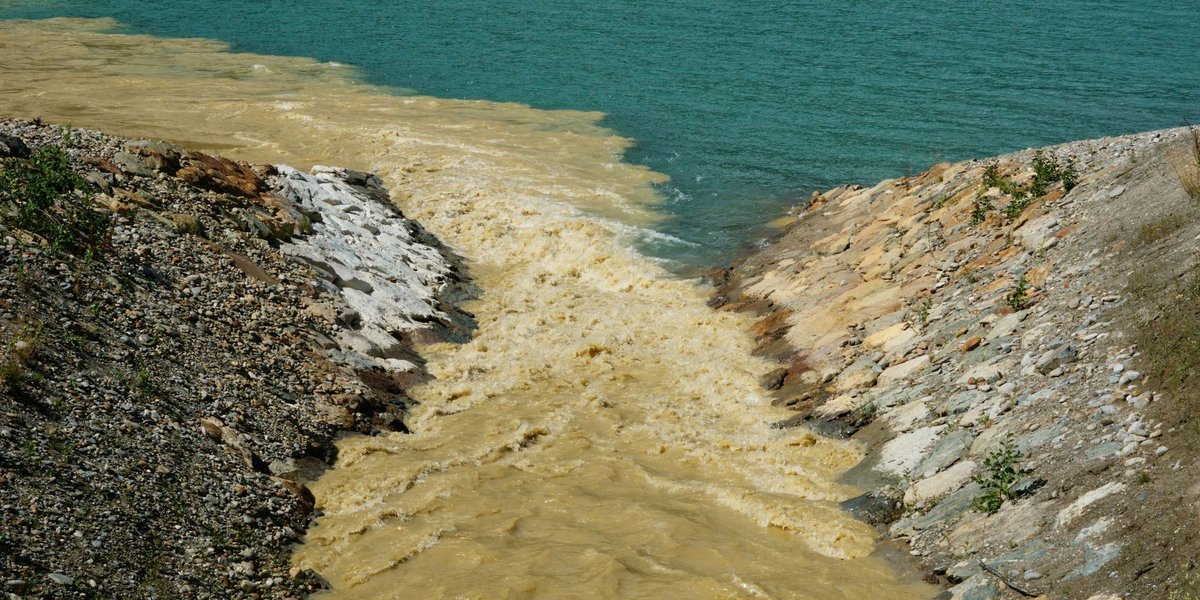
Off site, that soil becomes someone else’s problem. Sediment clogs ditches, storm drains, and reservoirs, raising flood risk and dredging costs. It muddies streams, smothering fish eggs and the gravel beds aquatic insects live in. And the nutrients riding along with the soil — especially nitrogen and phosphorus from farm fields — feed algae blooms downstream. The clearest example is the Gulf of Mexico dead zone, a seasonal area of oxygen-starved water roughly the size of a small U.S. state, fed largely by nutrient runoff carried down the Mississippi River basin. Soil that erodes off an Iowa hillside helps suffocate shrimp grounds 1,000 miles away.
That two-ended cost is why erosion control is rarely just a private matter — and why a lot of it is publicly subsidized.
How to Prevent Water Erosion: Agricultural Methods

These are the “soft” or biological methods. They’re cheaper, they work over wide areas, and most of them improve the soil while they protect it. The catch: they need management, not just installation.
Cover crops. Plant something — rye, clover, vetch — in the off-season so the ground is never bare. Living roots hold soil, canopy stops splash, and the residue feeds organic matter. It’s the closest thing to a universal recommendation in soil conservation. Cost is low (seed plus a planting pass), but it’s a recurring, every-season commitment.
Reduced and no-till farming. Every tillage pass breaks soil aggregates and buries the protective residue. No-till leaves last year’s crop stubble on the surface and plants straight through it, which can cut soil loss dramatically. It also saves fuel and labor. The trade-offs are a learning curve, new equipment, and often more herbicide early on.
Contour farming. Plant and till across the slope instead of up and down it, so every furrow becomes a small dam that catches runoff instead of channeling it downhill. Nearly free if you’re already farming — it’s a change in direction, literally — and most effective on gentle to moderate slopes.
Terracing. Cut a steep slope into a staircase of level (or near-level) benches, so water pools and infiltrates on each step instead of building speed down the whole face. It’s the heavy artillery of agricultural methods — extremely effective on steep ground, used for rice for millennia — but it’s earthwork, so it’s expensive to build and needs maintenance to stay intact.
Grassed waterways. Where runoff naturally concentrates and wants to cut a gully, shape a broad, shallow channel and plant it with tough grass. The grass armors the channel so water can pass without scouring. Modest cost, long-lived if maintained, and it targets exactly the spots where gullies start.
Filter strips and buffers. A band of permanent grass or trees along the downhill edge of a field or a stream bank. It doesn’t stop erosion uphill, but it catches sediment and soaks up nutrients before they reach the water — the last line of defense against the off-site costs.
How to Prevent Water Erosion: Structural Methods
These are the “hard armor” methods — engineered structures that physically resist or redirect water. They’re what you reach for when erosion is already active, the slope is steep, or there’s infrastructure to protect. Higher cost, but they work immediately and need little management once built.
Riprap. A layer of loose, heavy rock placed over a bank or channel. The stones are too big for the water to move, so they shield the soil underneath while letting water pass. It’s the default for riverbanks, bridge abutments, and culvert outlets — cheap as hard armor goes, very durable, and easy to repair by adding rock.
Gabions. Wire-mesh cages packed with stone, stacked like building blocks to form retaining walls or channel linings. They’re flexible (they settle without cracking the way concrete does), permeable (water drains through instead of building pressure behind), and good for steeper situations where loose riprap would slide. More expensive and labor-intensive than plain riprap.
Erosion control matting and blankets. Biodegradable or synthetic mesh laid over bare, seeded soil — think new construction slopes or a freshly graded backyard. It holds soil and seed in place long enough for vegetation to establish, then (for the biodegradable kind) breaks down. It’s a temporary bridge to a permanent grass cover, cheap and fast, but it’s a months-to-a-couple-years solution, not a permanent one.
Retaining structures. Walls — concrete, block, timber, or reinforced earth — that hold back a slope and turn an erosion-prone grade into stable, level ground. This is the homeowner’s nuclear option for a backyard that won’t stop sliding. Highest cost per foot, but permanent and the only real answer for steep, built-up areas where you can’t just plant your way out.
Control Methods Compared: Cost, Lifespan, Best Use
Most guides list these methods and leave you to guess which one fits. Here’s the comparison they skip — relative cost, how long it lasts, and where each actually earns its keep.
| Method | Relative Cost | Lifespan | Best Use Case |
|---|---|---|---|
| Cover crops | Low (recurring) | One season | Cropland with bare off-season ground |
| No-till / reduced till | Low–Medium | Ongoing | Large cropland acreage, gentle–moderate slopes |
| Contour farming | Very low | Ongoing | Gentle to moderate cultivated slopes |
| Terracing | High | Decades (with upkeep) | Steep farmland |
| Grassed waterways | Medium | 10+ years | Channels where runoff concentrates |
| Filter strips / buffers | Low–Medium | Long-term | Field edges and stream banks (off-site protection) |
| Riprap | Medium | 25+ years | Riverbanks, culvert outlets, active scour |
| Gabions | Medium–High | 25+ years | Steeper banks, retaining situations |
| Matting / blankets | Low | Months–2 years | New slopes, temporary cover until grass sets |
| Retaining walls | High | Decades | Steep residential or built-up slopes |
The pattern: soft methods are cheap and improve the land but demand ongoing management and won’t save an already-failing steep slope. Hard methods cost more up front but work instantly and protect infrastructure. Most well-managed land uses both — biological cover across the broad acres, hard armor at the specific points where water concentrates.
Water vs. Wind Erosion
The two get lumped together, but they behave differently and the fixes only partly overlap. Wind erosion needs dry, loose, fine soil and open exposure — it dominates in arid regions, on sandy ground, and across flat, unsheltered plains, and it’s fought mainly with windbreaks and keeping the surface rough and covered. Water erosion needs the opposite trigger: enough rain to generate runoff, and a slope to give it direction. Slope barely matters for wind; it’s everything for water.
The shared defense is the one that matters most for both: keep the soil covered. Vegetation and residue stop a raindrop and a gust alike. If you only do one thing for either kind of erosion, it’s that.
Frequently Asked Questions
What is the main cause of water erosion? Moving water detaching and carrying soil — but the single biggest controllable factor is lack of vegetation cover. Bare soil erodes many times faster than covered soil because nothing intercepts the raindrops or binds the surface. Rainfall intensity and slope set the difficulty; cover is the lever you actually control.
What are the four types of water erosion? The commonly cited four are splash, sheet, rill, and gully erosion, which form an escalating sequence as runoff gathers force. A fifth, tunnel erosion, occurs underground in dispersive soils and is often added to make five. Splash and sheet are subtle; rill is the visible warning; gully is the expensive stage.
How do you stop water erosion on a slope? Match the method to the steepness. Gentle slopes respond well to vegetation — plant ground cover, lay erosion-control matting until it establishes, and direct runoff into a grassed channel. Steep or already-failing slopes usually need hard armor: riprap, gabions, or a retaining wall to physically hold the grade. The goal is always the same: slow the water down and keep something growing in the soil.
How fast can water erosion happen? It ranges from imperceptible to dramatic. Sheet erosion can strip topsoil so gradually that a farmer notices only when yields drop after years. A single intense thunderstorm on bare, sloping ground can carve fresh rills or deepen a gully in a few hours. Geologic features like canyons take millennia, but the agricultural and residential damage that costs people money happens storm by storm.
Is water erosion always bad? Over geologic time it built river valleys, deltas, and fertile floodplains, so it’s a natural and necessary process. The problem is accelerated erosion — human activity stripping cover and steepening grades so soil leaves far faster than it forms. Natural erosion replaces what it takes over thousands of years; accelerated erosion doesn’t.
Water erosion comes down to a simple contest: the energy of moving water versus whatever’s holding the soil in place. Tip that balance back toward the soil — cover the ground, slow the water, armor the points where it concentrates — and the most powerful sculptor on the planet quietly leaves your land alone.