A producer is any organism that builds its own food instead of eating something else. In biology, that means autotrophs — organisms that pull energy from sunlight (photosynthesis) or from chemical reactions (chemosynthesis) and turn carbon dioxide into sugar. Every food chain starts here. No producers, no consumers, no decomposers, nothing.
The catch most study notes miss: producers are not just “green plants.” Some live in total darkness two miles underwater. Some are technically bacteria. One famous example lives inside coral. Below are 15 real examples, grouped by where they live and how they make their food, with a short explanation of why each one earns the label.
Table of Contents
- What Counts as a Producer
- Terrestrial Producers
- Aquatic Producers
- Chemosynthetic Producers
- Quick Comparison Table
- Producers vs. Consumers vs. Decomposers
- Frequently Asked Questions
What Counts as a Producer
The test is simple: does the organism make its own organic food from inorganic raw materials? If yes, it’s a producer (an autotroph). If it has to consume other organisms to get energy, it’s a consumer (a heterotroph).
Two methods qualify an organism as a producer:
- Photosynthesis — using light energy to convert CO₂ and water into glucose, releasing oxygen. This is where the overwhelming majority of Earth’s producers get their energy.
- Chemosynthesis — using energy from oxidizing inorganic chemicals (like hydrogen sulfide or methane) to fix carbon, with no sunlight involved at all.
That second pathway is what trips up exam answers. Producers don’t need sunlight. They need a way to fix carbon, and a few organisms found a workaround. According to NOAA Ocean Exploration, entire ecosystems at hydrothermal vents run on chemosynthesis, with bacteria as the base instead of plants.
Producers are also called primary producers, because they occupy the first trophic level — the foundation that everything above them depends on for energy.
Terrestrial Producers
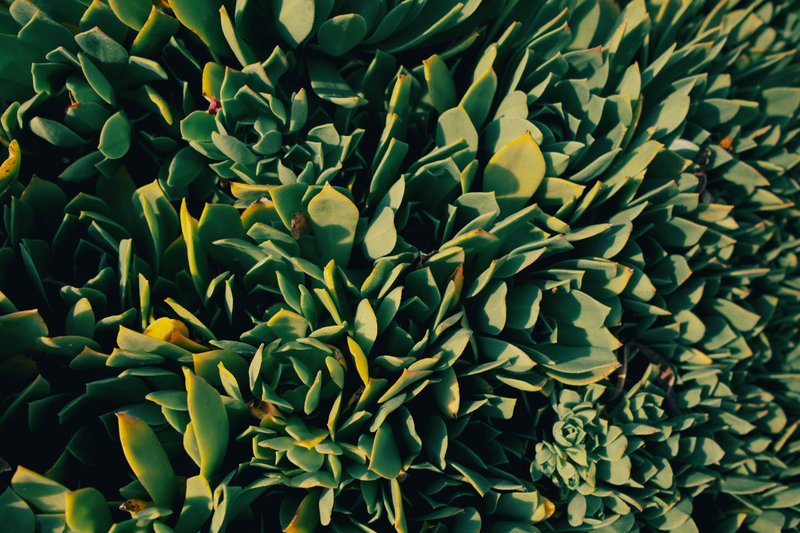
These are the land-based autotrophs, the ones most people picture first.
1. Trees
Oaks, pines, maples, baobabs — every tree is a producer. Their leaves are dense with chloroplasts that run photosynthesis on a massive scale. A single mature oak can support hundreds of insect species feeding on its leaves — the primary consumers that in turn feed birds, and so on up the chain. Trees also store enormous amounts of carbon, which is why forests matter to the climate conversation, not just the food web.
2. Grasses
Wheat, rice, corn, bamboo, and wild prairie grass are all producers — and arguably the most important ones for humans. Grasses photosynthesize like other plants but many use a more efficient pathway (C4 photosynthesis) that thrives in hot, sunny, dry conditions. The Serengeti’s millions of wildebeest exist because grass converts sunlight into food on a continental scale.
3. Flowering Plants (Angiosperms)
From sunflowers to roses to tomato plants, flowering plants are producers that added a reproductive trick: flowers and fruit. The photosynthesis happens in the leaves and green stems; the flowers are about attracting pollinators. A tomato plant is making its own sugar in its leaves while simultaneously bribing bees with nectar — both functions, one organism.
4. Mosses
Mosses are small, rootless plants that still qualify fully as producers. They photosynthesize through their tiny leaf-like structures and dominate damp, shaded environments where bigger plants struggle. In a peat bog, mosses (specifically Sphagnum) are the primary producers, and their slow decay builds the peat itself over thousands of years.
5. Ferns
Ferns photosynthesize through their fronds and were among the dominant producers on land hundreds of millions of years ago, long before flowers existed. The coal we burn today is largely the compressed remains of ancient fern-like producers from the Carboniferous period. They turned sunlight into biomass; geology turned that biomass into fuel.
6. Lichen
Lichen is the strange one. It’s not a single organism — it’s a partnership between a fungus and either an alga or a cyanobacterium. The fungus provides structure and protection; the photosynthetic partner produces the food. Because of that photosynthetic partner, the lichen as a whole functions as a producer. Lichens colonize bare rock where almost nothing else grows, slowly breaking it down into the first thin layer of soil.
Aquatic Producers
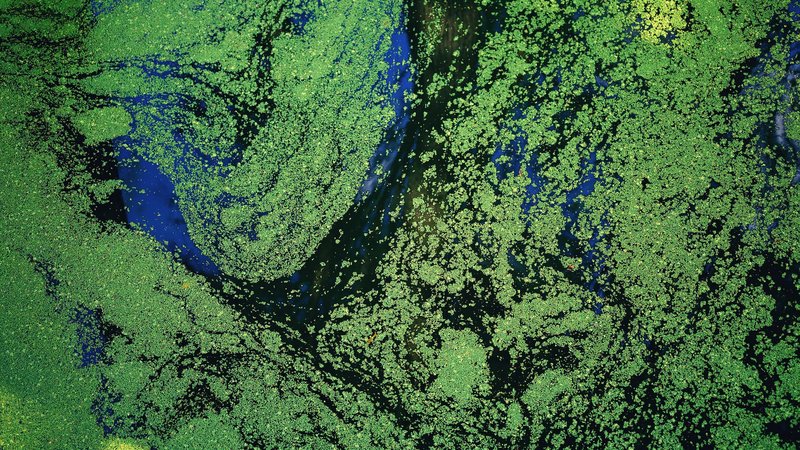
Water covers most of the planet, and its producers do most of the planet’s photosynthesis. The single-celled ones in the ocean are the unsung heroes here.
7. Phytoplankton
Phytoplankton are microscopic, free-floating photosynthetic organisms drifting in the sunlit surface of oceans and lakes. They are the most important producers on Earth by raw output — NASA estimates phytoplankton generate roughly half of all the oxygen produced on the planet. Every other breath you take traces back to these organisms you can’t even see. They also feed everything from krill to the largest whales — the animal consumers that make up the rest of the marine food web.
8. Algae (Green, Red, Brown)
Algae range from single cells to large multicellular forms, and all of them are producers. Green algae in a pond, red algae on a tropical reef, the algae that turns a stagnant pool bright green in summer — each one is fixing carbon through photosynthesis. They lack the true roots, stems, and leaves of plants, but they run the same chemistry.
9. Kelp and Seaweed
Kelp is a giant brown alga that forms underwater forests off temperate coasts, some species growing up to two feet a day. These kelp forests are producers that build entire habitats: sea urchins graze them, sea otters protect them, and fish shelter in them. Seaweed in general — the stuff you see washed up or wrapped around sushi — is photosynthetic and sits at the base of countless coastal food webs.
10. Cyanobacteria
Cyanobacteria (once misleadingly called “blue-green algae”) are bacteria that photosynthesize. They’re a big deal in the history of life: around 2.4 billion years ago, cyanobacteria pumped so much oxygen into the atmosphere through photosynthesis that they triggered the Great Oxidation Event and made complex life possible. They’re still producers today, found in oceans, lakes, soil, and even the surface of damp rocks.
11. Euglena
Euglena is a single-celled organism that blurs the line in a way exam questions love. It has chloroplasts and photosynthesizes in light, acting as a producer — but in darkness, it can also consume organic matter from its surroundings like a consumer. When there’s sunlight available, though, it makes its own food, which is exactly what a producer does.
12. Zooxanthellae
Zooxanthellae are photosynthetic algae that live inside the tissue of corals. The coral animal can’t make its own food, but its tenant algae can — and they share the sugar they produce, supplying most of the coral’s energy. These algae are the hidden producers powering entire reef ecosystems. When the water gets too warm and corals expel them, the result is coral bleaching: the producer leaves, and the reef starves.
Chemosynthetic Producers
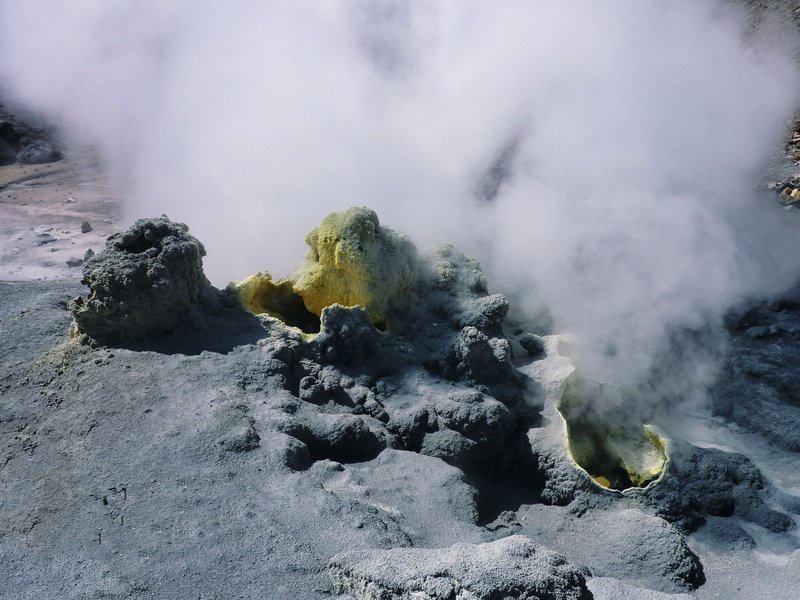
No sunlight reaches here. These producers prove that photosynthesis isn’t the only way to anchor a food chain.
13. Deep-Sea Hydrothermal Vent Bacteria
At hydrothermal vents on the ocean floor, where superheated, mineral-rich water erupts from the crust, bacteria oxidize hydrogen sulfide to fix carbon. No light, no plants — these bacteria are the producers. They support a bizarre community of giant tube worms, clams, and crabs that exists entirely independent of the sun. The tube worms don’t even have mouths; they house the chemosynthetic bacteria inside their bodies and live off the food the bacteria make.
14. Green Sulfur Bacteria
Green sulfur bacteria are a fascinating in-between case. They do use light, but they use hydrogen sulfide instead of water and don’t release oxygen — a process called anoxygenic photosynthesis. They survive in extreme low-light, sulfur-rich environments like the depths of certain lakes and, remarkably, near the faint glow of deep-sea vents. Still producers, just running an ancient variant of the chemistry.
15. Methanogens and Iron-Oxidizing Bacteria
Various chemosynthetic bacteria fix carbon using energy from compounds like methane or iron rather than sulfur. They turn up in cold seeps on the ocean floor, in deep soils, and in groundwater. Wherever there’s a steady supply of an oxidizable chemical and dissolved CO₂, some bacterium has figured out how to be a producer there — which is why life shows up in places that look completely uninhabitable.
Quick Comparison Table
| Producer | Habitat | Energy Source |
|---|---|---|
| Trees | Land (forests) | Sunlight (photosynthesis) |
| Grasses | Land (plains, fields) | Sunlight (photosynthesis) |
| Flowering plants | Land (widespread) | Sunlight (photosynthesis) |
| Mosses | Damp, shaded land | Sunlight (photosynthesis) |
| Ferns | Shaded, moist land | Sunlight (photosynthesis) |
| Lichen | Bare rock, tree bark | Sunlight (via algal partner) |
| Phytoplankton | Ocean/lake surface | Sunlight (photosynthesis) |
| Algae | Fresh & salt water | Sunlight (photosynthesis) |
| Kelp/seaweed | Coastal seas | Sunlight (photosynthesis) |
| Cyanobacteria | Water, soil, rock | Sunlight (photosynthesis) |
| Euglena | Fresh water | Sunlight (photosynthesis) |
| Zooxanthellae | Inside coral tissue | Sunlight (photosynthesis) |
| Vent bacteria | Deep-sea vents | Hydrogen sulfide (chemosynthesis) |
| Green sulfur bacteria | Low-light, sulfur-rich water | Light + sulfur (anoxygenic) |
| Methanogens/iron-oxidizers | Seeps, deep soil | Methane/iron (chemosynthesis) |
Producers vs. Consumers vs. Decomposers
It’s easy to mix these up, so here’s the clean distinction:
- Producers (autotrophs) make their own food from inorganic sources. A blade of grass. A patch of phytoplankton. They are the first trophic level.
- Consumers (heterotrophs) can’t make their own food, so they eat producers or other consumers. A rabbit eating grass is a primary consumer; a fox eating the rabbit is a secondary consumer.
- Decomposers (like fungi and many bacteria) break down dead organisms and waste, recycling nutrients back into the soil and water so producers can use them again.
Picture a simple food chain: grass → grasshopper → frog → snake → hawk. The grass is the only producer in that chain. Everything else is a consumer, and when any of them dies, decomposers return the nutrients to the soil — where the grass picks them back up. Producers are the only step that adds new energy to the system, captured straight from the sun (or, at a vent, from chemistry). Every other organism is just passing that energy along, losing most of it as heat at each step.
Frequently Asked Questions
Are all plants producers? Effectively yes — nearly all plants photosynthesize and qualify as producers. The rare exceptions are a few parasitic plants, like the corpse flower Rafflesia or dodder, that have lost the ability to photosynthesize and steal nutrients from host plants instead. Those behave like consumers.
Is grass a producer? Yes. Grass is one of the most important terrestrial producers, converting sunlight into food that supports grazing animals across grasslands worldwide.
Are fungi producers? No. Fungi can’t photosynthesize and don’t fix carbon. Most are decomposers, breaking down dead material. The exception in this article is lichen, which counts as a producer only because of its photosynthetic algal or cyanobacterial partner — not because of the fungus itself.
What is the most important producer on Earth? Phytoplankton. Despite being microscopic, they collectively produce around half the planet’s oxygen and form the base of nearly all marine food webs.
Can producers exist without sunlight? Yes — chemosynthetic bacteria at deep-sea vents and cold seeps fix carbon using chemical energy instead of light. They prove that “producer” means making your own food, not specifically using the sun.
What is the difference between a producer and an autotroph? They mean the same thing in an ecological context. “Autotroph” describes the organism’s nutrition (self-feeding); “producer” describes its role in the food chain (the first trophic level). Every producer is an autotroph.