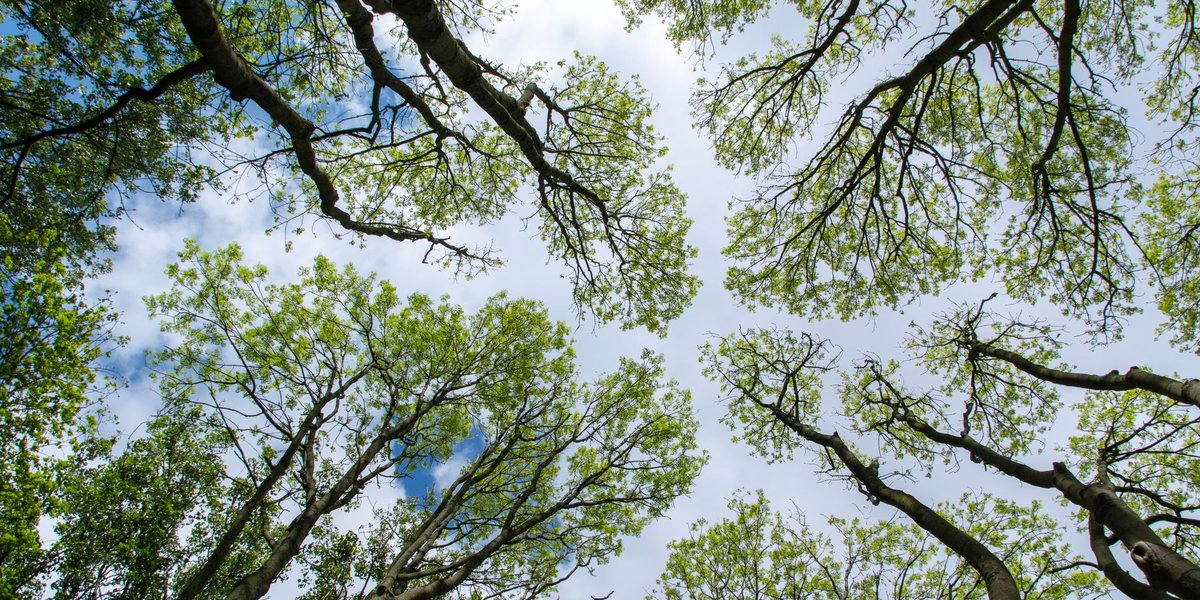
A forest ecosystem is a community of trees, plants, animals, fungi, and microbes interacting with each other and with the nonliving parts of their environment — soil, water, sunlight, and air — across a landscape dominated by trees. That’s the short answer. The long answer is where it gets interesting, because a forest isn’t just a lot of trees standing near each other. It’s a machine that moves energy and recycles matter, and almost every part of it is busy feeding, eating, or rotting.
Search for “forest ecosystem” and you’ll mostly hit academic journals and government research pages that assume you already know the material. This is the guide that doesn’t. By the end you’ll know the parts, the three big types, how the food web actually works, and why losing forests is a problem that reaches well past the tree line.
Table of Contents
- What Counts as a Forest Ecosystem
- The Four Components
- The Three Main Types of Forest Ecosystems
- Food Chains and Food Webs
- How Energy and Nutrients Cycle
- What Forests Do for the Planet
- What’s Threatening Forests
- Frequently Asked Questions
What Counts as a Forest Ecosystem
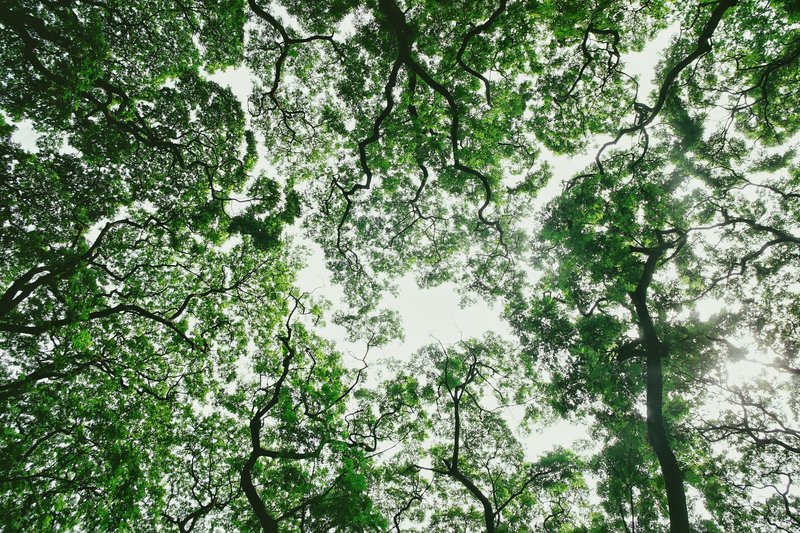
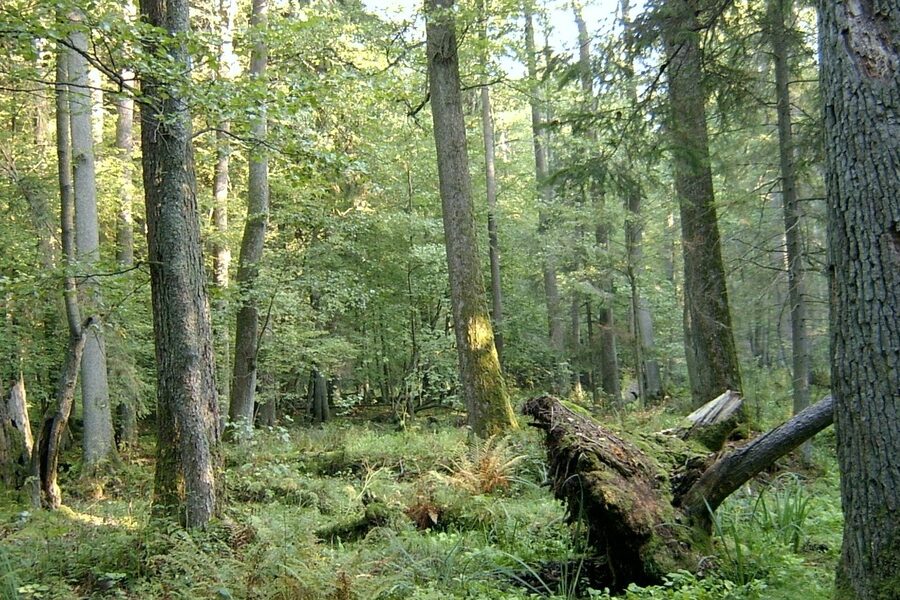
The word “ecosystem” does a lot of work here. An ecosystem is any group of living things plus the physical environment they depend on, treated as one connected unit. A puddle can be an ecosystem. So can a coral reef. A forest ecosystem is one where trees set the rules — they form the canopy, decide how much light reaches the ground, hold the soil together, and create the cool, humid, layered conditions that everything else lives inside.
That layering matters more than people expect. A mature forest has structure you can stand inside and point at: the forest floor where leaves rot and beetles work, the understory of shrubs and young trees, and the canopy overhead where most of the photosynthesis and a surprising amount of the animal life happens. In a tropical rainforest there’s even an emergent layer — the giant trees that punch above the canopy and catch the full sun and wind. Each layer is its own neighborhood with its own residents.
What ties a forest together isn’t the trees themselves but the constant exchange between the living and the nonliving. Scientists split those into two camps: biotic factors (everything alive) and abiotic factors (temperature, rainfall, sunlight, soil chemistry, wind). Change the abiotic side — drop the rainfall, raise the temperature — and the biotic side reshuffles to match. That sensitivity is exactly why forests are early warning systems for climate change.
The Four Components
Every forest ecosystem, whether it’s the Amazon or a patch of pine in Sweden, runs on the same four functional groups. Three are alive and one isn’t.
Producers. These are the green organisms that make their own food. Trees, shrubs, ferns, mosses, and the photosynthesizing parts of the floor all capture sunlight and convert carbon dioxide and water into sugars. They’re called producers because they produce the energy that every other living thing in the forest will eventually borrow. No producers, no ecosystem — full stop.
Consumers. Anything that eats. Ecologists split them by what’s on the menu. Herbivores (primary consumers) eat plants directly — deer browsing leaves, caterpillars stripping a branch, squirrels on acorns. Carnivores (secondary and tertiary consumers) eat the herbivores or each other — a fox, an owl, a tiger. Omnivores like bears and many birds work both sides.
Decomposers. The cleanup crew, and the most underrated members of the whole system. Fungi and bacteria break down dead leaves, fallen trunks, and animal remains, releasing the locked-up nutrients back into the soil where producers can use them again. A forest without decomposers would bury itself in its own dead matter within a few years. The fungal networks threading through forest soil are so extensive that researchers have mapped underground connections linking separate trees — sometimes called the “wood wide web.”
Abiotic factors. The nonliving foundation: sunlight, temperature, water, air, and the mineral content of the soil. These set the limits. A boreal forest and a rainforest run on the same four-part logic but look nothing alike, and the reason is almost entirely abiotic — how much light, how much rain, how cold it gets in January.
The Three Main Types of Forest Ecosystems
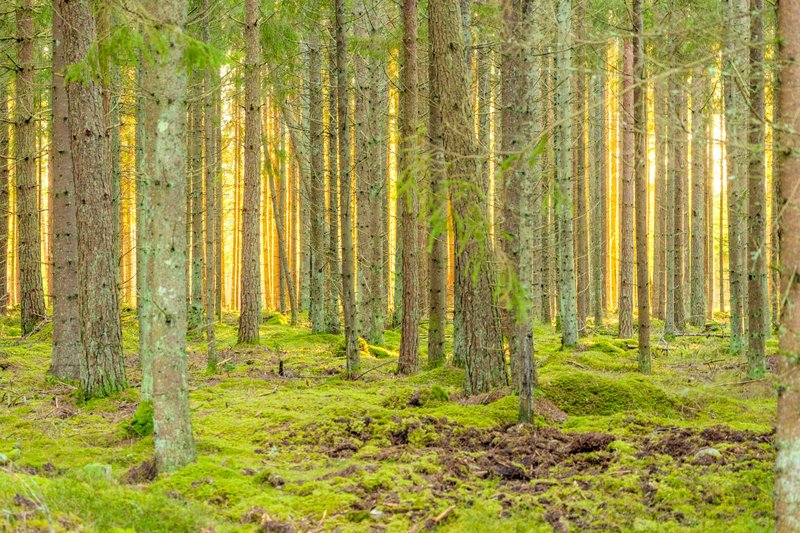
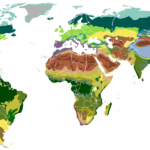
Forests get sorted by climate, and climate mostly tracks latitude. Three broad types cover the great majority of the world’s forest.
| Type | Where | Climate | Defining trait |
|---|---|---|---|
| Tropical rainforest | Near the equator (Amazon, Congo, Southeast Asia) | Hot and wet year-round | Highest biodiversity on Earth |
| Temperate forest | Mid-latitudes (eastern US, Europe, East Asia) | Four distinct seasons | Deciduous trees that drop leaves in fall |
| Boreal / taiga | Far north (Canada, Scandinavia, Russia) | Long cold winters, short summers | Conifers built for snow and cold |
Tropical rainforests are the showpieces. Warm and soaked in rain all year, they pack in more species per acre than anywhere else on land — some estimates put a single hectare of Amazon at hundreds of tree species alone. Oddly, their soil is often poor, because nutrients get recycled so fast they barely sit in the ground. The richness is in the living layer, not the dirt.
Temperate forests are the ones most readers in North America, Europe, and East Asia actually walk through. They run on a four-season rhythm: leaves out in spring, full canopy in summer, the famous color change and leaf drop in autumn, bare branches in winter. That annual reset shapes everything — animals hibernate or migrate, decomposers get a yearly flood of fallen leaves to work on.
Boreal forests, also called taiga, form the largest land biome on the planet, a green belt circling the far north. The trees here are mostly conifers — spruce, fir, pine — with needles and a narrow shape that shrug off snow. The growing season is brutally short, so decomposition crawls and a thick layer of slow-rotting needles builds up. These forests hold enormous amounts of carbon, which is exactly why they matter so much to the climate conversation.
Food Chains and Food Webs
A food chain is the simplest way to show who eats whom. Energy flows in one direction, from producer up through each consumer:
Grass and leaves → Deer → Tiger
The deer eats the plant, the tiger eats the deer. Decomposers sit at the end of every chain, breaking down whatever dies and returning the nutrients to the start.
The catch is that real forests don’t run on single chains. That same deer also gets eaten by wolves; the grass also feeds rabbits and insects; the tiger isn’t picky. Stack all the overlapping chains together and you get a food web — a tangled map of who eats whom that’s far closer to reality. The food web is what gives a forest its stability. If one prey species crashes, predators switch to another, and the system absorbs the shock instead of collapsing. Some of those predators carry outsized weight: a keystone species can hold an entire ecosystem together, and removing it sends the whole web wobbling.
Here’s the hard rule that governs the whole thing: only about 10% of the energy at one level passes up to the next. The other 90% gets spent on living — moving, breathing, staying warm — and lost as heat. That’s why a forest has thousands of plants, fewer deer, and only a handful of top predators. The US Forest Service and ecologists worldwide use this pyramid logic to predict how many large animals a given forest can actually support. You can’t have a forest that’s mostly tigers; the energy math forbids it.
How Energy and Nutrients Cycle
Two different things move through a forest, and the distinction trips people up.
Energy flows through and exits. It enters as sunlight, gets captured by producers, passes up the food web losing 90% at each step, and ultimately leaves the system as heat. Energy is a one-way street — the sun has to keep refilling the tank every single day.
Nutrients cycle and stay. Carbon, nitrogen, phosphorus, and water don’t leave the way energy does. They loop. A nitrogen atom might sit in a leaf, fall to the floor, get broken down by fungi, dissolve into the soil, get pulled up by a root, and end up back in a new leaf — the same atom, used over and over. Forests are exceptionally good at this recycling, which is how a tropical rainforest can be so lush while growing on thin, nutrient-poor soil. The matter never really leaves; it just keeps changing hands.
This is also where forests plug into the global climate. Through photosynthesis, trees pull carbon dioxide out of the air and lock the carbon into wood, leaves, and soil. A forest is, in effect, a giant carbon battery — which is fine while the forest stands and a serious problem when it burns or gets cleared.
What Forests Do for the Planet
“Ecosystem services” is the slightly clinical term for all the free work forests do that keeps the rest of the world running. The list is longer than most people realize.
- Carbon storage. The world’s forests hold an enormous share of land-based carbon. Cut or burn them and that carbon goes straight back into the atmosphere as CO₂. The IUCN treats forest protection as one of the most cost-effective climate tools available.
- Water regulation. Forests act like slow-release sponges. Roots and soil soak up rainfall, then release it gradually, which steadies river flows, recharges groundwater, and blunts both floods and droughts downstream.
- Biodiversity. Forests house the majority of the world’s land-based plant and animal species. Tropical rainforests alone, covering a small slice of the Earth’s surface, shelter a wildly disproportionate share of all known species.
- Soil protection. Tree roots bind soil and the canopy softens the hammering of heavy rain. Strip the trees and the soil washes away, often within a season.
- Air and climate moderation. Forests release oxygen, filter pollutants, and cool their surroundings through shade and the water vapor they pump into the air.
None of these show up on a balance sheet, which is a big part of why forests get cleared. The services are real; they’re just unpriced. Forests aren’t alone in doing this quiet work, either — the water-based environments described in this guide to aquatic biomes run their own versions of carbon storage and nutrient cycling across rivers, lakes, and oceans.
What’s Threatening Forests
Forests are durable but not invincible, and most of what’s hurting them now traces back to people.
Deforestation is the headline threat — clearing forest for farmland, cattle pasture, logging, and mining. According to the Food and Agriculture Organization, the planet loses millions of hectares of forest every year, with the heaviest losses in the tropics. Every cleared hectare releases stored carbon and erases the species that lived there.
Wildfire is a natural and sometimes necessary part of many forests — some pine cones only open in a fire’s heat. The problem is intensity and frequency. Hotter, drier conditions are pushing fires past the levels forests evolved to handle, so they kill the system instead of renewing it.
Climate change shifts the abiotic factors that define each forest type. Warming lets pests survive winters that used to kill them, droughts stress trees into dying, and the climate bands that boreal and temperate forests need are sliding poleward faster than the trees can follow.
Pests and disease finish the job. Stressed, weakened trees are easy targets, and a single beetle outbreak or fungal blight can level millions of acres — especially in the uniform conifer stands of the boreal north.
The threats compound. A drought-stressed forest burns more easily; a burned forest stores less carbon; less carbon storage feeds the warming that drives the next drought. Breaking that loop is the entire point of forest conservation.
Summary
A forest ecosystem is trees, the life they shelter, and the soil, water, and sunlight they all depend on — running on four components (producers, consumers, decomposers, and abiotic factors) and three broad types (tropical, temperate, and boreal). Energy flows through it one way and leaves as heat; nutrients cycle and stay. The payoff for the rest of the planet is carbon storage, clean water, biodiversity, and stable soil — services we mostly notice only once they’re gone. Understand the food web and the energy math behind it, and the whole system stops looking like a wall of green and starts looking like what it is: the busiest, most efficient recycling operation on Earth.
Frequently Asked Questions
What is a forest ecosystem in simple terms? It’s a community of trees, plants, animals, fungi, and microbes living together and interacting with their nonliving surroundings — soil, water, air, and sunlight — in an area dominated by trees.
What are the main components of a forest ecosystem? Four: producers (plants and trees that make food from sunlight), consumers (animals that eat plants or other animals), decomposers (fungi and bacteria that break down dead matter), and abiotic factors (the nonliving elements like temperature, water, and soil).
What are the three types of forest ecosystems? Tropical rainforest (hot and wet, near the equator), temperate forest (four seasons, mid-latitudes), and boreal forest or taiga (cold, conifer-dominated, in the far north).
What’s the difference between a food chain and a food web? A food chain is a single line showing who eats whom — grass to deer to tiger. A food web is all the overlapping food chains in an ecosystem stacked together, which is much closer to how a real forest works.
Why are forest ecosystems important? They store carbon, regulate water supplies, protect soil, clean the air, and shelter most of the world’s land-based species. Losing them releases stored carbon and wipes out biodiversity that can’t be replaced.