Mozambique has logged more than 750 bird species along a coastline that runs roughly 2,500 kilometers down the southeast edge of Africa. That alone puts it ahead of most countries people actually plan birding trips around. Yet the birds of Mozambique rarely show up on the lists that birders bookmark, partly because a long civil war kept the country off the circuit until the 1990s, and partly because its single national endemic, the Namuli Apalis, hides on one isolated mountain almost nobody visits.
Here’s the thing most guides skip: where you stand in Mozambique changes which birds you’ll see, and so does the month. The Zambezi River cuts the country roughly in half, and the avifauna north of it leans East African while the south leans southern African. Get that wrong and you’ll spend a morning looking for the wrong species in the wrong habitat.
This guide fixes that. Below you’ll find 25 notable species with their scientific names and ID cues, then a breakdown of which hotspots and seasons actually deliver them.
Table of Contents
- Quick Facts
- How Mozambique’s Geography Splits Its Birds
- 25 Birds of Mozambique
- Where to Bird in Mozambique
- Best Time to Visit
- A Field Guide Worth Packing
Quick Facts
- Species count: 750+ recorded, with around 600 considered regular
- National endemics: One. The Namuli Apalis, restricted to Mount Namuli in Zambezia Province
- The great divide: The Zambezi River splits the country into a northern (East African) and southern (southern African) zone
- Headline target: The crab-plover, a chunky black-and-white wader that breeds in colonies and is most reliable around the Bazaruto Archipelago
- Important Bird Areas: Gorongosa, the Chimanimani Mountains, Mount Namuli, the Zambezi Delta, and Maputo National Park top the list
How Mozambique’s Geography Splits Its Birds
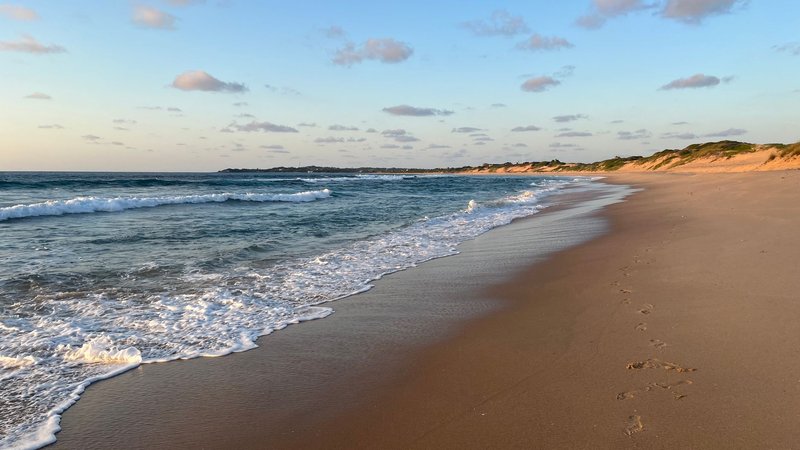
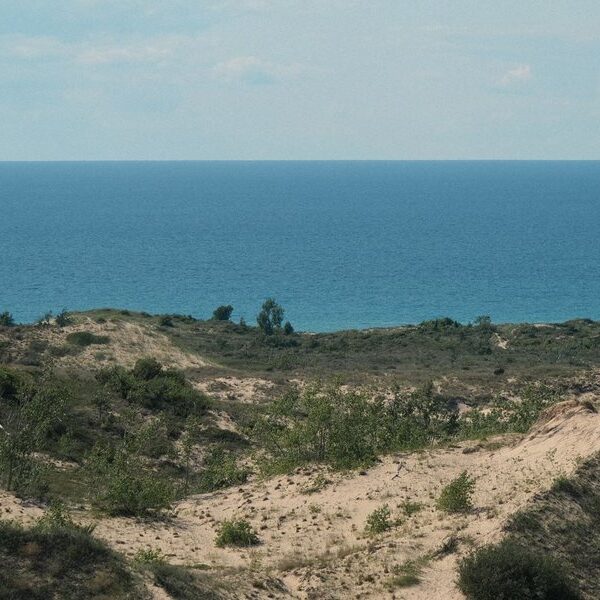
Mozambique is long and narrow, and its birds sort themselves by latitude and altitude more than anything else. The lowland coast is hot, humid, and dominated by miombo woodland, mangroves, and coastal thicket. Climb the inland mountains along the Zimbabwe and Malawi borders and you hit montane forest and grassland, which is where the rare, range-restricted species live.
The Zambezi is the line that matters most. North of it, you start picking up species shared with Tanzania and Malawi. South of it, the birds look more like what you’d see in Kruger across the border in South Africa. A few specialties, like the elusive green-headed oriole and the chestnut-fronted helmetshrike, cluster in specific forest patches and won’t appear anywhere else in the country.
The other split is wet versus dry. The coastal lowlands, the Zambezi Delta, and the inland pans flood seasonally, pulling in waterbirds and migrants from November onward. The dry miombo woodland holds a completely different cast year-round.
25 Birds of Mozambique
A mix of the country’s signature specialties, common-but-striking residents, and the migrants worth timing a trip around. Scientific names included so you can cross-reference with your field guide.
1. Namuli Apalis (Apalis lynesi)
Mozambique’s only true national endemic. A small, warbler-like bird with a grey head, white throat, and rufous wash on the flanks, it lives exclusively in the montane forest of Mount Namuli in Zambezia. The IUCN lists it as Vulnerable, and seeing it means a serious hike. This is the bird that makes Mozambique birding genuinely different from its neighbors.
2. Crab-plover (Dromas ardeola)
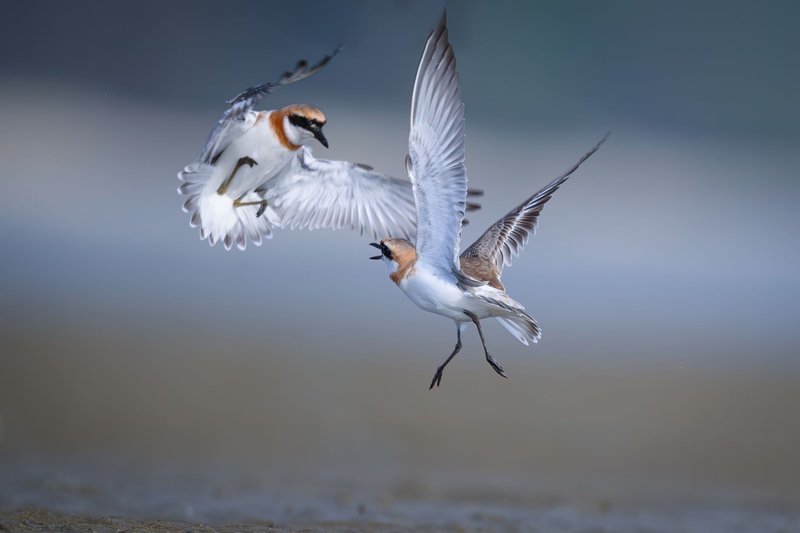
The country’s most-wanted shorebird. Striking black-and-white plumage, long bluish-grey legs, and a heavy black bill built for cracking crabs. It’s a non-breeding visitor to Mozambique’s coast, gathering on tidal flats around the Bazaruto Archipelago, often in flocks. Most reliable from around October through April.
3. Green-headed Oriole (Oriolus chlorocephalus)
A localized forest gem with a green head instead of the usual black, a yellow body, and the loud, liquid calls orioles are known for. In Mozambique it’s tied almost entirely to the moist montane forest on Mount Gorongosa. Hear it before you see it.
4. Southern Carmine Bee-eater (Merops nubicoides)
Carmine-pink with a teal cap and throat, these breed in riverbank colonies, drilling nest tunnels into vertical sandbanks along the Zambezi and other rivers. When a colony lifts off, the river edge turns pink. Present mainly August through November.
5. African Fish Eagle (Haliaeetus vocifer)
The voice of African waterways. White head and chest, chestnut belly, and a yodeling call that carries across any lake or delta. Common along the Zambezi Delta, Lake Cahora Bassa, and coastal estuaries. If you hear it, look for it perched high over open water.
6. Lilac-breasted Roller (Coracias caudatus)
The bird everyone photographs. Lilac throat and breast, turquoise belly, and electric-blue wings that flash in flight. Perches conspicuously on dead branches in open woodland and savanna across the south, including Maputo National Park.
7. Pel’s Fishing Owl (Scotopelia peli)
A massive, rufous, nocturnal owl that hunts fish from riverside trees. Ginger-brown all over with dark eyes and no ear tufts. It haunts the riparian forest of the Zambezi Delta and the Save River. Finding one usually means a guide who knows the exact roost tree.
8. Böhm’s Bee-eater (Merops boehmi)
A small, slender bee-eater with green upperparts, a rufous crown and throat, and a long tail. A northern-zone specialty tied to miombo woodland and forest edges around the Zambezi Valley. Less flashy than the carmine, but a quieter prize.
9. Racket-tailed Roller (Coracias spatulatus)
Similar to the lilac-breasted but with two long, bare tail shafts ending in spatula-shaped tips. Prefers mature miombo woodland in the interior, which makes it a better northern-and-central target than a coastal one.
10. Trumpeter Hornbill (Bycanistes bucinator)
A big black-and-white forest hornbill with a hefty casque and a call like a crying baby. Moves through coastal and riverine forest in flocks, often near fruiting trees. Common in the forest patches of Gorongosa and the southern coast.
11. Livingstone’s Turaco (Tauraco livingstonii)
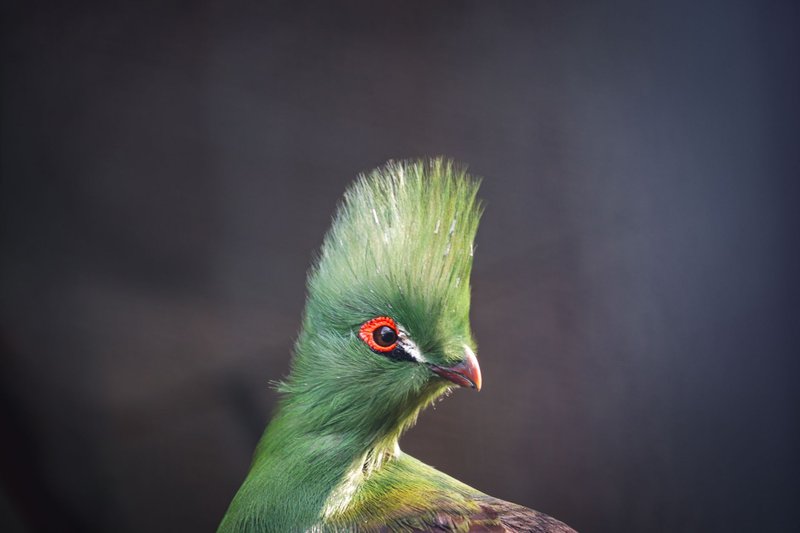
Green body, a tall white-tipped crest, and crimson flight feathers that only show when it flies. A skulker of evergreen and montane forest in central Mozambique, including Gorongosa and the Chimanimani foothills. The red flash in flight is the giveaway.
12. African Pitta (Pitta angolensis)
A jewel-toned ground bird: green back, buff underparts, a scarlet vent, and a black-and-buff head. A breeding migrant arriving with the rains around November, it displays in dense thicket and riverine forest. The Zambezi Delta and Catapú are classic spots. Tough to see, unforgettable when you do.
13. Mangrove Kingfisher (Halcyon senegaloides)
A turquoise-backed kingfisher with an all-red bill, found in mangroves and coastal estuaries rather than over open lakes. Present along the Mozambique coast, with seasonal movement between coastal and inland breeding sites.
14. Olive-headed Weaver (Ploceus olivaceiceps)
An uncommon weaver of mature miombo, with an olive head and yellow body. It forages methodically through lichen-draped branches. Central Mozambique’s miombo belt is one of the better places in the region to find it.
15. Rosy-throated Longclaw (Macronyx ameliae)
A grassland bird that looks like a meadowlark, with a vivid rose-pink throat ringed by a black band. Favors moist grassland and floodplain margins. Found in the wetter southern and central lowlands, especially after the rains green up the pans.
16. Southern Banded Snake Eagle (Circaetus fasciolatus)
A coastal-forest raptor, barred below with a short crest and large yellow eyes. It hunts snakes and lizards along the eastern lowland forests. Uncommon and patchily distributed, which makes a sighting along the coastal strip a real find.
17. White-breasted Cormorant (Phalacrocorax lucidus)
A large black cormorant with a white throat and breast, common on Cahora Bassa, coastal lagoons, and the larger rivers. Often seen perched with wings spread to dry. A reliable, easy entry to balance out the harder targets.
18. Woolly-necked Stork (Ciconia episcopus)
A dark stork with a fuzzy white neck collar and a black “skullcap.” Stalks wetland margins, flooded grassland, and river edges across the lowlands. Widespread but never in big numbers.
19. Greater Flamingo (Phoenicopterus roseus)
Pale pink, long-necked, and unmistakable in the shallow coastal lagoons and estuaries of the south. Numbers swell at sites like the Maputo Bay flats and inland pans when water levels are right.
20. Dickinson’s Kestrel (Falco dickinsoni)
A small grey kestrel with a pale head and rump, often perched on dead palms and baobabs. It favors palm savanna and open woodland near water, including the coastal lowlands and the Zambezi corridor.
21. Eleonora’s Falcon (Falco eleonorae)
A slim, long-winged falcon that breeds in the Mediterranean and winters in the western Indian Ocean. Passage birds move along the Mozambique coast and Channel on migration, typically around October to November and again in autumn. A migration-timing bird, not a year-rounder.
22. Palmnut Vulture (Gypohierax angolensis)
An odd, mostly white raptor with black wing patches that eats the fruit of oil and raffia palms as much as it scavenges. Tied to coastal palm groves and estuaries. The bare orange face around the eye seals the ID.
23. Black-winged Pratincole (Glareola nordmanni)
A graceful, tern-like wader of open ground and floodplains, dark above with black underwings. A non-breeding migrant from the Palearctic, it shows up in flocks on the southern grasslands and pans during the austral summer.
24. Gorgeous Bushshrike (Telophorus viridis)
The name is the field mark: a green-backed bushshrike with a scarlet throat bordered in black. A skulker of dense coastal thicket in the south, far more often heard than seen, with a distinctive ringing call. Patience and playback ethics required.
25. Yellow-billed Stork (Mycteria americana — regionally Mycteria ibis)
A large white stork with a yellow down-curved bill, pink wash on the wings in breeding plumage, and a red face. Wades the shallows of the Zambezi Delta, coastal lagoons, and inland pans, often alongside other waterbirds. Common and a good warm-up bird for picking out the rarer waders nearby.
Where to Bird in Mozambique
Match the bird to the place. These are the five sites that consistently produce.
Gorongosa National Park (central). The country’s flagship park and its best single-site list. Mount Gorongosa holds the green-headed oriole and Livingstone’s turaco in its montane forest, while the floodplains below pull in storks, eagles, and waterbirds. Decades of restoration have brought both the habitat and the bird diversity back.
Bazaruto Archipelago (south coast). The crab-plover headquarters. Tidal flats, dunes, and clear water make this the place to work shorebirds and terns, with the crab-plover as the headline catch from spring through autumn.
Maputo National Park (far south). Formerly Maputo Special Reserve, now expanded and renamed. Coastal grassland, thicket, and wetland near the capital, good for lilac-breasted rollers, the gorgeous bushshrike, flamingos on the bay flats, and easy access if you’re short on time.
The Zambezi Delta (central coast). Floodplain, riparian forest, and palm savanna. This is African pitta and Pel’s fishing owl country during the rains, plus carmine bee-eater colonies along the riverbanks.
Mount Namuli and the Chimanimani Mountains (montane interior). For the committed only. Namuli is the sole home of the Namuli Apalis, reached on foot through community land in Zambezia. The Chimanimani, on the Zimbabwe border, hold their own montane specialties. Neither is a casual day trip.
Best Time to Visit
The wet season, roughly November to April, is peak birding despite the heat and humidity. The rains trigger breeding, push resident birds into their brightest plumage, and bring in the intra-African and Palearctic migrants: the African pitta, the carmine and Böhm’s bee-eaters, the pratincoles, and passage falcons. Waterbirds concentrate as the pans and deltas fill.
The dry season, May to October, trades migrants for comfort. Travel is easier, roads are passable, and the resident miombo and forest species, the orioles, turacos, weavers, and hornbills, are there year-round. The crab-plover and many coastal waders straddle both, with strong numbers from around October into April.
If you can only pick one window, aim for November to early December. You catch the start of the rains, the arriving migrants, and breeding plumage, before the roads turn to soup in the heaviest months.
A Field Guide Worth Packing
Mozambique doesn’t have a dedicated national field guide, so most birders carry a regional one. Birds of Southern Africa (Sasol) covers the south of the country well but thins out north of the Zambezi, where you’ll want a guide that includes East African species, such as Birds of Africa South of the Sahara. A good guide for the northern zone matters precisely because of that Zambezi divide. The country’s richness, more than 750 species across one of Africa’s most overlooked birding frontiers, rewards anyone willing to match the right bird to the right place and the right month.