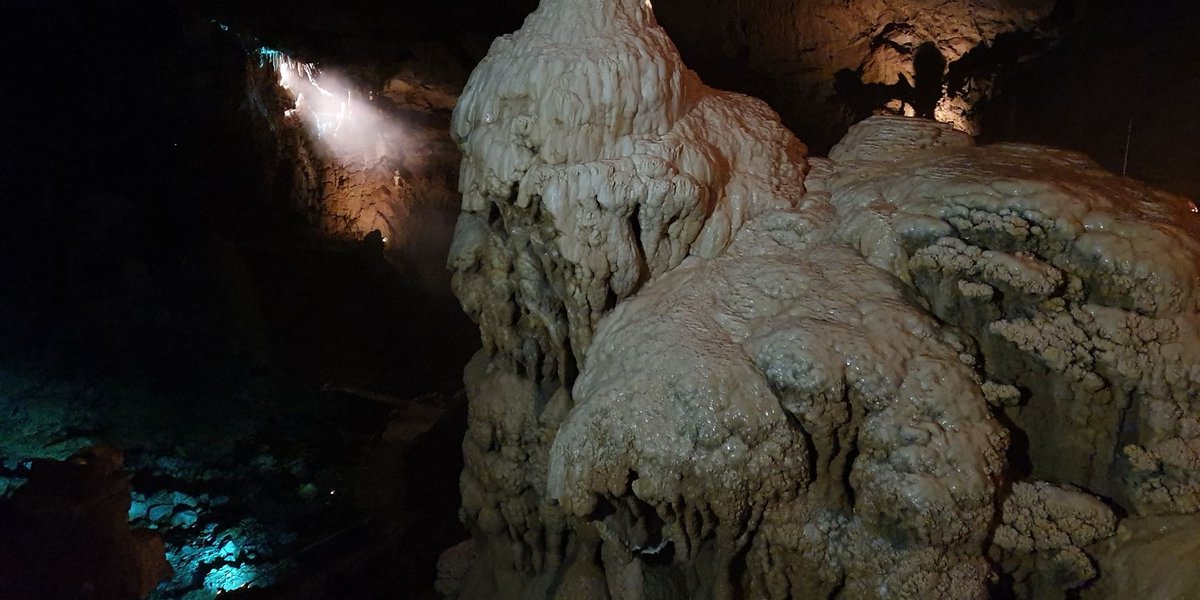
Here’s a thing most travel guides bury: a Japanese limestone cave holds the same temperature in mid-August as it does in February. Somewhere between 8 and 17°C, year-round, regardless of the heatwave cooking the rice fields above. That’s the real reason to plan a cave visit — it’s the best air conditioning in the country, and nobody’s charging resort prices for it.
This is a regional guide to the 14 caves worth your time, from the limestone cathedrals that draw tour buses to a sea cave you can only reach by boat. They’re grouped by where they are, so you can match one to wherever your trip already takes you. Each entry tells you the access, the public-path length, the year-round temperature, and what actually makes it worth the detour.
Table of Contents
- TLDR: The Quick Picks
- How to Choose a Cave
- The Big Three Limestone Caves
- Caves You Can Reach from Tokyo
- Kyushu and Okinawa
- Tohoku and the North
- Central Japan and the Alps
- Comparison Table
- What to Bring
TLDR: The Quick Picks
- Most impressive overall: Akiyoshido in Yamaguchi — Japan’s largest, with a kilometer of walkable passage and the terraced “Hundred Plates” pools.
- Best near Tokyo: Nippara Limestone Cave — a two-hour trip from Shinjuku into the mountains of Okutama.
- Best for swimming, not walking: Okinawa’s Blue Cave — a snorkel-and-dive sea cave lit electric blue from below.
- Best summer escape: any of the limestone three, but Ryusendo in Iwate adds underground lakes so clear you lose the sense of depth.
- Best for adventure cavers: Ryugado in Kochi has a separate “adventure course” where you crawl, not stroll.
How to Choose a Cave
Three questions sort almost every decision.
Are you walking or getting wet? Most caves here are limestone — you walk a paved or stepped path past stalactites and underground rivers. One, the Blue Cave, is a sea cave you enter by swimming. Don’t confuse the two; the limestone ones don’t involve a wetsuit.
Casual or committed? A few caves split into a tourist route (handrails, lighting, families with strollers) and an adventure route (helmet, headlamp, crawling through gaps). If you want the second, check ahead — adventure courses often need reservations and have age limits.
How far will you travel? The most spectacular caves cluster in the southwest and the far north, away from the main Tokyo–Kyoto corridor. If you’re tied to Tokyo, your options are real but smaller. The guide below is sorted so you can see the trade-off at a glance.
The Big Three Limestone Caves
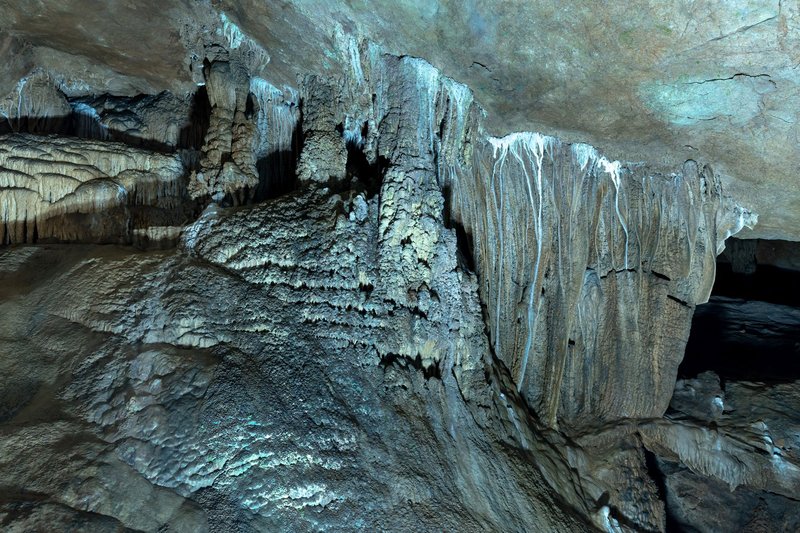
Japan groups its three largest limestone caves together the way it does its three great gardens or three great night views. These are the headliners, and they earn it.
1. Akiyoshido (Yamaguchi)
The biggest, and the one to see if you only see one. Akiyoshido sits beneath the Akiyoshidai plateau, Japan’s largest karst landscape — a rolling green field studded with white limestone outcrops that looks nothing like the rest of the country. The cave runs about 10 kilometers in total, with roughly 1 kilometer open to the public.
The signature feature is the Hyakumaizara, the “Hundred Plates” — a staircase of hundreds of shallow, rimmed pools built up over millennia by mineral-laden water, each one terraced like a paddy field. The interior holds around 17°C all year. You can enter from the main entrance and walk through, or take the elevator entrance from the plateau above and walk down. Open daily; admission is in the ¥1,300 range for adults.
2. Ryusendo (Iwate)
Ryusendo’s draw isn’t the formations — it’s the water. The cave contains a series of underground lakes fed by springs, and the water is so transparent that the divers who’ve mapped it report visibility that makes the surface and the bottom hard to tell apart. The deepest measured pool descends past 90 meters. Standing on the viewing platform, you look down into what reads as bottomless blue glass.
It’s one of Japan’s designated Natural Monuments, and the bats that roost here are protected. The walkable section runs a few hundred meters along the underground river, with the temperature holding around 10°C — bring a layer even in July. Located in Iwaizumi, in Iwate’s mountainous interior.
3. Ryugado (Kochi)
On Shikoku, Ryugado offers the most range. The standard tourist course is a well-lit walk past stalactites and a tall internal waterfall. But Ryugado also runs an adventure course where you trade the handrails for a helmet and headlamp and squeeze through the cave’s rougher passages — the kind of thing that needs a booking and a willingness to get muddy.
Archaeologists found pottery and traces of human use here dating back roughly 2,000 years, so people were sheltering in this cave before they were touring it. Interior temperature sits around 16°C. It’s the best pick if your group is split between “I want to see a cave” and “I want to do a cave.”
Caves You Can Reach from Tokyo
You won’t find a limestone giant inside the city, but two day trips put a genuine cave within a couple of hours of the station.
4. Nippara Limestone Cave (Tokyo)
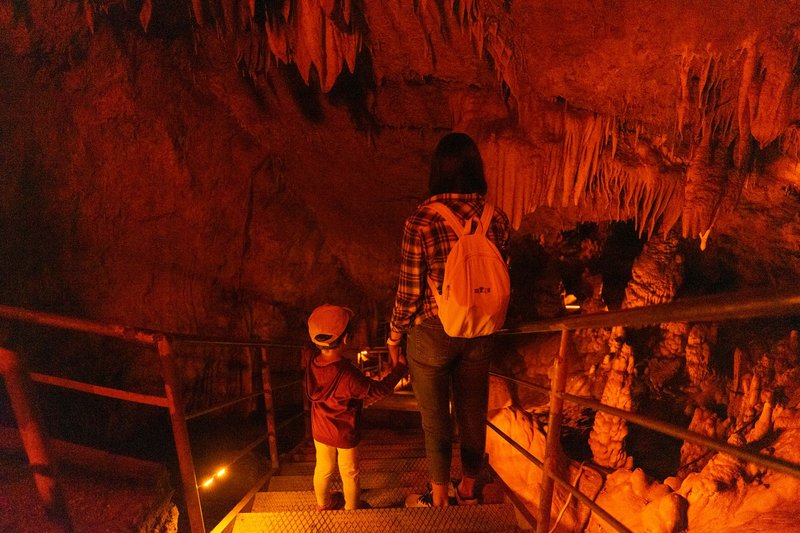
Technically still Tokyo — the metropolis stretches far west into the Okutama mountains, and Nippara hides up there. From Shinjuku you take a train to Okutama Station, then a bus into the hills. The cave is one of the larger limestone systems in the Kanto region, with a roughly 800-meter walking route lit in places with colored lighting that locals either love or roll their eyes at.
The temperature holds around 11°C all year, which in August feels like stepping into a walk-in fridge after the sweaty hike from the bus stop. That contrast is the whole appeal of a summer visit. Modest admission, open year-round.
5. Fugaku Wind Cave (Yamanashi)
At the base of Mount Fuji, in the Aokigahara forest, sits a lava cave instead of a limestone one. Fugaku Fuketsu formed when Fuji erupted and the surface of a lava flow hardened while the molten rock underneath drained away, leaving a tube. It’s small — you can walk it in 15 minutes — but it stays near 3°C inside and was historically used to store silkworm eggs and, later, seeds, because it works as a natural cold room.
Pair it with the nearby Narusawa Ice Cave for a half-day around Fuji’s northern flank, easily done from Tokyo as a day trip via the Fujikyu line and a local bus.
Kyushu and Okinawa
The southwest is where the limestone caves get strange and the water gets blue.
6. Blue Cave (Okinawa)
The outlier on this list, and the most photographed. The Blue Cave near Cape Maeda on Okinawa’s main island isn’t a cave you walk — it’s a sea cave you enter by swimming or boat. Sunlight hits the white sandy bottom outside the entrance, reflects up through the seawater, and floods the cave interior with a glowing electric blue. Snorkel and dive operators run trips here constantly; it’s calm enough that first-time snorkelers manage it, though conditions close it in rough weather.
This is the one to book in advance, and the one where you’ll want a guide rather than a self-guided ticket. Summer is peak season, so reserve a morning slot before the boats stack up.
7. Gyokusendo (Okinawa)
Okinawa’s other underground star is the opposite of the Blue Cave: a vast limestone system in the south of the island, part of the Okinawa World park. Gyokusendo stretches about 5 kilometers, with around 890 meters open to visitors, and it’s dense — the ceiling drips with an estimated million-plus stalactites, far more crowded with formations than the mainland caves. Lit walkways carry you past underground pools and curtains of mineral the color of wet stone. Temperature holds in the low 20s°C, warmer than the northern caves because, well, it’s Okinawa.
8. Inazumi Underwater Cave (Oita)
In the mountains of Oita on Kyushu, Inazumi is unusual: it’s a partially submerged limestone cave, one of very few in the world where you peer into clear underground water that fills the lower chambers. The walkable section is short, but the flooded passages glow turquoise under the lighting, and the operators have leaned into the spectacle. It’s a quirky stop if you’re already touring Oita’s hot springs.
Tohoku and the North
9. Abukuma-do (Fukushima)
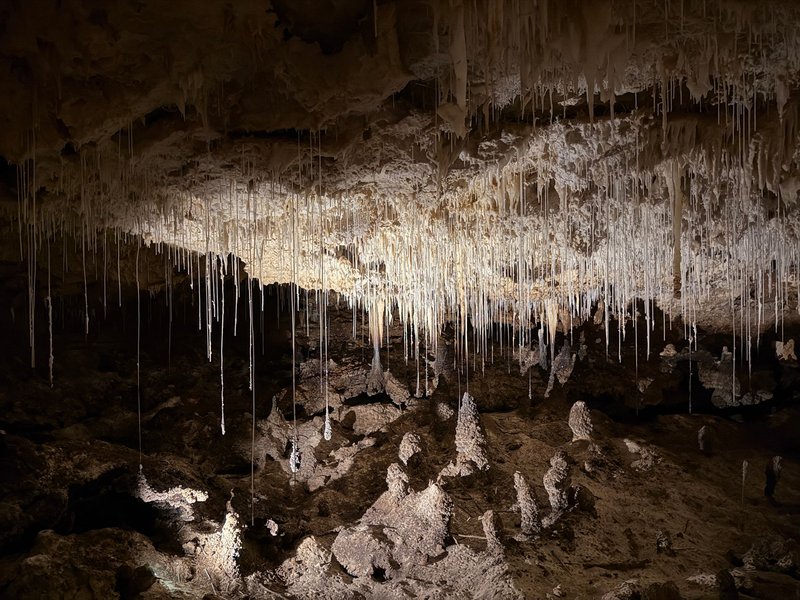
Abukuma-do is the show-off of the Tohoku caves. Discovered during limestone quarrying in 1969, it’s relatively young to tourism, and the operators have outfitted the largest chamber — the “Takine Goten” hall — with dramatic colored lighting that climbs the walls of formations. There’s a standard route and an “exploration course” with tighter, lower passages for a few hundred yen extra. Around 13°C inside, in the Tamura area of Fukushima, reachable from the Ban’etsu East rail line.
10. Genbikei and the Iwaizumi caves (Iwate)
Beyond Ryusendo, Iwate’s karst belt holds smaller caves like Akka and Ryusendo’s sister cave, Ryusen-shindo, which houses a small museum of cave science. These are for the completist who’s already in Iwaizumi — short visits, fewer crowds, and the same bone-cold underground rivers as their famous neighbor.
Central Japan and the Alps
11. Narusawa Ice Cave (Yamanashi)
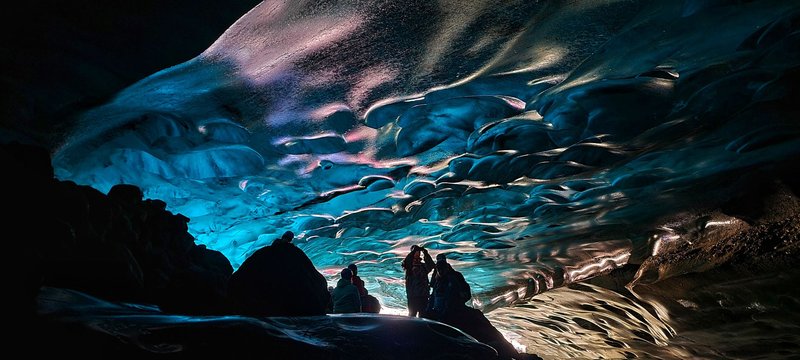
The cold one. Narusawa, also formed by a Fuji lava flow, drops to near or below freezing, and in the cold months its interior grows columns of ice that linger well into summer. You duck through low passages — at points the ceiling forces you into a crouch — past walls glazed in ice. It’s small and quick, often combined with Fugaku Wind Cave next door. Bring something warm; the name is not a metaphor.
12. Ryugashido Cavern (Shizuoka)
Near Hamamatsu, Ryugashido is one of the larger limestone caves in central Honshu, with around 400 meters open to the public and a tall internal waterfall that drops through the chamber. It’s an easy add-on if you’re traveling the Tokaido corridor between Tokyo and Nagoya and want a cave without committing to a trip out to Yamaguchi or Iwate. Around 18°C inside.
13. Hida Great Limestone Cave (Gifu)
The highest-altitude show cave in Japan, sitting around 900 meters up in the mountains near Takayama. Hida Daishonyudo runs roughly 800 meters of walkable route across three levels, and because of the elevation the helictites — twisting, gravity-defying mineral straws — formed in unusually delicate shapes. Pair it with a trip to the old town of Takayama or the thatched villages of Shirakawa-go. Cool inside, around 12°C.
14. Akiyoshido’s Adventure Course (Yamaguchi)
Worth naming separately: beyond the main public path, Akiyoshido offers a guided adventure route through unlit, undeveloped passages of the same system — helmet, headlamp, water up to your knees in places. It needs advance booking and isn’t a casual add-on. If the regular walk leaves you wanting more, this is the deep end of the same cave, and it closes the loop on Japan’s most complete caving destination.
Comparison Table
| Cave | Region | Type | Public path | Year-round temp | Difficulty |
|---|---|---|---|---|---|
| Akiyoshido | Yamaguchi | Limestone | ~1 km | ~17°C | Easy (adventure option) |
| Ryusendo | Iwate | Limestone + lakes | ~700 m | ~10°C | Easy |
| Ryugado | Kochi | Limestone | ~1 km | ~16°C | Easy (adventure course) |
| Nippara | Tokyo | Limestone | ~800 m | ~11°C | Easy |
| Fugaku Wind | Yamanashi | Lava tube | ~200 m | ~3°C | Easy |
| Blue Cave | Okinawa | Sea cave | Swim/boat | sea temp | Swim required |
| Gyokusendo | Okinawa | Limestone | ~890 m | low 20s°C | Easy |
| Inazumi | Oita | Underwater limestone | Short | cool | Easy |
| Abukuma-do | Fukushima | Limestone | varies | ~13°C | Easy (exploration option) |
| Narusawa Ice | Yamanashi | Lava ice cave | ~150 m | near 0°C | Crouching |
| Ryugashido | Shizuoka | Limestone | ~400 m | ~18°C | Easy |
| Hida Great | Gifu | Limestone | ~800 m | ~12°C | Easy |
What to Bring
A light jacket is the single most-skipped item. People arrive in summer clothes, drenched from the walk to the entrance, and then spend 40 minutes shivering in a 10°C cave. Bring a layer even in August.
Wear shoes with grip. Limestone paths stay wet because the formations are still actively dripping — that’s how they grow — and the steps get slick. For any adventure or exploration course, the operator supplies the helmet and headlamp, but you’ll want clothes you don’t mind ruining and, in some caves, a change for afterward.
For the Blue Cave, none of this applies — you’ll be in a wetsuit the operator provides, and the only thing to bring is a reservation, ideally for the first boat of the morning before the queue forms. The Japan National Tourism Organization lists seasonal closures worth checking, since heavy rain shuts the river caves and rough seas close the sea cave.
Pick one cave per region you’re already visiting, dress for the cold, and you’ve got the best free air conditioning in Japan plus a few hundred million years of geology doing the entertaining.