Contents
- What camouflage actually is
- Seasonal change: animals that swap coats
- Background matching and masquerade
- Active color changers
- Decorators and impersonators
- Light and pattern tricks
- Can you spot it?
- An arms race that never ends
- When camouflage fails
- FAQ
Camouflaged animals survive by being hard to see, or by being seen as something that isn’t food. The trick can be color, pattern, body shape, behavior or all four at once. Below are 15 animals grouped by the method they use, because the method tells you more than the habitat does.
What camouflage actually is
Camouflage is any trait that makes an animal harder for another animal to detect or recognize. Predators use it to get close. Prey use it to avoid being found. Biologists sort it into a handful of types, and most of the animals below lean on one or two of them.
| Type | How it works | Example |
|---|---|---|
| Background matching | Color and texture blend into the surroundings | Flounder |
| Disruptive coloration | Bold patches break up the body outline | Zebra |
| Countershading | Dark top, pale belly cancels out shadow | Great white shark |
| Masquerade | The animal looks like an object, such as a twig | Stick insect |
| Mimicry | The animal copies another animal | Mimic octopus |
| Seasonal change | Coat or plumage changes with the year | Arctic fox |
Seasonal change: animals that swap coats
A white animal on brown ground is a snack. Animals in places with snowy winters solve this by changing color twice a year.
1. Arctic fox
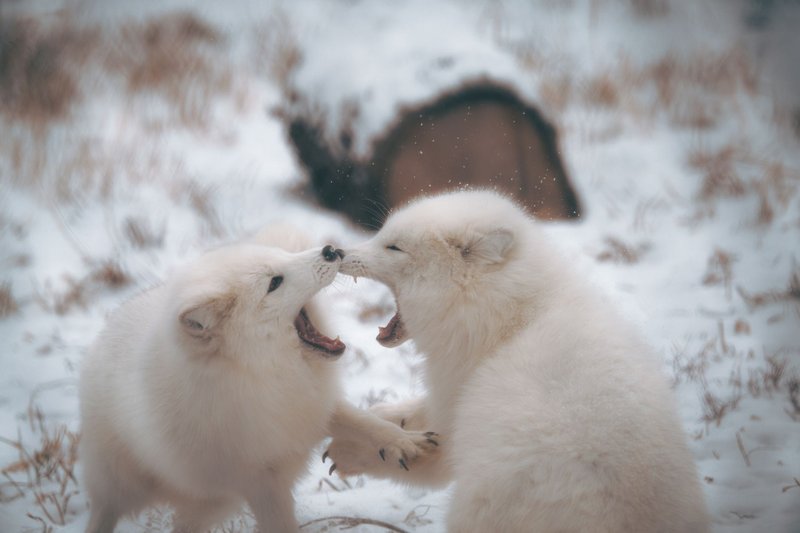
The arctic fox wears a thick white coat in winter and sheds it for a brown-gray one in summer, matching snow in one season and tundra rock and moss in the other. It lives across the Arctic circle, from Alaska to Siberia, and the same camouflage that hides it from polar bears and wolves also helps it sneak up on lemmings.
2. Rock ptarmigan
The rock ptarmigan is a grouse of Arctic and alpine country that turns almost entirely white in winter, then molts into mottled brown and gray as the snow melts. It stays motionless when threatened. A white bird on snow with its eyes shut is nearly invisible until it explodes into flight a few feet from your boots.
3. Snowshoe hare
The snowshoe hare of North America’s northern forests goes from brown to white each autumn. The trigger is day length, not temperature or snow cover, and that detail matters later in this post.
Background matching and masquerade
Here the goal is to disappear into a surface or become something nobody wants to eat, like a leaf, a branch or a lump of bark.
4. Peppered moth
The peppered moth is the textbook case of camouflage evolving in real time. In 19th-century England, soot-darkened tree trunks favored dark moths over pale ones, because birds picked off whichever form stood out. When air pollution fell, pale moths recovered. A 2016 study in Nature traced the dark form to a single genetic change that arose around 1819.
5. Leaf-tailed gecko
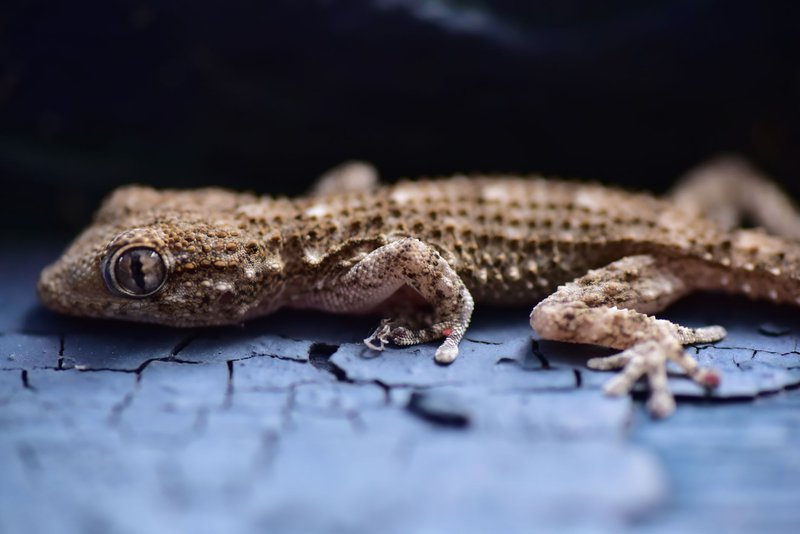
Leaf-tailed geckos of Madagascar (genus Uroplatus) combine three tricks. Their flattened bodies press against bark, a fringe of skin along the flank erases the shadow that would give them away, and the tail looks like a dead leaf, complete with ragged edges. Some species can hang motionless on a trunk for the entire day.
6. Stick insect
There are roughly 3,000 species of stick and leaf insects, and many sway side to side while they walk, mimicking a twig in a breeze. The sway is a behavior as much as a body shape. A stick insect that holds perfectly still on a windy day is the one that gets noticed.
7. Common potoo
The common potoo, a Central and South American bird, perches upright on a broken branch stump during the day with its beak pointed to the sky and its body stretched thin. Its feathers match lichen-streaked wood. If something approaches, it keeps its eyelids cracked into slits, which lets it watch while still looking like part of the tree.
8. Pygmy seahorse
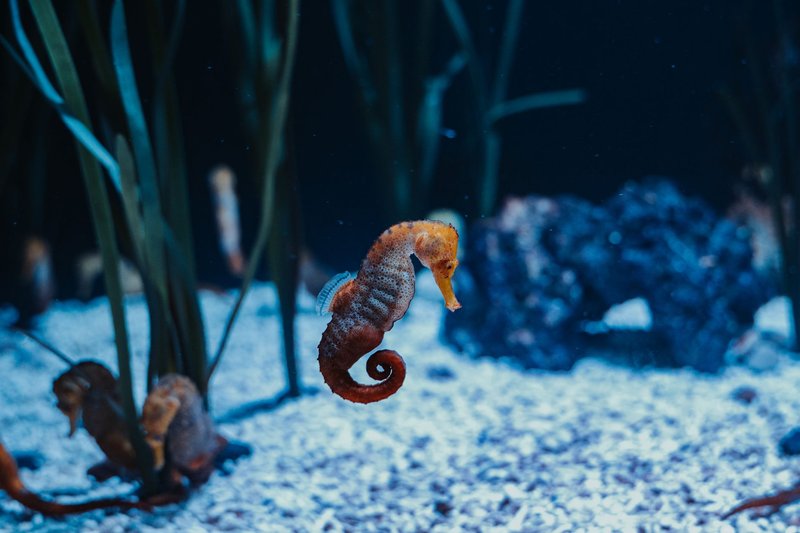
Bargibant’s pygmy seahorse is under 2.5 centimeters long and lives its whole life on a single type of gorgonian sea fan. Its body is covered in knobby bumps colored to match the coral’s polyps, so well that divers often found the coral for years before anyone noticed the seahorse.
Active color changers
Some animals do not settle for one look. They change on demand.
9. Flounder
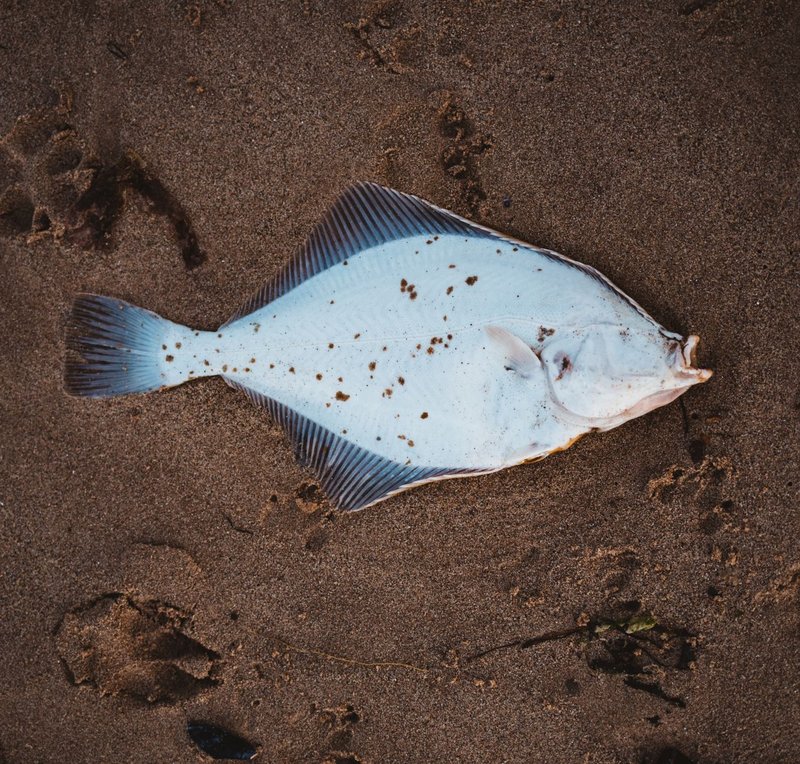
A flounder lies flat on the seafloor with both eyes on its upper side, and it adjusts its skin to the sand, gravel or mud beneath it. Within minutes it can go from plain sand to speckled pebbles. Researchers have shown that flatfish read the texture of the bottom, not just its shade.
10. Cuttlefish
Cuttlefish are the fastest and most complete color changers on Earth. Thousands of pigment sacs called chromatophores expand and contract under muscle control, and the skin can raise small bumps to mimic coral or rock texture. A cuttlefish can change its look in under a second. Oddly, most cuttlefish have only one type of light-sensing cell in their eyes, so how they match colors they may not perceive is still an open question.
11. Chameleon
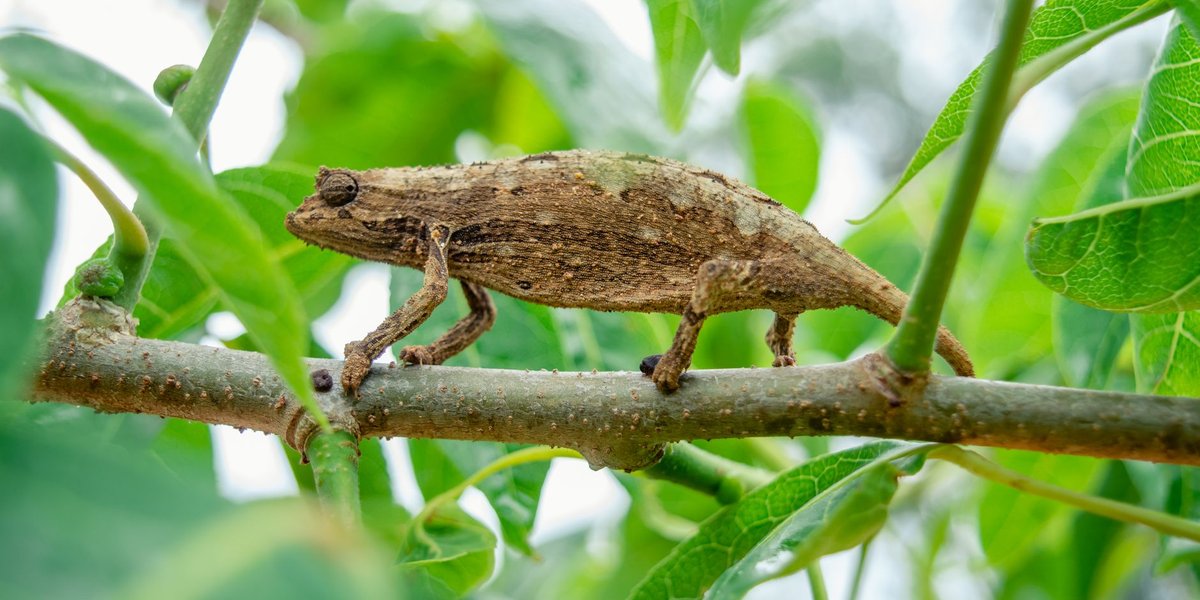
Chameleons are the animal everyone associates with camouflage, and the popular story is mostly wrong. Their color changes are used mainly for signaling: males show off to rivals and mates, and color also helps with temperature control. Their baseline coloring does most of the hiding. A Nature Communications study found that panther chameleons change color by adjusting the spacing of tiny guanine crystals in their skin cells, which shifts the wavelengths of light reflected.
Decorators and impersonators
12. Decorator crab
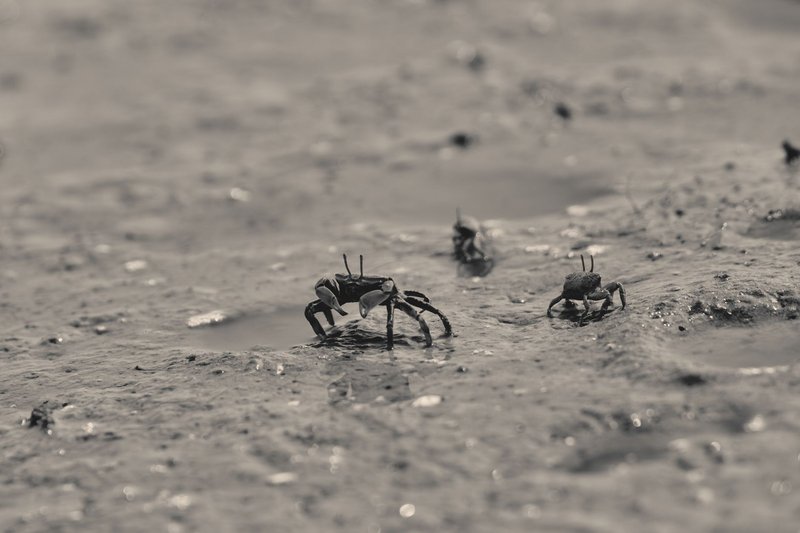
The decorator crab builds its camouflage instead of growing it. It snips off pieces of sponge, algae and anemone, then fixes them to the hooked bristles on its shell. When it molts, it often moves its old decorations to the new shell. Some species pick pieces that taste bad, so the costume is both a disguise and a deterrent.
13. Mimic octopus
The mimic octopus, found in the muddy waters off Indonesia, does not copy a background. It copies animals. Observers have recorded it flattening itself to move like a flatfish, holding its arms out like a lionfish’s spines, and sinking two arms into burrows with banded stripes to resemble a venomous sea snake. Which impression it chooses seems to depend on which predator is nearby.
Light and pattern tricks
Not all camouflage tries to look like the scenery. These two work on perception.
14. Great white shark
Great whites are dark gray on top and white underneath. Seen from above, the dark back merges with deep water. Seen from below, the white belly blends with bright surface light. This is countershading, first described in the 1890s by the American painter Abbott Thayer, and it flattens the shading that normally makes a three-dimensional body easy to spot.
15. Zebra
The zebra’s stripes are the classic case of disruptive coloration, and they are also a good reminder that scientists still argue about what camouflage is for. Stripes do break up the outline of a herd, which can confuse a predator picking out one animal. But the strongest experimental evidence points to a different job: biting flies land far less often on striped surfaces.
Can you spot it?
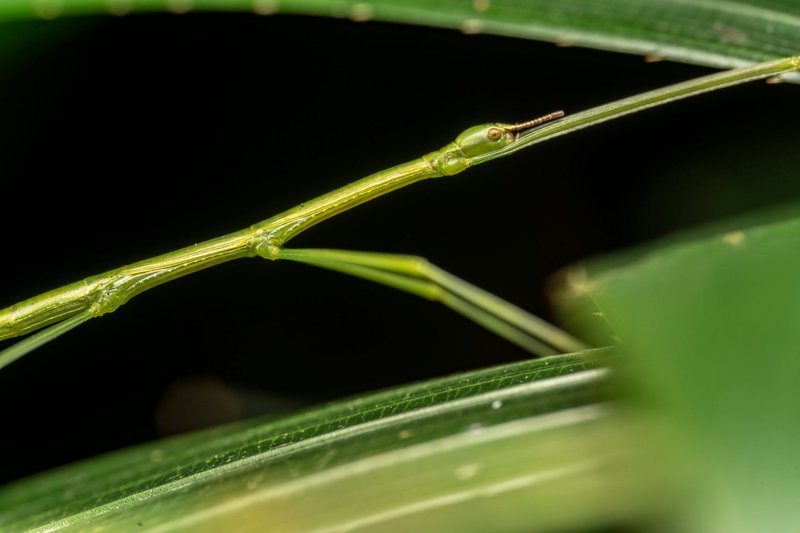
Try this with any photo of a camouflaged animal. Do not look for the animal. Look for what does not belong: a shadow that runs the wrong way, an edge that is too straight, a leaf with a perfectly symmetrical shape. Predators hunt the same way. They scan for outlines and odd shadows, which is why so many of the tricks above target outlines and shadows specifically.
An arms race that never ends
Camouflage does not evolve in isolation. Every improvement in hiding puts pressure on predators to see better, and every improvement in seeing puts pressure on prey to hide better. Predators evolve sharper eyes, better color vision or search habits tuned to common prey patterns. Prey respond with more convincing textures and behaviors.
The peppered moth shows the process on a short timescale: birds acted as the filter, and the moth population shifted within a few decades. Many camouflaged species also have backup defenses. A stick insect that is spotted can drop to the ground and play dead. A cuttlefish that is spotted can ink and flee.
When camouflage fails
Camouflage works only when the animal matches its surroundings. Change the surroundings and the match breaks. Snowshoe hares turn white based on day length, but snow now arrives later and melts earlier across much of their range. Researchers studying hares in Montana documented how shorter snow seasons leave white hares on bare brown ground, a mismatch that makes them easy targets. Some hare populations may adapt by staying brown through winter, but evolution has to outrun the climate to do it.
FAQ
What are the main types of animal camouflage?
The main types are background matching, disruptive coloration, countershading, masquerade, mimicry and seasonal color change. Many animals use more than one.
Which animals change color the fastest?
Cephalopods, especially cuttlefish and octopuses, change color in a fraction of a second. Flounders and chameleons take longer, from several seconds to a few minutes.
Do chameleons change color to blend in?
Mostly no. Chameleons change color for communication and temperature control. Their resting colors do most of the camouflage work.
What is the difference between camouflage and mimicry?
Camouflage hides an animal from view or from recognition. Mimicry makes one animal look like another, usually a dangerous or unappetizing one, so it is seen but avoided.
Is camouflage only for prey?
No. Predators use it too. Leaf-tailed geckos, flounders and cuttlefish all ambush or stalk prey while hidden.