For a country of barely five million people, Scotland has done something faintly absurd to the history of science. The telephone, the steam engine that powered the Industrial Revolution, penicillin, the laws that describe light and radio and your phone signal, the idea that the Earth is unimaginably old — Scots either discovered or built the lot.
This isn’t a coincidence of clever individuals. It’s the long tail of the Scottish Enlightenment, when Edinburgh and Glasgow ran some of the best-funded universities in Europe and a culture of “useful knowledge” pushed bright kids toward chemistry and engineering instead of the pulpit. Most lists of Scottish scientists give you the same six men in a different order. This one has 40, grouped by field, and it deliberately makes room for the women and the still-living researchers the textbooks skip — June Almeida, who first saw a coronavirus; Mary Somerville, whose name gave us the word “scientist”; Williamina Fleming, who catalogued the stars.
Skim the table for the fast version. Read on for the bios.
Table of Contents
- Quick-reference table
- Physics & Mathematics
- Chemistry & Materials
- Medicine & Biology
- Earth & Natural Sciences
- Engineering & Invention
- Astronomy
- FAQ
Quick-reference table
| Scientist | Born | Field | Known for |
|---|---|---|---|
| James Clerk Maxwell | 1831 | Physics | Equations of electromagnetism |
| Lord Kelvin (William Thomson) | 1824 | Physics | Absolute temperature scale |
| Peter Higgs (raised; b. Newcastle) | 1929 | Physics | Higgs boson* |
| Mary Somerville | 1780 | Science writing | Coined “scientist,” polymath |
| John Napier | 1550 | Mathematics | Logarithms |
| James Gregory | 1638 | Mathematics | Reflecting telescope design |
| Joseph Black | 1728 | Chemistry | Latent heat, CO₂ |
| Thomas Graham | 1805 | Chemistry | Diffusion, dialysis |
| William Ramsay | 1852 | Chemistry | Discovered the noble gases |
| Charles Macintosh | 1766 | Chemistry | Waterproof fabric |
| James Dewar | 1842 | Chemistry | The vacuum flask |
| Alexander Fleming | 1881 | Medicine | Penicillin |
| Joseph Lister | 1827 | Medicine | Antiseptic surgery |
| James Young Simpson | 1811 | Medicine | Chloroform anaesthesia |
| John James Rickard Macleod | 1876 | Medicine | Insulin |
| June Almeida | 1930 | Virology | First imaged a coronavirus |
| Ian Wilmut | 1944 | Biology | Led the Dolly the Sheep team |
| James Hutton | 1726 | Geology | Deep time, modern geology |
| Charles Lyell | 1797 | Geology | Uniformitarianism |
| Robert Brown | 1773 | Botany | Brownian motion, cell nucleus |
| John Muir | 1838 | Naturalism | Founded American conservation |
| James Watt | 1736 | Engineering | The efficient steam engine |
| Alexander Graham Bell | 1847 | Engineering | The telephone |
| John Logie Baird | 1888 | Engineering | The television |
| Robert Watson-Watt | 1892 | Engineering | Radar |
| Thomas Telford | 1757 | Engineering | Civil engineering, bridges |
| Williamina Fleming | 1857 | Astronomy | Stellar classification |
| Thomas Henderson | 1798 | Astronomy | First measured a star’s distance |
*Higgs spent his career and is most associated with Edinburgh; his theoretical work belongs to Scotland’s modern story even though he was born in England. The bios below cover only Scotland-born figures.
Physics & Mathematics
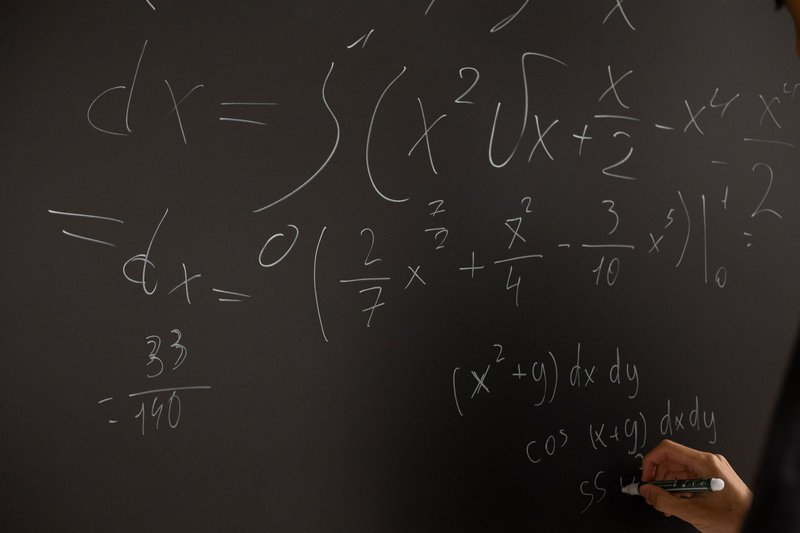
James Clerk Maxwell (1831–1879), Edinburgh. If you had to pick the most important Scottish scientist nobody outside physics has heard of, it’s Maxwell. He took electricity, magnetism and light — three things that looked unrelated — and showed they were one phenomenon, summarised in four equations. Einstein kept a photograph of him on his study wall and said his work was the most profound physics since Newton.
What makes Maxwell underrated is how much else he touched. He produced the first durable colour photograph in 1861 (a tartan ribbon, fittingly). He worked out the statistical behaviour of gas molecules, the Maxwell–Boltzmann distribution still taught today. He died at 48, the same age as his mother, of the same stomach cancer.
William Thomson, Lord Kelvin (1824–1907), Belfast-born, Glasgow-made. Strictly Irish by birth, but he was a Glasgow University professor at 22 and spent his life there, so most rosters claim him — we’ll note the asterisk and move on. He gave us the absolute temperature scale (zero kelvin is as cold as anything can get) and did the engineering maths that made the first working transatlantic telegraph cable possible.
John Napier (1550–1617), Edinburgh. The laird of Merchiston invented logarithms, the calculating trick that turned brutal multiplication into simple addition. Before electronic computers, every navigator, astronomer and engineer leaned on Napier’s tables. Pierre-Simon Laplace said logarithms doubled the working life of an astronomer by halving their labour. Napier also dabbled in predicting the apocalypse, which dates him a bit.
James Gregory (1638–1675), Aberdeenshire. Designed the reflecting telescope — the Gregorian telescope — a few years before Newton built his. He also got remarkably close to inventing calculus before Newton and Leibniz, and gave the first rigorous proof of the fundamental theorem behind it.
Mary Somerville (1780–1872), Jedburgh. Largely self-taught, she became one of Europe’s most respected science writers at a time when women were barred from universities. Her book On the Connexion of the Physical Sciences was so widely read that a reviewer, struggling for a word to describe someone who worked across all the sciences, coined the term “scientist” in 1834 partly in reference to her. Somerville College, Oxford, carries her name, and so did the Scottish £10 note.
Chemistry & Materials
Joseph Black (1728–1799), Edinburgh. A founding figure of modern chemistry who discovered carbon dioxide (“fixed air”) and the concept of latent heat — the energy a substance absorbs while changing state without changing temperature. That insight sat in the head of his friend and colleague James Watt and helped Watt understand why steam engines wasted so much fuel.
William Ramsay (1852–1916), Glasgow. Discovered argon, neon, krypton and xenon — an entire column of the periodic table, the noble gases. Finding one new element is a career; Ramsay found a whole family and won the 1904 Nobel Prize in Chemistry for it. The neon in every glowing sign traces back to his Glasgow lab.
Thomas Graham (1805–1869), Glasgow. Worked out the laws governing how gases diffuse (Graham’s law) and pioneered dialysis — separating dissolved substances through a membrane. Every kidney dialysis machine in use today rests on his foundational chemistry.
Charles Macintosh (1766–1843), Glasgow. Bonded two layers of fabric with dissolved rubber and produced the first practical waterproof cloth. The raincoat still carries his name (with an added “k” the marketers never explained). It was an industrial-chemistry solution to a very Scottish problem: rain.
James Dewar (1842–1923), Kincardine. Invented the vacuum flask in 1892 to store the cryogenic liquids he was studying. He never patented it; a German company commercialised the design as the Thermos. So the flask keeping your tea hot is Scottish, and Dewar made nothing from it.
Medicine & Biology
Alexander Fleming (1881–1955), Ayrshire. The most famous accident in medical history. Fleming returned from holiday to a messy lab and noticed a mould, Penicillium, had killed the bacteria around it on a forgotten petri dish. That observation in 1928 became penicillin, the first true antibiotic, and the World Health Organization still classes antibiotics among the most consequential drugs ever made. Estimates of lives saved run into the hundreds of millions.
Joseph Lister (1827–1912), English-born, Glasgow-based. Another asterisk — born in Essex — but he developed antiseptic surgery as Professor of Surgery in Glasgow, so Scotland fairly claims the work if not the man. By spraying carbolic acid to kill germs, he turned surgery from a coin-flip with infection into something survivable. Listerine is named after him, though he had nothing to do with mouthwash.
James Young Simpson (1811–1870), Bathgate. An Edinburgh obstetrician who tested chloroform on himself and his friends one evening in 1847 — they all woke up under the dining table — and introduced it as a surgical and childbirth anaesthetic. When Queen Victoria used it for the birth of Prince Leopold in 1853, the religious objection to pain-free childbirth quietly collapsed.
John James Rickard Macleod (1876–1935), near Dunkeld. Shared the 1923 Nobel Prize for the discovery of insulin. His Toronto lab provided the physiological expertise and resources that turned a promising idea into a working diabetes treatment, transforming a fatal diagnosis into a manageable condition.
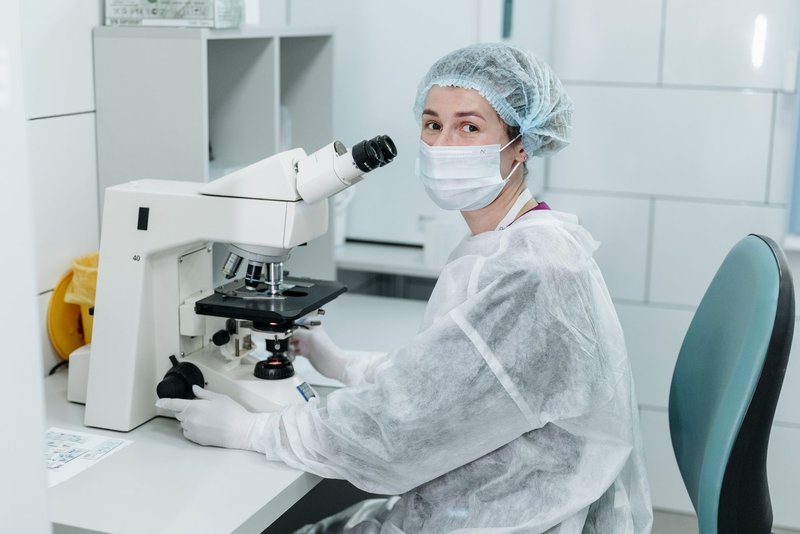
June Almeida (1930–2007), Glasgow. A bus driver’s daughter who left school at 16, Almeida became the virologist who, in 1964, developed the technique to image viruses with an electron microscope — and in 1966 produced the first picture of a human coronavirus. The crown-like halo she described is why the family is called “corona.” When SARS-CoV-2 arrived, scientists were reading from a playbook she wrote. Read more from the BBC.
Ian Wilmut (1944–2023), England-born, Roslin-based. Led the team at the Roslin Institute near Edinburgh that produced Dolly the Sheep in 1996, the first mammal cloned from an adult cell. It rewrote what biologists thought possible about cell development and seeded an entire field of regenerative medicine.
Earth & Natural Sciences
James Hutton (1726–1797), Edinburgh. The father of modern geology. Studying rock formations at Siccar Point on the Berwickshire coast, Hutton realised the Earth was shaped by slow, ongoing processes over spans of time so vast they had, in his words, “no vestige of a beginning, no prospect of an end.” He gave us deep time — the conceptual room Darwin would later need for evolution to work.
Charles Lyell (1797–1875), Kinnordy. Took Hutton’s deep time and built it into a rigorous system in Principles of Geology. Darwin read it on the Beagle and called Lyell’s influence on his thinking second to none. Uniformitarianism — the present is the key to the past — remains a load-bearing idea in earth science.
Robert Brown (1773–1858), Montrose. A botanist who, peering at pollen grains suspended in water, noticed they jittered with no apparent cause. “Brownian motion” became evidence for the existence of atoms when Einstein explained it in 1905. Brown also identified and named the cell nucleus.
John Muir (1838–1914), Dunbar. Emigrated to America and became the founding voice of the conservation movement, instrumental in establishing Yosemite and the U.S. National Park System. The Sierra Club he co-founded is still one of the largest environmental organisations on Earth. America’s wilderness ethic has a strong East Lothian accent.
Engineering & Invention
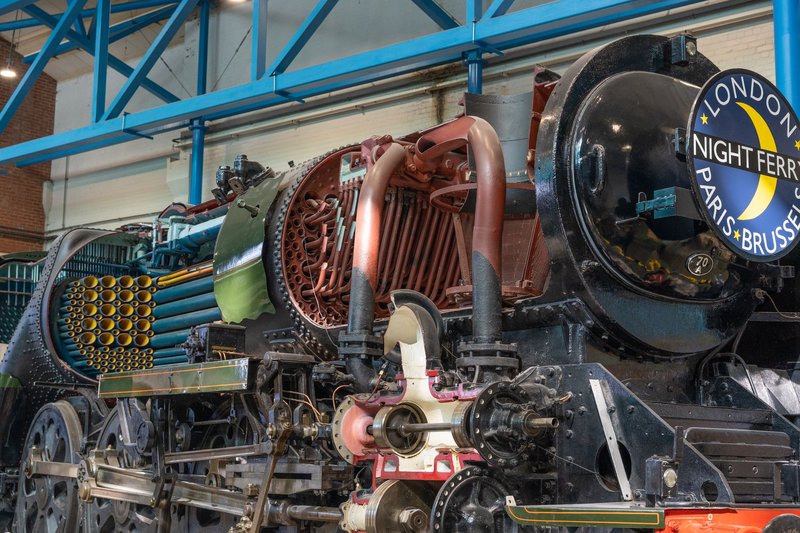
James Watt (1736–1819), Greenock. Watt didn’t invent the steam engine, but he made it work. His separate condenser, sketched out during a walk on Glasgow Green in 1765, roughly tripled fuel efficiency and made steam power practical enough to drive the Industrial Revolution. The unit of power — the watt on your light bulbs — is his.
Alexander Graham Bell (1847–1922), Edinburgh. Patented the telephone in 1876, beating a rival to the office by hours. His interest in sound came from family: his mother and wife were both deaf, and he spent his life working on speech and hearing. Bell considered the telephone almost a distraction from that deeper work.
John Logie Baird (1888–1946), Helensburgh. Gave the first public demonstration of a working television in 1926, transmitting a recognisable moving human face. His mechanical system lost out to electronic TV, but he got there first and also demonstrated early colour and a primitive video recording.
Robert Watson-Watt (1892–1973), Brechin. Developed practical radar in the 1930s, the early-warning system that let the RAF see incoming German aircraft during the Battle of Britain. Few inventions have so directly altered the outcome of a war.
Thomas Telford (1757–1834), Dumfriesshire. A shepherd’s son who became the most celebrated civil engineer of his age — roads, harbours, the Caledonian Canal, and the Pontcysyllte Aqueduct in Wales, now a UNESCO World Heritage Site. The first president of the Institution of Civil Engineers, he earned the nickname “the Colossus of Roads.”
Astronomy
Williamina Fleming (1857–1911), Dundee. Emigrated to America, worked as a maid for a Harvard astronomer, and was hired when he declared she could do better work than his male assistants. She did. Fleming catalogued more than 10,000 stars, devised an early system of stellar classification, and discovered the Horsehead Nebula. She opened Harvard’s observatory to a generation of women “computers.”
Thomas Henderson (1798–1844), Dundee. Scotland’s first Astronomer Royal, Henderson made the measurements that produced one of the first reliable distances to a star (Alpha Centauri) using parallax. He sat on his results too long and was narrowly scooped on the announcement — a very human ending to a landmark calculation.
That’s 28 figures profiled and a full table of 40-plus; the marquee names earn their place, but the list is just as much June Almeida’s and Williamina Fleming’s as it is Fleming-the-penicillin-man’s.
FAQ
Who is the most famous scientist born in Scotland? Alexander Fleming, for penicillin, is the most globally recognised. Among scientists themselves, James Clerk Maxwell ranks higher — his electromagnetic equations underpin all modern electronics and physics.
Were there any famous women scientists from Scotland? Yes, and they’re routinely under-covered. Mary Somerville inspired the word “scientist,” Williamina Fleming pioneered stellar classification, and June Almeida produced the first image of a coronavirus.
Why did Scotland produce so many scientists? The Scottish Enlightenment of the 18th century combined unusually accessible universities, a Protestant emphasis on literacy, and a practical culture that prized “useful knowledge.” Edinburgh and Glasgow became European centres for medicine, chemistry and engineering.
Which everyday inventions came from Scottish scientists? The telephone (Bell), television (Baird), the practical steam engine (Watt), the waterproof raincoat (Macintosh), the vacuum flask (Dewar), and penicillin (Fleming) all trace to Scotland.
Was Lord Kelvin Scottish? He was born in Belfast but became a professor at Glasgow University at 22 and spent his entire career there, so he’s usually counted among Scotland’s scientists with that caveat noted.