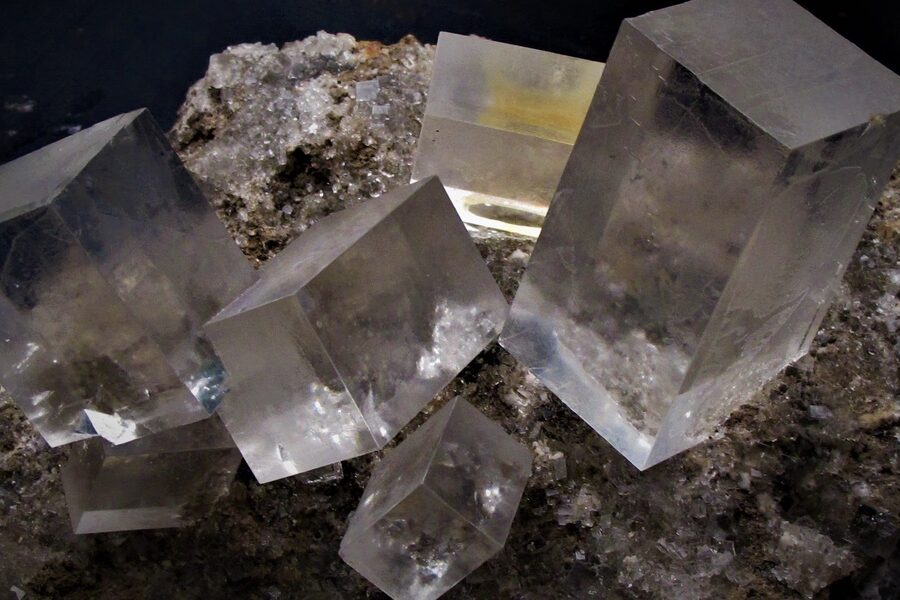
A strong base is one that dissociates completely in water. Drop it in, and essentially every formula unit splits apart to release hydroxide ions (OH⁻). There’s no equilibrium arrow, no “partial” — it’s a one-way trip. That single property is what separates the strong bases from everything else, and it’s the reason their pH math is so clean.
There are only eight of them you need to know, and they’re all metal hydroxides. Memorize the list, understand why they behave the way they do, and you’ve got most of what general chemistry, the MCAT, and nursing prep will throw at you.
Table of Contents
- The 8 Strong Bases
- What “Strong” Actually Means
- Three Ways to Define a Base
- How to Calculate the pH of a Strong Base
- The Calcium Hydroxide Trap
- Strong vs. Weak Base
- Strong vs. Concentrated vs. Soluble
- Superbases
- Where You Actually Meet Strong Bases
- Practice Problems
- FAQ
The 8 Strong Bases
The complete list is the Group 1 (alkali metal) hydroxides plus the heavier Group 2 (alkaline earth) hydroxides. Here they are with their dissociation equations:
| Strong base | Formula | Dissociation in water |
|---|---|---|
| Lithium hydroxide | LiOH | LiOH → Li⁺ + OH⁻ |
| Sodium hydroxide | NaOH | NaOH → Na⁺ + OH⁻ |
| Potassium hydroxide | KOH | KOH → K⁺ + OH⁻ |
| Rubidium hydroxide | RbOH | RbOH → Rb⁺ + OH⁻ |
| Cesium hydroxide | CsOH | CsOH → Cs⁺ + OH⁻ |
| Calcium hydroxide | Ca(OH)₂ | Ca(OH)₂ → Ca²⁺ + 2 OH⁻ |
| Strontium hydroxide | Sr(OH)₂ | Sr(OH)₂ → Sr²⁺ + 2 OH⁻ |
| Barium hydroxide | Ba(OH)₂ | Ba(OH)₂ → Ba²⁺ + 2 OH⁻ |
Notice the pattern. The first five come from Group 1 and release one hydroxide each. The last three come from Group 2 and release two. That stoichiometry difference matters more than it looks, and it’s where most people lose points (more on that below).
A quick shortcut: the strong bases are the hydroxides of the metals in the first two columns of the periodic table — with Be(OH)₂ and Mg(OH)₂ left out. Beryllium hydroxide is amphoteric and barely soluble; magnesium hydroxide is the milky stuff in milk of magnesia and only weakly soluble. They don’t make the cut. Cesium hydroxide sits at the other extreme — it’s one of the strongest of the eight because cesium is so eager to give up its electron, a reactivity that shows up across the metal’s whole family of cesium compounds.
What “Strong” Actually Means
The strength of a base has exactly one definition in this context: how completely it dissociates. A strong base hands over its hydroxide ions to solution fully. Write the reaction with a single forward arrow, because the reverse reaction is negligible.
Compare that to ammonia (NH₃), the classic weak base. Ammonia doesn’t contain hydroxide at all — it grabs a proton from water to make a little hydroxide, and only a small fraction reacts at any moment. You write that one with an equilibrium arrow (⇌) and a base dissociation constant, Kb. A strong base has no meaningful Kb because the reaction goes essentially to completion.
This is why strong-base pH problems are arithmetic and weak-base problems require an equilibrium table. With a strong base, the hydroxide concentration is handed to you by the stoichiometry. Nothing to solve for.
Three Ways to Define a Base
Chemistry gives you three nested frameworks for what “base” means, and a strong hydroxide qualifies under all three.
Arrhenius. The oldest and narrowest definition: a base is something that increases OH⁻ concentration in water. NaOH dumps hydroxide directly into solution, so it’s a textbook Arrhenius base. This definition is the one strong bases fit most cleanly.
Brønsted-Lowry. A base is a proton (H⁺) acceptor. The hydroxide ion itself is the proton acceptor here — OH⁻ + H⁺ → H₂O. The Brønsted-Lowry model from LibreTexts is broader than Arrhenius because it covers bases that work in non-aqueous solvents, too.
Lewis. The broadest: a base is an electron-pair donor. Hydroxide donates a lone pair to form a bond. This definition stretches all the way to species that have nothing to do with hydroxide, but every Arrhenius base is also a Lewis base.
For the eight strong bases, you almost always use the Arrhenius lens. The other two matter when you move into superbases and organic chemistry.
How to Calculate the pH of a Strong Base
Because dissociation is complete, the hydroxide concentration equals the base concentration (times the number of OH⁻ per formula unit). The whole calculation is four steps.
Worked example: pH of 0.1 M NaOH
- Find [OH⁻]. NaOH releases one OH⁻ per unit, so [OH⁻] = 0.1 M.
- Find pOH. pOH = −log[OH⁻] = −log(0.1) = 1.
- Convert to pH. At 25 °C, pH + pOH = 14, so pH = 14 − 1 = 13.
- Sanity check. A pH of 13 is strongly basic. That fits a tenth-molar NaOH solution.
If you’d rather skip pOH, you can go straight through the water autoionization constant. [OH⁻] = 0.1, so [H⁺] = Kw / [OH⁻] = (1.0 × 10⁻¹⁴) / 0.1 = 1.0 × 10⁻¹³, and pH = −log(1.0 × 10⁻¹³) = 13. Same answer, one extra step.
The key insight: you never needed an equilibrium expression. For a strong base, [OH⁻] is just the molarity scaled by the hydroxide count. The mirror-image calculation runs on the acid side too, where the seven strong acids hand you [H⁺] just as directly.
The Calcium Hydroxide Trap
Here’s the spot where confident students get burned. Group 2 hydroxides release two hydroxide ions per formula unit, and forgetting that factor of 2 throws your pH off.
Worked example: pH of 0.05 M Ca(OH)₂
Ca(OH)₂ → Ca²⁺ + 2 OH⁻. Each formula unit gives two hydroxides, so:
[OH⁻] = 2 × 0.05 = 0.1 M
pOH = −log(0.1) = 1, and pH = 14 − 1 = 13.
Notice that 0.05 M Ca(OH)₂ gives the same pH as 0.1 M NaOH — because it produces the same hydroxide concentration with half the molarity. Treat the “2” as part of the dissociation equation and you’ll never miss it. Skip it and you’ll calculate pH 12.7 instead of 13.
One caveat for the real world: calcium and strontium hydroxide aren’t very soluble, so you can’t actually dissolve them to high concentrations. The math above assumes everything you added dissolved. Barium hydroxide is the most soluble of the three and the one labs reach for when they want a genuinely concentrated Group 2 base.
Strong vs. Weak Base
The strong/weak distinction is about dissociation, full stop. It is not about pH, concentration, or how dangerous the substance feels.
| Strong base | Weak base | |
|---|---|---|
| Dissociation | Complete | Partial |
| Reaction arrow | One-way (→) | Equilibrium (⇌) |
| Kb | Effectively infinite | Finite, measurable |
| Example | NaOH, KOH | NH₃, pyridine, baking soda |
| pH math | Direct stoichiometry | Requires ICE table |
| Conducts electricity | Strongly | Weakly |
A weak base like ammonia can still produce a basic solution — just not as efficiently. At equal concentrations, the strong base always reaches a higher pH because more of it converts to hydroxide. But “weak” doesn’t mean “harmless,” and “strong” doesn’t mean “concentrated.” That last point trips up enough people to deserve its own section.
Strong vs. Concentrated vs. Soluble
Three words that sound related and mean completely different things.
Strong describes dissociation. Does it fully break apart? NaOH does, every time, regardless of how much you dissolve.
Concentrated describes amount. How many moles per liter? You can have dilute NaOH (strong but low concentration) or, in principle, concentrated ammonia (weak but high concentration). A 0.0001 M NaOH solution is still a strong base — it’s just a barely-basic one, sitting around pH 10.
Soluble describes how much will dissolve at all. This is where Group 2 hydroxides get interesting: Ca(OH)₂ is a strong base in the chemical sense — whatever dissolves dissociates completely — but it’s only slightly soluble, so you can’t make a concentrated solution of it. Limewater, a saturated calcium hydroxide solution, tops out around pH 12.4 not because the base is weak, but because so little of it dissolves.
Keep these three axes separate and the whole topic clicks. A substance can be strong-but-dilute, strong-but-insoluble, or weak-but-concentrated.
Superbases
Beyond the eight metal hydroxides sit the superbases — species so eager to grab protons that they make NaOH look mild. These show up in organic chemistry, not intro gen chem, but they’re worth knowing exist.
A superbase is, loosely, any base stronger than hydroxide. Common ones include sodium amide (NaNH₂), the alkyllithiums like n-butyllithium, and sodium hydride (NaH). They’re powerful enough to rip protons off carbon atoms that ordinary bases can’t touch, which makes them indispensable in synthesis.
The catch: most superbases react violently with water, so you can’t talk about their “pH in solution” the usual way. They’re handled in dry, inert conditions. The American Chemical Society’s coverage of organometallic reagents treats compounds like n-butyllithium as standard but hazardous lab tools — strong enough that the question stops being “what’s the pH” and becomes “how do we keep this away from moisture.”
Where You Actually Meet Strong Bases
These aren’t just exam answers. They run a surprising chunk of everyday chemistry.
- Drain cleaner. Sodium hydroxide (lye) dissolves hair and grease clogs by breaking down fats and proteins. The same caustic action that makes it useful makes it dangerous.
- Soap. Saponification — the reaction that turns fats into soap — runs on NaOH (for bar soap) or KOH (for softer, liquid soaps).
- Batteries. Potassium hydroxide is the electrolyte in alkaline batteries, the AA in your remote.
- Construction. Calcium hydroxide is slaked lime, used in mortar, plaster, and to adjust soil pH in agriculture.
- Food. Lye gives pretzels their brown crust and bagels their chew; it’s also used to cure olives.
Every one of these is corrosive. The CDC’s guidance on sodium hydroxide flags it as a severe skin and eye hazard, which is the practical flip side of “completely dissociates” — all that free hydroxide is chemically aggressive toward tissue.
Practice Problems
Try these before peeking at the answers.
- What is the pH of a 0.01 M KOH solution at 25 °C?
- What is the pH of a 0.025 M Ba(OH)₂ solution at 25 °C?
- A solution of NaOH has a pH of 12. What is its molar concentration?
- True or false: a 0.001 M NaOH solution is not a strong base because its pH is low.
Answers
- KOH gives one OH⁻: [OH⁻] = 0.01 M, pOH = 2, pH = 12.
- Ba(OH)₂ gives two OH⁻: [OH⁻] = 2 × 0.025 = 0.05 M, pOH = −log(0.05) = 1.3, pH = 12.7.
- pH 12 means pOH 2, so [OH⁻] = 10⁻² = 0.01 M. NaOH is 1:1, so [NaOH] = 0.01 M.
- False. It’s still a strong base — it dissociates completely. It’s just dilute, so its pH (around 11) is modest. Strength and concentration are different things.
FAQ
Is NaOH a strong base? Yes. Sodium hydroxide dissociates completely in water into Na⁺ and OH⁻, which is the definition of a strong base. It’s the most common one in labs.
How many strong bases are there? Eight that you need to know: LiOH, NaOH, KOH, RbOH, CsOH, Ca(OH)₂, Sr(OH)₂, and Ba(OH)₂ — the soluble Group 1 and Group 2 hydroxides.
Is ammonia a strong base? No. Ammonia (NH₃) is the classic weak base. It only partially reacts with water to form hydroxide, so it sits at equilibrium and has a finite Kb.
Why isn’t magnesium hydroxide a strong base? Mg(OH)₂ is barely soluble. Although the small amount that dissolves does dissociate, so little dissolves that it can’t behave like the soluble strong bases. It’s the active ingredient in milk of magnesia.
Can a strong base have a low pH? It can’t go below 7, but a very dilute strong base can have a pH near neutral. A 10⁻⁷ M NaOH solution is barely basic. Strength sets how it dissociates; concentration sets how high the pH climbs.
What’s the strongest base? Among the common eight, they’re all “fully dissociated,” so none is stronger by that measure. If you include superbases like n-butyllithium or sodium amide, those vastly exceed hydroxide in proton-grabbing power.