As an Amazon Associate we earn from qualifying purchases. Disclosure
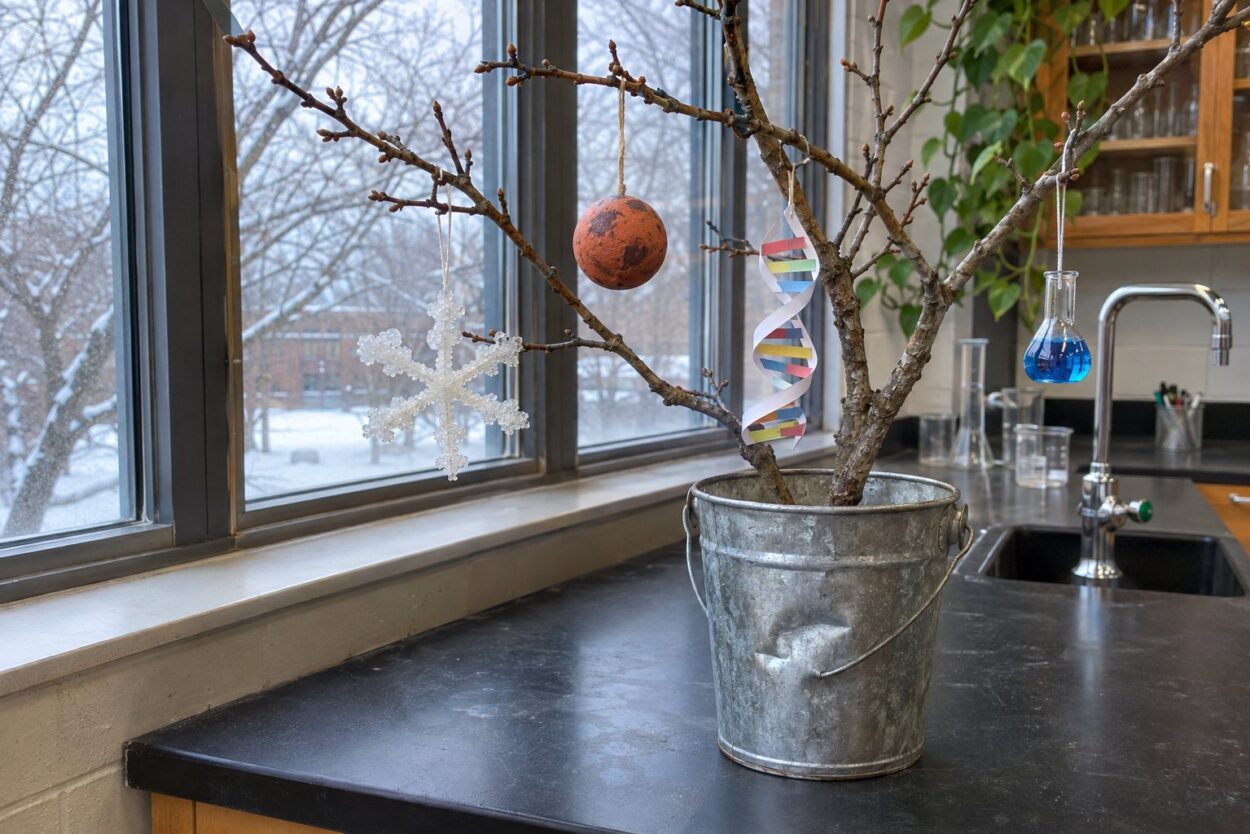
Earlier this week, on the last afternoon before Thanksgiving break, I found my daughter Noor’s science teacher wedging a bare branch into a metal bucket on his side bench. He had a shoebox next to it. Out came a borax snowflake that had turned slightly chalky, a ping-pong ball painted as Mars and a paper double helix repaired twice with tape. Former students made all of them. He puts the branch up every December, and he said some of the people who made those ornaments now have jobs.
That branch explains what works as a Christmas gift for a science teacher: something that can live in the classroom, show a piece of real science and come out again next year. A glass beaker ornament does it for very little. A 6-inch glass prism will throw a spectrum across the board for years. For a stocking, a bag of wintergreen mints doubles as a physics demonstration, because the mints flash blue when you crush them in the dark.
The 21 picks below are split into ornaments and holiday items, larger Christmas gifts and stocking stuffers for science teachers. I trained as a geoscientist, so each one comes with the science it can teach. Every product was rated 4.2 stars or higher on Amazon when I checked.
Quick picks
| Gift | Best for | Budget |
|---|---|---|
| Glass beaker ornament | Chemistry teachers | Budget |
| Glass microscope ornament | Biology teachers | Mid-range |
| National Geographic science advent calendar | Elementary classrooms | Mid-range |
| Campo del Cielo meteorite | Earth and space science | Mid-range |
| Element cube set | A whole department | Premium |
| 6-inch glass prism | Physics teachers | Budget |
| Wintergreen mints | Stockings, any subject | Mid-range |
| Snowflake diffraction glasses | Stockings, the last week of term | Budget |
Budget, Mid-range and Premium compare the picks with each other. Amazon prices change often in December, so check the current one on the product page.
What to get a science teacher for Christmas
Get something that does a job in the room or shows something worth looking at. Science teachers collect demonstration objects the way other people collect mugs, and an object with a story gets handled by students all year. A joke T-shirt gets worn once.
Three questions settle most choices:
- Is it for the classroom or for the person? Ornaments, prisms, rocks and demonstration materials end up in the room. Socks, books, calendars and a loupe go home or stay in a pocket.
- What do they teach? A meteorite lands better with an earth science teacher than with someone who spends the year on cell biology. The table below matches picks to subjects.
- What does the school allow? Many districts cap the value of a gift to a teacher or restrict food and chemicals in classrooms. Check the handbook. Our guide to Christmas gifts for teachers covers school gift rules and what to write in the card.
| They teach | Start with |
|---|---|
| Chemistry | Beaker ornament, cookie cutters, element cubes |
| Biology | Microscope ornament, hand loupes, science pins |
| Physics | Prism, spectroscope, The Physics of Christmas |
| Earth and space | Meteorite, geodes, UV flashlight |
| Elementary or general | Advent calendar, instant snow, wintergreen mints |
This page covers the holiday season. For microscope slides, molecular model kits, document cameras and other year-round picks sorted by subject, see our gifts for science teachers.
Science ornaments and holiday gifts for the classroom
These five go up in December and come down in January, so they never add to the clutter on a teacher’s desk.
Best for chemistry teachers · Budget
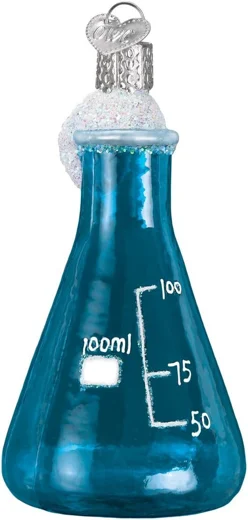
1. Old World Christmas Science Beaker Glass Ornament
A mouth-blown, hand-painted glass ornament in cobalt blue with white graduation lines and glittered bubbles at the neck. The listing calls it a beaker, and your teacher will tell you it is an Erlenmeyer flask: the cone shape with a narrow neck, designed so a liquid can be swirled without splashing out.
The shape is named for the German chemist Emil Erlenmeyer, who described it around 1860. The painted lines on a real one are only approximate, which is why chemists measure with a graduated cylinder or a volumetric flask and use the Erlenmeyer for mixing.
- Mouth-blown, hand-painted glass
- Hangs on a classroom branch or tree
Good: small, instantly readable and an easy stocking item. Not great: it is thin glass, so hang it high in a room full of backpacks.
Check on Amazon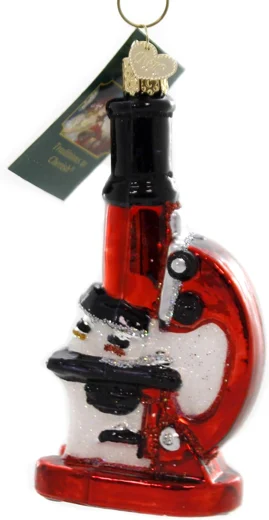
Best for biology teachers · Mid-range
2. Old World Christmas Glass Microscope Ornament
A red and black compound microscope in mouth-blown glass, about 4.75 inches tall, with silver trim and a glittered lens. It has the eyepiece, arm, stage and base in the right places, which a biology teacher will check.
A compound microscope uses two lens systems in series. The objective near the slide makes an enlarged image inside the tube, and the eyepiece enlarges that image again. A 40x objective with a 10x eyepiece gives 400x, enough to see the nucleus in a stained cheek cell.
- Mouth-blown glass with hand-painted detail
- About 4.75 inches tall
Good: a specific, personal choice for someone who teaches life science. Not great: the narrow parts are fragile, so keep the box for storage.
Check on Amazon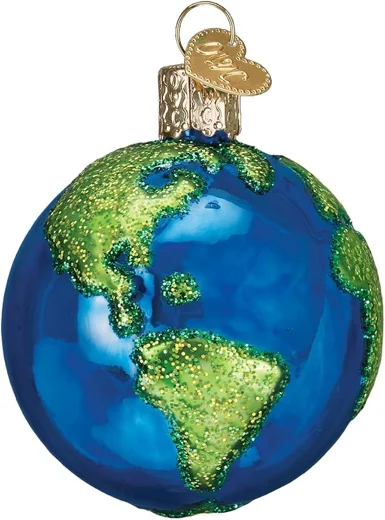
Best for earth science teachers · Mid-range
3. Old World Christmas Planet Earth Glass Ornament
A glass globe with deep blue oceans and glittered green continents. It is the one ornament here that suits a geography teacher as well as an earth science teacher.
The familiar full-disc view of Earth dates from December 1972, when the Apollo 17 crew took the photograph now called the Blue Marble on their way to the Moon. It was a Christmas season image from the start, and a teacher can hang this beside a printout of the original and ask students what the ornament gets wrong.
- Hand-painted blown glass
- Glitter on the land areas
Good: works on a home tree as well as a classroom one. Not great: the continents are decorative, so don’t expect accurate coastlines.
Check on Amazon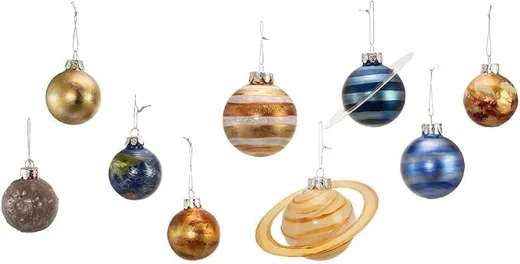
Best ornament set · Premium
4. Kurt Adler Noble Gems Solar System Ornament Set (9 pieces)
Nine painted glass ornaments between 50 and 70 mm across, with a ringed Saturn, boxed as a set. Hung in order along a window or a wire, they make a December display that is also a lesson.
The sizes are the lesson. Jupiter’s diameter is about 11 times Earth’s, so if Earth were a 50 mm bauble, Jupiter would be more than half a meter wide. These ornaments squeeze that range into 20 mm. Ask students to work out how big each one should be and they have a ratio problem with a visible answer.
- 9 glass ornaments, 50 to 70 mm
- Boxed set
Good: a strong group gift from a class or several families. Not great: nine glass balls need a spot out of reach, and it has fewer reviews than most picks here.
Check on Amazon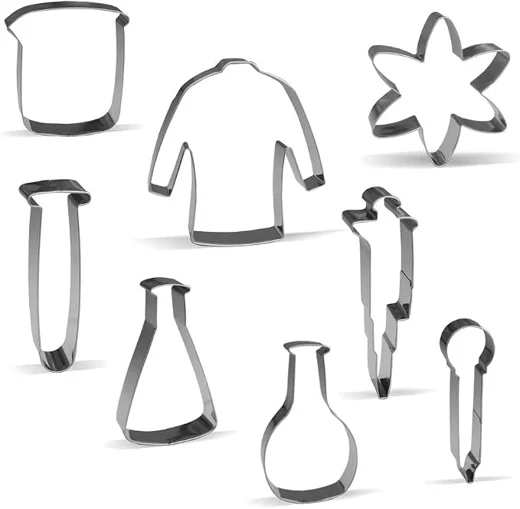
Best for a department cookie exchange · Budget
5. Science Chemistry Cookie Cutters (8 piece)
Eight stainless steel cutters: a lab coat, an atom, a beaker, a round-bottom flask, an Erlenmeyer flask, a test tube, an eye dropper and a micropipette. The listing says they are dishwasher safe, and they also cut clay and soft fruit.
A gingerbread flask is a small chemistry lesson on its own. Baking soda reacts with the acid in molasses and releases carbon dioxide, which puffs the dough, while sugar and protein brown through the Maillard reaction. Thin necks spread and burn first because they have more surface for their volume.
- 8 shapes in stainless steel
- Listed as dishwasher safe
Good: inexpensive and used again every December. Not great: the narrow shapes stick unless the dough is chilled and the cutter floured.
Check on AmazonChristmas gifts for science teachers
These seven are the main present: a calendar, specimens, an optics piece and two books.
Best classroom countdown · Mid-range
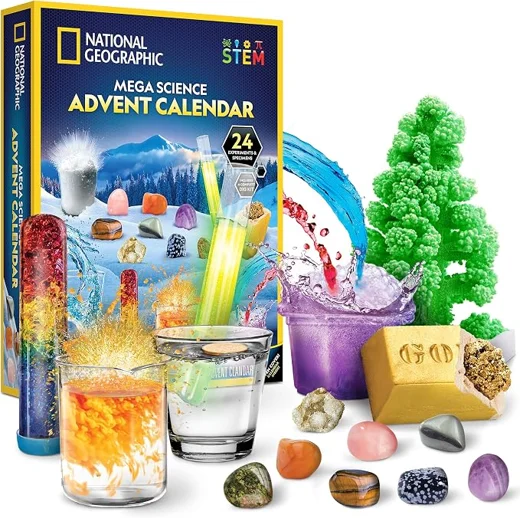
6. National Geographic Science Advent Calendar
Twenty-four doors holding 13 small experiments and 11 specimens, including amethyst, tiger’s eye, snowflake obsidian, a gastropod fossil and a geode. The last day is a pyrite specimen that has to be dug out of a block. It is rated for ages 8 and up.
It has to arrive by December 1, so give it early. A teacher can open one door at the start of each class. School usually breaks up before the 24th, so plan to open two a day in the last week.
- 13 experiments and 11 specimens
- Storage pouch for the collection
- Ages 8 and up
Good: a month of two-minute lesson openers in one box. Not great: the experiments are sized for one child, so the teacher will need to demonstrate them.
Check on Amazon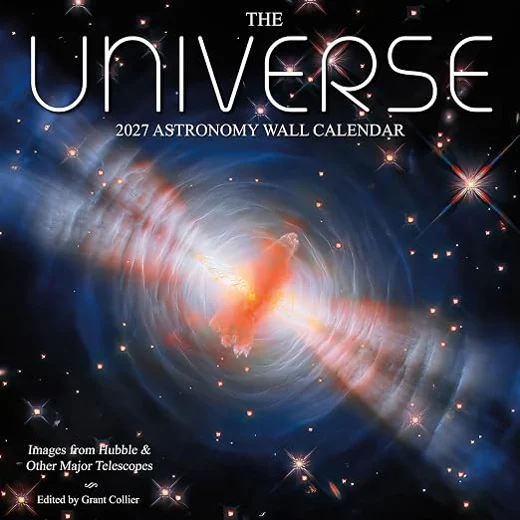
Best gift they use all year · Mid-range
7. The Universe 2027 Astronomy Wall Calendar
A 12 by 12 inch wall calendar from Collier Publishing with images from the Hubble Space Telescope and other major telescopes, one for each month of 2027.
Many of the colors in space telescope images are assigned. A camera records brightness through a filter, and processors give each filter a color, often mapping infrared or a single element’s glow to something eyes can see. A new image on the first school day of each month is a ready-made question about what the colors mean.
- 12 by 12 inches, 2027 dates
- Hubble and other telescope photography
Good: goes on the wall in January and stays useful. Not great: it follows the calendar year, so the first term is already over when it starts.
Check on Amazon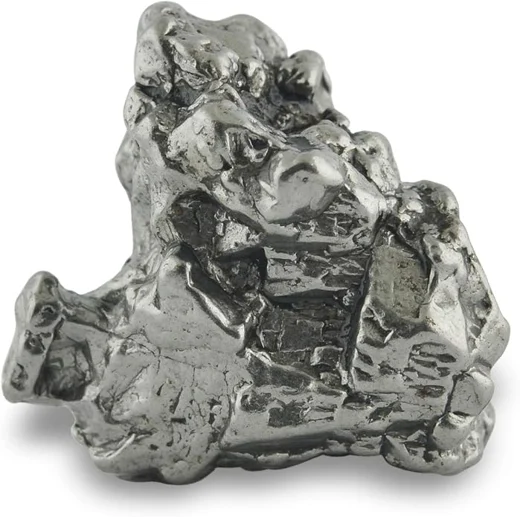
Best for earth and space science · Mid-range
8. Campo del Cielo Iron Meteorite (20 to 30 g)
One iron-nickel nugget from the Campo del Cielo field in northern Argentina, about 1 by 3/4 inch. Each piece differs a little from the photo.
The fall happened roughly 4,000 to 5,000 years ago and scattered iron across a long strip of the plain. The metal itself is far older: iron meteorites come from the cores of small bodies that formed early in the solar system and were later broken apart. It is heavy for its size and a magnet sticks to it, two things a student can test in seconds. Our article on meteors covers what happens on the way down.
- 20 to 30 grams, iron-nickel
- Magnetic, noticeably dense
Good: students remember holding something that came from space. Not great: iron rusts, so keep it dry and wipe it after many hands.
Check on Amazon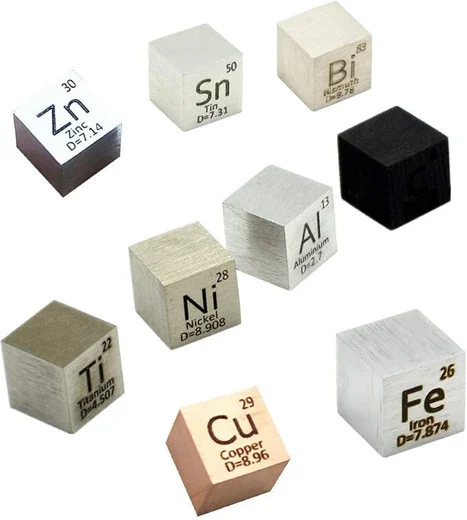
Best department gift · Premium
9. Element Cube Set, 10 mm (9 elements)
Nine cubes of carbon, aluminum, titanium, iron, nickel, copper, zinc, tin and bismuth, each 10 mm on a side with the element information laser engraved, in a carrying case.
Each cube is one cubic centimeter, so its mass in grams is the element’s density in grams per cubic centimeter. Aluminum comes in near 2.7, iron near 7.9 and copper near 9. Students can weigh the cubes, compare with a periodic table and spot which measurements drifted.
- 9 cubes, 10 mm each, with a case
- Engraved element data
- Listed for ages 15 and up
Good: a density lab that fits in a shirt pocket. Not great: the cubes are small enough to walk off, and nickel is a common skin allergen.
Check on Amazon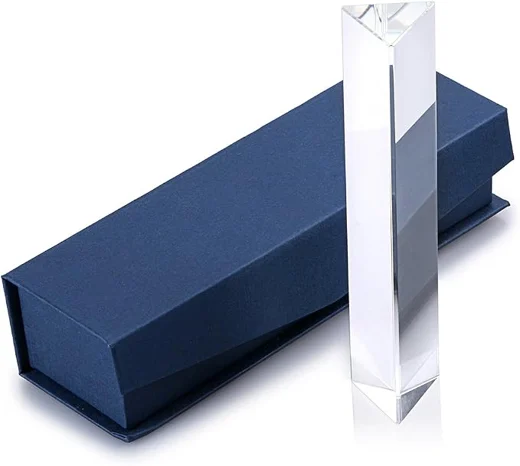
Best for physics teachers · Budget
10. 6-Inch Glass Triangular Prism
A solid glass prism, 150 by 30 by 30 mm, in a lined box. It is sold for photography, and it is large enough to throw a spectrum that the back row can see.
Glass bends short wavelengths slightly more than long ones, so white light fans out into its colors: violet bends most and red least. Isaac Newton used a second prism to put the colors back together and showed that the glass was separating them, not adding them.
- 150 mm long, solid glass
- Comes boxed
Good: works with sunlight or a projector beam and never wears out. Not great: glass edges chip if it rolls off a bench, and it should never be used to look at the sun.
Check on Amazon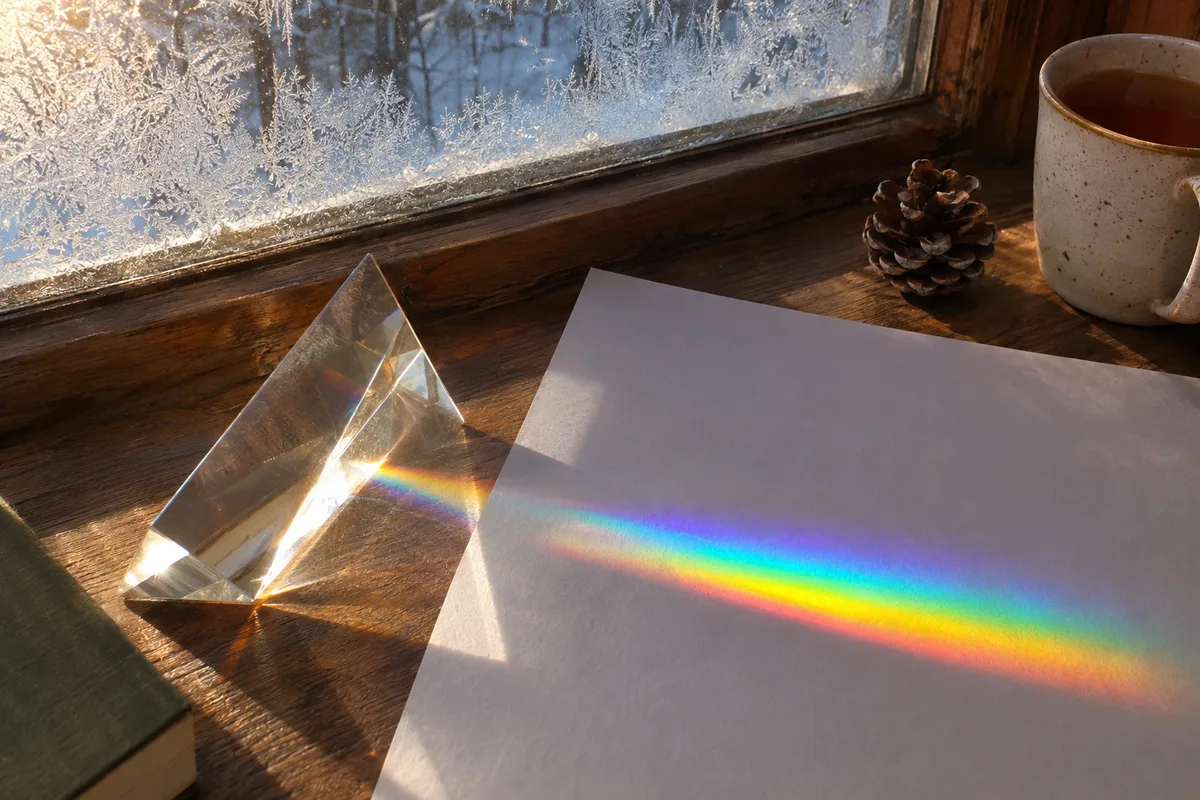
Best holiday read · Budget
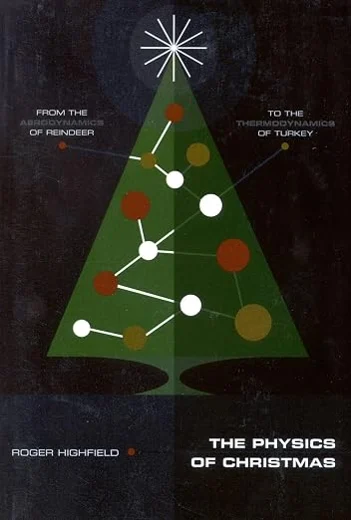
11. The Physics of Christmas by Roger Highfield
A paperback by a science journalist that runs Christmas through the lab: how reindeer might fly, the thermodynamics of cooking a turkey, why snow behaves as it does. The British edition is titled Can Reindeer Fly?
It reads in short sections, which suits the first days of a break. A teacher can lift a question from it for the last lesson before the holiday, such as how fast Santa would need to travel to reach every house in one night.
- Paperback
- Popular science, no equations needed to follow it
Good: seasonal and useful for lesson hooks. Not great: it is an older book with a modest number of Amazon ratings, so treat figures that change over time with care.
Check on Amazon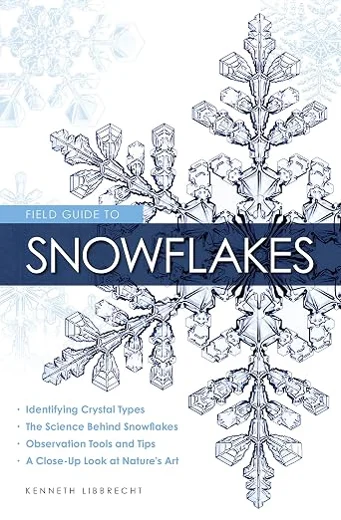
Best small book · Budget
12. Field Guide to Snowflakes by Kenneth Libbrecht
A pocket guide by a Caltech physicist who grows snow crystals in the lab. It sorts natural snowflakes into types, explains how each forms and gives tips for observing them.
Snowflakes have six sides because water molecules lock into a hexagonal lattice when they freeze. Whether a crystal grows into a flat star, a column or a needle depends mostly on temperature and humidity in the cloud, so the shape is a record of its fall.
- Pocket-size paperback
- Crystal types with observing advice
Good: it turns a snow day into fieldwork with a hand lens and a dark sleeve. Not great: less hands-on for teachers who live where it never snows.
Check on AmazonStocking stuffers for science teachers
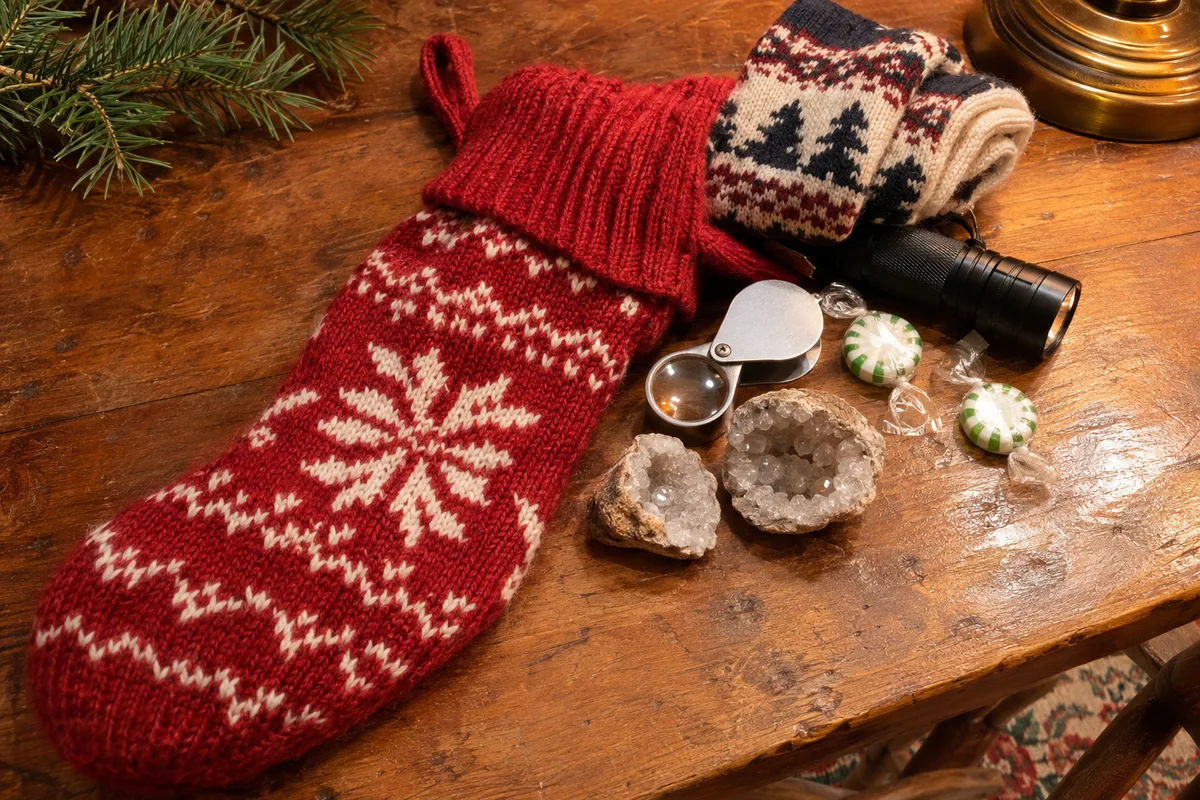
These nine are small enough for a stocking or a gift bag. Several make good demonstrations in the last week of term, when attention is short.
Best edible demonstration · Mid-range
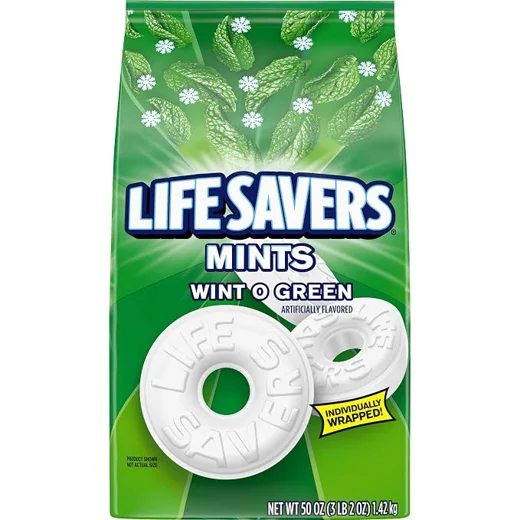
13. Life Savers Wint-O-Green Mints (50 oz bag)
A large bag of individually wrapped wintergreen mints. It is far more than one stocking needs, so split it across the science department.
Crushing sugar crystals separates electric charge, and the discharge gives off light, mostly ultraviolet that you cannot see. This is triboluminescence. Wintergreen oil, methyl salicylate, absorbs the ultraviolet and re-emits it as blue light, so the flash becomes visible. Sit in a dark room until your eyes adjust, then crush a mint with pliers or chew it in front of a mirror. The Exploratorium has the full activity.
- Individually wrapped
- Enough for many stockings
Good: a physics and chemistry lesson that smells like December. Not great: hard candy is a choking risk for young children and many classrooms restrict food.
Check on Amazon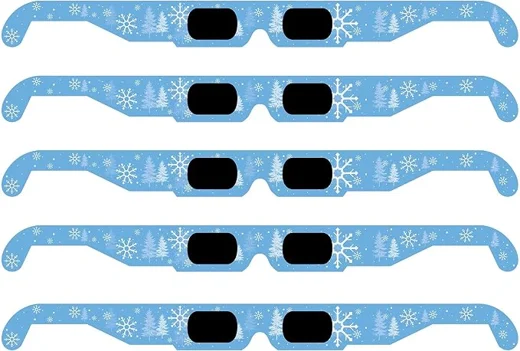
Best for the last day before break · Budget
14. Holiday Specs Snowflake Glasses (5 pack)
Five pairs of paper glasses that turn each point of light into a snowflake. They are thin enough to slip into a card.
The lenses are printed diffraction patterns. Light passing through spreads and interferes, and the pattern in the film is designed so that the bright spots add up to a snowflake around every bulb. A teacher can follow it with a plain diffraction grating and ask why that one makes rainbows in a line instead.
- 5 pairs, paper frames
- Listed for ages 3 and up
Good: instant effect on any string of lights. Not great: paper frames wear out, five is not a class set and nobody should look at the sun through them.
Check on Amazon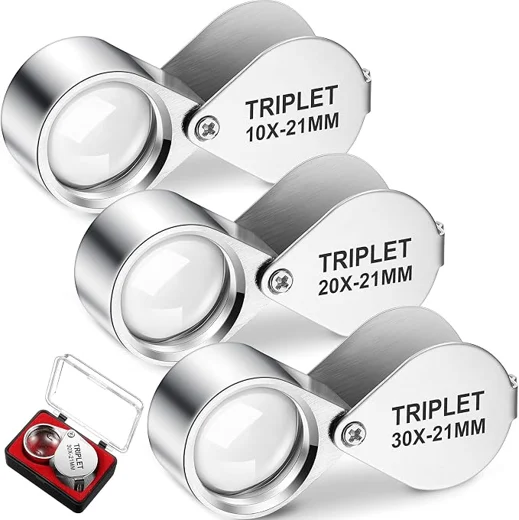
Best pocket tool · Budget
15. Folding Hand Loupe Set (10x, 20x, 30x)
Three small folding loupes in metal housings with a case and a loop for a lanyard. I wore a 10x lens on a cord every field season, and it is the one to start with.
Higher magnification means a smaller field of view and a shorter working distance, so 30x is much harder to use than 10x. Hold the lens close to your eye and bring the specimen up to it until it snaps into focus.
- 10x, 20x and 30x
- Folding metal bodies, case included
Good: mineral grains, leaf hairs, snowflakes and circuit boards all open up. Not great: these are inexpensive optics, so expect some blur at the edges at the higher powers.
Check on Amazon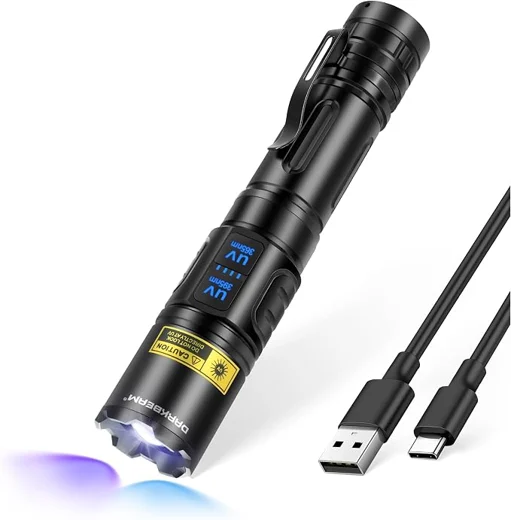
Best for rocks and minerals · Mid-range
16. DARKBEAM UV Flashlight (365 nm and 395 nm)
A rechargeable aluminum flashlight with two ultraviolet settings. The 365 nm light gives off little visible violet, so fluorescence stands out better under it.
A fluorescent material absorbs ultraviolet and gives back lower-energy visible light. Many calcite and fluorite specimens glow, as do tonic water (because of quinine) and highlighter ink. Try it on a tray of rocks with the lights off.
- 365 nm and 395 nm
- Rechargeable by cable
Good: a darkened-room demonstration with things already in the cupboard. Not great: it is a strong UV source. This is a tool for the teacher, never to be aimed at eyes or skin.
Check on Amazon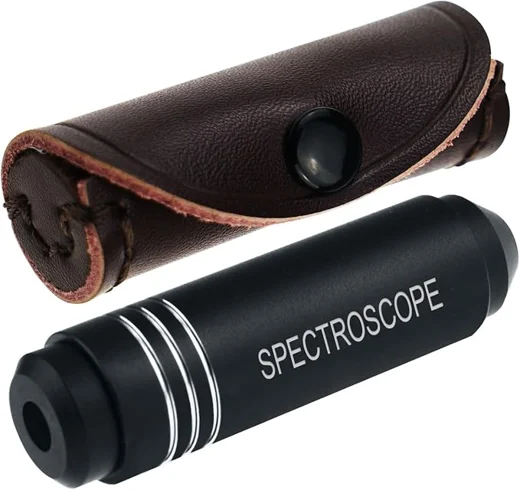
Best for curious physics teachers · Mid-range
17. Handheld Diffraction Spectroscope
A short aluminum tube with a diffraction grating and a pouch. It is sold to gem testers, and it works on any light source.
Point it at a fluorescent ceiling tube and bright separate lines appear, several of them from mercury inside the tube. A white LED shows a continuous band with a strong blue region. Those differences are how astronomers read what stars are made of. Point it at bright sky if you like, never at the sun.
- Pocket size, aluminum body
- Needs no batteries
Good: shows something the eye cannot do on its own. Not great: only one person can look at a time, and aiming it takes a few tries.
Check on Amazon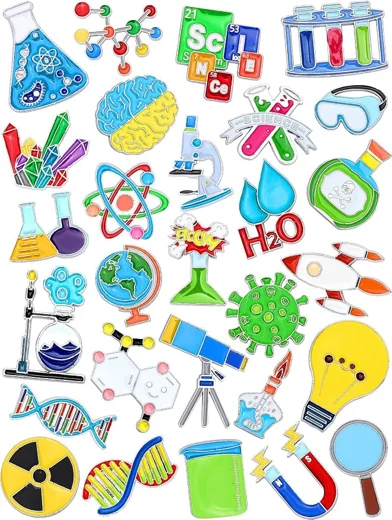
Best for lanyards · Budget
18. Science Enamel Pins (28 pieces)
Twenty-eight metal pins with flasks, atoms, DNA, microscopes and other lab motifs. A teacher can wear one that matches the unit, or hand the extras to the science club.
Split the set to fill several stockings. A few on a lanyard are easy conversation starters with students who rarely start one.
- 28 different pins
- For lanyards, bags and bulletin boards
Good: the most stocking filler per package here. Not great: pin backs come loose, and the sharp posts are unsuitable for small children.
Check on Amazon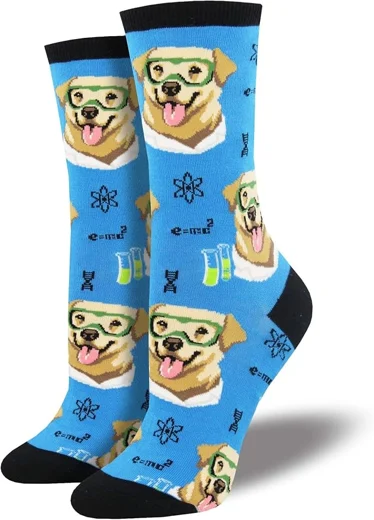
Best personal gift · Budget
19. Socksmith Science Lab Crew Socks
One pair of crew socks with a Labrador in safety goggles over a background of equations, in a cotton, nylon and spandex blend. The pun is the point.
The few percent of spandex is what holds them up: it can stretch to several times its length and spring back. The listing is for a women’s one-size fit, so check it against the wearer.
- One pair, crew length
- 63% cotton, 34% nylon, 3% spandex
Good: well rated and a safe choice when you don’t know the subject. Not great: sizing rules out some teachers.
Check on Amazon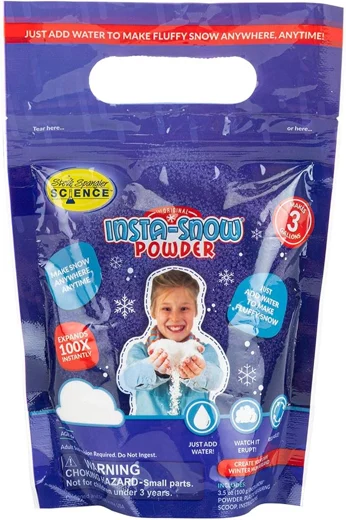
Best indoor snow · Mid-range
20. Steve Spangler Insta-Snow Powder (100 g)
A white powder that swells into fluffy artificial snow when water is added. The bag is listed as making about 3 gallons.
It is a superabsorbent polymer, a relative of the filling in diapers. Long chains linked into a network pull water in and hold it, so each grain swells many times over. Left out, it dries and can be used again. Salt makes it collapse, which is a good second demonstration.
- 100 g, makes about 3 gallons
- Reusable after drying
Good: snow on a lab bench in any climate. Not great: don’t eat it, don’t pour it down a drain and keep the dry powder out of eyes.
Check on Amazon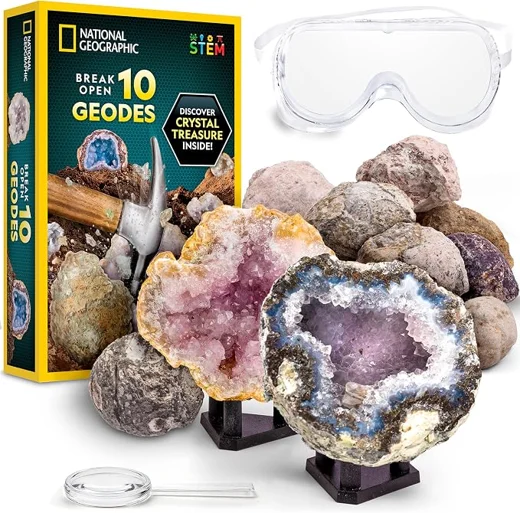
Best to share around · Mid-range
21. National Geographic Break Open Geodes (10 pack)
Ten unopened geodes with safety goggles, display stands and a learning guide. One box can fill ten stockings, or give one class ten reveals.
A geode starts as a cavity in rock. Groundwater seeps in and leaves dissolved minerals behind, usually quartz, which grows inward as crystals over a very long time. Put a geode in a sock, wear goggles and strike it with a hammer. Nobody knows what is inside until it splits.
- 10 geodes with goggles and stands
- Ages 8 and up
Good: a very large number of Amazon ratings and a real specimen at the end. Not great: some crack into crumbs and some interiors are plain, and you supply the hammer.
Check on AmazonIf the stocking is for someone outside school, or for the teacher’s own children, our science stocking stuffers are sorted by age. For smaller everyday items such as markers and hand cream, see stocking stuffers for teachers.
A homemade gift: borax crystal snowflake ornament
A student can make the ornament that ends up on the branch every year. It needs an evening and one night of waiting, and an adult does the hot part.
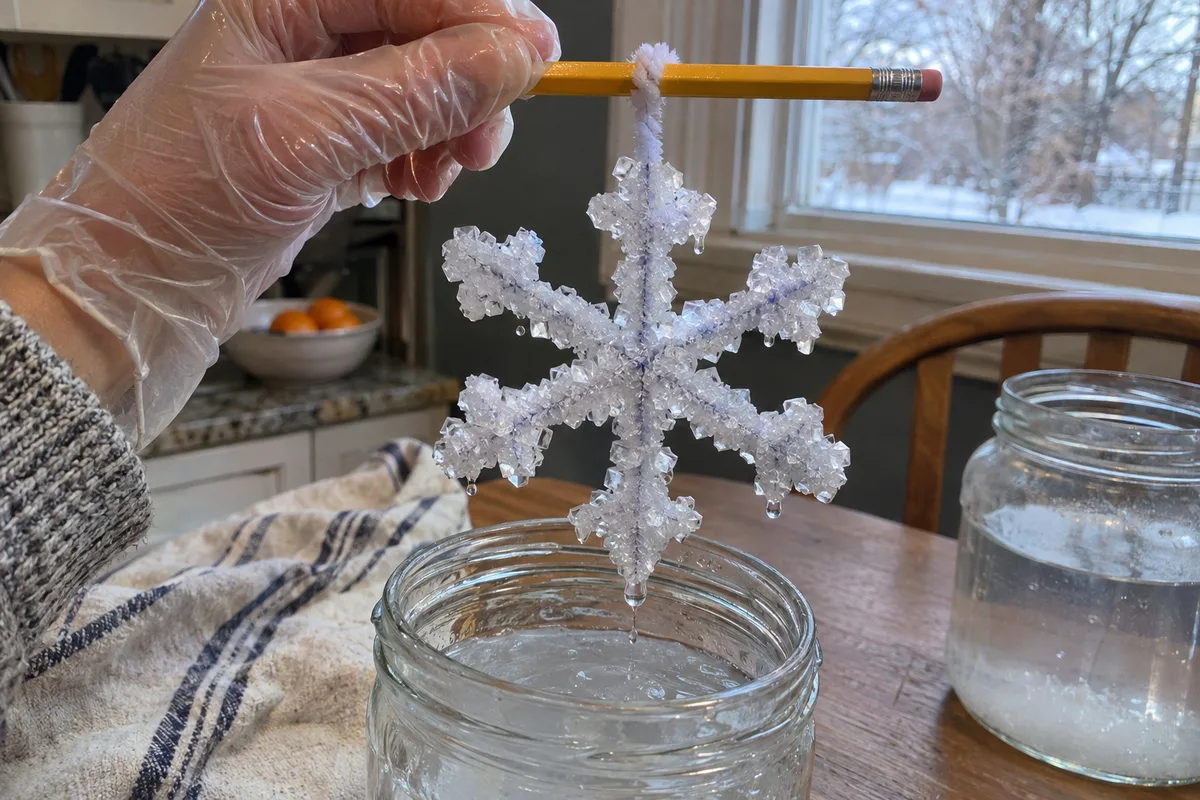
- Twist pipe cleaners into a six-armed star that fits inside a wide, heat-safe jar without touching the sides.
- Tie it to a pencil with string so it can hang clear of the bottom.
- An adult fills the jar with boiling water and stirs in borax, about 3 tablespoons per cup, until no more will dissolve.
- Hang the star in the liquid with the pencil resting across the rim.
- Leave it undisturbed overnight, then lift it out and let it dry.
Hot water holds more dissolved borax than cold water. As the jar cools, the extra can no longer stay in solution and builds up as crystals on the rough fibers. The same idea explains many of the crystal structures that form in nature.
Borax is not food. Swallowing or breathing the powder can cause harm and some people get a rash from touching it, so wear gloves and goggles, keep it away from young children and pets and wash up afterward. The method and safety notes follow Steve Spangler Science.
Add a card that says who made it and the year. That label is what makes it worth keeping.
Gifts to skip
- Chemicals and mystery kits. Schools control what enters a prep room. A bottle without paperwork is a disposal problem.
- Drinking from real lab glassware. A flask that has held reagents is never a cup, and mixing the two habits is unsafe. A mug printed to look like a beaker is fine at a desk at home.
- High-powered magnets and laser pointers. Small strong magnets are dangerous if swallowed, and many schools ban lasers.
- Live animals and plants. They need care over a two-week break.
- Safety gear as a surprise. Goggles and coats must meet the school’s rules and fit. If they ask for them, our lab safety goggles guide explains the ratings.
When to give it
- Before December 1: the advent calendar.
- First two weeks of December: ornaments, snowflake glasses and instant snow, so they get used before the break.
- Last day of term: books, the wall calendar, socks and anything that goes home.
- In January: a late meteorite or prism still lands well, because it arrives when the new term needs something to talk about.
Buying for a scientist who works in research and not in a school? Try our Christmas gifts for scientists.
FAQ
A good choice is something the classroom can use or display: a glass science ornament, a prism, a meteorite or mineral specimen, an element cube set or a science advent calendar. For a personal present, choose a popular science book, an astronomy wall calendar or a hand loupe. Add a handwritten note about something you learned in their class.
Wintergreen mints, snowflake diffraction glasses, a folding loupe, a UV flashlight, a pocket spectroscope, science enamel pins, science socks, instant snow powder and break-open geodes all fit in a stocking or a gift bag. Most can also be used for a short demonstration.
A homemade ornament with a card is a strong choice. A borax crystal snowflake, a painted planet or a paper double helix costs little and shows that you learned something. A single glass beaker ornament is a good bought option.
Start with an Erlenmeyer flask ornament, chemistry cookie cutters or a set of element cubes. The cubes work for density measurements, so they serve the classroom as well as the shelf. Avoid sending any chemicals to school.
For physics, try a glass prism, a handheld spectroscope or The Physics of Christmas. For earth science, try an iron meteorite, a box of geodes, a UV flashlight for fluorescent minerals or a 10x hand lens.
Crushing the sugar crystals separates electric charge, which discharges and gives off mostly ultraviolet light. The wintergreen flavoring, methyl salicylate, absorbs that ultraviolet and gives off blue light you can see. The effect is called triboluminescence.
Skip chemicals, small high-powered magnets, laser pointers, live animals and drinking glasses made from used or real lab glassware. Check the school’s policy on food and on the value of gifts to staff.
Yes, and it often works better than many small ones. A solar system ornament set or an element cube set suits a group, with a card signed by everyone. Confirm that the school allows group gifts and any value limit first.
Sources
- Exploratorium, Science of Candy: Lightning in Your Mouth
- Linda M. Sweeting, Towson University, Experiments at home: wintergreen candy and triboluminescence
- Kenneth Libbrecht, SnowCrystals.com
- European Space Agency, About the Campo del Cielo meteorites
- Steve Spangler Science, Borax crystal ornaments