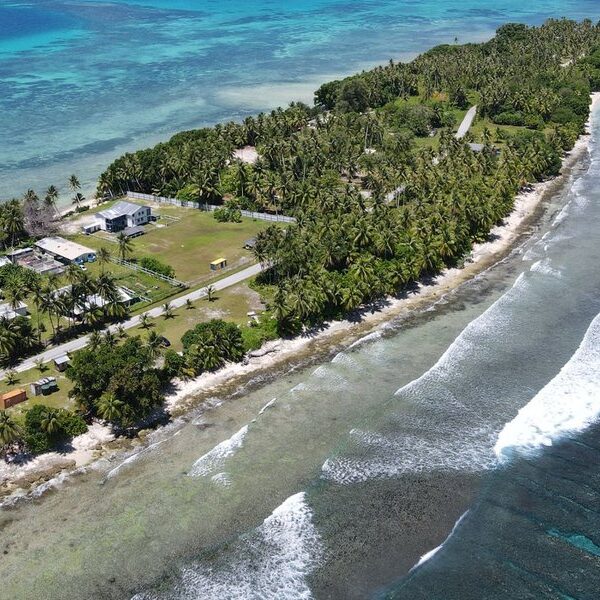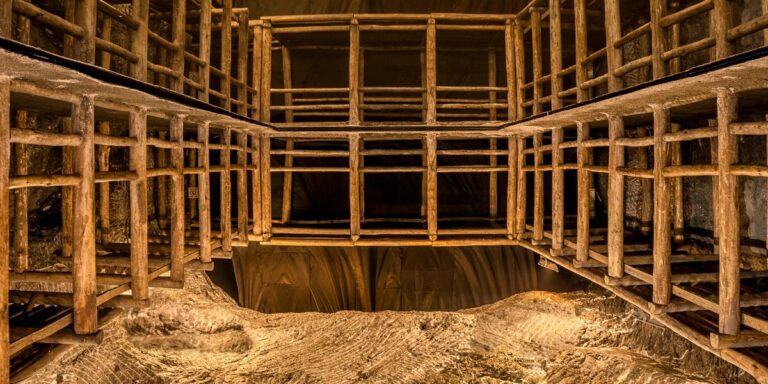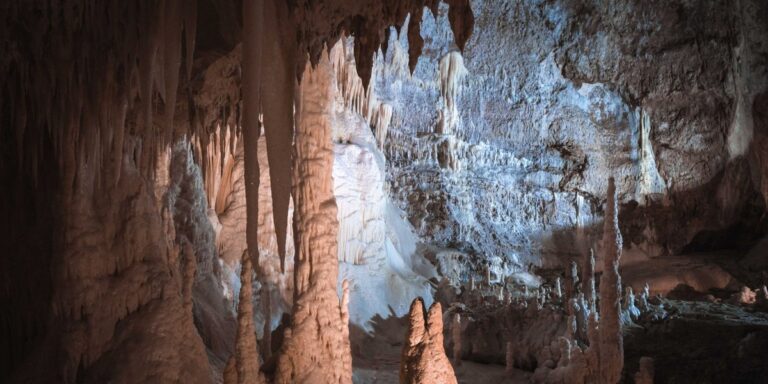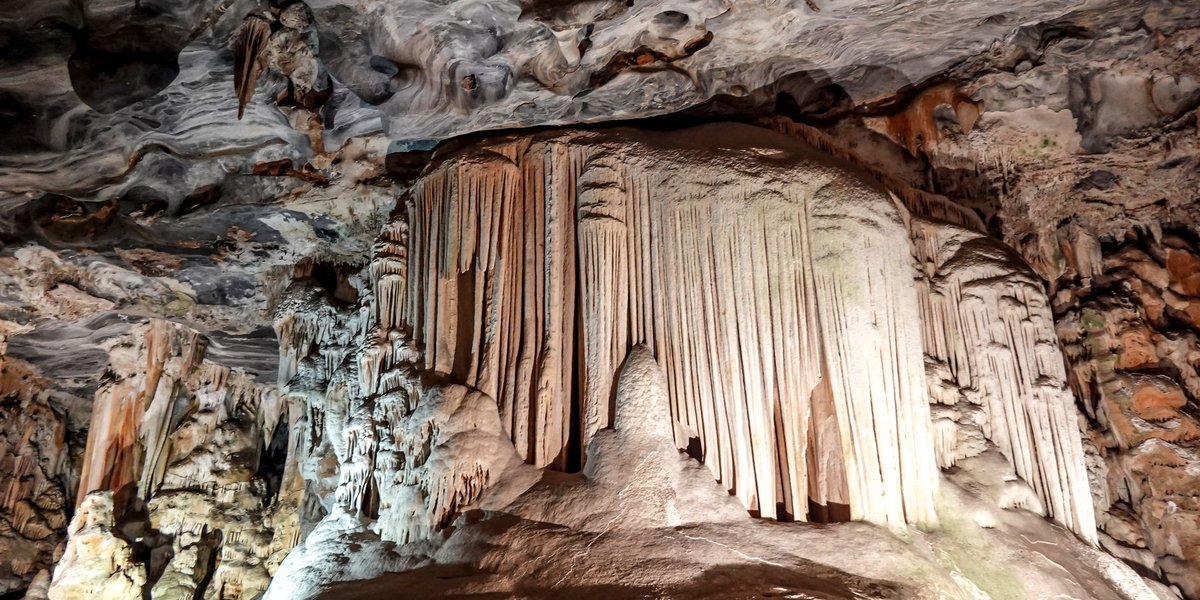
Florida has two kinds of caves, and most visitors only expect one. There are dry caves, where you walk in on your own two feet. And there are flooded caves, where the passages sit underwater and the only way in is with a mask, fins, and the right certification. Almost every “best caves in Florida” list mixes them together and tosses in a few springs and a waterfall for padding.
This guide sorts them by how you actually get in: guided walking tours, swim-and-snorkel springs with cave openings, sites reserved for cave divers, and caves that need a permit.
TLDR
- Florida Caverns State Park in Marianna is the only place in the state where the public can take a guided tour of a dry cave.
- Devil’s Den, Blue Grotto, Ginnie Springs, and Morrison Springs let you snorkel or dive near cave openings without cave training, within limits.
- Peacock Springs, Madison Blue Spring, and Wakulla Springs are in cave-diver territory. Going past the daylight zone without cave certification is how people die.
- Warren’s Cave in Gainesville is one of the state’s biggest dry caves, and you need permission to enter.
Table of contents
- Why most caves in Florida are underwater
- Walk-in cave tours
- Snorkel and swim springs with cave entrances
- Cave-diver-only sites
- Permit-only caves
- Florida caves by region
- Best time to visit
- Safety rules that matter
Why most caves in Florida are underwater
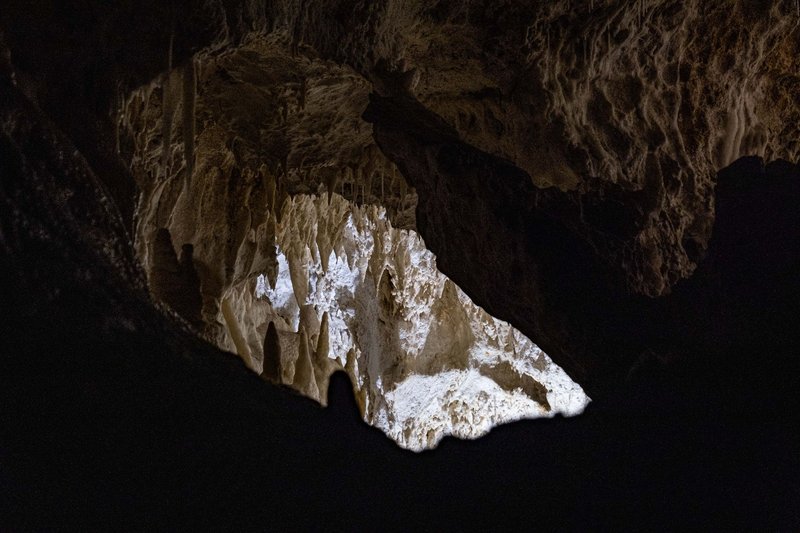
Florida sits on a thick slab of limestone. Rain is slightly acidic, and over millions of years it dissolved the rock from the inside, carving passages, sinkholes, and springs. This kind of terrain is called karst. The USGS explains how sinkholes form when the roof of one of these voids collapses.
Here’s the catch. The state is flat and low, and the water table sits close to the surface. So when the limestone dissolved, the holes filled with groundwater. That’s why the northern half of the state holds hundreds of springs, and why the long cave systems are mostly drowned.
Dry caves exist only where the land rises enough to keep water out. The Panhandle around Marianna is the best example. Everywhere else, a “cave” usually means a spring vent that leads into a flooded passage.
A quick vocabulary check, because competing lists blur these:
- Cave: a natural void big enough for a person to enter.
- Sinkhole: a depression or collapse in the surface. It may open into a cave, or it may just be a hole.
- Spring: a place where groundwater flows out. Many springs are the mouth of a flooded cave.
Fees, hours, and rules change. The figures below are approximate as of November 2026. Confirm with the managing agency before you drive.
Walk-in cave tours
Florida Caverns State Park, Marianna (Panhandle)
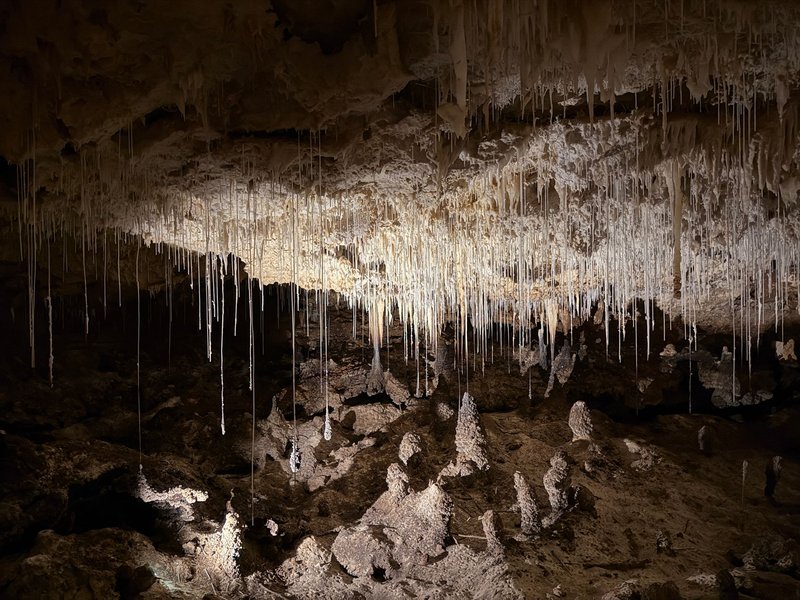
This is the one. Florida Caverns State Park is the only state park in Florida with ranger-led tours of an air-filled cave, and it’s the reason Marianna shows up on anyone’s list of caves in Florida you can walk into.
The tour runs about 45 minutes through a lit passage in the Marianna Limestone. You’ll see stalactites, stalagmites, columns, flowstone, and thin “soda straw” formations. Ceilings drop low in places, so you’ll duck. The cave holds a steady temperature in the mid-60s °F no matter what the weather is doing outside, which makes it a good summer escape and a mild winter one.
What to know before you go:
- Cost: a park entry fee per vehicle (around $5) plus a separate cave tour ticket (roughly $10 for adults, less for children).
- Booking: tours follow a posted schedule and don’t run every day. Check the park’s page for current days, and arrive early on holidays.
- Accessibility: stairs and narrow, low sections make the tour hard for wheelchairs and strollers.
- Bats: the cave is a roost for several bat species, so tours are managed to avoid disturbing them.
The park has more than the cave. You can paddle the Chipola River, hike, and camp. Plan on half a day.
Falling Waters State Park, Chipley (Panhandle)
Not a cave, but it belongs on the list because people search for it. Falling Waters has a 73-foot waterfall dropping into a cylindrical sinkhole, listed by Florida State Parks as the tallest waterfall in the state. The water disappears underground at the bottom. You view it from a boardwalk. You can’t enter anything.
Snorkel and swim springs with cave entrances
These are the sites where you can get close to a cave without cave training. The rule is the same everywhere: you stay in open water and in the light. Water in these springs holds near 72 °F all year.
Devil’s Den, Williston (North-Central)
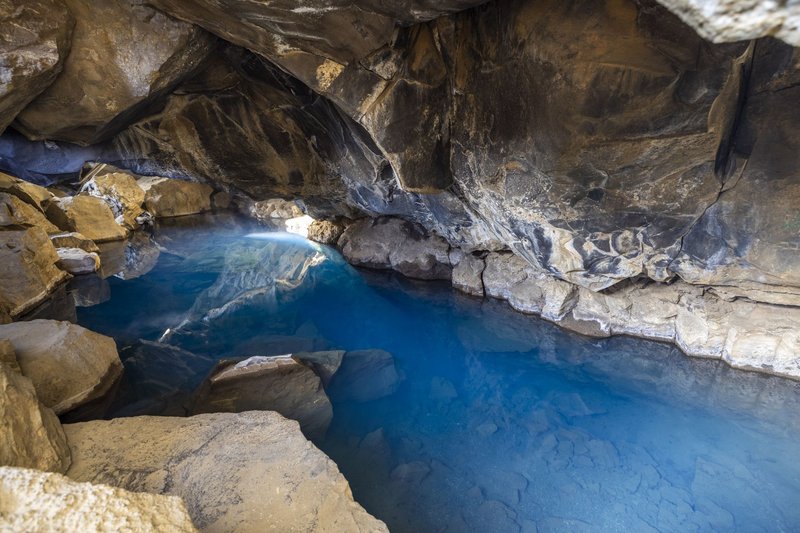
Devil’s Den is a spring inside a collapsed cavern. You climb down a staircase into a room where the roof has fallen open to a circle of sky, with roots hanging from the limestone and sunlight cutting through the water. In winter, the spring is warmer than the air, so steam rises through the opening.
The pool is about 54 feet deep at the bottom. Fossils of Ice Age animals have been pulled from this area, which is where the “prehistoric” in the name comes from.
- What you do: snorkel or scuba dive. There’s no swimming from shore in the usual sense, because you enter by platform.
- Requirements: divers need open-water certification. Snorkelers need their own mask and snorkel or must rent them.
- Cost: roughly $20 to $30 for snorkelers and more for divers. Reservations are strongly advised, especially on summer weekends.
Blue Grotto, Williston (North-Central)
Blue Grotto is a private dive resort built around a flooded cavern. It’s a training site for cavern divers, and the water is clear enough that snorkelers floating above the opening can see divers working far below. Open-water divers can explore the cavern zone, which keeps the surface light in view. Going past it requires full cave certification and isn’t part of a standard visit.
- Requirements: certification for diving, none for snorkeling.
- Cost: varies by activity. Expect to pay more than at Devil’s Den.
Ginnie Springs, High Springs (North-Central)
Ginnie is a cluster of springs along the Santa Fe River, and it’s the busiest spot on this list. Most visitors tube, swim, and snorkel in water that stays near 72 °F even in a hot August. Several vents lead into cave systems. The best known is the Devil’s Ear, a vent popular with cave divers.
- What you do: tube the river, snorkel, or dive. Camping is available.
- Cost: a daily admission of roughly $15 to $20 per adult.
- Requirements: none for swimming. Diving in the cave systems requires cave certification.
Morrison Springs, Ponce de Leon (Panhandle)
Morrison Springs is one of the few good options west of Tallahassee, which makes it the answer for anyone staying near Destin or Panama City. It’s managed by a regional water management district and is free to enter. A deep vent opens into a cave, and the water flows into Choctawhatchee Bay’s watershed. Snorkelers stay on the surface, while certified divers explore the cavern. Past the cavern, the cave is for trained cave divers only.
Cave-diver-only sites
Not every flooded cave is open to casual divers. These sites are for people with cave training and, in many cases, extra permits. Read this section as a map of where not to go if you’ve only done a recreational open-water course.
Peacock Springs State Park, Live Oak (North-Central)
Peacock Springs is a cave-diving destination, and the park describes its cave system as among the longest surveyed underwater cave systems in the continental United States. You’ll find a few sinkholes and short trails above ground, but nearly everything of interest is below. Divers need proper cave certification to enter beyond the cavern zone.
Madison Blue Spring, Lee (Big Bend)
Madison Blue is a pretty spring on the Withlacoochee River with a cave opening that attracts divers. The state limits the number of divers who can enter the cave each day, and cave divers need the matching certification. Casual visitors can swim and snorkel in the spring pool.
Wakulla Springs, Wakulla (Big Bend)
Edward Ball Wakulla Springs State Park holds one of the largest and deepest freshwater springs in the world, and the cave system behind it has been surveyed by research divers for decades. Mastodon bones were pulled from the spring in the 1930s. Visitors take a boat tour over the vent, where manatees, alligators, and birds are easy to spot. Cave diving here is restricted to approved research and technical projects.
Leon Sinks Geological Area, Tallahassee (Big Bend)
Leon Sinks is a hiking site in the Apalachicola National Forest. Trails loop past sinkholes, and you can look into them, but you can’t walk into a cave. The underwater cave system below is a serious one and is limited to cave divers with permits. Bring a bug spray and a camera, not a mask.
Permit-only caves
Warren’s Cave, Gainesville (North-Central)
Warren’s Cave is one of the biggest dry caves in Florida, with several miles of passage mapped beneath the Gainesville area. It’s not open to casual visitors. Entry is by permission, and cavers who get access have to follow strict rules to protect the cave’s bats and its formations. If you want in, the Florida Speleological Society, an organization of local cavers, is the logical first contact. Show up without permission and you’re trespassing.
A few other well-known caves, such as Eagle’s Nest in Hernando County, are restricted for a different reason: they’re extremely dangerous even for experienced divers, and access is tightly limited.
Florida caves by region
| Region | Site | Town | Access type | Needs certification? |
|---|---|---|---|---|
| Panhandle | Florida Caverns State Park | Marianna | Guided walking tour | No |
| Panhandle | Falling Waters State Park | Chipley | Waterfall and sinkhole viewing | No |
| Panhandle | Morrison Springs | Ponce de Leon | Swim, snorkel, dive | Dive cert for diving |
| Big Bend | Wakulla Springs | Wakulla | Boat tour, swimming area | Cave cert (restricted) |
| Big Bend | Leon Sinks | Tallahassee | Hiking | Cave cert plus permit |
| Big Bend | Madison Blue Spring | Lee | Swim, snorkel, cave dive | Cave cert for cave |
| North-Central | Devil’s Den | Williston | Snorkel, scuba | Open-water for diving |
| North-Central | Blue Grotto | Williston | Snorkel, cavern dive | Open-water for cavern |
| North-Central | Ginnie Springs | High Springs | Tube, snorkel, dive | Cave cert for cave |
| North-Central | Peacock Springs | Live Oak | Cave dive | Cave cert |
| North-Central | Warren’s Cave | Gainesville | Permit only | Permission required |
Best time to visit
The cave at Florida Caverns stays in the 60s year-round, so tour timing is about weather and crowds, not conditions underground. Heavy rain can still affect the park, especially along the Chipola River, so check before you drive.
For springs, the water temperature barely moves, but everything around it does. Summer is peak season. It’s hot, the springs are busy, and Devil’s Den and Ginnie fill up on weekends. Winter and early spring are quieter, and the steam at Devil’s Den is at its best in cold weather. The air is chilly, though, so bring a wetsuit if you plan to stay in.
Visibility depends on rain. When the Santa Fe River runs high, tannin-stained river water can flow back into the springs and cloud them, so Ginnie and nearby springs look best after dry stretches.
Safety rules that matter
Cave diving has its own culture and its own rules because the failure mode is unforgiving. In an overhead environment, you can’t just swim up to the surface.
- Stay in the light. Open-water divers belong in the cavern zone, where natural light is still visible.
- Get real training. Cave certification from a recognized agency, such as the National Association for Cave Diving or the NSS Cave Diving Section, is the minimum for going beyond the light.
- Respect the signs. Many Florida springs post warnings at cave entrances. The skull-and-crossbones signs aren’t decoration.
- Don’t treat a flooded cave like a pool. Currents, silt, and tight passages can disorient even strong swimmers.
- Bats are protected. In dry caves, you stay quiet and keep lights off roosting colonies.
If you’re only here to see a cave, Florida Caverns is the easy answer. If you’re here to swim with a cave beneath you, start with Devil’s Den or Ginnie Springs. For everything past the daylight zone, take the course first.