Table of Contents
- What Counts as an Urban Ecosystem
- Green Space Examples of Urban Ecosystems
- Blue Space Examples: Rivers, Wetlands, and Bioswales
- Habitats Built Into the Buildings Themselves
- Productive Urban Ecosystems
- Whole Cities as Ecosystems
- Quick Comparison Table
- Urban Wildlife That Makes the Systems Work
- How Urban Ecosystems Differ From Natural Ones
What Counts as an Urban Ecosystem
An urban ecosystem is a city, town, or any piece of one, treated as a living system: plants, animals, fungi, microbes, and people interacting with soil, water, air, and the built environment. What separates it from a forest or a reef is that humans are inside the system and set most of its rules.
That definition is broad on purpose. A 843-acre park counts. So does a pigeon-stained bridge ledge, a bioswale at the end of a street, and the metro area of Phoenix. The twelve examples below are grouped by what they are made of, followed by three cities that scientists study as complete systems.
Green Space Examples of Urban Ecosystems
1. City Parks
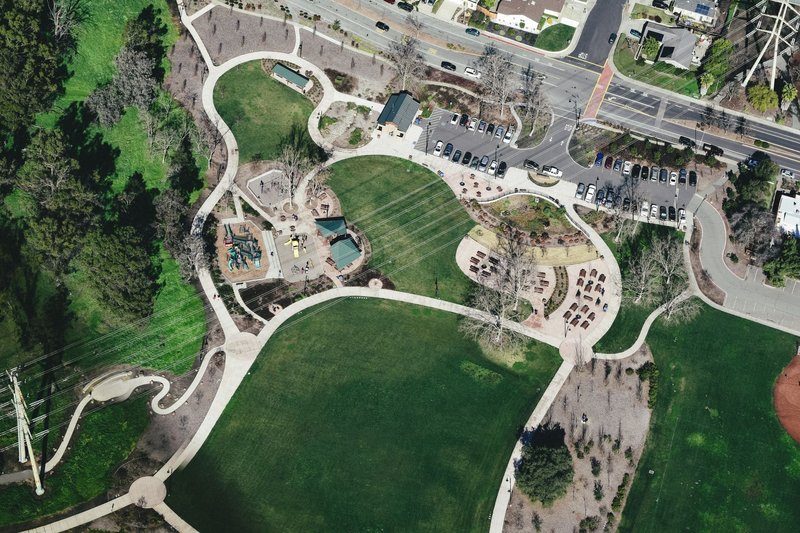
Central Park in New York City is the textbook case. It’s also entirely designed: the landscape was built in the mid-1800s on rock and swampland, then planted. Yet more than 200 bird species have been recorded there, mostly because it sits on the Atlantic Flyway and is the only large patch of green on a long island of concrete. Red-tailed hawks nest on the buildings along its edge. Warblers drop in by the dozen each May.
Living components: oaks, elms, turf, raccoons, migratory songbirds, hawks. Human role: designer, gardener, and the main source of disturbance.
2. Urban Forests
Rio de Janeiro’s Tijuca Forest covers roughly 3,900 hectares inside the city limits, and it was planted by hand. Coffee farming had stripped the hillsides by the mid-1800s, and the city’s water supply began to fail. Starting in 1861, officials replanted the slopes with tens of thousands of seedlings. What grew back now shelters toucans, coatis, and marmosets, within sight of Copacabana.
3. Cemeteries
Cemeteries are quiet, rarely sprayed, and full of old trees, which makes them some of the best wildlife habitat in a dense city. Green-Wood Cemetery in Brooklyn covers 478 acres. A colony of monk parakeets, escaped pets that learned to survive northern winters, builds stick nests on the spires of its Gothic entrance gate. Mount Auburn Cemetery near Boston, opened in 1831, is a well-known birding site for the same reason.
4. Backyards and Gardens
Individually they’re tiny. Together they’re enormous. Studies of five British cities found that domestic gardens made up roughly a quarter of the urban area. Ponds, hedges, compost heaps, and bird feeders turn those lots into a patchwork habitat for hedgehogs, bumblebees, frogs, and garden birds. Each garden’s owner decides what grows, which makes this the most human-controlled ecosystem on the list.
Blue Space Examples: Rivers, Wetlands, and Bioswales
5. Urban Rivers
The Los Angeles River is mostly a concrete flood channel. But in the Glendale Narrows, groundwater sits too close to the surface to pour a concrete bottom, so the riverbed stayed soft. Willows and cottonwoods grew in, and now great blue herons and snowy egrets fish there, a few miles from downtown. The Chicago River tells a different story: its flow was reversed in 1900 to carry sewage away from Lake Michigan, and decades of cleanup have since brought back fish and even beavers.
6. Constructed Wetlands
London’s Wetland Centre in Barnes was built in 2000 on four disused Victorian reservoirs. It now hosts bitterns, lapwings, and otters, about five miles from Trafalgar Square. Kolkata’s East Kolkata Wetlands go further: the city’s sewage flows into shallow ponds where sunlight and algae break it down, and the cleaned water feeds fish farms. The site is a Ramsar-listed wetland, and it works as the city’s wastewater plant.
7. Stormwater Bioswales
A bioswale is a shallow, planted channel, often cut into a curb strip, that soaks up street runoff before it hits the sewer. The plants and soil microbes filter oil and metals as the water seeps down. Philadelphia launched a 25-year plan in 2011 to manage stormwater with this kind of green infrastructure instead of building bigger tunnels. A bioswale is a small ecosystem with a civil-engineering job.
Habitats Built Into the Buildings Themselves
8. Green Roofs
Chicago City Hall’s green roof, planted in 2001, covers about 20,000 square feet with roughly 150 plant species, including prairie natives. Bees, beetles, and nesting birds followed. The roof also pulls its weight on temperature: the EPA reports that green roof surfaces can run 30 to 40°F cooler than conventional roofs on a hot summer day, which cuts the building’s cooling load.
9. Vertical Gardens
Milan’s Bosco Verticale (Vertical Forest), finished in 2014, carries about 900 trees and thousands of shrubs and perennials on the balconies of two residential towers. Sparrows, blackcaps, and other birds nest in them. The building is an ecosystem a gardener has to tend by rope: the trees are pruned and checked from suspended platforms because wind loads on a tower are nothing like those at ground level.
10. Buildings and Bridges
Some of the best urban habitat is accidental. The Congress Avenue Bridge in Austin, Texas, has narrow gaps under its deck that happen to suit Mexican free-tailed bats. Roughly 1.5 million of them roost there each summer, the largest urban bat colony in North America, and they leave at dusk to eat insects over the city. Skyscraper ledges work the same way for peregrine falcons and pigeons, which evolved on sea cliffs.
Productive Urban Ecosystems
11. Community Gardens and Vacant-Lot Farms
Detroit lost much of its population, from about 1.8 million in 1950 to roughly 640,000 in 2020, and thousands of vacant lots reverted to meadow or were turned into gardens and small farms. Pollinators, earthworms, and soil fungi move in. Havana’s organopónicos, raised-bed farms that took off in the 1990s after Soviet food imports collapsed, feed the city with vegetables grown a few blocks from the people eating them. Allotment gardens in Berlin and across the UK do the same on a quieter scale.
12. Rooftop Farms
Brooklyn Grange started in 2010 on a warehouse roof in Long Island City, Queens, and now grows tens of thousands of pounds of produce a year across rooftop sites. It keeps honeybees too. The soil is a few inches of engineered growing medium, not ground, so everything in this ecosystem, from drainage to nutrients, is supplied and managed by people.
Whole Cities as Ecosystems
Ecologists also study entire metro areas as single systems, tracking energy, water, nutrients, and species together. Two U.S. cities are part of the National Science Foundation’s Long Term Ecological Research network, and a third is a deliberate design experiment.
Phoenix, Arizona. The Central Arizona-Phoenix Long-Term Ecological Research project has studied the city and the surrounding Sonoran Desert since 1997. One of its notable results is the “luxury effect”: wealthier neighborhoods tend to have more plant and bird diversity, partly because irrigation and landscaping money buy more greenery. In a desert city, how much water a neighborhood can afford shapes which species live there.
Baltimore, Maryland. The Baltimore Ecosystem Study, also started in 1997, follows the Gwynns Falls watershed from rowhouse blocks to suburbs. It tracks how tree canopy, nitrogen runoff, and stream quality change with land use and neighborhood history. Streets, sewers, and zoning decisions turn out to be as much a part of the ecosystem as soil and rain.
Singapore. Singapore is one of the densest cities on Earth, yet close to half its land is covered in greenery. Its “City in Nature” plan links parks through a network of green corridors and builds vegetation into skyscrapers, such as the supertrees at Gardens by the Bay. It’s the clearest example of a city that plans its ecosystem on purpose.
Quick Comparison Table
| Example | Main living components | Human role | Main stressor |
|---|---|---|---|
| City park (Central Park) | Trees, turf, migratory birds, raccoons | Designs and maintains | Foot traffic, light pollution |
| Cemetery (Green-Wood) | Old trees, monk parakeets, small mammals | Maintains grounds | Development pressure, mowing |
| Urban river (LA River) | Willows, herons, egrets, fish | Engineered the channel | Concrete, pollutants, flood control |
| Constructed wetland (East Kolkata) | Algae, fish, wetland plants | Manages ponds and fish farms | Land conversion, sewage load |
| Bioswale | Grasses, sedges, soil microbes | Builds and cleans out | Road salt, trash, drought |
| Green roof (Chicago City Hall) | Sedums, native prairie plants, bees | Plants and irrigates | Shallow soil, heat, wind |
| Bridge colony (Austin) | Mexican free-tailed bats | Provides the structure | Disturbance, extermination |
| Rooftop farm (Brooklyn Grange) | Crops, honeybees, soil organisms | Controls nearly everything | Weight limits, wind, water supply |
Urban Wildlife That Makes the Systems Work
Cities don’t just host leftover wildlife. Some species do better here than in the wild.
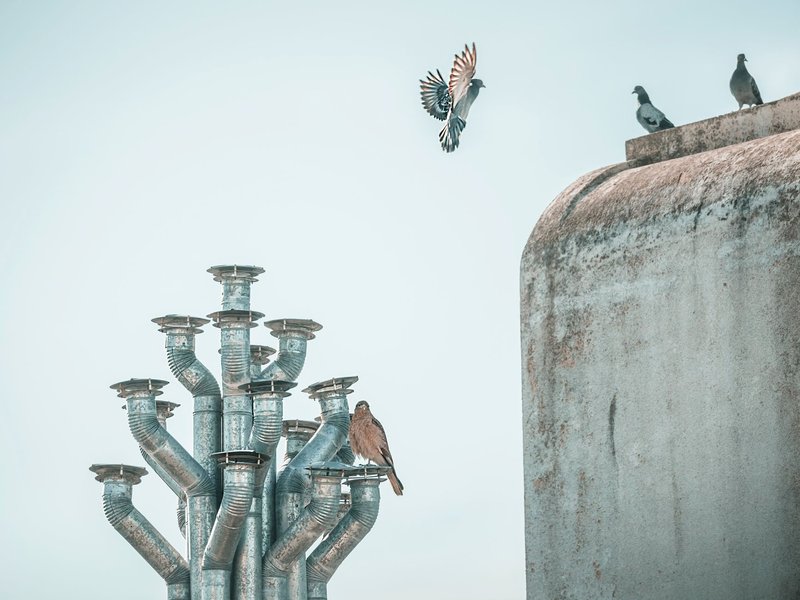
Peregrine falcons. DDT wiped out the eastern U.S. population by the mid-1960s. After the pesticide was banned and captive-bred birds were released, peregrines found that skyscraper ledges work like cliffs. The Cornell Lab of Ornithology notes that they now nest in cities across North America, where pigeons are plentiful prey.
Pigeons. Feral pigeons descend from rock doves, a cliff-nesting species. Building ledges are artificial cliffs, and spilled food and handouts replace wild seeds.
Coyotes. Researchers from Ohio State University have tracked coyotes around Chicago since 2000. The animals are mostly nocturnal, avoid people, and eat rodents, rabbits, and fruit, which makes them a quiet pest-control service.
Red foxes. London’s foxes are commonly estimated at around 10,000. They raid bins, den under sheds, and are active in daylight more than most people expect.
Bay checkerspot butterflies. Not every species adapts. Around San Jose, this threatened butterfly survives only on patches of serpentine grassland. Nitrogen from car exhaust acts as fertilizer, letting invasive grasses crowd out the small native plants its caterpillars need. The city’s traffic is a direct stressor on a species that lives within sight of it.
How Urban Ecosystems Differ From Natural Ones
The examples of urban ecosystems above share traits that set them apart from a forest or prairie.
They run on imported energy. A natural ecosystem runs on sunlight. A city imports food, fuel, and electricity from far away, and exports waste.
Surfaces change the climate. Pavement and roofs absorb heat, so cities develop an urban heat island. The EPA notes that large cities can be several degrees warmer than the countryside around them, with the gap widest at night. Plants and animals respond: trees leaf out earlier, and some insects get an extra generation in a season.
Habitat comes in fragments. Parks, gardens, and roofs are islands. Species that can’t cross a six-lane road get stuck, and corridors such as rivers and rail lines matter more than they would in unbroken land.
Species mixes are novel. Urban communities blend natives with plants and animals brought from other continents. Hedgehogs and monk parakeets, planted street trees and escaped ornamentals, all end up in the same system.
Evolution runs faster. In a global study of white clover, cities favored plants that make less cyanide defense, since fewer herbivores are around to eat them. Urban animals are showing shifts in behavior and body traits within a few generations.
Humans are the keystone species. Every example here, from a Berlin allotment to the Glendale Narrows, exists in its current form because of a decision someone made about land, water, or money. That’s the clearest answer to what makes an ecosystem urban: people are part of the system, not just visitors to it.