Materials science is the study of how a material’s atomic structure determines what it does: how strong it is, whether it conducts electricity, how it breaks, how it ages. Engineers use that link to design new metals, ceramics, polymers and composites on purpose instead of by trial and error. Your phone screen, your car’s frame and the plastic bottle in your bag all exist because someone worked out how to control structure.
These facts about materials science are grouped by theme. Each one has a number, a date or a name attached, so you can check it yourself.
Contents
- History facts about materials science
- Everyday materials
- Extreme materials
- Materials copied from nature
- The downsides
- FAQ
- What to read next
History facts about materials science
1. Whole eras of history are named after materials
Archaeologists split prehistory into the Stone, Bronze and Iron Ages. Bronze working began around 3300 BCE in the Near East, and ironworking spread widely from roughly 1200 BCE. No other branch of science can claim that its subject matter names thousands of years of human history.
2. Bronze beat copper because of alloying
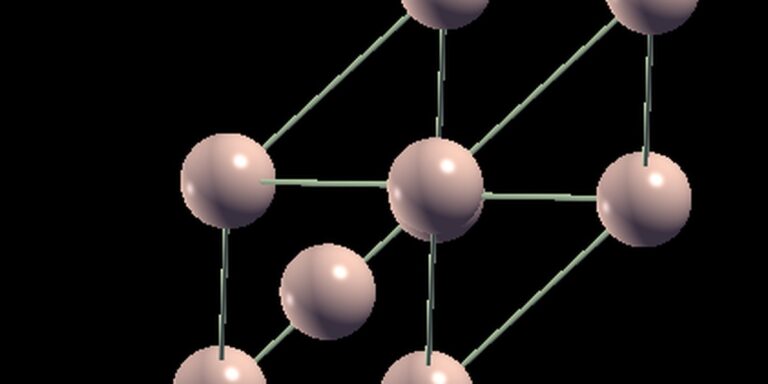
Pure copper is soft. Add about 10 percent tin and you get bronze, which is far harder and holds a cutting edge. The tin atoms are a different size from copper atoms, so they jam the crystal lattice and stop layers of atoms from sliding past each other. Ancient smiths had no atomic theory. They just noticed the result and traded tin across continents to get it.
3. Bakelite, the first fully synthetic plastic, dates to 1907
Chemist Leo Baekeland made Bakelite from phenol and formaldehyde. It didn’t melt, didn’t conduct electricity and could be molded, which made it ideal for telephones, radio cases and electrical sockets. Every plastic you’ve thrown away descends from that experiment.
4. The field only got its name in the mid-20th century
Metallurgists had been working on metals for millennia, but “materials science” as a unified discipline took shape in the 1940s and 1950s. Wartime research on radar, alloys and semiconductors, and then Cold War funding after Sputnik in 1957, pushed universities to merge metallurgy, ceramics and polymer departments. The result was one field covering all four classes of material: metals, ceramics, polymers and composites.
Everyday materials
5. Diamond and graphite are the same element with opposite personalities
Both are pure carbon. In diamond, every atom bonds to four neighbors in a rigid 3D lattice, which makes it a 10 on the Mohs hardness scale. In graphite, each atom bonds to three neighbors in flat sheets that barely grip each other. That’s why a pencil leaves a mark: layers of graphite shear off onto the paper. It’s the clearest example of the structure-property link, and it’s the core idea of the whole field.
6. Silicon is about 28 percent of Earth’s crust, but chips need it nearly perfect
Silicon is the second most abundant element in the crust by mass, after oxygen. Semiconductor-grade silicon, though, is purified to roughly nine nines (99.9999999 percent) and grown into a single crystal before it’s sliced into wafers. A grain of beach sand and a processor start from the same element and end up very far apart.
7. Gorilla Glass is hardened by swapping atoms in a hot salt bath
Corning makes it by submerging glass in molten potassium salt. Larger potassium ions replace smaller sodium ions near the surface and squeeze it into compression, which makes cracks much harder to start. The process came from a 1960s Corning project called Chemcor. It sat mostly unused until Apple needed a scratch-resistant screen for the original iPhone in 2007.
8. The lithium-ion battery took three decades and a Nobel Prize
Stanley Whittingham built an early lithium battery in the 1970s, John Goodenough doubled its voltage with a cobalt oxide cathode in 1980, and Akira Yoshino produced a safer commercial design in 1985. Sony sold the first cells in 1991. All three men shared the 2019 Nobel Prize in Chemistry. Every phone and electric car battery is a materials problem: which atoms hold lithium ions, and how many cycles before the structure cracks.
9. Carbon fiber is thinner than a hair and makes up half of a Boeing 787
Carbon fibers are about 5 to 10 micrometers across, roughly a tenth the width of a human hair. Bundled into a polymer resin, they make a composite that’s stiff and strong at a fraction of steel’s weight. Composites account for about half of the Boeing 787’s structure by weight, which is a big reason the plane burns less fuel than the aluminum jets it replaced.
Extreme materials

10. Graphene was first isolated with sticky tape
In 2004, Andre Geim and Konstantin Novoselov at the University of Manchester peeled flakes off graphite with ordinary adhesive tape until they got a layer one atom thick. They won the 2010 Nobel Prize in Physics for it. Graphene is a sheet of carbon atoms in a honeycomb pattern. Measurements put its intrinsic strength at around 200 times that of structural steel, and it conducts electricity extremely well. If you were searching for interesting facts about graphene, the strangest one is how low-tech the discovery was.
11. Aerogel is up to 99 percent air
Samuel Kistler made the first aerogel in 1931 by replacing the liquid in a gel with gas without letting the structure collapse. Silica aerogel can be as much as 99 percent air by volume, yet it’s one of the best thermal insulators known. NASA’s Stardust spacecraft used it to catch dust from comet Wild 2 at high speed, and the samples came back to Earth in 2006.
12. Nitinol remembers its shape
Nitinol is a nickel-titanium alloy. William Buehler found its shape memory effect at the US Naval Ordnance Laboratory in the early 1960s, and the name comes from Nickel Titanium Naval Ordnance Laboratory. Bend it, heat it past a set temperature and it snaps back, because its crystal structure switches between two phases. Surgeons use it in stents that are squeezed small, inserted into an artery and then expand with body heat.
13. Concrete can heal its own cracks
At Delft University of Technology, microbiologist Henk Jonkers developed concrete containing dormant Bacillus spores and a calcium-based food source. When a crack opens and water seeps in, the bacteria wake up and produce limestone that fills the gap. Romans may have solved a similar problem differently: MIT researchers reported in 2023 that lime clasts in Roman concrete can dissolve and recrystallize into cracks, which helps explain why harbor walls from 2,000 years ago still stand.
14. Kevlar came from a liquid that looked wrong
In 1965, DuPont chemist Stephanie Kwolek noticed a cloudy, runny polymer solution that her colleagues expected to throw away. She convinced a technician to spin it anyway, and the fiber was stiffer than anything they’d made. Kevlar is about five times stronger than steel by weight, and it’s now in body armor, tires and ropes.
Materials copied from nature

15. Velcro began with burrs on a dog
Swiss engineer George de Mestral pulled burdock burrs off his dog after a walk in the Alps in 1941 and looked at them under a microscope. Tiny hooks were catching on loops in the fur. He spent years turning that into nylon hooks and loops and patented the result in 1955.
16. Geckos stick with no glue at all
A gecko’s toe pads carry millions of microscopic hairs called setae. A 2002 study led by Kellar Autumn showed they stick through van der Waals forces, the weak attraction between molecules that sit very close together. Add up millions of tiny attractions and a gecko can hang from a ceiling. Researchers now build gecko-inspired adhesives that grip and release cleanly, with no residue.
17. Mother-of-pearl is tougher than the mineral it’s made of
Nacre is about 95 percent aragonite, a brittle form of calcium carbonate, with thin layers of protein between tiny mineral tablets. The arrangement is like bricks and mortar, and it stops cracks from running through the shell. Nacre ends up far tougher than pure aragonite, so engineers copy its layered design for stronger ceramics and composites.
The downsides
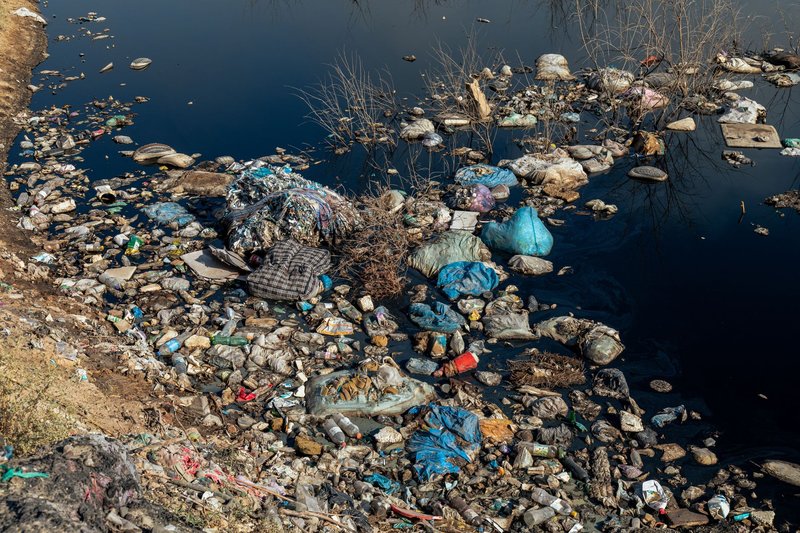
18. Most plastic ever made is still around
A 2017 analysis in Science Advances estimated that 8.3 billion metric tons of plastic were produced between 1950 and 2015. About 6.3 billion tons became waste. Of that waste, roughly 9 percent was recycled, 12 percent was burned and 79 percent ended up in landfills or the environment. Plastics are cheap, durable and light. The durable part is the problem.
19. PFAS, the “forever chemicals,” come from a materials success story
Roy Plunkett accidentally discovered Teflon at DuPont in 1938. Its backbone of carbon-fluorine bonds, among the strongest in organic chemistry, makes it slippery and heat-resistant, and the same bonds keep PFAS from breaking down in the environment. The EPA tracks thousands of PFAS compounds, and in 2024 it set enforceable drinking water limits of 4 parts per trillion for two of them, PFOA and PFOS.
20. Modern magnets depend on rare earth mining
The 17 rare earth elements go into the neodymium magnets used in electric vehicle motors, wind turbines and hard drives. China accounts for roughly 60 to 70 percent of global mining and an even larger share of processing. The ore often contains thorium and uranium, so refining it produces radioactive waste. Better materials design now includes finding magnets that need fewer of these elements, or none.
FAQ
What is materials science in simple terms?
It’s the study of why materials behave the way they do and how to change them. Scientists look at atomic structure, then adjust composition and processing to get a property they want, such as hardness, flexibility or conductivity.
What are the four main types of materials?
Metals, ceramics, polymers and composites. Steel is a metal, porcelain a ceramic, polyethylene a polymer and carbon fiber in resin a composite. Semiconductors like silicon are often treated as a fifth group.
What’s the difference between materials science and materials engineering?
Materials science asks why a material behaves as it does. Materials engineering applies that knowledge to design a part or product. Most university programs combine the two.
Is materials science the same as chemistry or physics?
It overlaps with both, along with mechanical engineering and biology. Chemistry focuses on reactions and molecules. Materials science focuses on how structure at every scale, from atoms to visible grains, controls performance.
What to read next
For the long history of plastics, transistors and fiber optics, Science News covers the century of materials in detail. To see why people study the field, the University of Cambridge materials science pages explain it from a student’s point of view. If one fact here caught your attention, graphene, aerogel and nitinol each have deep research histories worth looking up by name.