
A medical device is any instrument, machine, implant, software or material used on people to diagnose, monitor, treat or prevent disease or injury, and that does its job without depending on chemistry inside the body. A tongue depressor qualifies. So does a pacemaker, a blood glucose meter and an app that reads heart rhythm from a smartwatch. Aspirin doesn’t, because it works by chemical action once it’s metabolized.
That one-sentence version is close to what regulators say, but the details change which rules apply to a product and how much evidence its maker has to produce. This guide covers the official definitions, the risk classes, the main types of medical devices, and where the line between a device and a drug falls.
Table of contents
- TLDR
- How the FDA, EU and WHO define a medical device
- Medical device classification: Class I, II and III
- One example for each risk class
- Types of medical devices
- Medical devices vs drugs
- FAQ
TLDR
- A medical device is a product with a medical purpose that achieves its main effect by physical, mechanical or electronic means, not mainly through pharmacology, immunology or metabolism.
- The FDA, EU and WHO definitions overlap heavily. The main differences: the EU and WHO name software explicitly and include “prediction” and “prognosis” as medical purposes, and the FDA definition is built into US law from 1938 and amended since.
- Regulators sort devices by risk. The US uses three classes (I, II, III). The EU uses four (I, IIa, IIb, III).
- Higher class means more scrutiny: Class I is mostly self-managed, Class III needs the heaviest evidence before sale.
- Device types include diagnostic equipment, therapeutic devices, implants, software and in vitro diagnostics (tests run on samples such as blood or saliva).
- The World Health Organization estimates there are around 2 million different kinds of medical devices on the global market, grouped into more than 7,000 generic device groups.
How the FDA, EU and WHO define a medical device
Three bodies set the vocabulary most of the world uses. Their wording differs, but the structure is the same: a list of things that can be devices, a list of medical purposes, and an exclusion for products that work mainly through drug-like action.
The FDA definition
In the United States, the legal definition sits in section 201(h) of the Federal Food, Drug, and Cosmetic Act. The FDA’s own summary is that a device is an instrument, apparatus, implement, machine, contrivance, implant, in vitro reagent or similar article, including a component part or accessory, that is:
- recognized in the official National Formulary or US Pharmacopeia, or
- intended for use in the diagnosis, cure, mitigation, treatment or prevention of disease, or
- intended to affect the structure or any function of the body,
and that does not achieve its primary intended purpose through chemical action within or on the body and isn’t dependent on being metabolized.
Note the phrase “intended to affect the structure or any function of the body.” It’s broad. A device doesn’t have to treat a disease. A knee brace and a hospital bed both fit.
The EU definition
The EU’s Medical Device Regulation (MDR 2017/745) has applied since May 2021 and replaced an older directive from 1993. Article 2 of the regulation defines a device as any instrument, apparatus, appliance, software, implant, reagent, material or other article intended by the manufacturer for one or more specific medical purposes. Those purposes include:
- diagnosis, prevention, monitoring, prediction, prognosis, treatment or alleviation of disease
- diagnosis, monitoring, treatment, alleviation of or compensation for an injury or disability
- investigation, replacement or modification of anatomy or a physiological process
- control or support of conception
- providing information through in vitro examination of samples from the human body, including blood and tissue donations
The device must not achieve its principal action by pharmacological, immunological or metabolic means, though those means may assist it. The MDR also pulls in some products with no medical purpose, such as non-corrective colored contact lenses and equipment for liposuction, because they carry similar risks.
The WHO definition
The WHO uses nearly the same wording as the EU, which isn’t an accident. The WHO definition follows the language developed by the Global Harmonization Task Force, the group whose work later moved to the International Medical Device Regulators Forum, so that countries could write compatible laws. The WHO explicitly lists software and reagents for in vitro use, and it treats “medical device” as an umbrella term covering everything from a bandage to an MRI scanner.
What actually differs
Three differences matter in practice:
- Intent is the test. Under both systems, what the manufacturer says the product is for decides whether it’s a device. A plain pair of sunglasses is a consumer product. The same lenses marketed to treat a medical eye condition are a device.
- Software is named in the EU and WHO texts. The FDA covers software through the broader wording, and publishes separate guidance on software as a medical device (SaMD).
- Prediction and prognosis. The EU lists these as medical purposes. A tool that estimates your risk of a future event can be a device in the EU even if it never diagnoses anything today.
Medical device classification: Class I, II and III
Regulators don’t treat a plastic spatula and a heart valve the same way. Medical device classification sorts products by the harm they could do if they fail, then attaches stricter requirements to higher classes.
How the US does it
The FDA’s three classes date to the Medical Device Amendments of 1976:
- Class I is low risk. General controls apply: registration, good manufacturing practice, accurate labeling. Most Class I devices are exempt from premarket review.
- Class II is moderate risk. General controls plus “special controls” such as performance standards or post-market surveillance. Most Class II devices reach the market through a 510(k) notification, which shows the new device is substantially equivalent to a legally marketed predicate device.
- Class III is high risk: devices that support or sustain life, are implanted, or present potential unreasonable risk of illness or injury. These need premarket approval (PMA), which requires clinical evidence of safety and effectiveness.
The FDA assigns class by device type. It maintains a database of around 1,700 generic device types, each already assigned to a class. You look up your product and find where it sits.
How the EU does it
The EU doesn’t list products. It applies 22 classification rules from Annex VIII of the MDR. The rules ask about:
- how long the device touches the body (transient, short-term, long-term)
- whether it’s invasive, and how deeply
- whether it’s active (needs a power source) or non-active
- which part of the body it touches, with extra caution for the heart and central nervous system
The result is Class I, IIa, IIb or III. Class I devices are mostly self-certified by the manufacturer. Everything above that, plus Class I devices that are sterile, have a measuring function or are reusable surgical instruments, needs an independent notified body to review the technical file before the device gets its CE mark.
The side-by-side comparison
| Risk level | FDA class | EU MDR class | Typical examples | Route to market |
|---|---|---|---|---|
| Low | Class I | Class I | Tongue depressor, elastic bandage, manual wheelchair | US: mostly exempt from premarket review. EU: manufacturer self-declares (with exceptions) |
| Moderate | Class II | Class IIa | Hypodermic needle, hearing aid, most ultrasound scanners | US: usually 510(k). EU: notified body review |
| Moderate to high | Class II | Class IIb | Infusion pump, ventilator, X-ray machine | US: usually 510(k). EU: notified body review, deeper scrutiny |
| High | Class III | Class III | Pacemaker, heart valve, drug-eluting stent | US: PMA with clinical data. EU: notified body review with clinical evaluation |
The mapping is approximate, not exact. The FDA has one middle tier where the EU has two, and because the systems use different logic, one product can land in different classes on each side. A device may be Class II in the US and Class IIb in Europe, for instance, or the reverse.
One example for each risk class
Abstract class definitions are easier to hold onto with objects you’ve seen.
Class I: the tongue depressor. A flat wooden or plastic stick. It touches the body briefly, has no power source, and the worst plausible failure is a splinter. The FDA exempts it from premarket review, and in the EU it’s Class I.
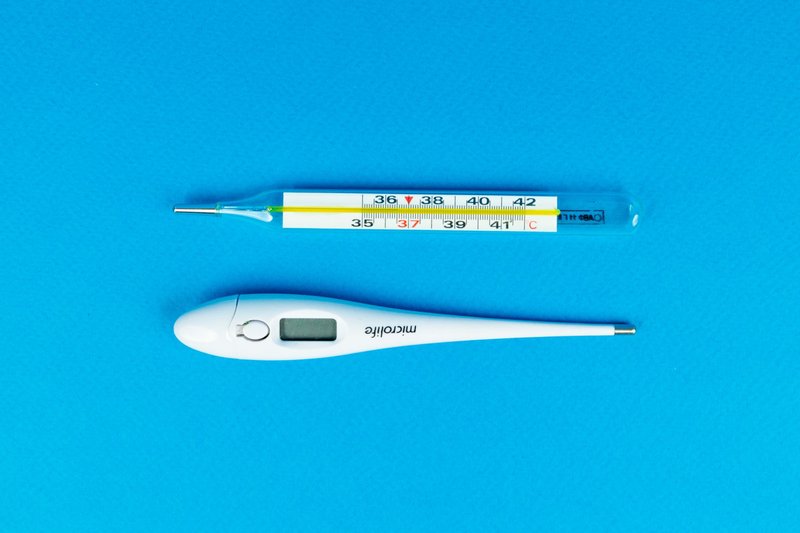
Class II (FDA) and Class I or IIa (EU): the digital thermometer. It measures a physiological value, so a wrong reading can mislead a clinician or a parent about a fever. In the US it’s Class II. In the EU, a clinical thermometer typically lands in Class I or IIa depending on how it’s built and what it’s intended for. Because it measures, a Class I thermometer still needs a notified body to check the measuring function.
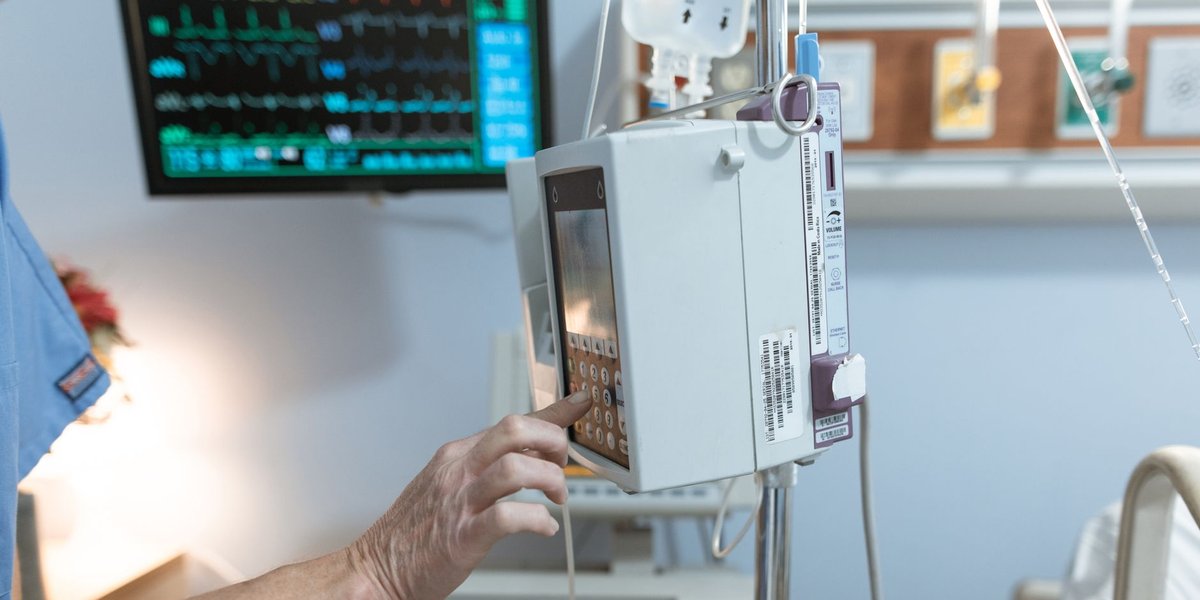
Class II (FDA) and Class IIb (EU): the infusion pump. It meters liquid drugs or nutrition into a patient’s bloodstream. A pump that delivers too much too fast can kill. That active control over a dose is what pushes it up the EU scale, and the FDA applies special controls and has run a dedicated infusion pump safety initiative because of the number of recalls over the years.
Class III: the pacemaker. It’s implanted for years, it’s active, it sits against the heart, and its failure can be fatal. Both the FDA and the EU place it in the top class, and manufacturers must submit clinical data before it can be sold.
Types of medical devices
Class tells you how risky a device is. Type tells you what it does. The categories overlap, but most devices fit one of five.
Diagnostic devices
These detect or measure something about the body. Stethoscopes, blood pressure cuffs, ECG machines, CT scanners and ultrasound probes all belong here. They don’t change the patient. They produce information a clinician acts on.
Therapeutic devices
These treat or support. Examples include defibrillators, ventilators, dialysis machines, insulin pumps, hearing aids and surgical lasers. Some are life-critical and run around the clock in an intensive care unit. Others, like a TENS unit for muscle pain, sit in a drawer at home.
Implantable devices
These stay in the body: pacemakers, artificial hip and knee joints, cochlear implants, coronary stents, breast implants. Long contact time and the difficulty of fixing a failure after surgery are why most implants sit in the upper classes. Materials matter here. Titanium and certain ceramics are used because the body tolerates them for decades.
Software and wearables
Software as a medical device is software that performs a medical function on its own, without being part of a physical device. The International Medical Device Regulators Forum defines it that way, and the FDA follows the same idea. A program that analyzes a CT scan for signs of stroke is SaMD. So is an app that screens photos of moles.
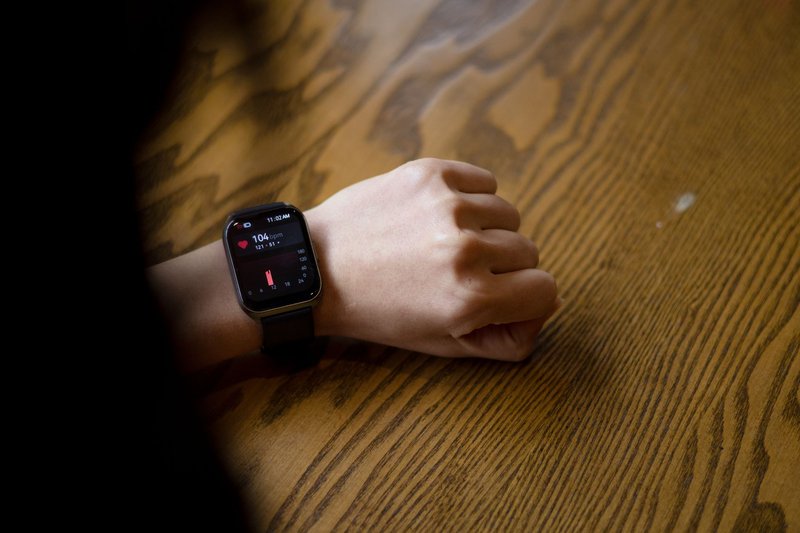
The Apple Watch ECG feature is a well-known case: the FDA authorized it in 2018 as a Class II device through its De Novo pathway, which exists for novel low-to-moderate-risk devices with no predicate. The step counter on the same watch isn’t a device, because counting steps for general wellness makes no medical claim.
The pattern holds across wearables. What the product claims decides its status. In the EU, MDR Rule 11 pushes most software that informs clinical decisions into Class IIa or above, which is stricter than the old rules.
In vitro diagnostic devices
In vitro diagnostics (IVDs) test samples taken from the body: blood, urine, saliva, swabs, tissue. Blood glucose meters, home pregnancy tests, COVID-19 rapid antigen tests and the analyzers in hospital labs, which run chemical analysis on patient samples, are all IVDs. The FDA regulates them as devices with the same I to III classes. The EU gave them their own regulation, the IVDR (2017/746), with four classes labeled A through D, where D covers the highest-risk tests such as those that screen donated blood for HIV.
Medical devices vs drugs
The simplest way to separate the two is by mechanism. A drug works through chemistry or biology: it binds receptors, blocks enzymes, kills bacteria or triggers an immune response. Those molecular mechanisms are what biochemistry studies. A device works through physical or mechanical action: it cuts, props open, measures, shocks, filters, replaces or supports.
Compare an anti-inflammatory gel and a knee brace. Both are used for the same sore knee. The gel is a drug because its active ingredient acts chemically on tissue. The brace is a device because it works by holding the joint in place.
The boundary blurs in a few cases:
- Combination products. A drug-eluting stent is a metal scaffold that holds an artery open (device action) and releases medication to prevent re-narrowing (drug action). Regulators decide which action is primary and assign review accordingly. For stents, the primary mode of action is mechanical, so they’re reviewed as devices.
- Substance-based devices in the EU. Some saline nasal sprays and throat lozenges are legally devices because they work by physical action, such as coating or flushing, rather than by being absorbed and acting chemically.
- Drug-delivery devices. An inhaler, an autoinjector or an insulin pen is the vehicle for a drug, and each has its own device rules covering the hardware.
The practical consequence: drug approval typically rests on randomized trials proving a drug works against a placebo or a standard treatment, while many Class II devices clear on equivalence to an existing product. That’s one reason devices can reach patients faster, and one reason critics argue some devices get less evidence than they should.
FAQ
Is a bandage a medical device?
Yes. An adhesive bandage is a Class I device in the US, and the same applies in the EU. Wound dressings that contain drugs, such as antimicrobial agents, can fall into higher classes or be treated as combination products.
Is a smartwatch a medical device?
Only for features with a medical claim. An ECG or irregular-rhythm notification that the manufacturer says detects atrial fibrillation is regulated as a device. Step counting and sleep tracking marketed for general wellness are not.
What is the difference between a medical device and medical equipment?
“Medical equipment” usually means reusable machines and hardware, such as MRI scanners and hospital beds. “Medical device” is the broader legal category and also covers single-use items like syringes, implants and software.
Are contact lenses medical devices?
Yes. In the US, most soft daily-wear lenses are Class II and extended-wear lenses are Class III. In the EU, even non-corrective cosmetic lenses fall under the MDR because they sit directly on the eye.
Do medical devices need clinical trials?
It depends on class and pathway. Class III devices in the US need clinical data as part of the PMA process. Many Class II devices clear through a 510(k) without new clinical trials, using testing and comparison to a predicate. In the EU, clinical evaluation is required for all classes, though the amount of evidence scales with risk.
Is a COVID rapid test a medical device?
Yes. It’s an in vitro diagnostic device, because it examines a sample from the human body to provide information about a medical condition.
How many types of medical devices are there?
The WHO estimates more than 7,000 generic device groups and around 2 million distinct products worldwide. The FDA lists about 1,700 generic types in its own classification database.