TLDR
- Nuclear power is the dominant use. Reactors burn enriched uranium to produce roughly 9-10% of the world’s electricity.
- Weapons and naval reactors use highly enriched uranium, in the range of 90% U-235.
- Depleted uranium, the leftover from enrichment, goes into armor, armor-piercing rounds, ballast, and radiation shielding.
- Medicine, research, and industry use uranium mostly indirectly, as a source of isotopes or as a stain for electron microscopy.
- Historical uses include yellow-green uranium glass and orange-red ceramic glazes.
- Which use you get depends on one number: how much of the uranium is U-235.
Table of contents
- One element, three versions
- Electricity: the biggest of the uses of uranium
- Weapons and naval reactors
- Depleted uranium: dense, cheap, and everywhere
- Medicine, research, and industry
- Historical uses: glass, glazes, and photographs
- Uses by uranium type
- Myths and mix-ups
- A short safety note
- Summary
One element, three versions
Almost every question about what uranium is used for comes down to isotopes. Natural uranium is about 99.3% uranium-238 and about 0.7% uranium-235, with a trace of uranium-234. Only U-235 splits easily enough to sustain a chain reaction in most reactors, so the industry sorts uranium into three working categories:
- Natural uranium: as mined, with about 0.7% U-235.
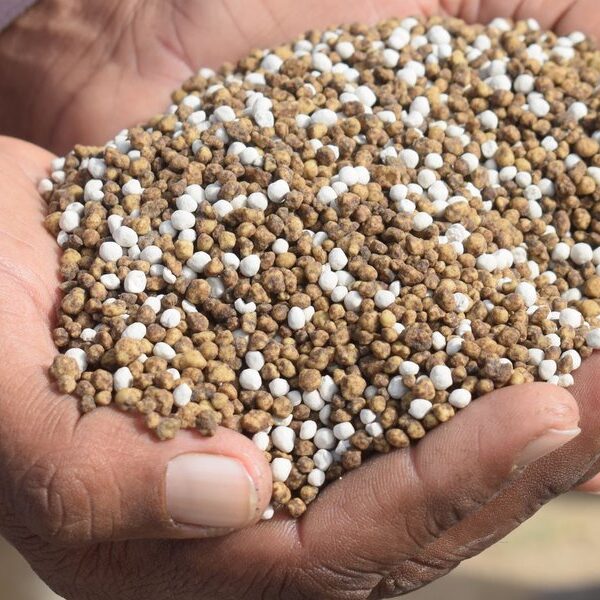
- Enriched uranium: processed so the U-235 share is higher. Reactor fuel is typically 3-5%. Weapons-grade material is around 90% or more.
- Depleted uranium: what’s left after enrichment, with roughly 0.2-0.3% U-235.
The U.S. Nuclear Regulatory Commission describes enrichment as the step that raises that U-235 share to make fuel. Every other category of use below follows from which of the three you’re holding.
Electricity: the biggest of the uses of uranium
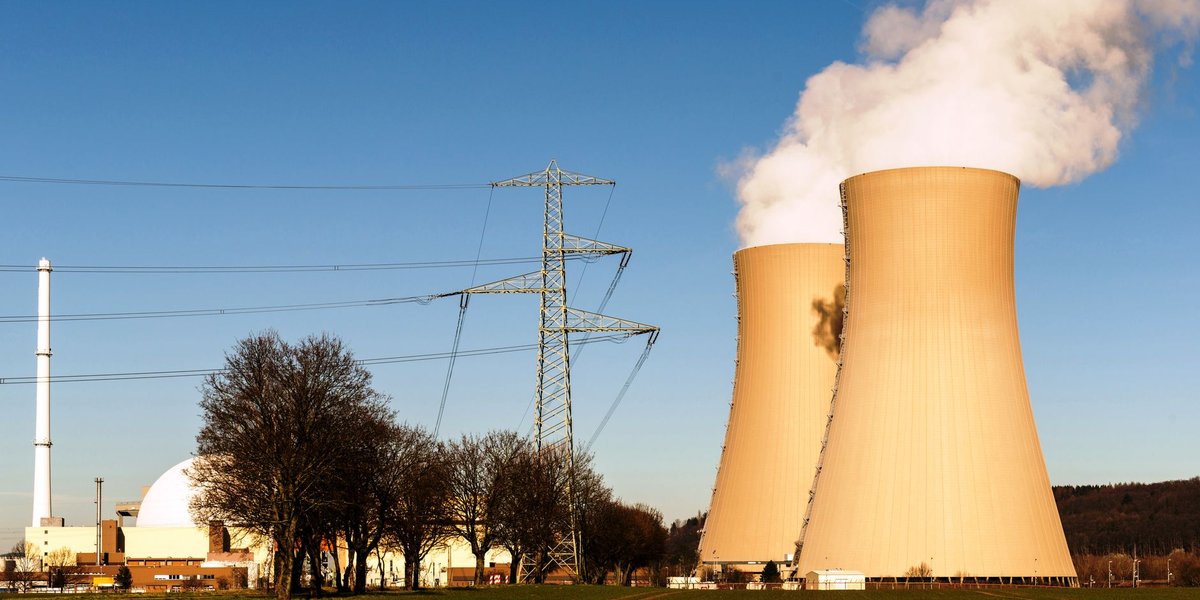
Power generation is the main reason anyone mines uranium, and most of the uranium mined in the United States comes from mines in Wyoming. Around 440 reactors worldwide supply roughly 9-10% of global electricity, and nuclear plants provide about 19% of electricity in the United States, according to the U.S. Energy Information Administration.
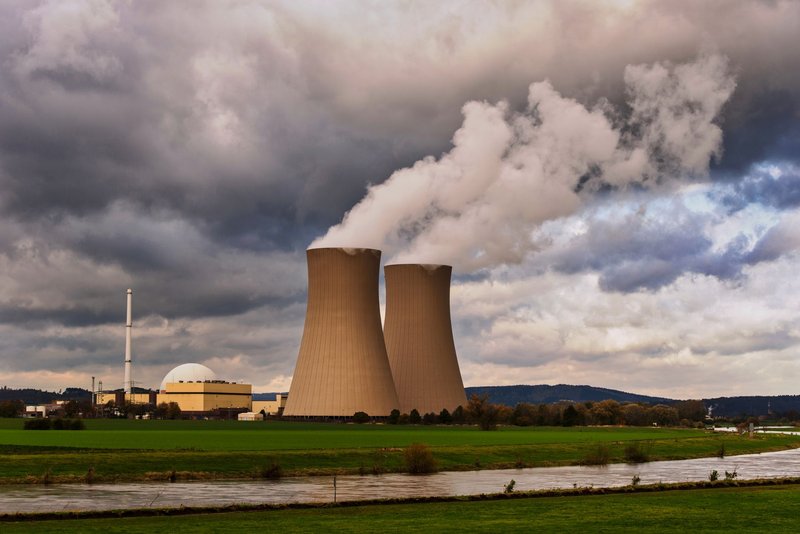
The fuel is enriched to about 3-5% U-235, pressed into ceramic uranium dioxide pellets about the size of a fingertip, and stacked inside long metal rods. One pellet holds about as much energy as a ton of coal. The reactor doesn’t burn anything. Neutrons split U-235 nuclei, the split releases heat and more neutrons, and the heat boils water to turn a turbine.
U-238 isn’t idle in there, either. It absorbs stray neutrons and turns into plutonium-239, which also fissions. In a typical reactor, a meaningful share of the energy in spent fuel’s lifetime comes from plutonium that was never loaded in. Some plants also run “MOX” fuel, which mixes recycled plutonium with depleted uranium.
Some reactor designs, such as the Canadian CANDU, run on natural uranium with no enrichment at all. They use heavy water instead of ordinary water to slow the neutrons, which lets them get by on the 0.7%.
Weapons and naval reactors
Nuclear weapons need far more U-235 than a power plant does. Uranium-based bombs use material enriched to about 90% or higher, because a bomb needs an uncontrolled chain reaction in a small mass. Reactor fuel at 3-5% cannot explode like a bomb, which is the reason enrichment levels are the focus of nonproliferation inspections.
U-238 plays a supporting role here too. In thermonuclear weapons, a uranium casing around the fusion stage fissions when hit by fast neutrons, adding a large share of the yield.

The other military use is propulsion. A highly enriched core lasts for decades without refueling, so U.S. Navy submarines and aircraft carriers run on it. The USS Nautilus, launched in 1954, was the first nuclear-powered submarine and could stay submerged for as long as the crew could stand it. Some countries, France among them, use lower enrichment levels in naval reactors and refuel more often.
Space gets a small mention here. Most deep-space probes use plutonium-238 generators, not uranium. But uranium-fueled reactors have flown, including the U.S. SNAP-10A in 1965, and NASA has tested small enriched-uranium designs for powering lunar and Mars bases.
Depleted uranium: dense, cheap, and everywhere
Depleted uranium (DU) is a byproduct of enrichment, and there’s a lot of it. Its selling point is density. Uranium is about 19 times denser than water and roughly 70% denser than lead.
That makes it useful wherever you need a lot of mass in a small space:
- Armor-piercing rounds. DU penetrators for tank guns and aircraft cannons such as the A-10’s 30 mm gun are dense and self-sharpening, meaning they shed material as they punch through armor rather than mushrooming into a blunt tip.
- Tank armor. Some versions of the U.S. M1 Abrams carry DU layers inside their armor.
- Counterweights and ballast. Some older aircraft and ship keels used DU as compact weight.
- Radiation shielding. Containers for gamma-emitting sources use DU for the same reason lead is used, with better shielding per unit thickness.
The U.S. Environmental Protection Agency notes that DU is about 60% as radioactive as natural uranium. It’s still a heavy metal with a chemical hazard, which is why its battlefield use is controversial.
Medicine, research, and industry
Uranium is rarely put into a patient. What it provides is a supply of radioactive isotopes.
Molybdenum-99, which decays into technetium-99m, the most common isotope in nuclear medicine diagnostics, is made mainly by fissioning U-235 targets in research reactors. Tens of millions of diagnostic scans a year rely on that chain, from heart stress tests to bone scans. Uranium’s role in a hospital is invisible, and it starts at a reactor.
Research and industry add a few more:
- Geology. Uranium-lead dating of zircon crystals is one of the most precise clocks in science. U-238 has a half-life of about 4.5 billion years, which is why the technique pins the age of the oldest rocks and of Earth itself at about 4.5 billion years.
- Electron microscopy. Uranyl acetate has long been used as a stain, because uranium’s heavy atoms scatter electrons strongly and make cell structures visible.
- Research reactors. Universities and labs use small reactors, fueled by enriched uranium, for neutron beams and materials testing.
Historical uses: glass, glazes, and photographs
Before anyone knew uranium was radioactive, it was a coloring agent. Martin Klaproth identified the element in 1789 in a mineral from a Bohemian silver mine, and by the mid-1800s glassmakers were adding uranium oxide to melts to get a yellow-green tint.

Uranium glass, sometimes called Vaseline glass, usually contains a fraction of a percent to a few percent uranium by weight. Under ultraviolet light it glows a vivid green. Collectors still hunt it at antique shops with a blacklight in their pocket.
Ceramic glazes used uranium oxide to produce a bright orange-red. Fiesta dinnerware’s “Fiesta Red” is the best-known case. The company stopped using uranium in 1943, when the U.S. government took control of the supply for the Manhattan Project, and resumed in 1959 with depleted uranium until 1972.
Photography had a uranium toner that turned prints reddish-brown. Uranium also sat in some early dental porcelain, to mimic the natural fluorescence of teeth.
Most of these ended once regulators took a harder look at radioactive consumer goods.
Uses by uranium type
| Uranium type | U-235 content | Main uses |
|---|---|---|
| Natural | about 0.7% | CANDU reactor fuel, feedstock for enrichment, historical glass and glazes |
| Low-enriched | about 3-5% | Commercial power reactor fuel, some naval reactors |
| Highly enriched | about 20% to 90%+ | Nuclear weapons, U.S. naval reactors, research reactors, medical isotope production |
| Depleted | about 0.2-0.3% | Armor, penetrators, ballast, shielding, MOX fuel blending |
Sources differ on exactly where “high” starts. The usual dividing line is 20% U-235, and anything near 90% is called weapons-grade.
Myths and mix-ups
“Smoke detectors contain uranium.” They don’t. Ionization smoke detectors use a tiny amount of americium-241, which is made in reactors but is a different element.
“Glow-in-the-dark watches used uranium.” Old radium-dial watches used radium paint, which was dangerous to the workers who painted them. Modern glow-in-the-dark items use zinc sulfide or strontium aluminate phosphors, which are not radioactive at all. Uranium glass glows only under UV light.
“Uranium is rare.” It’s about as common in the Earth’s crust as tin. What’s scarce is concentrated ore that’s cheap to mine.
“Depleted uranium is nuclear waste.” It’s a byproduct of enrichment, not spent fuel. It’s less radioactive than the natural uranium it came from.
“Uranium is used directly in medicine.” Mostly no. Hospitals rely on isotopes like technetium-99m that are produced in reactors with uranium targets.
A short safety note
Uranium is a weak radiation hazard from outside the body. Its radiation is mostly alpha particles, which a sheet of paper or the outer layer of skin blocks. The risk comes from swallowing or inhaling dust, where it behaves as a toxic heavy metal that mainly harms the kidneys. Handling a piece of uranium glass is not a concern for most people. Grinding it up is.
Summary
The uses of uranium split along isotope lines. Natural and low-enriched uranium make electricity. Highly enriched uranium powers submarines and weapons. Depleted uranium is valued for weight. The rest, from hospital scans to green glassware, is a long tail of niche uses that follow from the same physics.