China produces roughly 70,000 tonnes of vanadium a year, about 70% of the world’s supply. Russia is a distant second at around 21,000 tonnes, then South Africa and Brazil. Together those four make up nearly all of the roughly 100,000 tonnes mined or recovered worldwide annually, according to the US Geological Survey’s Mineral Commodity Summaries.
That concentration is the real story of vanadium. The metal is tiny in volume and large in consequence: it makes steel tougher, and it’s the active ingredient in one of the most promising grid batteries.
Contents
- Vanadium production by country
- China: vanadium from steel slag
- Russia: titaniferous magnetite
- South Africa: the Bushveld Complex
- Brazil: Largo’s Maracás Menchen mine
- Reserves are not production
- Why vanadium matters
- Supply risk and what comes next
Vanadium production by country
The table uses rounded USGS estimates for 2024 mine and recovered output, measured in tonnes of contained vanadium. Reserves are the USGS estimates of what’s economically recoverable today. Shares are calculated against a world total of about 100,000 tonnes, and USGS rounds its figures, so they won’t sum perfectly.
| Rank | Country | Output (t, 2024) | Share of world | Reserves (approx.) |
|---|---|---|---|---|
| 1 | China | ~70,000 | ~70% | ~9.5 million t |
| 2 | Russia | ~21,000 | ~21% | ~5 million t |
| 3 | South Africa | ~8,000 | ~8% | ~3.5 million t |
| 4 | Brazil | ~6,500 | ~6% | ~3.7 million t |
| – | Australia | negligible | – | ~6 million t |
Treat the smaller figures as approximate. Sources disagree by a few thousand tonnes year to year, and some sites still quote China at 68,000 tonnes instead of 70,000 because they’re citing an older edition. The ranking hasn’t changed in years.
China: vanadium from steel slag
China doesn’t just lead on volume. It also makes vanadium differently from everyone else.
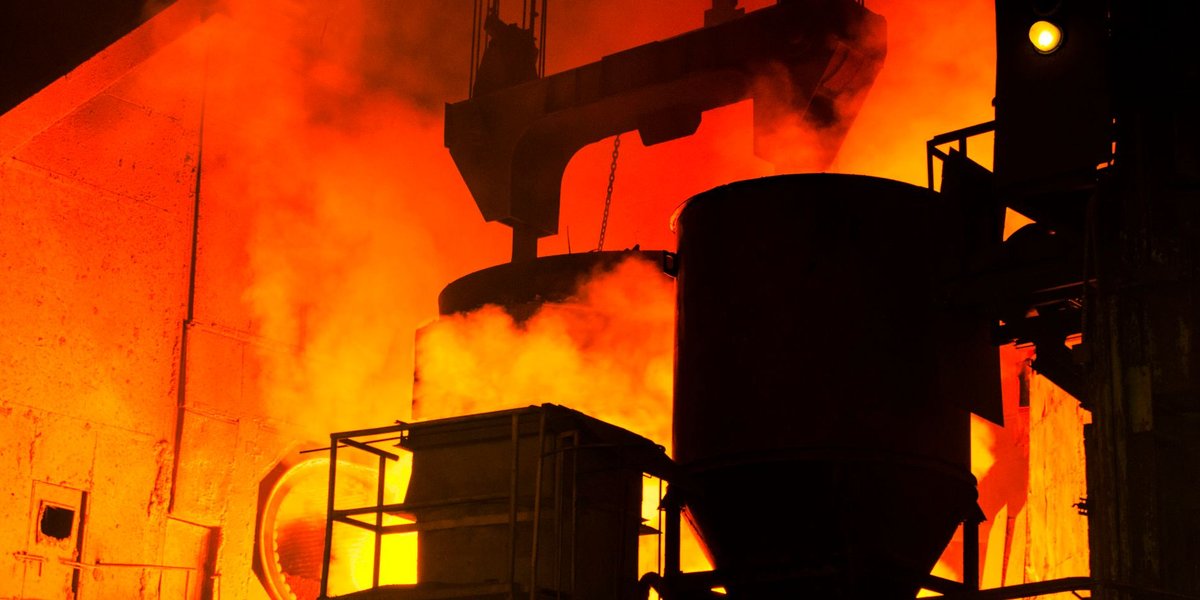
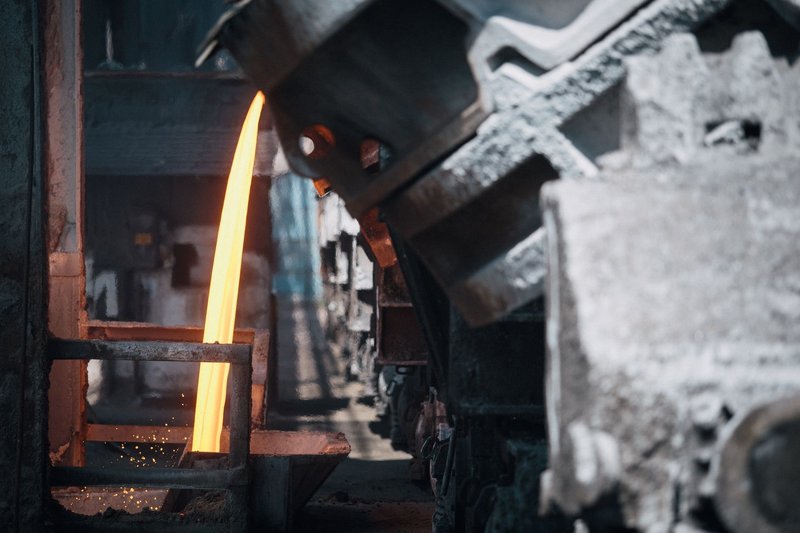
Most Chinese vanadium is a by-product. Iron ore in the Panzhihua region of Sichuan and around Chengde in Hebei is rich in vanadium. When mills smelt it into iron, the vanadium ends up in the slag, which gets roasted and leached to pull out vanadium oxide. The slag is a waste stream turned into a second product, and that’s why Chinese output tracks steel production so closely.
If you read “vanadium from steel slag” and wondered whether it’s a niche process, it isn’t. It accounts for the largest single share of global supply.
Russia: titaniferous magnetite
Russia’s vanadium comes from titaniferous magnetite, an iron ore that carries vanadium inside its crystal structure. The Kachkanar deposit in the Urals, mined and processed by Evraz, is the main source. The same ore is smelted for iron, and the vanadium is recovered from the slag, much like in China, though the ore body is a different geological animal.
Russia has been the number two producer for decades, and Evraz’s Nizhny Tagil and Tula operations convert that slag into vanadium pentoxide and ferrovanadium.
South Africa: the Bushveld Complex
South Africa sits on the Bushveld Complex, a layered igneous intrusion roughly 2 billion years old that holds most of the world’s platinum and a huge amount of vanadium. The vanadium lives in magnetite layers that run for hundreds of kilometres.
Here vanadium can be the primary product rather than a by-product. Mines such as Vametco and Bushveld Vanadium’s Vanchem operation process magnetite directly. That matters because primary producers can ramp up or down on vanadium prices rather than steel demand.
Brazil: Largo’s Maracás Menchen mine
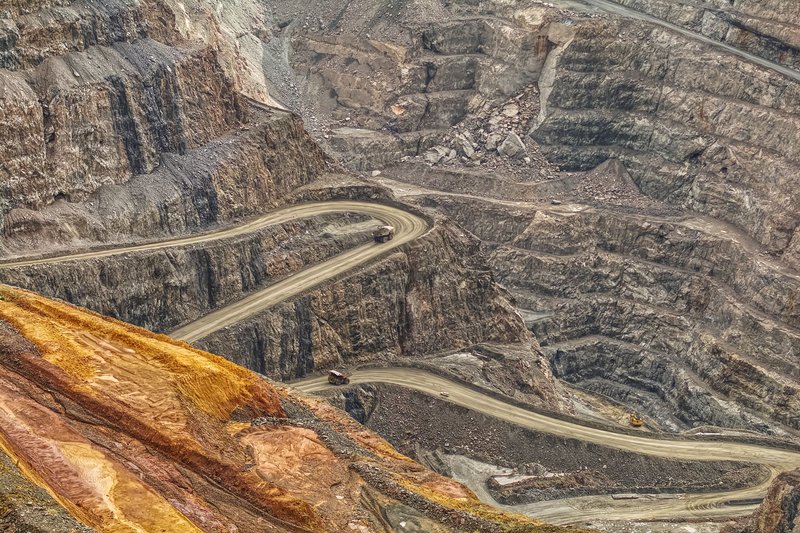
Brazil’s output comes almost entirely from one operation: the Maracás Menchen mine in Bahia, run by Largo Inc. It’s another titaniferous magnetite deposit, and it’s among the highest-grade primary vanadium mines in the world. Largo processes the ore on site into vanadium pentoxide, and the company has also explored using its product for vanadium redox flow batteries.
One mine accounting for Brazil’s entire ranking tells you how thin the global supply base is outside China and Russia.
Reserves are not production
Look at the table again. Australia has some of the largest vanadium reserves in the world, yet it produced almost nothing in 2024. Its deposits, such as Windimurra in Western Australia, have been developed and shelved repeatedly as vanadium prices fell.
Reserves only count if someone can mine them profitably at current prices. Production follows the market, not the geology. China holds the biggest reserves and the biggest output, but the gap between the two columns is wide for almost everyone else. The United States, Canada and Australia all have projects at various stages, and none has yet moved the global totals.
Why vanadium matters
About 90% of vanadium goes into steel. Adding as little as 0.1% to 0.2% vanadium makes steel noticeably stronger and lighter. It’s why it appears in rebar, pipelines, tool steel and aerospace alloys. Vanadium steel is also the reason Ford’s Model T was relatively tough for its weight, a detail Henry Ford made much of at the time.
The second use is growing. In a vanadium redox flow battery, two tanks of vanadium electrolyte in different oxidation states pump past a membrane to store and release electricity. The same element is used on both sides, so the electrolyte doesn’t degrade the way lithium cells do. The cycle life runs to tens of thousands of cycles. That makes flow batteries a good fit for storing wind and solar power for grid-scale use, as the US Department of Energy has been funding for years.
Supply risk and what comes next
Seventy percent from one country, and 91% from two, is a fragile arrangement for something the energy transition may need in volume. A policy shift or a steel slowdown in China moves the whole market. The 2022 sanctions on Russia added another wrinkle for Western buyers.
Watch three things. First, whether flow-battery installations scale enough to pull more primary mining online, since slag-based supply tracks steel, not batteries. Second, whether stalled projects in Australia, Canada and the US get financed. Third, whether recycling from spent steel and electrolyte reuse can reduce dependence on mining.
For now, the answer to “which country produces the most vanadium” is the same as it was a decade ago: China, by a wide margin. The figures above reflect 2024 USGS estimates, and they’ll be refreshed as new data comes out.