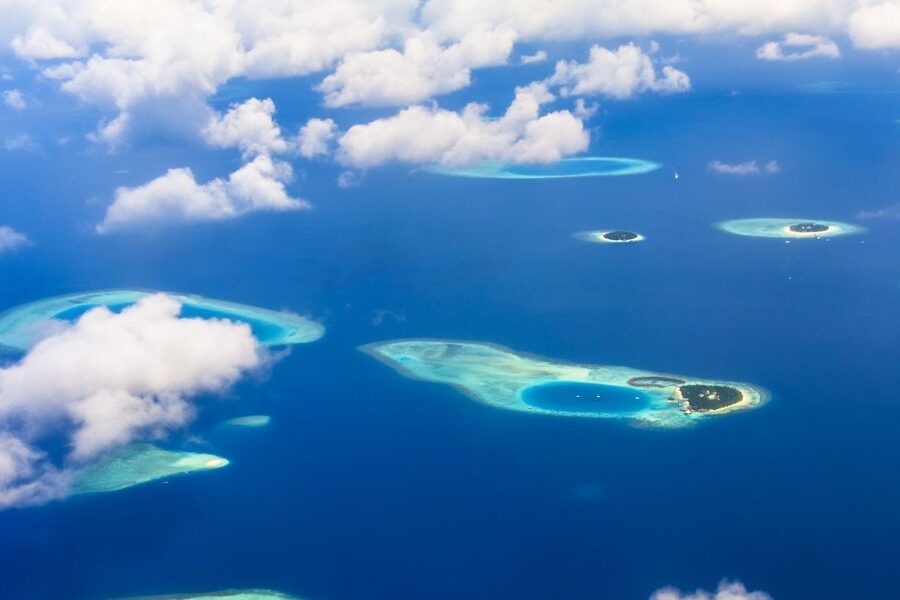
Two small volcanic islands off the coast of Gabon hold roughly 28 bird species found nowhere else on Earth. That’s a number in the same league as the Galápagos, from a country most people can’t place on a map. The exact figure depends on whose taxonomy you follow, and we’ll get to why.
TL;DR
- São Tomé and Príncipe have about 28 endemic birds, depending on the checklist. That’s a very high density for two islands that together cover less than 1,000 square kilometers.
- Each island is its own Endemic Bird Area, with its own set of species.
- The best sites are Obô Natural Park and the forests above Lagoa Amélia on São Tomé, plus the primary forest and offshore seabird islets on Príncipe.
- Go in the dry months (June to August, with a shorter dry spell around December and January) and hire a local guide.
Contents
- Why these islands have so many endemic birds
- Why the endemic count changes depending on the source
- Standout birds of São Tomé
- Standout birds of Príncipe
- Endemic birds at a glance
- Where to go birding
- When to go and what to expect
Why these islands have so many endemic birds
Both islands are volcanic and have never touched the African mainland. They sit in the Gulf of Guinea, São Tomé about 300 kilometers from the coast, Príncipe a little closer to it. Every bird on them arrived by crossing open water, then spent a very long time isolated from its relatives.
That’s the standard recipe for island endemism, and these islands follow it closely. Small founding populations drifted apart from their mainland cousins, adapted to mountain forest and lowland jungle, and in many cases became big enough to be recognized as separate species. The two islands also differ from each other, so a species on one is often replaced by a different relative on the other. The same isolation shaped plants and other wildlife too; for the wider picture beyond birds, see the guide to endemic species of São Tomé and Príncipe.
Why the endemic count changes depending on the source
You’ll see “26,” “28” and other totals in guidebooks and checklists. The gap comes from taxonomy, not from anyone miscounting.
Some birds on the islands were long treated as one species with several island forms. When researchers split them, the endemic tally goes up. Some of those splits are accepted by one checklist and still only “proposed” by another. The African Bird Club country profile lists endemics, near-endemics and proposed splits separately for exactly this reason.
So treat “about 28” as a good working number. If you’re keeping a life list, check which checklist your app or club follows before you start ticking.
Standout birds of São Tomé
São Tomé Grosbeak. A large, heavy-billed finch that was known from very few records for decades and was rediscovered in the 1990s. It’s tied to the primary forest in the south-west of the island and it’s the bird most birders come hoping to see. It’s rare, shy, and often seen only briefly.
São Tomé Oriole. A golden-yellow forest bird with black markings, more often heard than seen. Its song carries through the canopy before you spot a thing.
São Tomé Olive Pigeon. A dark, plump pigeon of the forest, usually seen perched on high branches or flying over the canopy.
São Tomé Spinetail. A swift that hawks insects over the forest and open clearings. Spinetails are fast and often high up, so this one rewards patience and decent binoculars.
São Tomé Fiscal. A shrike-like bird of the forest, long rare and extremely hard to see. Even guides treat a sighting as a good day.
São Tomé has more of the pigeons, passerines and other endemics than Príncipe, partly because it’s larger and has far more high-elevation forest. The cloud forest of the interior holds species you won’t find anywhere near the coast.
Standout birds of Príncipe
Príncipe Thrush. A thrush restricted to Príncipe, found in forest and in some plantation habitat. It’s one of the species that separates a Príncipe trip from a São Tomé trip.
Príncipe Seedeater. A small finch of the island’s forests and edges. It also occurs on a nearby islet.
Príncipe Sunbird and Príncipe White-eye. Small and quick, and they show up in the same flocks as other forest species if you stand still long enough.
The real draw on Príncipe is how intact the forest feels. Much of the island is protected, so the walk from the town to the primary forest is short, and you’ll often hear the birds long before you get far from the road.
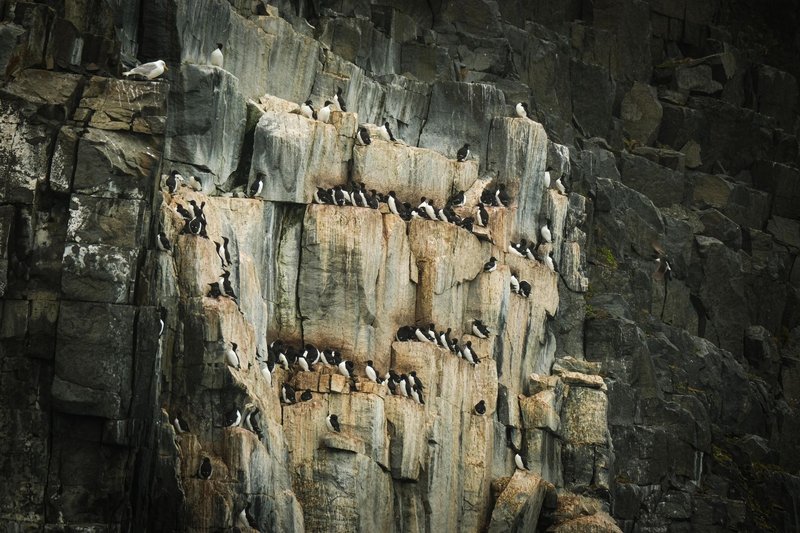
Off Príncipe, the Pedras Tinhosas islets are a seabird stronghold. Boat trips there are weather-dependent, but the colonies of terns and noddies are one of the few places in the country where birds gather in the thousands.
Endemic birds at a glance
The table below lists the species profiled in this article. It isn’t the full list of endemics, so check a current checklist for the rest.
| Species | Island | Habitat | Notes |
|---|---|---|---|
| São Tomé Grosbeak | São Tomé | Primary forest, south-west | Rediscovered in the 1990s; the one most birders want |
| São Tomé Oriole | São Tomé | Forest canopy | Easier to hear than see |
| São Tomé Olive Pigeon | São Tomé | Forest | Often seen from ridge viewpoints |
| São Tomé Spinetail | São Tomé | Aerial, over forest | Fast flier, usually high |
| São Tomé Fiscal | São Tomé | Primary forest | Very rare; guide required |
| Príncipe Thrush | Príncipe | Forest and plantation edge | Island speciality |
| Príncipe Seedeater | Príncipe | Forest and edges | Also on a nearby islet |
| Príncipe Sunbird | Príncipe | Forest and gardens | Joins mixed flocks |
Conservation status varies a lot across these birds, and several are threatened. The IUCN Red List has the current assessment for each species, and the status can change when a taxonomy decision does.
Where to go birding
Obô Natural Park (São Tomé). The largest block of primary forest on the island and the main site for the endemics that need real forest. Most serious birding trips start here, and you’ll want a guide because the trails are rough, the signage is limited, and the rarest birds need a trained ear.
Monte Carmo and the forests above Lagoa Amélia (São Tomé). Lower-elevation forest and a crater lake within a short drive of each other, good for pigeons, sunbirds and mixed flocks. A good first morning, to calibrate your ear before heading into deeper forest.
Príncipe’s southern forest. Compact, accessible and rich. Because the island is so small, you can often fit forest, plantation and coast into one day.
Pedras Tinhosas. Seabird islets reached by boat from Príncipe. Go only with an operator who knows the sea state.
When to go and what to expect
The dry season runs from June to August, and there’s a shorter dry spell in December and January. Trails are firmer, the forest is quieter in the rain’s absence, and birds are easier to hear. The rest of the year brings heavy rain, and in the highlands you can get a lot of it in a single afternoon.
Plan on early starts. Forest birds are most active in the first hours after dawn, and by mid-morning the canopy often goes quiet. Bring waterproofs even in the dry season, and a recorder or an app with local calls, because most of these species announce themselves long before they let you see them.
A local guide isn’t optional for the hardest species. Many of these birds are shy, scarce and tied to forest where the paths aren’t marked. A good guide knows which tree has been fruiting, which ridge has the fiscal this season, and which boat captain will actually run to the islets.
For a first trip, plan at least four days on São Tomé and two or three on Príncipe. That’s enough to see most of the endemics you can realistically find, and it leaves a day for the weather to ruin one of the plans. For background on what’s being protected and why, the Cornell Lab of Ornithology hosts species accounts and recordings that help you learn calls before you go.