TLDR
The natural resources of Malaysia are led by petroleum and natural gas (mostly offshore, near Terengganu, Sabah and Sarawak), tin, palm oil, timber and rubber. Bauxite, copper, iron ore, gold and rare earth minerals fill out the mineral side. Oil, gas and palm oil drive today’s economy. Tin and rubber built the colonial one.
Table of Contents
- The short list
- Energy: oil and natural gas
- Minerals: tin, bauxite, rare earths and more
- Plantation crops: palm oil and rubber
- Forests and biodiversity
- Marine and water resources
- How the mix changed over time
- Sustainability and regulation
- FAQ
The short list
Malaysia splits into two landmasses 600 km apart across the South China Sea: Peninsular Malaysia, and Sabah and Sarawak on Borneo. That geography decides who gets what. The peninsula has the old tin belt, the plantations and the gas fields off its east coast. Borneo has the bigger forests and the offshore oil and LNG that Sarawak ships from Bintulu.
| Resource | Main regions | Economic role |
|---|---|---|
| Crude oil | Offshore Terengganu, Sabah, Sarawak | Export earner, state revenue via Petronas |
| Natural gas / LNG | Offshore Sarawak, Terengganu | One of Asia’s largest LNG exporters |
| Tin | Perak (Kinta Valley), Selangor | Historic backbone, now small scale |
| Bauxite | Pahang (Kuantan) | Aluminium feedstock, tightly regulated |
| Rare earths | Perak, Kedah, Johor, Kelantan | Strategic, policy-driven |
| Palm oil | Peninsular Malaysia, Sabah, Sarawak | Second-largest producer worldwide |
| Rubber | Peninsular Malaysia | Gloves and latex products |
| Timber | Sarawak, Sabah, Pahang | Furniture, plywood, export |
Energy: oil and natural gas
Petroleum is the largest resource by value. Nearly all of it is offshore: fields off the east coast of the peninsula, off Sabah, and off Sarawak. Malaysian crude such as Tapis is light and sweet (low sulphur), which refiners in Asia pay a premium for.
Gas matters even more than oil. The US Energy Information Administration lists Malaysia among the world’s leading LNG exporters, with most of the volume coming from the Bintulu complex in Sarawak. Petronas, the state-owned company, controls upstream rights through production-sharing contracts. Domestic gas also feeds Malaysia’s power plants and its petrochemical industry.
The catch is depletion. Many older fields are mature, so output is held up by smaller marginal fields and deepwater discoveries off Sabah.
Minerals: tin, bauxite, rare earths and more
Tin. For most of the 20th century Malaysia was the world’s top tin producer. The Kinta Valley around Ipoh in Perak was the centre, and the mining towns around it still carry the legacy in flooded pits and old dredging ponds. Output has fallen far below its peak, but Malaysia still smelts tin at Butterworth, one of the largest smelters globally.
Bauxite. Pahang’s Kuantan area became a large bauxite exporter after 2014 when Indonesia banned raw exports. Poorly managed mining left red mud in rivers and roads, and Malaysia suspended bauxite mining in January 2016. It reopened in 2018 under stricter rules and export limits.
Rare earths. Malaysia has rare earth elements in clay deposits, mostly in Perak, Kedah, Johor and Kelantan. The US Geological Survey tracks global rare earth supply, which China dominates, and that is why Malaysian deposits get attention. Malaysia has moved to restrict raw rare earth exports to keep processing and value added at home.
Others. Copper (Mamut mine in Sabah), iron ore (Pahang, Terengganu), gold (Raub in Pahang), kaolin, silica sand and limestone round out the list. None of them move the national economy alone, but they feed construction, ceramics and electronics. For a comprehensive look at all minerals found in Malaysia, explore our complete mineral resource guide.
Plantation crops: palm oil and rubber
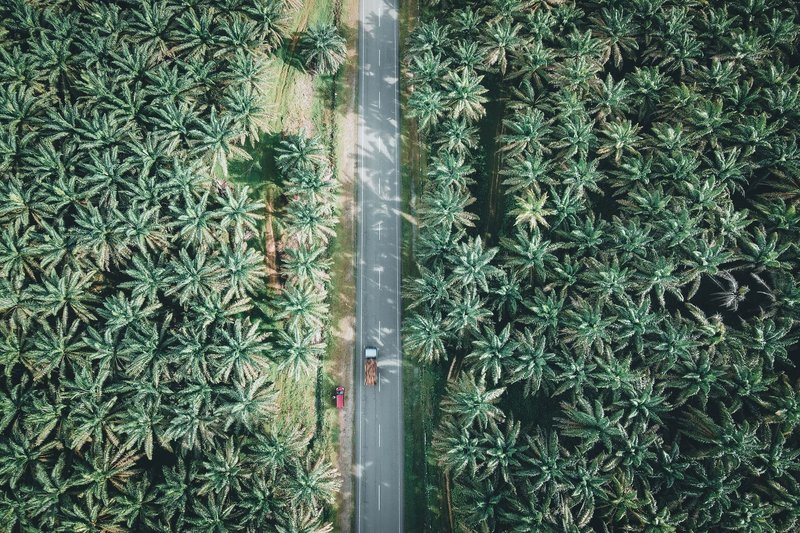
Palm oil is the resource most people associate with Malaysia. The country is the world’s second-largest producer after Indonesia, with oil palm covering roughly 5.6 million hectares, more than a sixth of the country’s land area. The crop is used in cooking oil, margarine, soap, cosmetics and biodiesel. An oil palm yields several times more oil per hectare than soybean or rapeseed, which is exactly why it expanded so fast.
Rubber came first. British colonial planters brought Hevea seedlings from Brazil via Kew Gardens in the 1870s, and by the early 20th century rubber had overtaken most other exports. Natural rubber output has shrunk as growers switched to oil palm, but Malaysia remains a global leader in rubber gloves and medical latex products, which use imported and domestic latex.
Smaller crops include cocoa, pepper (Sarawak is known for its pepper), and tropical fruit.
Forests and biodiversity
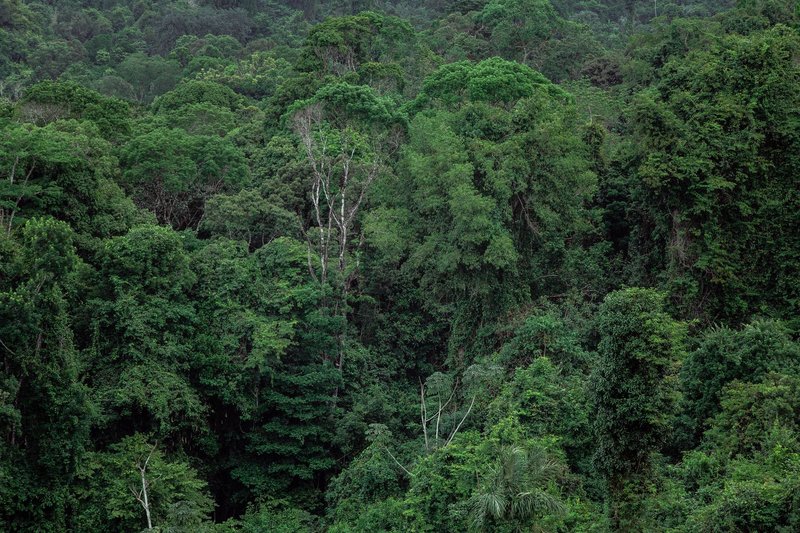
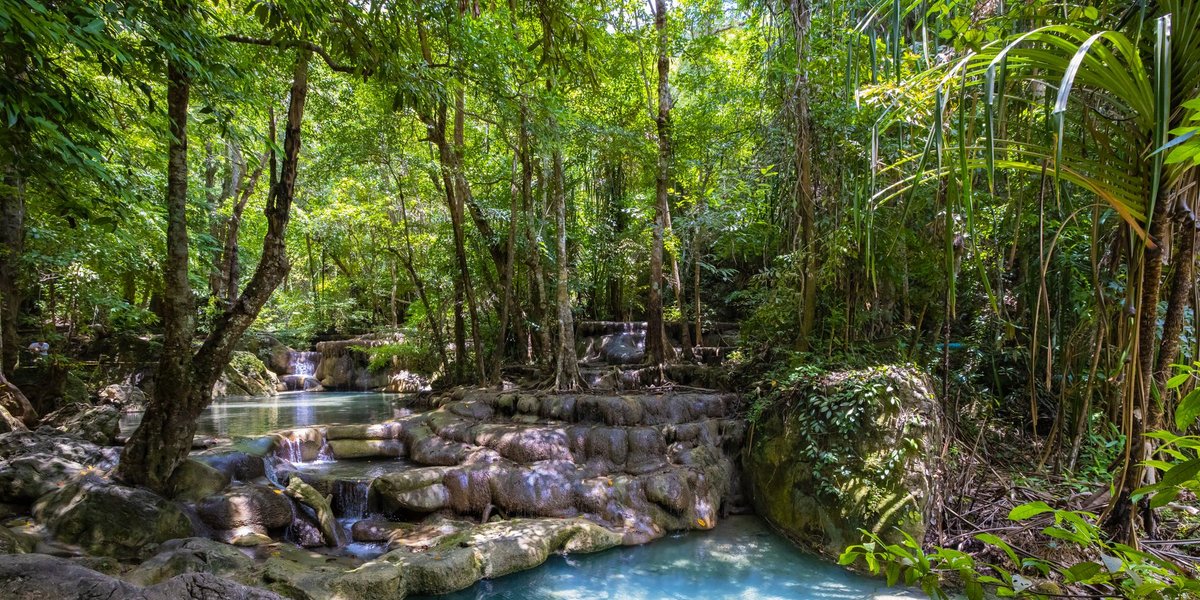
Forest covers roughly half of Malaysia’s land. Sarawak and Sabah hold the largest tracts, with dipterocarp lowland forests that can reach 60 metres in height. Taman Negara on the peninsula is often cited as among the oldest rainforests in the world.
Timber is the obvious product: meranti, keruing and other tropical hardwoods supply the plywood and furniture industries, particularly in Sarawak. But the biodiversity itself is a resource. Malaysia is a mega-diverse country, home to orangutans, Bornean pygmy elephants, rhinos, hornbills and thousands of tree species. Ecotourism, bioprospecting for medicines and carbon-credit schemes all draw on that.
Marine and water resources
Malaysia has about 4,800 km of coastline between the two landmasses. Fisheries supply local protein and some export, with the Straits of Malacca and the South China Sea as main grounds. Aquaculture, including prawns and tilapia, has grown to fill the gap where wild catches have levelled off. Coral reefs around Sipadan and the Perhentian Islands support dive tourism. Rainfall is heavy on both sides of the South China Sea, so rivers supply hydropower, notably the Bakun and Murum dams in Sarawak.
How the mix changed over time
Early on, the story was tin and rubber. Colonial Malaya used both to build ports, rail lines and towns. After independence in 1957, the government pushed diversification, and oil palm replaced rubber on many estates through the 1960s and 1970s. Petronas was founded in 1974, and oil and gas took over as the main fiscal contributor in the following decades. Manufacturing (especially electronics) later outgrew all of them in GDP terms, but the resource sector still pays for a large share of government budgets.
Sustainability and regulation
Three problems repeat across the resources.
Deforestation. Expansion of oil palm and logging have cut into primary forest, especially in Borneo. The IUCN notes palm oil’s biodiversity cost but also that replacing it with other oils would need more land. The industry responds with the Malaysian Sustainable Palm Oil (MSPO) certification, which is mandatory for producers, alongside the voluntary RSPO scheme.
Mining damage. The Kuantan bauxite episode pushed the government toward quotas, environmental audits and bans on raw exports. Rare earth policy follows the same pattern.
Depletion. Oil fields age. Malaysia is investing in carbon capture, offshore renewables and downstream processing to cut reliance on raw extraction.
FAQ
What is Malaysia’s most important natural resource? By export value, petroleum and natural gas. Palm oil follows closely.
Is Malaysia rich in minerals? Moderately. Tin, bauxite and rare earths are the key ones, but oil and gas matter far more to the economy.
Where are Malaysia’s oil and gas fields? Offshore, off Terengganu on the peninsula’s east coast, and off Sabah and Sarawak in Borneo.
Is Malaysia the largest palm oil producer? No. Indonesia is first, and Malaysia is second.
Does Malaysia still produce tin? Yes, but at a fraction of its peak. It remains important as a smelting and refining hub.