Table of Contents
- TLDR
- Minerals and Mining
- The Four National Forests
- Coastal and Fishery Resources
- Wildlife Habitat and Conservation
- Agricultural Soil
- Energy Resources
- Why the Economic Story Matters
TLDR
North Carolina’s resource base breaks into six categories, and most write-ups only cover one or two of them. Here’s the full picture in one table.
| Resource Category | What NC Actually Has | Scale |
|---|---|---|
| Minerals | Feldspar, high-purity quartz, mica, lithium, kaolin clay, emeralds | Ranks #1 in the US for feldspar and scrap mica production |
| National Forests | Nantahala, Pisgah, Uwharrie, Croatan | ~1.25 million acres combined |
| Coastal/Fisheries | Blue crab, shrimp, flounder, oysters | Pamlico Sound is the second-largest estuary in the US |
| Wildlife | Black bears, red wolves, sea turtles | Only wild red wolf population on Earth |
| Agricultural Soil | Piedmont clay, coastal plain sandy loam | #1 US producer of sweet potatoes |
| Energy | Nuclear, natural gas, emerging offshore wind | 4 nuclear plants supply over half the state’s electricity |
The rest of this piece covers each one properly, with the specific places and numbers that make North Carolina’s resource map different from anywhere else on the East Coast.
Minerals and Mining
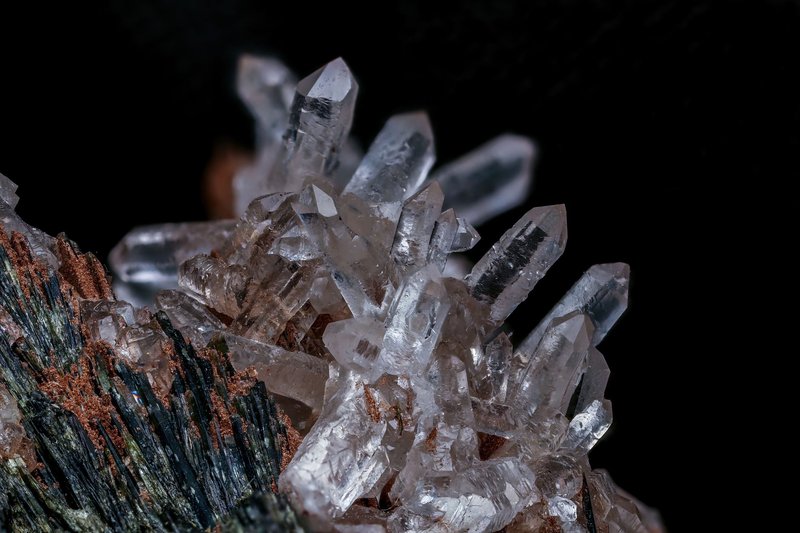
Start in the mountains around Spruce Pine, in Mitchell County. This is one of the strangest, most economically important mining towns in the country and almost nobody outside the industry has heard of it. The pegmatite deposits there produce the world’s purest natural quartz, and that quartz is what gets melted into the crucibles used to grow silicon ingots for computer chips and solar panels. A meaningful share of the global semiconductor supply chain runs through a handful of mines in a small Appalachian county — that’s the kind of detail that doesn’t show up in a generic “NC has minerals” list.
North Carolina is also the nation’s leading producer of feldspar and scrap mica, both mined in that same western belt, according to the U.S. Geological Survey. Feldspar goes into glass and ceramics; mica shows up in everything from paint to electronics insulation.
Further west, Hiddenite in Alexander County gave its name to a green gemstone variety and remains one of the only places in North America where emeralds have been mined commercially. And in Gaston County, the Piedmont Lithium project sits on one of the largest known hard-rock lithium deposits in the United States — a resource that barely registered in state reports a decade ago and now gets discussed in the same breath as the EV battery supply chain.
Kaolin clay, mined mostly in the Sandhills region, rounds out the list, used in everything from paper coating to ceramics.
The Four National Forests
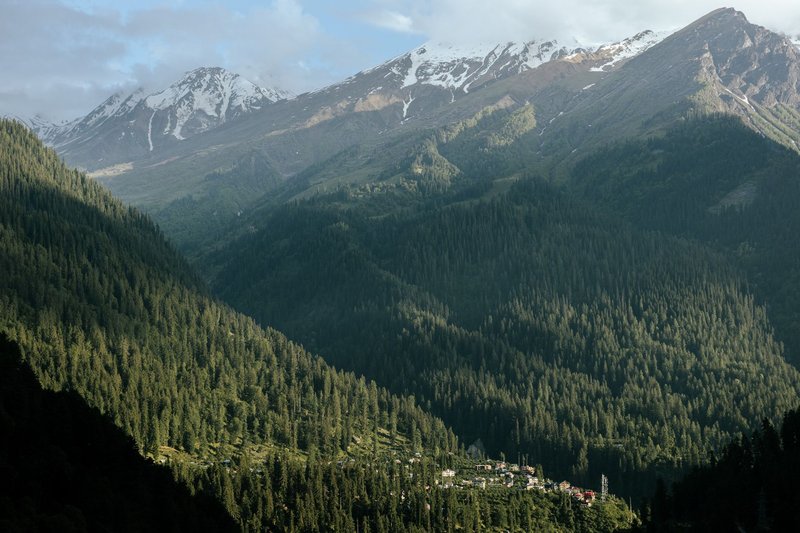
North Carolina holds four national forests, and forestry is the state’s largest manufacturing sector by employment — a fact that almost never gets connected to the forest acreage numbers themselves.
- Nantahala National Forest — the largest of the four, covering rugged terrain in the far southwestern mountains, home to old-growth stands and some of the deepest gorges east of the Mississippi.
- Pisgah National Forest — administered jointly with Nantahala, includes Mount Mitchell, the highest peak east of the Mississippi River, and Looking Glass Rock.
- Uwharrie National Forest — the smallest, sitting in the Piedmont near Asheboro, built around one of the oldest mountain ranges on the continent, worn down to low, rolling hills.
- Croatan National Forest — the only one of the four on the coastal plain, a mix of pocosin wetlands, longleaf pine, and saltwater estuary.
Together they add up to roughly 1.25 million acres managed by the U.S. Forest Service, and that acreage supports a timber and paper industry that generates more manufacturing revenue for North Carolina than furniture or textiles — the two industries the state is actually famous for.
Coastal and Fishery Resources
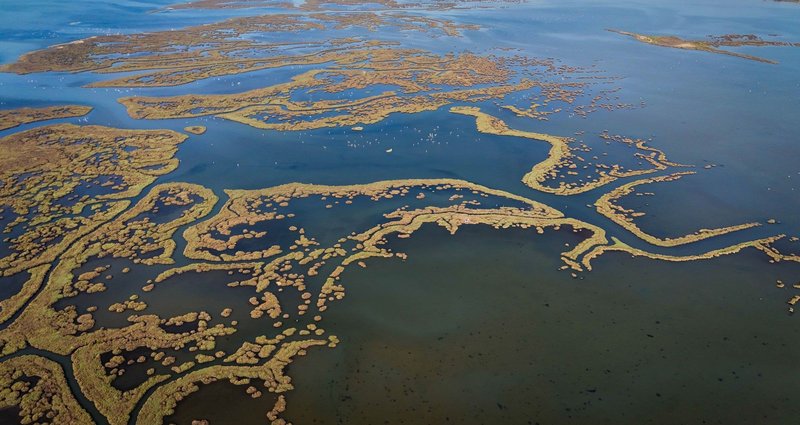
Pamlico Sound, tucked behind the Outer Banks, is the second-largest estuary system in the country after the Chesapeake. It functions as a nursery for blue crab, shrimp, and flounder up and down the Atlantic coast — juvenile fish spawned offshore ride the currents in to grow up in that shallow, brackish water before heading back out to sea. The NOAA Fisheries South Atlantic region depends on that estuary staying intact more than most people realize.
Commercial landings here run heavy on blue crab and shrimp, with oyster restoration projects picking up steam over the past decade after over a century of decline from overharvesting and habitat loss. The state’s coastal counties still run working waterfronts — Wanchese, Beaufort, Calabash — where the boats go out before dawn and the catch gets sold the same afternoon.
Wildlife Habitat and Conservation
North Carolina’s Alligator River National Wildlife Refuge, on the Albemarle-Pamlico peninsula, holds the only wild population of red wolves left on the planet. The species was declared extinct in the wild by 1980, reintroduced here in 1987, and the population remains fragile and closely managed by the U.S. Fish and Wildlife Service — a conservation story most “natural resources of NC” lists skip entirely in favor of listing black bears and deer.
Black bears do matter here too — the state holds one of the densest bear populations on the East Coast, split between the mountain and coastal populations, which behave differently enough that biologists sometimes treat them as near-separate management units. Add loggerhead sea turtles nesting on the barrier islands each summer, and you’ve got a state that’s doing more heavy-lift conservation work than its “moderate, general-audience” reputation suggests.
Agricultural Soil
The state splits cleanly into three soil zones: the mountains, the Piedmont, and the coastal plain, and each one supports a different kind of agriculture. Piedmont red clay, iron-rich and slow-draining, historically built the tobacco economy. The coastal plain’s sandy loam, by contrast, drains fast and warms early in spring — exactly the conditions sweet potatoes want.
That’s not a small detail. North Carolina grows more sweet potatoes than any other state, accounting for over half of US production most years, concentrated around Nash, Wilson, and Johnston counties. Tobacco still gets grown, but it no longer dominates the way it did through most of the 20th century; today’s agricultural resource base is genuinely diversified, running from sweet potatoes to hogs to Christmas trees grown on the cool, high-elevation slopes near Boone.
Energy Resources
North Carolina’s energy resource picture is less about what’s in the ground and more about what gets built on top of it. Coal was mined historically in the Deep River Basin near Sanford, but those deposits were thin and largely exhausted decades ago — coal hasn’t been a meaningful in-state resource for a long time, despite older reference pages still listing it as current.
What actually powers the state now: four nuclear plants operated by Duke Energy — McGuire, Harris, Brunswick, and a fourth shared across the Carolinas grid — supply more than half of North Carolina’s electricity, a higher nuclear share than all but a handful of states. Natural gas has taken over most of the rest of the fossil fuel mix, and offshore wind leases off Kitty Hawk represent the newest resource category the state is only beginning to develop.
Why the Economic Story Matters
Forestry alone outranks furniture and textiles as a share of the state’s manufacturing revenue — a fact that rarely gets tied back to the “natural resources” conversation, even though it’s the most direct economic through-line the state has. Add the tourism dollars flowing through the national forests, the Outer Banks, and the mountain trail towns, and you’ve got an economy where the resource base and the recreation economy are the same asset, viewed from two different angles.
Conservation and extraction aren’t opposing forces here so much as they’re managed side by side — a lithium mine in Gaston County and a red wolf refuge on the coast can both be true statements about the same state’s resource priorities, at the same time.