Type “examples of snakes” into a search bar and you mostly get exhaustive taxonomy guides — every family, every subfamily, more Latin than you asked for. That’s useful if you’re studying for a herpetology exam. It’s less useful if you just found something in the garden and want to know what you’re looking at.
This list skips the taxonomy lecture and sorts 25 snake examples the way people actually think about them: the ones you’ll meet in your yard, the ones people keep as pets, the ones worth knowing are dangerous, the record-holders, and the small ones nobody notices.
Table of Contents
- TLDR
- Harmless Backyard Snakes
- Popular Pet Snake Species
- Venomous Snakes Worth Knowing
- The Giants: Longest and Heaviest Examples
- Small Snakes You’ve Probably Walked Past
- FAQ
TLDR
If you only remember one snake per category, remember these:
| Category | Example | Key Fact |
|---|---|---|
| Backyard | Common garter snake | Harmless, found in nearly every U.S. state |
| Pet | Ball python | Docile, curls into a ball when stressed |
| Venomous | King cobra | Longest venomous snake alive, up to 18 feet |
| Giant | Green anaconda | Heaviest snake species on Earth |
| Small | Brahminy blind snake | About the size of an earthworm, entirely female |
Now the full list, grouped by what you’re actually trying to find out.
Harmless Backyard Snakes
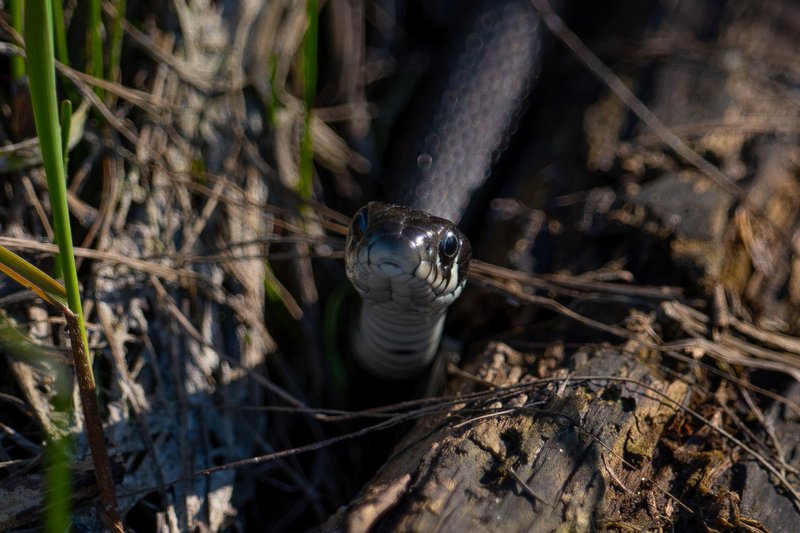
These are the snakes you’re most likely to find under a woodpile or coiled by the hose. None of them are dangerous to a healthy adult, though a couple will still strike if you corner them.
1. Common Garter Snake
The garter snake is probably the single most-seen snake in North America — it tolerates cold better than most species, which is why you’ll find it as far north as Canada. It eats slugs, earthworms, and small amphibians, and it produces a musky secretion when handled rather than biting. Stripes run the length of the body, usually yellow or orange on a darker background.
2. Eastern Rat Snake
Rat snakes are climbers. They’ll go up a tree, a fence post, or the side of a barn after eggs and rodents, and a big one can top six feet. When threatened, an eastern rat snake vibrates its tail against dry leaves — a bluff that sounds enough like a rattlesnake to work on most predators, and most people.
3. Common Kingsnake
Kingsnakes eat other snakes, including venomous ones. They’ve got a partial resistance to pit viper venom, which lets them take on copperheads and rattlesnakes without much trouble. The banded black-and-white or black-and-yellow pattern varies wildly by region — some populations look almost nothing alike.
4. DeKay’s Brown Snake
Small, secretive, and easy to miss — DeKay’s brown snake rarely exceeds a foot long and spends most of its life under leaf litter, mulch, or flat rocks. It’s one of the most common snakes in urban and suburban yards across the eastern U.S., living almost entirely on earthworms and slugs.
5. Ring-Necked Snake
You’ll know this one by the bright yellow or orange ring just behind its head and a matching belly color it flashes when alarmed. It’s mildly venomous through rear fangs, but the venom is weak and the mouth too small to deliver a meaningful bite to a person. Mostly nocturnal, mostly under rocks.
Popular Pet Snakes
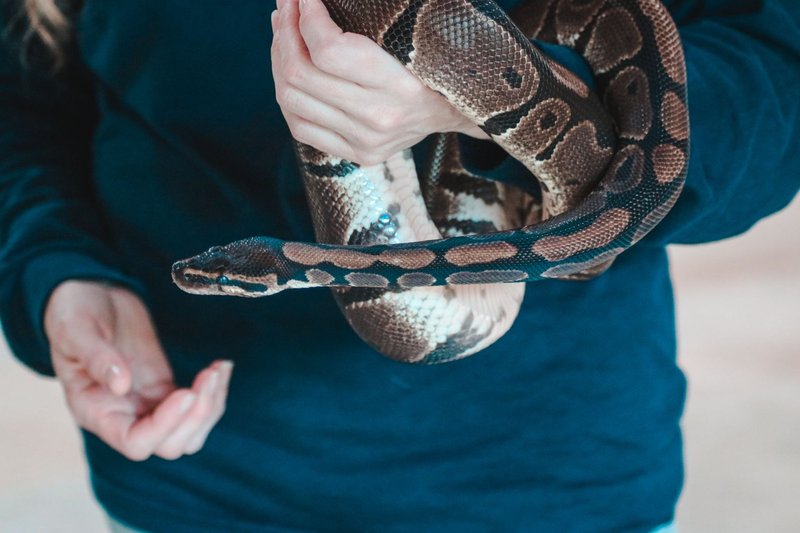
These species dominate the reptile-keeping hobby for the same reasons: manageable size, calm temperament, and decades of captive breeding that’s produced an enormous range of color morphs.
6. Ball Python
The ball python is the most commonly kept pet snake in the world, and the reason is right there in the name — when stressed, it balls up around its own head instead of striking. Wild-type ball pythons are native to West and Central Africa, but breeders have produced thousands of documented color and pattern morphs.
7. Corn Snake
Corn snakes are escape artists — they can squeeze through gaps that look far too small — but they’re otherwise about as low-drama as a pet snake gets. Native to the southeastern U.S., they get their name either from the corn-kernel pattern on their belly scales or from a habit of hanging around grain stores hunting rodents.
8. California Kingsnake
A close relative of the common kingsnake, bred in captivity in banded, striped, and even solid morphs. It’s hardy, eats readily, and — like its wild relatives — will eat other snakes if housed together, which is why keepers house them alone.
9. Rosy Boa
Native to the deserts of the southwestern U.S. and Baja California, the rosy boa moves slowly, rarely bites, and tolerates handling better than almost any other snake kept as a pet. It’s a live-bearer, not an egg-layer, and stays small enough — usually under three feet — to suit a modest enclosure.
10. Boa Constrictor
Boas give birth to live young rather than laying eggs, and a captive-bred boa constrictor typically tops out around 6 to 10 feet — smaller than its reputation suggests, though still a serious commitment. In the wild it’s an ambush predator, waiting motionless for prey rather than actively hunting it down.
Venomous Snakes Worth Knowing
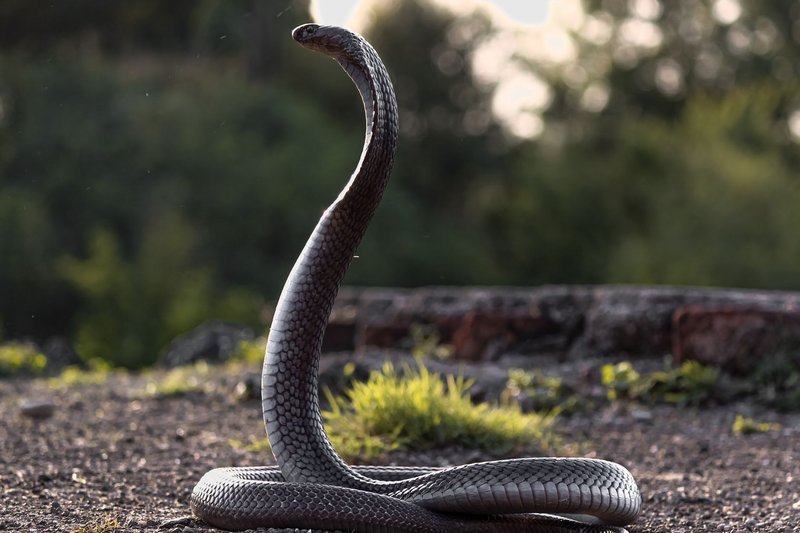
Most people can’t identify the snakes actually worth worrying about, and mix up harmless mimics with the real thing. These are the ones that matter.
11. King Cobra
The king cobra is the longest venomous snake on the planet, reaching up to 18 feet. It’s also the only snake species known to build a nest for its eggs, guarding it aggressively until they hatch. Its venom is a potent neurotoxin, but according to National Geographic, king cobras generally avoid humans and bites are uncommon relative to other venomous species.
12. Black Mamba
Despite the name, the black mamba’s scales are olive to gray — the “black” refers to the ink-dark interior of its mouth, flashed as a warning before it strikes. It’s also fast for a snake, capable of short bursts that make it one of the quickest species on land. Native to sub-Saharan Africa, its venom acts on the nervous system and untreated bites progress quickly.
13. Inland Taipan
Drop-for-drop, the inland taipan carries the most toxic venom of any land snake, based on laboratory LD50 testing — making it one of the most venomous animals on Earth. In practice it’s a shy, reclusive species restricted to remote parts of central Australia, and confirmed human bites are rare — most documented cases involve researchers handling the snake directly.
14. Eastern Diamondback Rattlesnake
North America’s heaviest venomous snake, with a diamond-patterned back that gives it its name. It relies on ambush and camouflage over speed, and its rattle — a warning, not an aggressive display — is often the first sign anyone’s actually near one. Populations have declined sharply across the southeastern U.S. due to habitat loss.
15. Gaboon Viper
The Gaboon viper holds two records: longest fangs of any snake, close to two inches, and heaviest body among vipers. Its leaf-litter camouflage is good enough that people have stepped within inches of one without noticing. It’s also notably slow to strike compared to more defensive species — bites in the wild are infrequent given how often people likely walk past one unaware.
16. Copperhead
Copperheads cause more venomous snakebites in the U.S. than any other species, mostly because they’re common, well-camouflaged, and freeze rather than flee when approached. The bites are painful and require medical attention but are rarely fatal to healthy adults — a very different profile from the more toxic species on this list.
The Giants: Longest and Heaviest Examples
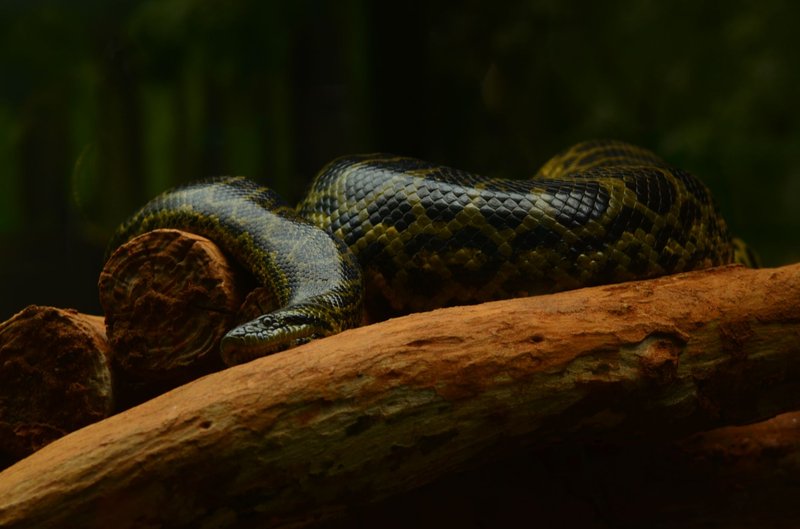
Size claims get exaggerated constantly in this category, so here’s what’s actually documented.
17. Green Anaconda
By mass, the green anaconda is the heaviest snake alive — a large female can weigh over 200 pounds, built for an almost entirely aquatic life in South American rivers and swamps. Females significantly outsize males, an unusual pattern that’s fairly extreme even for snakes.
18. Reticulated Python
The reticulated python holds the record for longest snake species, with confirmed individuals exceeding 20 feet. Native to Southeast Asia, its name comes from the net-like diamond pattern across its back, and it’s a powerful constrictor despite its slimmer build compared to the anaconda.
19. Burmese Python
Burmese pythons are native to Southeast Asia, but they’re better known in the U.S. as an invasive species that’s established a breeding population in the Florida Everglades after escapes and releases from the pet trade. According to the National Park Service, the species has contributed to steep declines in native mammal populations across the park.
20. African Rock Python
Africa’s largest snake species, capable of exceeding 16 feet, and one with a reputation for being more defensive than most large constrictors when it feels cornered. It preys on animals as large as small antelope, using the same coil-and-suffocate method as its python relatives.
Small Snakes You’ve Probably Walked Past
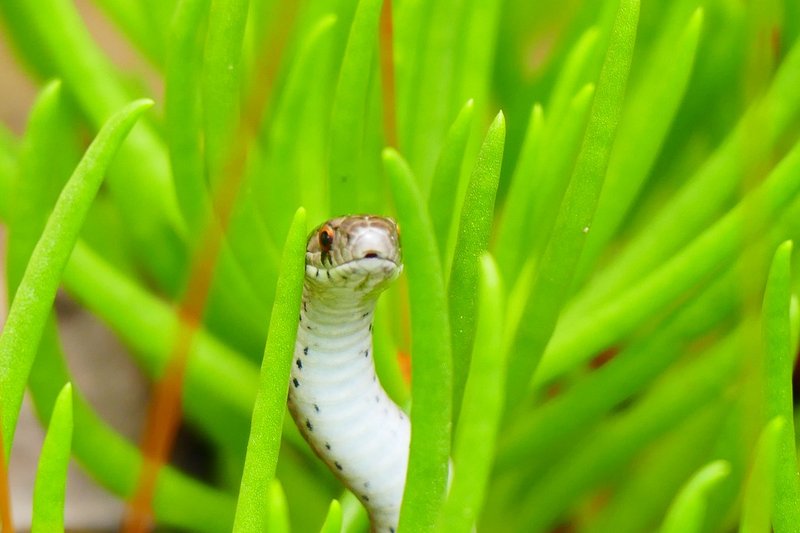
Not every entry on a snake list needs to be dangerous or enormous. Some of the more interesting examples are the ones easy to mistake for something else entirely.
21. Brahminy Blind Snake
Also called the flowerpot snake, this is about as small as snakes get — roughly the size and shape of an earthworm, usually under six inches. It’s blind, burrows constantly, and the species is entirely female; it reproduces by parthenogenesis, without needing a male at all. It’s spread to warm climates worldwide by hitching rides in the soil of potted plants.
22. Smooth Green Snake
A bright grass-green snake found across North American meadows and grasslands, feeding almost entirely on insects and spiders rather than the rodents most snakes go after. It’s thin, fast, and so well camouflaged in vegetation that most sightings happen by accident.
23. Western Worm Snake
Small, glossy, and pinkish-brown, the western worm snake spends nearly its entire life underground or under surface debris, surfacing rarely enough that most people who live alongside it never see one. It feeds mainly on actual earthworms.
24. Sharp-Tailed Snake
Found along the U.S. Pacific coast, this small species has a spine-like tip on its tail and a narrow diet built almost entirely around slugs — it uses curved teeth to hold onto the slime while feeding, an adaptation that’s unusually specialized even by snake standards.
25. Rubber Boa
Named for skin that looks and feels almost rubbery, this small, thick-bodied boa moves slowly and has a blunt tail that closely resembles its head — a decoy it presents to predators while its actual head stays hidden. Found in cooler, forested parts of the western U.S., it’s one of the most docile snakes in North America to handle.
FAQ
What is the most common example of a snake? In North America, the common garter snake is the species people encounter most often, thanks to its wide range and tolerance for cooler climates. Globally, “most common” depends heavily on region — but garter snakes, rat snakes, and small burrowing species like the Brahminy blind snake all rank among the most frequently seen due to sheer population size.
Are all snake examples dangerous? No — most snake species are harmless to humans. Of the roughly 4,000 known snake species, only a few hundred are venomous enough to pose a real medical threat, and most of those still avoid contact with people whenever possible. The snakes people are most likely to actually encounter — garter snakes, rat snakes, small burrowing species — aren’t dangerous at all.
What’s the difference between a venomous and a poisonous snake? Venomous snakes inject toxins through a bite, using fangs connected to venom glands. “Poisonous” technically refers to something toxic when eaten or touched, which describes only a small number of snake species (some garter snake populations that sequester toxins from their prey are a rare example). Nearly every dangerous snake on this list, including the king cobra and black mamba, is venomous, not poisonous.
Which snake on this list makes the best first pet? Corn snakes and ball pythons are the two most commonly recommended starter species, largely because of their calm temperament, manageable adult size, and decades of captive-breeding data on their care requirements.