TLDR
Azerbaijan sits on the Caspian flyway between the Caucasus Mountains and a landlocked sea, which crams an absurd range of habitat into a small country. Shirvan National Park is the single best stop — 270-plus recorded species and winter flocks of Little Bustard that number in the tens of thousands. Pair it with the wetlands at Ghizil-Agaj for pelicans and flamingos, and the Talysh or Greater Caucasus foothills if you want the mountain endemics. November through March covers the wintering spectacle; April through June covers the breeders.
Table of Contents
- Why Azerbaijan Punches Above Its Weight
- Caspian Wetlands and Coast
- Steppe and Semi-Desert
- Caucasus and Talysh Mountains
- When to Go
Why Azerbaijan Punches Above Its Weight
Most “birds of X country” lists are just taxonomy dumps — order, family, scientific name, repeat 400 times, no photos, no context. That works if you already know what a Tetrax tetrax looks like. It’s useless if you’re planning where to actually stand with binoculars.
Azerbaijan earns its spot on a serious birder’s map for a specific reason: geography did the work for you. The country pinches the Caspian Sea against the Greater Caucasus in the north and the Talysh range in the south, so migrating birds funnel through a narrow corridor between mountain and water. Add subtropical wetlands, semi-desert steppe, and alpine peaks above 4,000 meters, all within a few hours’ drive of each other, and you get a species list that punches well above what a country this size should produce.
Below are 15 species worth building a trip around, grouped by the terrain where you’ll actually find them.
Caspian Wetlands and Coast
The Caspian shoreline is where the numbers get silly. Ghizil-Agaj (also spelled Kizil-Agach), a Ramsar-designated wetland of 88,400 hectares in the country’s southeast, was set aside in 1929 specifically to protect wintering and nesting waterbirds, and it still holds 248 recorded species.
Dalmatian Pelican
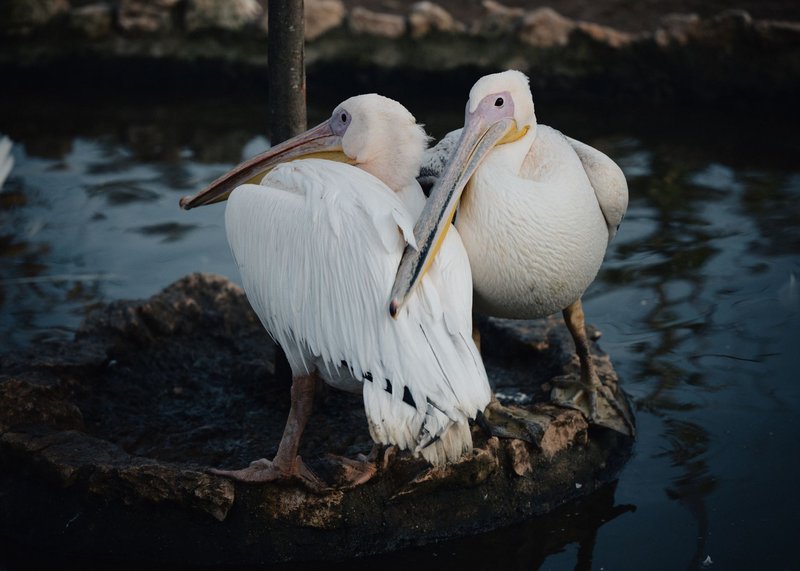
The Dalmatian Pelican is the largest member of its family, with a wingspan that can hit 3.2 meters — big enough that a raft of them soaring together looks less like birds and more like a formation of small aircraft. It’s listed as Vulnerable on the IUCN Red List, and Azerbaijan’s Caspian coast, particularly Ghizil-Agaj Bay, is one of its few reliable strongholds outside southeastern Europe. Look for it patrolling open lagoon water, not the reedbeds.
Greater Flamingo
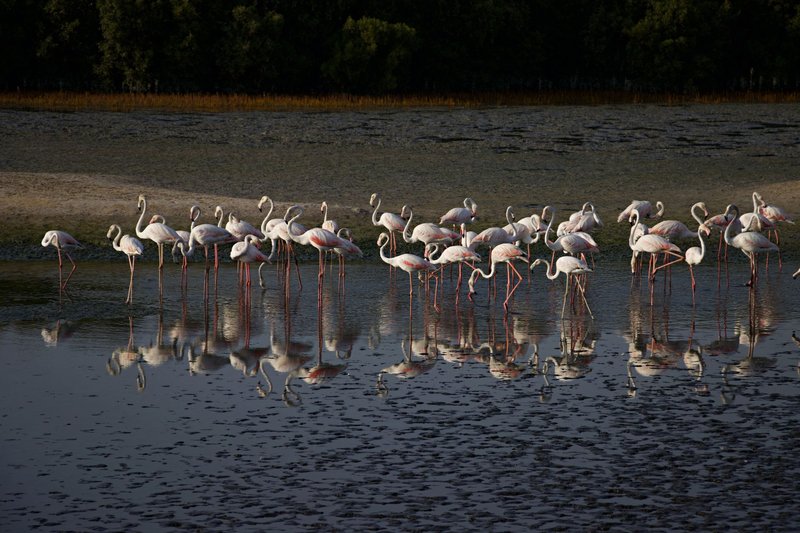
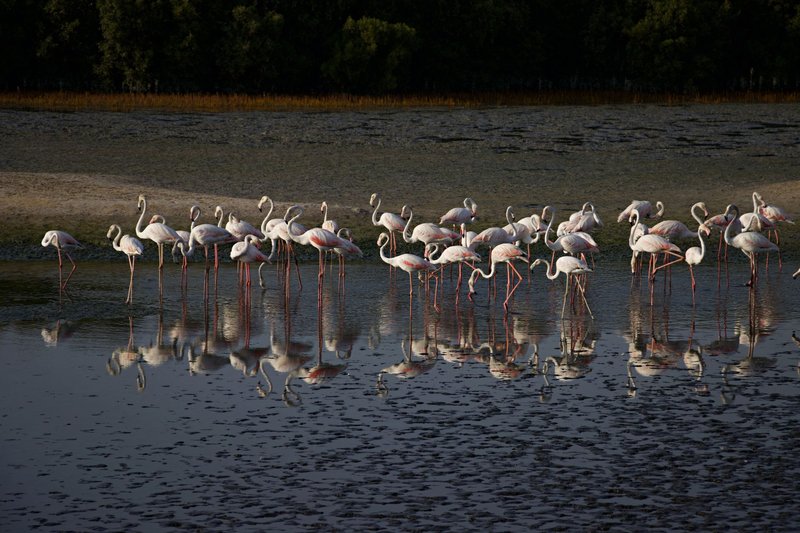
Flamingos show up on the shallow, salt-tinged lagoons of the Caspian coast, most reliably during winter and the spring and autumn passage. They’re gregarious to the point of absurdity — a flock working a mudflat in unison looks choreographed. Ghizil-Agaj and the smaller coastal lagoons near Shirvan both host them.
Marbled Duck
A small, sandy-brown dabbling duck that doesn’t get the attention the flamingos and pelicans do, which is a mistake — it’s globally threatened, and its stronghold habitat, dense reedbed fringing shallow water, is exactly the kind of terrain that’s disappearing fastest along the Caspian. If you find one, you’ve found a bird most visiting birders miss entirely.
White-tailed Eagle
Europe’s largest eagle winters along the Caspian coast in numbers that surprise first-time visitors. Scan the open water and reed edges at Ghizil-Agaj or Shirvan in the colder months — a hunched, barn-door-winged silhouette perched on a dead snag is usually this bird, not a buzzard.
Caspian Tern
The biggest tern on the planet, with a blood-red bill you can pick out at range. It works the coastal shallows and lagoon mouths year-round, plunge-diving for fish with a heaviness that looks almost clumsy next to the smaller terns it shares the coast with.
Steppe and Semi-Desert
Inland from the coast, the lowlands turn into open steppe and dry semi-desert — a completely different bird community from the wetlands, and the setting for Azerbaijan’s single best birding spectacle.
Little Bustard
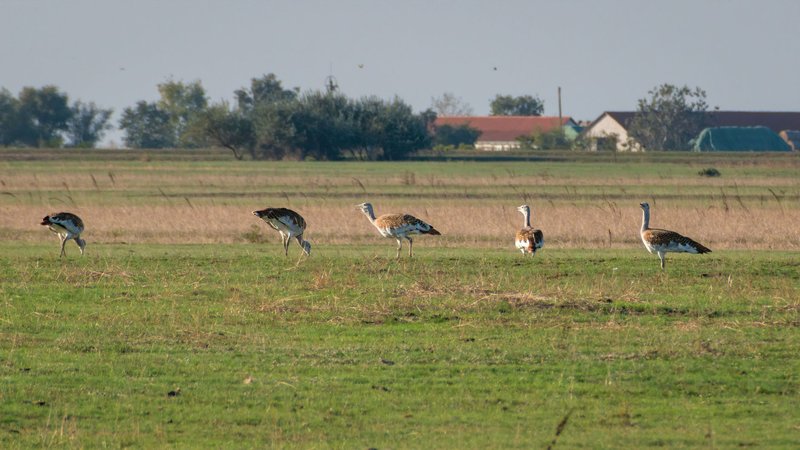
This is the bird to build a winter trip around. Shirvan National Park, a 54,000-hectare protected steppe south of Baku, hosts wintering flocks that a 2025 population survey counted at over 25,000 birds — one of the largest concentrations of this globally Near Threatened species anywhere. They arrive by mid-November and stay through early March, moving across the lowland steppe in dense, wary flocks that flush as one unit. Bring a scope; they don’t let vehicles get close.
European Roller
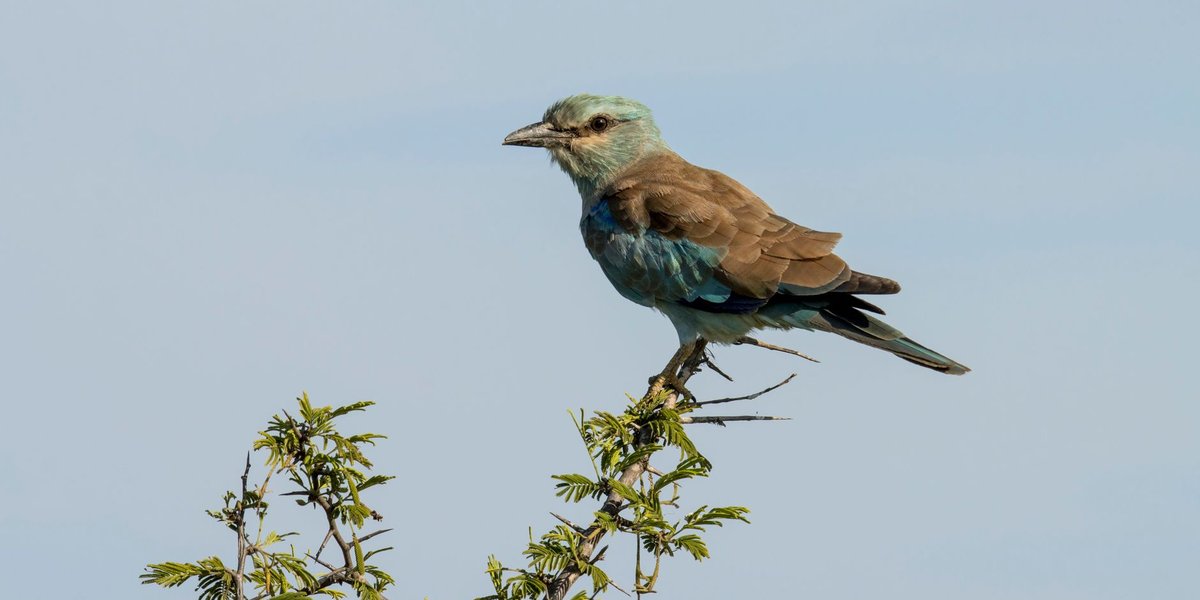
Bright cobalt-blue with a rusty back, the European Roller is often called Azerbaijan’s unofficial national bird, and it earns the reputation honestly — there’s nothing subtle about it perched on a fence post over open farmland. It breeds across the steppe and agricultural edges from spring through late summer, then heads south, so April to August is your window.
See-see Partridge
A sandy, well-camouflaged gamebird of the dry, rocky semi-desert around Gobustan. You’ll usually hear its rattling call before you see it — it prefers to run rather than flush, and it blends into the same stone terrain that makes Gobustan famous for its ancient rock carvings.
Pallid Harrier
Steppe raptors funnel through Azerbaijan on migration, and the Beshbarmag Pass — the narrow gap between the Caucasus foothills and the Caspian Sea just north of Baku — is one of the best migration bottlenecks in the region for watching them stream past overhead. The Pallid Harrier, a slim, pale hunter of open ground, is one of the more sought-after species moving through in spring and autumn.
Caucasus and Talysh Mountains
Head into the Greater Caucasus in the north or the Talysh range in the south and the bird list changes again — this is where the Caucasus’s endemics and near-endemics live, species you won’t find on a coastal trip no matter how long you stay.
Caucasian Grouse
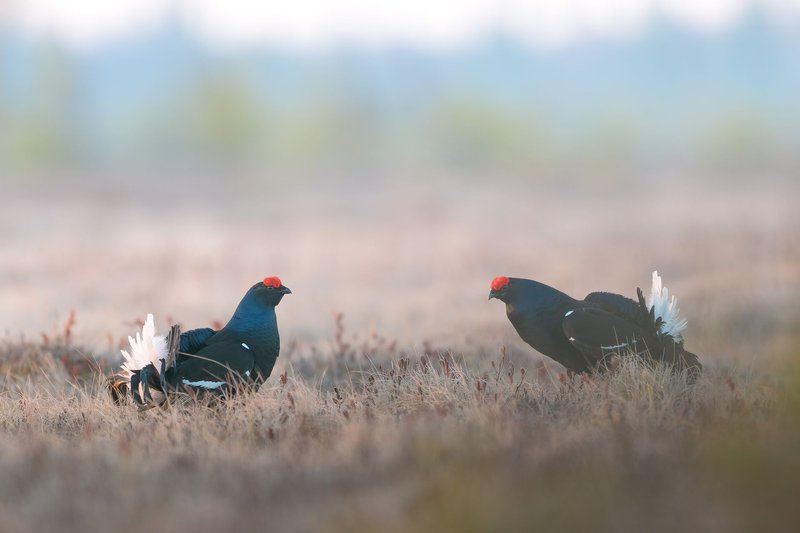
A large, glossy black gamebird found nowhere outside the Caucasus mountains, favoring high-altitude scrub and alpine meadow near the treeline. Males display at communal leks in spring, which is by far the best chance to actually see one rather than just hear the distant hiss-and-flutter of a bird you never spot.
Caspian Snowcock
Even higher up than the grouse, breeding between 1,800 and 3,000 meters on bare, stony alpine slopes, the Caspian Snowcock is a genuine effort bird — you earn this sighting with a climb. It shares its range with the similar Caucasian Snowcock further north, and separating the two takes practice, but the reward is a bird most global birders never get a realistic shot at.
Griffon Vulture
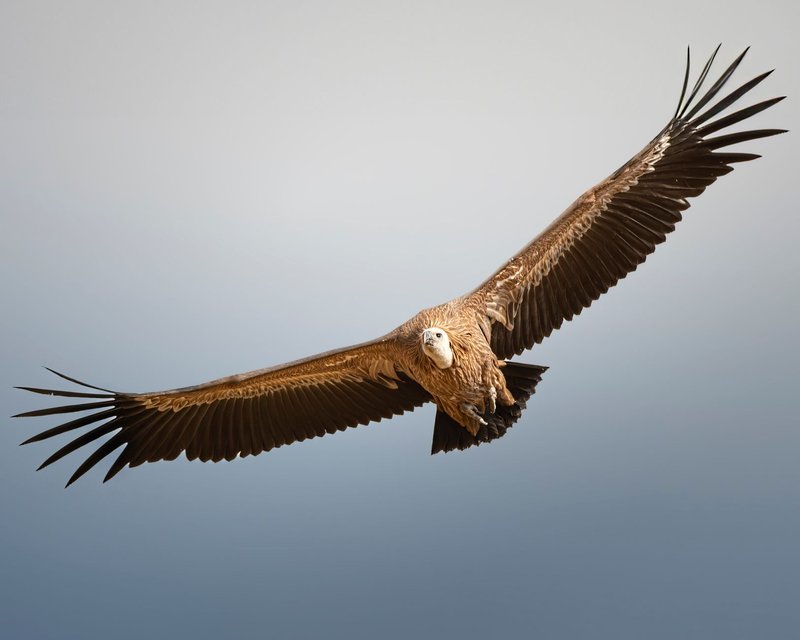
Broad-winged and built for effortless soaring, Griffon Vultures work the thermals over the Caucasus foothills and the cliffs around Gobustan, riding rising air for hours without a wingbeat. A kettle of them circling over a ridge is one of the more dependable big-bird moments the mountains offer.
Black Stork
Unlike its common white cousin, the Black Stork is shy and forest-loving, favoring the streams and river valleys of the Talysh hill forests over open farmland. It’s a genuinely elusive bird in most of its range, which makes the Talysh — where it breeds in reasonable numbers along wooded watercourses — worth the detour for stork specialists.
Semi-collared Flycatcher
A small, sharply patterned breeding specialty of the Talysh forests, this flycatcher sits at the edge of its global range here, sharing the canopy with Caspian Tit and other hill-forest species. Spring, when males are singing on territory, is the season to look for it.
Great Rosefinch
A chunky, powder-pink finch of the high Caucasus screes and alpine meadows, well above where the grouse and snowcock hang out. It’s a genuine high-altitude specialist — you’re not finding this bird from a roadside pullout — but for anyone doing the full mountain circuit, it rounds out a serious alpine day list alongside the snowcock and grouse.
When to Go
Winter (November through early March) is the wetland and steppe season — Little Bustard flocks are at Shirvan, White-tailed Eagles and pelicans crowd the coast, and flamingos work the lagoons. Spring and early summer (April through June) flip the emphasis to breeders: rollers on farmland fence posts, grouse lekking in the high Caucasus, flycatchers on territory in the Talysh canopy. If you can only pick one window, winter delivers the bigger single-site spectacle; spring delivers the wider species list. Either way, Shirvan and Ghizil-Agaj belong on the itinerary regardless of season — they’re simply that productive.