In 2003, a fungal infection killed the last living St. Helena olive tree on a remote island in the South Atlantic. It wasn’t ancient history. Most adults reading this were already alive when it happened. A species that had grown on that island for millions of years ended, quietly, in a cutting that a conservationist had been nursing for years because it was the only one left.
That’s the part people miss about plant extinction. It doesn’t feel like a headline. There’s no last roar, no dramatic chase — just a species that stops showing up, one growing season at a time, until someone realizes nobody’s seen it in a while.
Table of Contents
- How Many Plants Have We Actually Lost
- Notable Plants That Vanished
- What’s Actually Killing Plants
- Why This Matters Beyond Botany
- The Comeback: Seed Banks and Lazarus Plants
- The Short Version
How Many Plants Have We Actually Lost
The official count is smaller than you’d expect. The IUCN Red List formally classifies around 129 plant species as Extinct — a conservative number that requires exhaustive surveys before a species earns the label. Researchers who’ve combed historical botanical records put the real figure closer to 600 to 850 species lost since the 1750s, when Linnaeus’s classification system gave us a baseline to measure against.
The rate is the more useful number. A study published in Nature Ecology & Evolution found that more than three plant species have disappeared every year since 1900, at a pace estimated to run as much as 500 times faster than the natural background rate of extinction. Background extinction — the rate at which species would disappear with no human involvement — sits somewhere between 0.05 and 0.35 extinctions per million species per year. We’ve blown well past that.
Geography isn’t random here. Roughly half of all documented plant extinctions happened on islands, and nearly a fifth occurred in the Pacific alone. Hawaii, Mauritius, and the Mediterranean basin show up disproportionately in extinction records — small, isolated ecosystems where a single invasive species or a cleared hillside can wipe out something that exists nowhere else on Earth.
Notable Plants That Vanished
Every one of these had a name, a range, and a specific reason it stopped existing. That specificity matters — “habitat loss” is an abstraction, but a bison migration route or a single fungal spore is a fact you can point to.
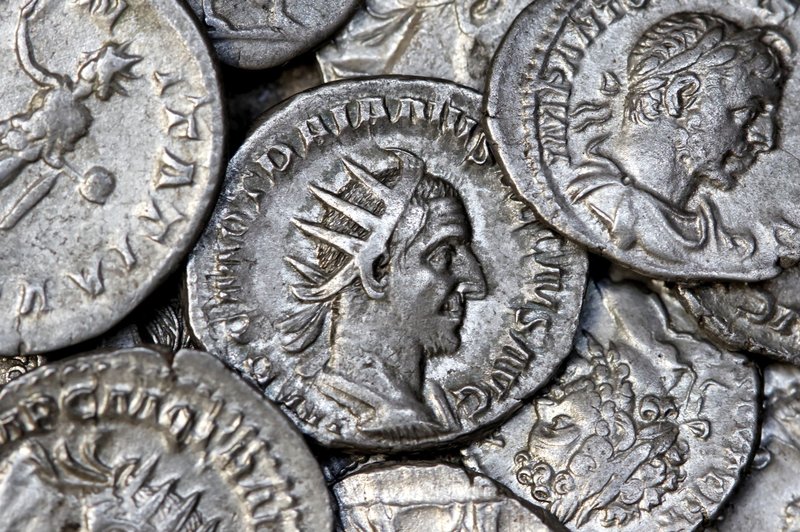
Silphium — Gone by roughly 50 CE, North Africa. Before it disappeared, Silphium was arguably the most economically important plant in the ancient Mediterranean. Cyrene, the city that controlled its trade, minted coins stamped with its likeness because the plant made the region rich — it was cooked as a vegetable, used as a contraceptive and digestive remedy, and its resin was grated over food like a luxury spice. Pliny the Elder wrote that the very last stalk found was given to the Roman emperor Nero as a curiosity. Overharvesting killed it: demand outran a plant that, by most accounts, couldn’t be successfully cultivated outside its native range.
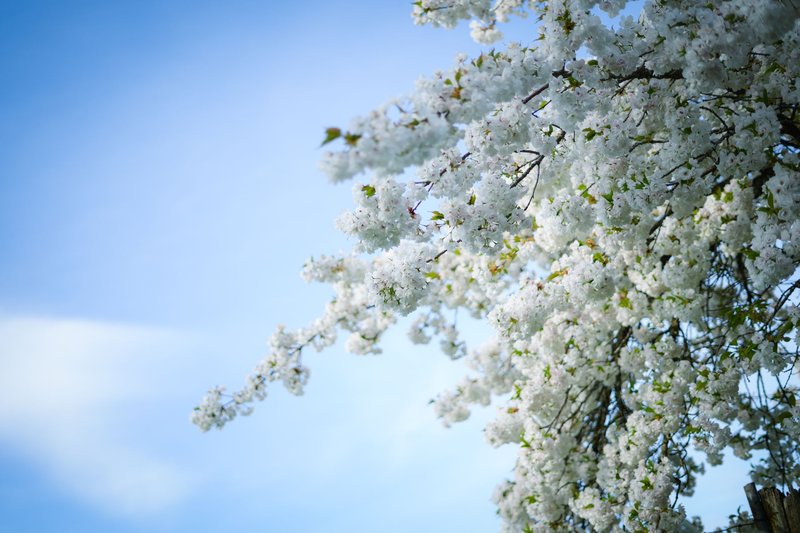
Franklin Tree (Franklinia alatamaha) — Extinct in the wild since 1803, Georgia, USA. Botanist John Bartram found a small grove of these white-flowered trees along the Altamaha River in 1765. His son William returned in 1773 to collect seeds, which was fortunate, because by the early 1800s the wild population was gone and no one has ever confirmed why — theories range from cotton farming altering the local hydrology to a fungal pathogen carried in on cultivated cotton plants. Every Franklin tree alive today, and there are thousands in gardens worldwide, descends from those seeds William Bartram carried home.
Falls-of-the-Ohio Scurfpea (Orbexilum stipulatum) — Last seen 1881, Kentucky, USA. This one is a textbook coextinction. The plant grew almost exclusively on a single rocky island in the Ohio River and appears to have depended on American bison for seed dispersal — its seed pods likely caught in bison fur or passed through their digestive tracts during the animals’ regular river crossings. Once bison were exterminated from the region, the scurfpea’s dispersal mechanism vanished with them, and the plant followed within a few decades.
Chile Sandalwood (Santalum fernandezianum) — Last documented alive in 1908, Juan Fernández Islands, Chile. Straightforward overharvesting: the tree’s fragrant heartwood was valuable enough on the international sandalwood market that loggers stripped the small island population faster than it could regenerate.
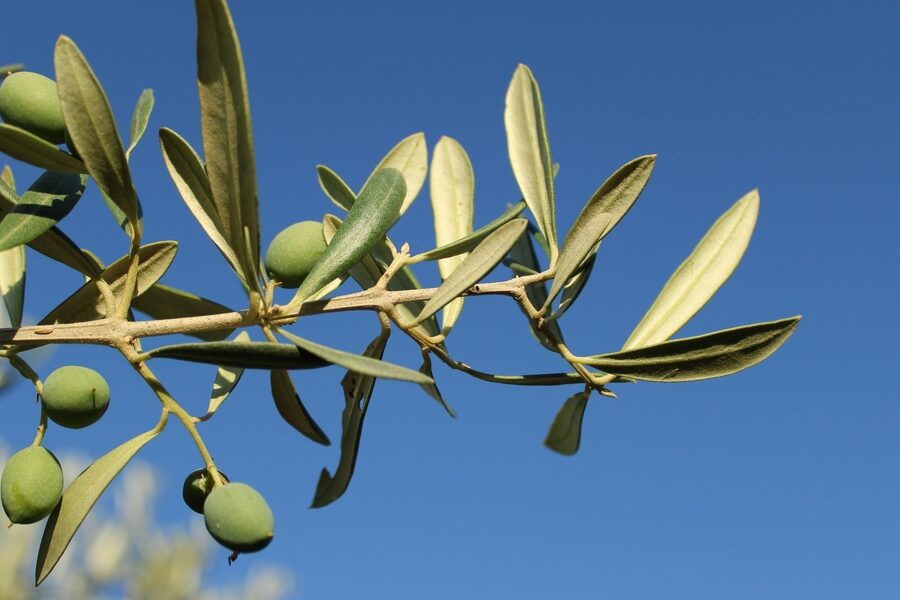
St. Helena Olive (Nesiota elliptica) — Extinct in the wild by 1948, extinct outright in 2003. Settlers on the island of St. Helena cleared the tree’s habitat for farmland and cut it for firewood over centuries, leaving only a couple of individuals by the mid-20th century. Conservationists propagated cuttings from the last wild plant, but the cultivated stock succumbed to old age and fungal disease, and the final specimen died in 2003.
Cyanea superba — Subspecies lost between 1932 and 2002, Oahu, Hawaii. A member of Hawaii’s remarkable lobelioid family, this plant lost a fight on multiple fronts at once: invasive plants crowding out its habitat, and feral pigs, rats, and non-native slugs eating seedlings before they had a chance to mature. Hawaii accounts for a wildly disproportionate share of American plant extinctions precisely because of this compounding pressure.
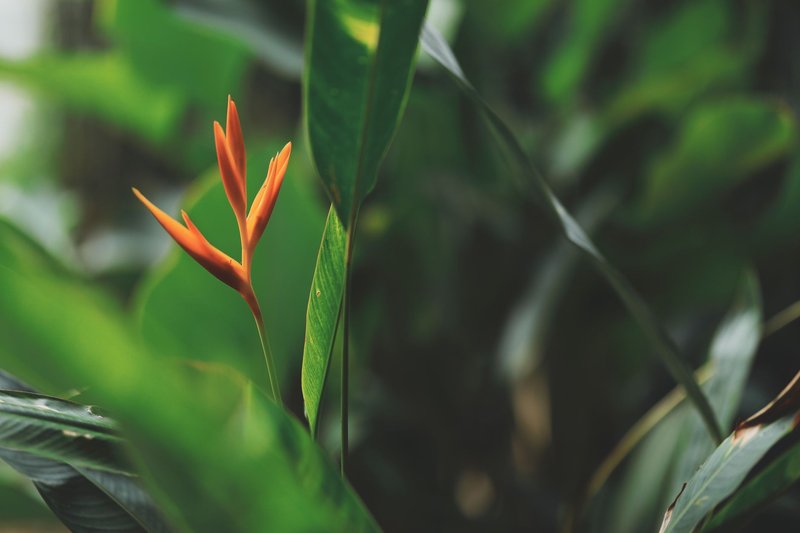
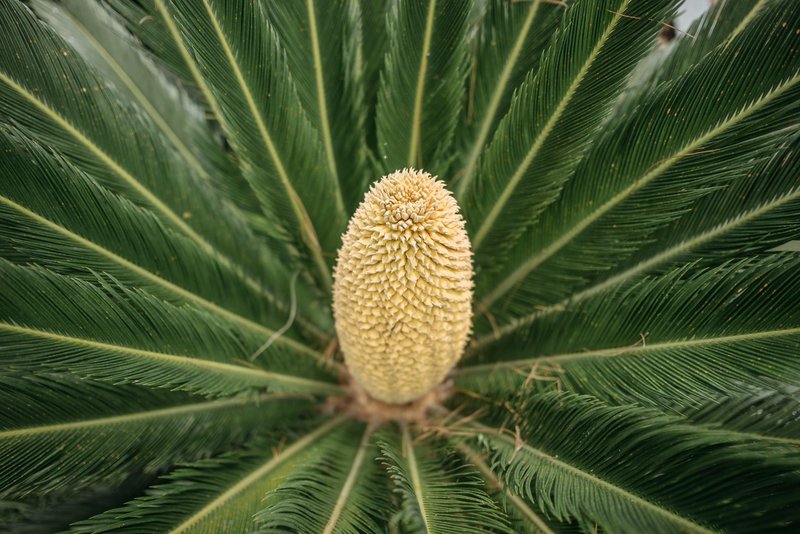
Wood’s Cycad (Encephalartos woodii) — Down to a single wild specimen by 1912, South Africa. Botanist John Medley Wood found one multi-stemmed plant growing in the Ngoye Forest in 1895; by 1916 the last wild stem had been removed to a botanical garden for its own protection, and the species was never seen growing wild again. The catch: it’s male. No female Encephalartos woodii has ever been found, which means every one of the roughly 500 cloned specimens alive today in botanical collections — sometimes called the loneliest plant in the world — is genetically incapable of reproducing on its own.
Cooke’s Kokio (Kokia cookei) — Extinct in the wild by 1978, Molokai, Hawaii. A relative of hibiscus reduced to a single tree by the 1950s, propagated only through grafting onto related rootstock because the seeds rarely germinate and the plant can’t self-pollinate reliably. Today it survives as roughly two dozen grafted individuals spread across a handful of protected sites, according to the U.S. Fish and Wildlife Service — alive, technically, but with no wild population and no easy path back to one.
What’s Actually Killing Plants
Pull the eight stories above apart and four drivers keep recurring, usually stacked on top of each other rather than acting alone.
Habitat loss is the biggest single factor — clearing land for agriculture, grazing, or settlement, as happened to the St. Helena olive over generations of firewood cutting and farm clearing.
Invasive species compound habitat problems fast, especially on islands, where native plants evolved with no defense against introduced grazers, insects, or competing vegetation. Cyanea superba’s collapse under feral pigs and non-native slugs is the pattern playing out across most Hawaiian and Pacific extinctions.
Overharvesting took out species people wanted badly enough to strip a population faster than it could recover — Silphium for its medicinal and culinary value, Chile sandalwood for its wood.
Coextinction is the quietest driver and the easiest to miss: a plant that depended on one animal for pollination or seed dispersal disappears when that animal does, even if nothing ever touched the plant directly. The Falls-of-the-Ohio scurfpea’s dependence on bison herds is the clearest documented case, but botanists suspect it’s far more common than the record shows, since most plant-pollinator relationships were never studied closely enough to prove the link after the fact.
Climate shifts layer on top of all four, changing rainfall patterns and growing seasons faster than plants with limited ranges can adapt or migrate.
Why This Matters Beyond Botany
A plant going extinct rarely stays contained to one line in a database. Roughly 40% of modern pharmaceuticals trace their origins to compounds first identified in plants — aspirin from willow bark, the cancer drug paclitaxel from Pacific yew, and quinine from cinchona bark among the most famous examples. Every species lost before scientists get around to studying its chemistry is a research question that can never be answered.
Ecosystems lose structure, too. Plants anchor food webs from the ground up — insects, birds, and mammals that depend on a specific flowering season or fruiting cycle don’t have a backup plan when their plant disappears. And island ecosystems, where plant extinction concentrates most heavily, tend to have the fewest redundant species to absorb the loss.
The Comeback: Seed Banks and Lazarus Plants
Not every story ends in a database entry marked “extinct.” Two things are actively pushing back.
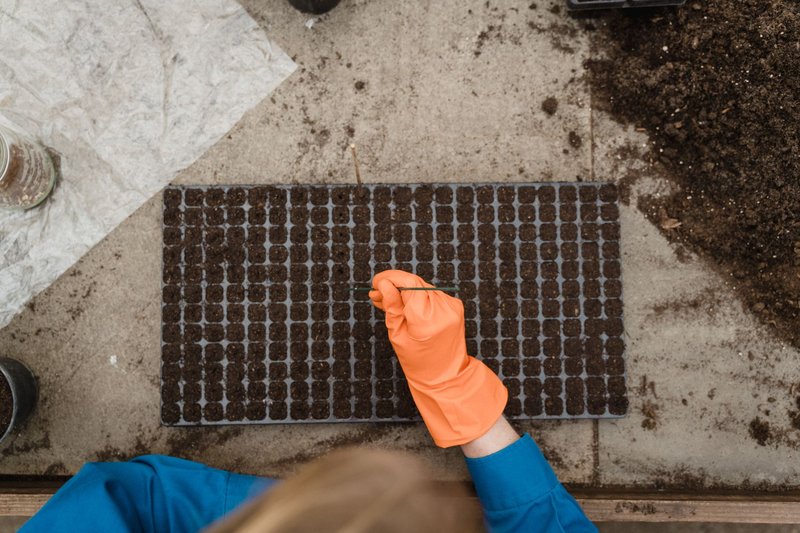
Seed banks exist specifically to hedge against this. The Millennium Seed Bank at Royal Botanic Gardens, Kew, holds roughly 2.4 billion seeds representing nearly 40,000 wild species — the largest such collection focused on non-crop plants anywhere. It’s a different mission from the more famous Svalbard Global Seed Vault in Norway, which mainly backs up agricultural crop varieties; Kew’s collection is aimed squarely at wild species that have nowhere else to survive if their native habitat disappears.
Then there are the Lazarus species — plants formally declared extinct that someone finds alive years or decades later. Ptilotus senarius, an Australian wildflower, hadn’t been recorded since 1967 and sat on extinction lists for decades until a horticulturalist photographing birds in a remote corner of Queensland stumbled on it and posted the photos to iNaturalist. More than 100 plant species presumed extinct have turned up alive again this way over the past century — usually in places nobody had surveyed recently, which says less about resilience and more about how much of the planet’s plant life still goes unmonitored.
That’s the uncomfortable flip side of every rediscovery story: for each Lazarus plant that turns up alive, botanists are fairly confident several more actually are gone for good, in habitats nobody checked before it was too late.
The Short Version
Formal counts put plant extinctions in the hundreds since the 1700s, but the real rate — hundreds of times faster than nature’s baseline — is the number that should worry you. Island ecosystems and overharvested species took the earliest hits; invasive species, coextinction, and habitat clearing keep adding names to the list today. Seed banks like Kew’s Millennium Seed Bank are the closest thing to an insurance policy, and every so often a plant thought gone for good, like Queensland’s Ptilotus senarius, turns up alive in some corner nobody had checked in fifty years. The list of the lost keeps growing. So, occasionally, does the list of the found.