Table of Contents
- The quick version
- What makes a plant “endemic,” and why Syria has so many
- Syria’s six endemic plant centers
- Notable species tied to Syria
- What’s putting this flora at risk
- The conservation status nobody’s tracking
The quick version
Syria’s flora runs to roughly 3,077 recorded species, and 243 of them — about 8.7% — grow nowhere else on the planet, according to Plantlife’s Important Plant Areas assessment. Those 243 species span 35 families and 113 genera, concentrated in six geographic pockets: the Anti-Lebanon range, the Al-Badiah steppe, Jabal El-Arab, Aleppo Hill, the Coastal Mountains, and the Homs region. The standouts include the Syrian orchid, a scatter of Kurd Dag irises found in a single mountain pass, and a set of Aleppo Hill specialists most botanists outside the region have never heard of. More than a decade of war has made documenting any of this harder than it used to be.
What makes a plant “endemic,” and why Syria has so many
Endemic means restricted to one place — not “common in Syria,” but found in Syria and, in the strictest cases, nowhere else on Earth. A country doesn’t rack up 243 of these by accident. Syria sits at the collision point of the Mediterranean and Irano-Turanian floristic regions, with the Anti-Lebanon range forming a rain shadow that dries out fast heading east into steppe and desert. That gradient — wet coastal mountains to bone-dry Badia in under 200 kilometers — packs an unusual number of microclimates into a small footprint, and isolated microclimates are exactly where endemism builds up. Plants get stranded on a particular slope, at a particular elevation, and stay there for thousands of years while the world around them changes.
Most of Syria’s flora is shared with its Mediterranean and Irano-Turanian neighbors. The 243 truly Syrian species are the exceptions — the ones that never made it over the next ridge.
Syria’s six endemic plant centers
Botanists split Syria’s endemism into six concentrated centers rather than treating it as evenly spread across the country:
- Anti-Lebanon — the western spine bordering Lebanon, where deciduous woodland gives way to isolated stands of Greek juniper and Cilician fir on the drier eastern face.
- Al-Badiah — the steppe and desert plain in the southeast, home to specialists adapted to almost no rainfall.
- Jabal El-Arab — a volcanic highland in the south, its basalt soils supporting a distinct flora from the limestone country around it.
- Aleppo Hill — a modest 400–600 meter rise near Aleppo that punches well above its elevation, hosting species like Salvia drusica, Polygonum cedrorum, Trifolium bonnevillei, and Smyrniopsis syriaca that occur almost nowhere else recorded.
- Coastal Mountains — the range paralleling the Mediterranean, wetter and cooler than anywhere else in the country, with the closest thing Syria has to relict forest.
- Homs — the central plains and gap between the coastal range and the interior, a transition zone with its own specialists.
That last point matters for how you read any “endemic plants of Syria” list: a species restricted to Aleppo Hill and a species restricted to the Anti-Lebanon range are both Syrian endemics, but you’d never find them growing near each other.
Notable species tied to Syria
A handful of species do most of the work when people ask what actually grows only in Syria — plus a few that aren’t strict endemics but define the country’s plant life anyway. Worth being precise about which is which, since conflating them is exactly where a lot of casual write-ups on this topic go wrong.
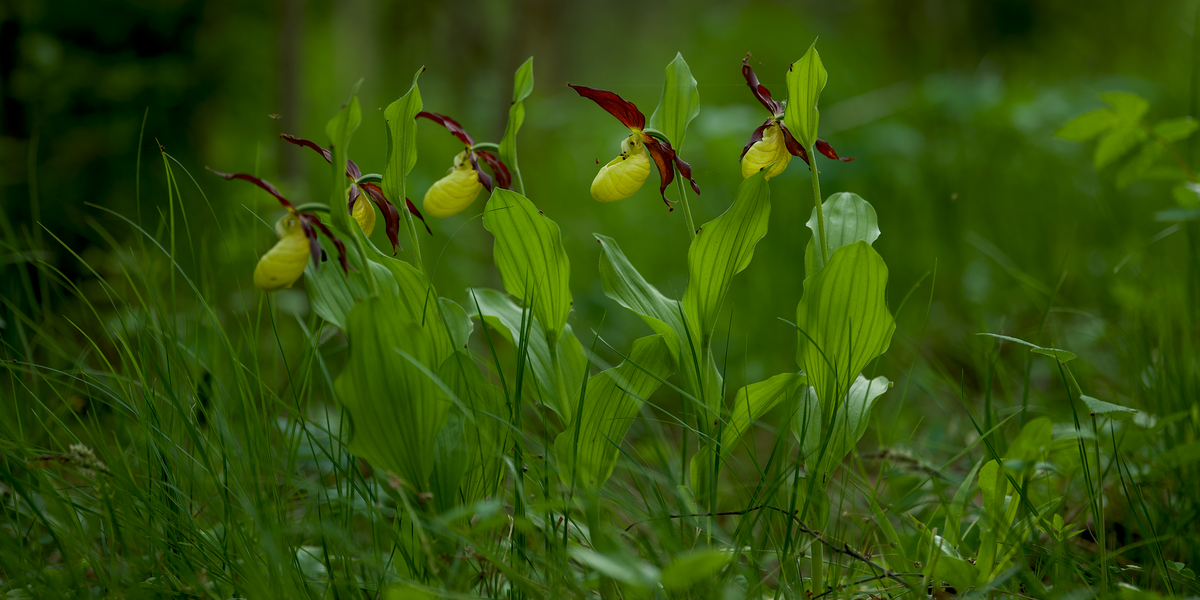
Syrian orchid (Orchis syriaca). A true regional endemic, restricted to a narrow band of mountainous terrain in Syria and immediately adjacent Lebanon. It flowers in spring in rocky, semi-shaded ground and gets collected far more than its population can sustain — orchid tubers are a traditional ingredient in the drink sahlab, and wild harvesting has been one of the quieter pressures on the species for decades.
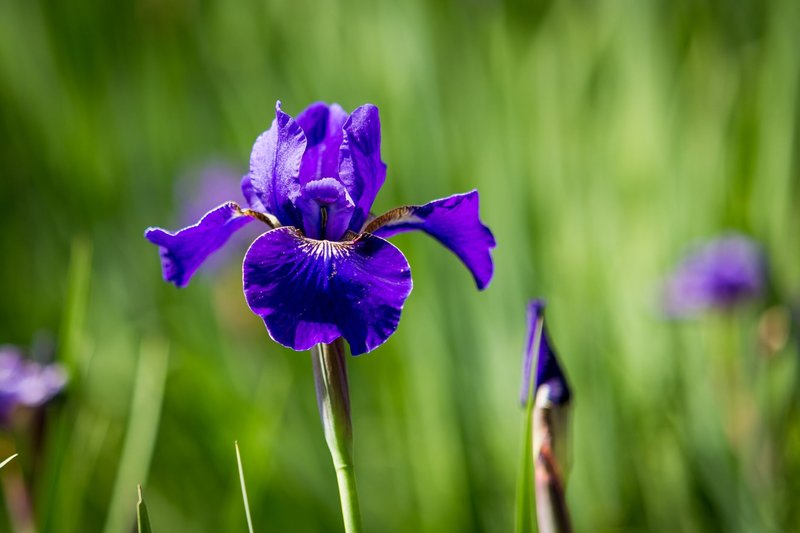
Kurd Dag irises. The Kurd Dag hills in Syria’s northwest, near the Turkish border, count as one of the country’s recognized centers of endemism in their own right, distinct from the six main centers. Several iris populations here are locally restricted enough that a single road cut or grazing shift can meaningfully dent them.
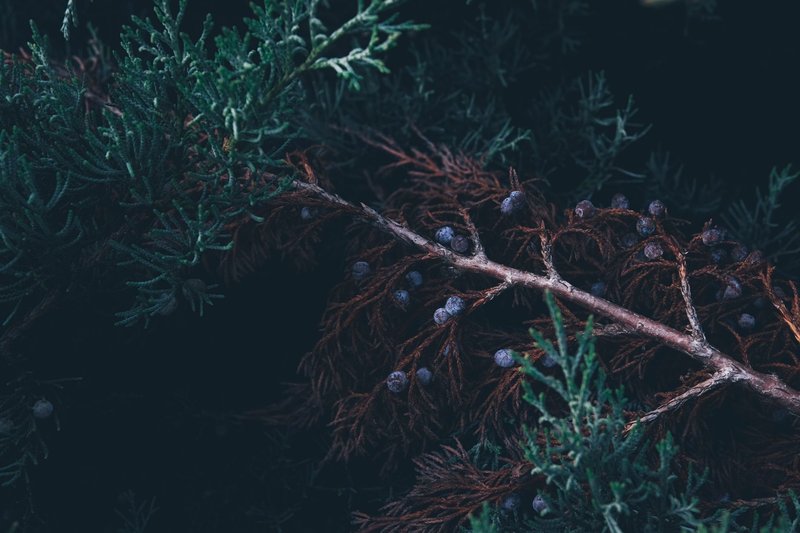
Syrian juniper (Juniperus drupacea). Despite the name, this one isn’t a strict Syria endemic — it also grows in Lebanon, Israel, southern Turkey, and Greece, according to the U.S. Fish and Wildlife Service’s species profile. What makes it worth including is that Syria’s Anti-Lebanon and coastal populations sit at the eastern edge of its range, and it’s one of the few conifers in the region that produces a genuinely fleshy, plum-like cone rather than the usual dry juniper berry.
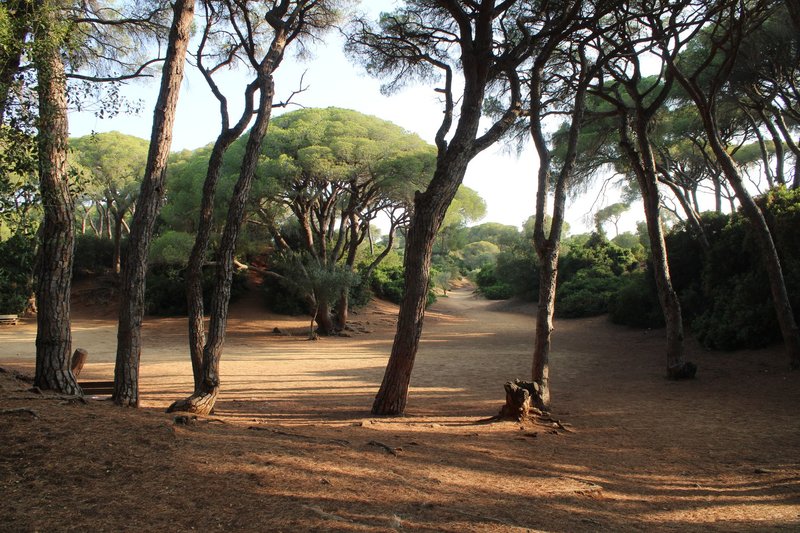
Aleppo pine (Pinus halepensis). Also not endemic — it’s the dominant Mediterranean pine from Spain to the Levant — but it’s Syria’s principal woodland tree and the species most associated with the country’s forest cover. Its resin scent and drought tolerance define what “forest” looks like across the coastal hills, which is exactly why its loss during the war landed so hard on the landscape.
Syrian wild pear (Pyrus syriaca). A near-endemic of the eastern Mediterranean, ranging from southern Turkey through Lebanon and western Syria into northern Iraq. It fruits in September and October with small, gritty pears that aren’t much good raw but have been used locally for preserves. You’ll find it as a scattered understory tree rather than in stands — it doesn’t dominate anywhere, it just persists.
Aleppo Hill specialists. Salvia drusica, Polygonum cedrorum, Trifolium bonnevillei, and Smyrniopsis syriaca rarely make any popular list, but they’re the closest thing to textbook point-endemics on this page — recorded almost exclusively on that one low hill. If a species list claims comprehensiveness without mentioning them, it’s working from secondary sources rather than the regional botanical literature.
What’s putting this flora at risk
Three pressures show up across nearly every endemic center, war or no war:
- Unsustainable wild collection. Orchid tubers, wild thyme, chamomile, and other aromatic or medicinal species get harvested at a pace their populations can’t replace, especially where cash income from other work has dried up.
- Overgrazing. Goat and sheep grazing in the steppe and hill centers — Al-Badiah and Aleppo Hill in particular — strips seedlings before they establish, which quietly shrinks a population over a generation without ever looking like a single dramatic event.
- Deforestation. Logging for fuel and land conversion has chipped at the coastal forest and Anti-Lebanon woodland that shelter the more shade-dependent endemics.
None of these are new. What’s changed since 2011 is the scale and speed.
The conservation status nobody’s tracking
This is the part most write-ups on Syrian flora skip entirely, and it’s arguably the more important story now. Between 2011 and 2021, the governorates of Latakia, Hama, Homs, and Idlib — which overlap directly with the Coastal Mountains and Homs endemic centers — lost 45,320 hectares of tree cover, more than 36% of what stood there before the war, according to a ReliefWeb assessment of conflict-driven deforestation. Fuel shortages pushed illegal logging up as heating oil became unaffordable. Military operations set fires that didn’t distinguish between strategic ground and rare habitat. Field botanists who once did the seasonal surveys that catch a declining population early lost access to entire regions, or left the country.
That’s the gap in the record: nobody has run a comprehensive re-survey of Syria’s endemic centers since the war started. The 243-species, 8.7%-endemism figures botanists cite are largely pre-2011 baselines. Aleppo Hill sits close to a city that saw years of active fighting. The Coastal Mountains lost over a third of their tree cover in a decade. Whether the Kurd Dag irises or the Aleppo Hill specialists are still where the older surveys placed them isn’t something anyone can currently confirm with confidence — and for species that were already restricted to a single hillside before 2011, that uncertainty is the whole ballgame.