Table of Contents
- What Counts as a Celestial Body
- Quick Reference Table
- 1. Stars
- 2. Planets
- 3. Dwarf Planets
- 4. Moons
- 5. Asteroids
- 6. Comets
- 7. Meteoroids
- 8. Nebulae
- 9. Galaxies
- 10. Black Holes
Look up “celestial body” and you’ll get one of two things: a Wikipedia taxonomy table that reads like tax code, or a list so short it skips half the categories that actually get tested or asked about. Neither answers the real question, which is: what are the different kinds, and what’s an actual example of each one?
Here’s the short version. A celestial body is any naturally occurring physical object that exists in space — outside Earth’s atmosphere and not made by humans. That last part matters: satellites, space stations, and telescopes don’t count, no matter how far out they orbit. Ten categories cover essentially everything astronomers classify, from the star burning in your sky right now down to the black hole nothing escapes.
What Counts as a Celestial Body
Two terms get used interchangeably and shouldn’t be. A celestial body is a single, gravitationally bound object — a planet, a moon, a star. A celestial object can be a looser collection of bodies and structures, like a planetary system, a star cluster, or a galaxy. A comet is the odd case that’s technically both: the frozen nucleus is a body, and the whole thing with its glowing coma and tail is an object.
Artificial satellites, the International Space Station, and space junk are none of the above. They’re human-made, so they fall outside the definition entirely — a distinction worth knowing if you ever see “natural vs. artificial celestial bodies” come up on a test.
Quick Reference Table
| Category | What Sets It Apart | Named Examples |
|---|---|---|
| Star | Self-luminous, powered by nuclear fusion | Sun, Sirius, Betelgeuse |
| Planet | Orbits a star, has cleared its orbital path | Earth, Jupiter, Mars |
| Dwarf planet | Orbits a star but hasn’t cleared its path | Pluto, Ceres, Eris |
| Moon | Natural satellite orbiting a planet or dwarf planet | The Moon, Titan, Europa |
| Asteroid | Rocky, airless body, mostly in the asteroid belt | Vesta, Ceres, Pallas |
| Comet | Icy body that develops a tail near the Sun | Halley’s Comet, Hale-Bopp |
| Meteoroid | Small fragment of rock or metal in space | Chelyabinsk meteoroid |
| Nebula | Cloud of interstellar gas and dust | Orion Nebula, Crab Nebula |
| Galaxy | Gravitationally bound system of billions of stars | Milky Way, Andromeda |
| Black hole | Region where gravity prevents even light from escaping | Sagittarius A, M87 |
1. Stars
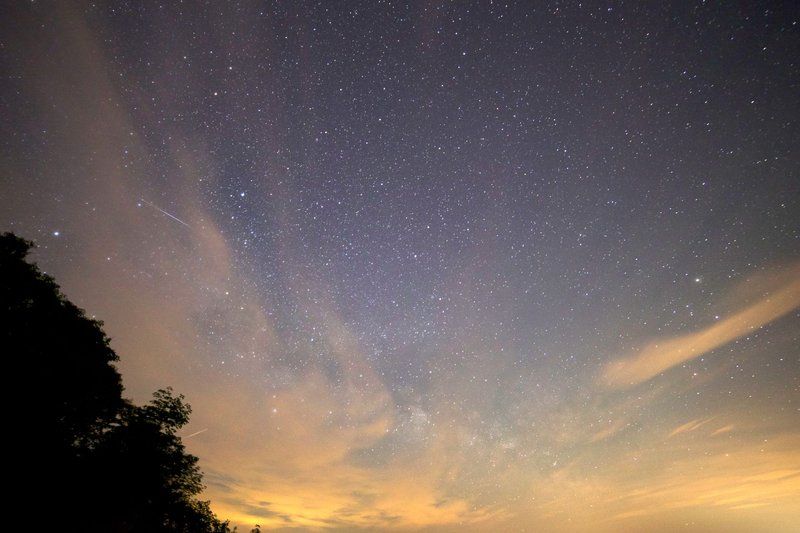
A star is a ball of plasma dense enough to trigger nuclear fusion at its core, which is what makes it glow on its own rather than just reflecting someone else’s light. That’s the dividing line between a star and everything else on this list.
The Sun is the obvious example, but it’s easy to forget how ordinary it is: a fairly average G-type star that fuses roughly 600 million tons of hydrogen into helium every second and has been doing so for about 4.6 billion years. Sirius, 8.6 light-years away in Canis Major, is the brightest star in the night sky and burns about twice as hot as the Sun. Betelgeuse, the reddish shoulder of Orion, is a red supergiant so large that if it replaced the Sun, its surface would extend past the orbit of Mars.
2. Planets
A planet orbits a star, has enough mass to pull itself into a round shape, and — per the IAU’s official definition, adopted in 2006 — has cleared other debris from its orbital neighborhood. That third condition is the one that got Pluto demoted.
Earth and Mars are terrestrial planets: rocky, relatively small, with solid surfaces. Mars also holds a superlative — Olympus Mons, its largest volcano, stands roughly 13.6 miles high, nearly triple the height of Everest. Jupiter and Saturn are gas giants instead, built almost entirely from hydrogen and helium. Jupiter’s Great Red Spot is a storm larger than Earth that’s been raging for at least 350 years.
3. Dwarf Planets
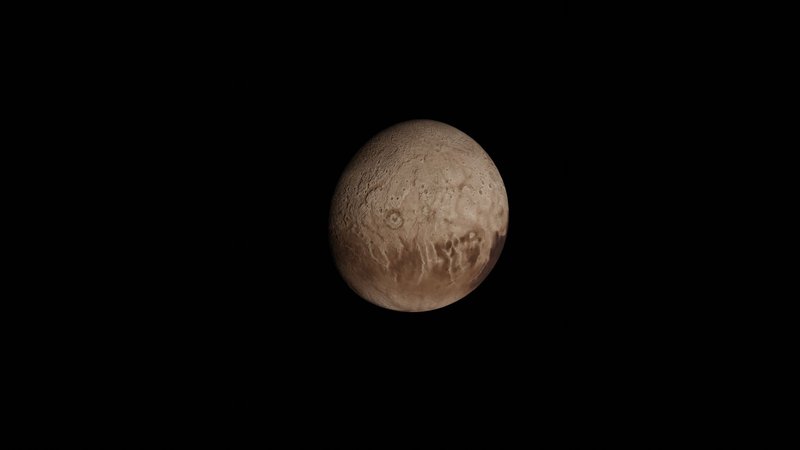
Dwarf planets meet the first two planetary criteria — they orbit the Sun and are round — but haven’t cleared their orbital path of other objects. Pluto is the famous case: it shares the Kuiper Belt with enough icy neighbors that it lost its full-planet status in 2006, the same year the IAU created the dwarf planet category specifically to sort it.
Ceres is the only dwarf planet in the inner solar system, sitting in the asteroid belt between Mars and Jupiter, and NASA’s Dawn spacecraft orbited it directly for over three years. Eris, out in the scattered disc beyond Neptune, is actually slightly more massive than Pluto — its discovery in 2005 is what forced astronomers to define “planet” more precisely in the first place.
4. Moons
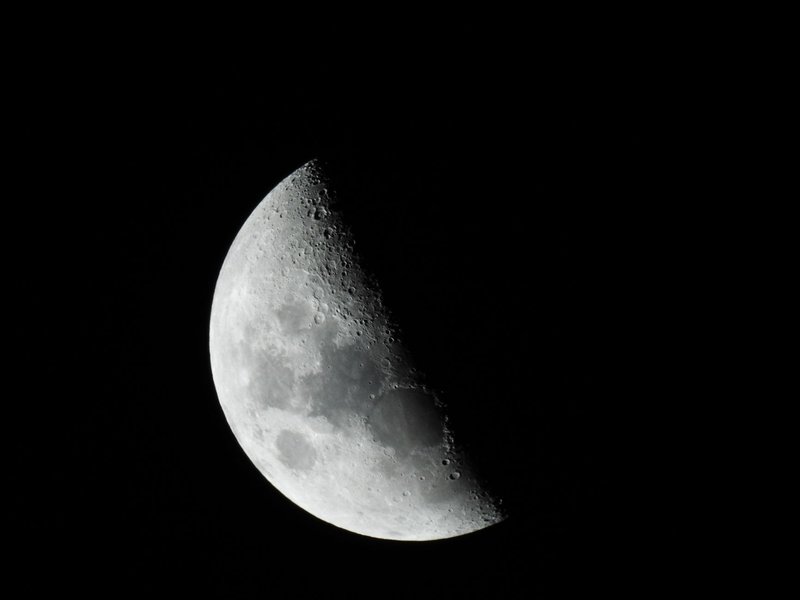
A moon, or natural satellite, orbits a planet or dwarf planet rather than a star directly. Earth has exactly one, formed roughly 4.5 billion years ago when a Mars-sized body is thought to have collided with the young Earth.
Saturn’s moon Titan is the only moon in the solar system with a substantial atmosphere, dense enough to support lakes and rivers of liquid methane on its surface. Jupiter’s moon Europa hides a saltwater ocean beneath an icy crust — enough of a candidate for life that NASA’s Europa Clipper mission is en route to study it directly. Between the major planets, moon counts range from zero (Mercury and Venus) to well over ninety for Jupiter and Saturn.
5. Asteroids
Asteroids are rocky, metallic bodies too small and irregular to round themselves out under their own gravity, and most of them cluster in the asteroid belt between Mars and Jupiter. Despite the crowded reputation, the entire belt’s combined mass is less than 4% of the Moon’s, so the “asteroid field” of the movies is mostly empty space.
Vesta is the belt’s second-most massive object and bright enough to spot with the naked eye under dark skies. Pallas is the third-largest, an unusually tilted, irregular body. Ceres, as mentioned above, got promoted out of the asteroid category entirely once it was reclassified as a dwarf planet.
6. Comets
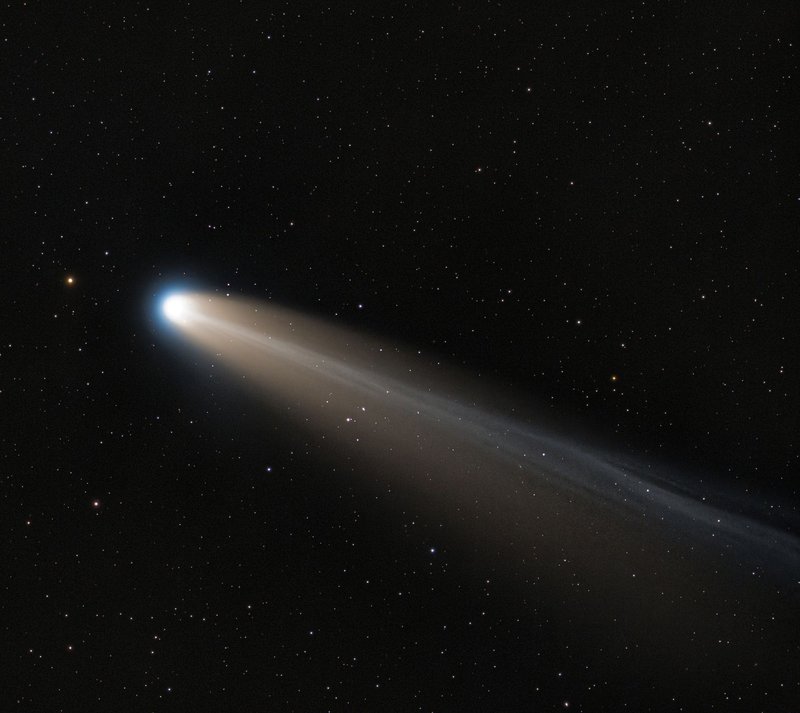
A comet is a body of ice, dust, and frozen gas that, when it swings close enough to the Sun, starts vaporizing and forms a glowing coma and a tail. The tail always points away from the Sun, pushed by solar wind, regardless of which direction the comet is actually traveling.
Halley’s Comet is the best-known example, visible from Earth roughly every 76 years — it’s not due back until 2061. Comet Hale-Bopp was visible to the naked eye for about 18 months in 1996 and 1997, one of the longest naked-eye comet appearances on record. Both originate from the solar system’s icy outer reaches, either the Kuiper Belt or the more distant Oort Cloud.
7. Meteoroids
Meteoroids are the smallest bodies on this list: fragments of rock or metal, often chipped off asteroids or comets, drifting through space until gravity pulls one into a planet’s atmosphere. Once it starts burning up from friction, it’s a meteor — the streak of light people call a shooting star. If a fragment survives the trip and lands, it becomes a meteorite.
The 2013 Chelyabinsk event over Russia is the modern reference case: a meteoroid roughly 20 meters across entered the atmosphere and exploded with a force estimated at nearly 30 times the energy of the Hiroshima bomb, injuring over a thousand people from shattered glass alone, without a single piece reaching the ground large enough to cause direct damage.
8. Nebulae
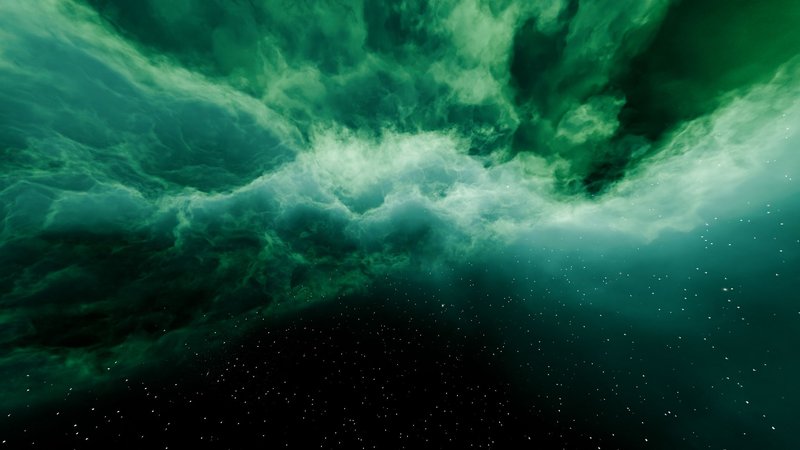
A nebula is a cloud of gas and dust in interstellar space, and depending on the type, it’s either where stars are born or the wreckage left after one dies. Emission nebulae glow from radiation given off by young, hot stars inside them; dark nebulae are dense enough to block the light behind them instead.
The Orion Nebula, visible to the naked eye as a fuzzy patch below Orion’s belt, sits about 1,344 light-years away and is one of the most active stellar nurseries astronomers can observe. The Crab Nebula is the opposite case — a supernova remnant from a stellar explosion that Chinese astronomers recorded seeing in the year 1054. The Horsehead Nebula, silhouetted against a brighter background, is the textbook example of a dark nebula.
9. Galaxies
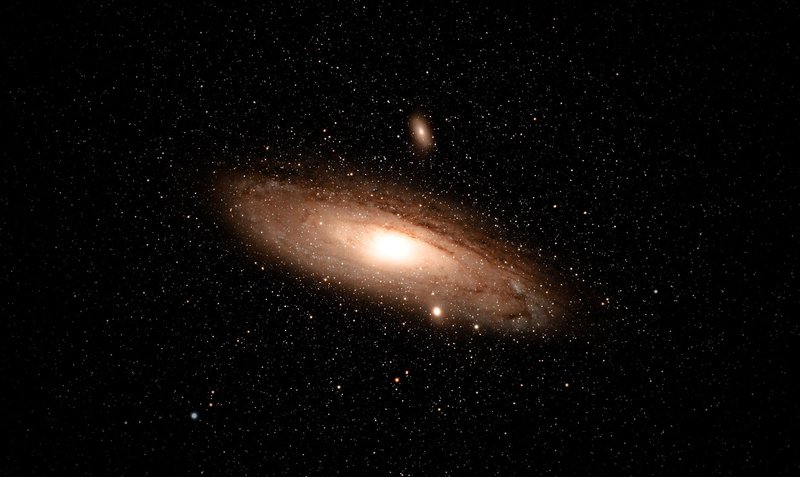
A galaxy is a gravitationally bound system of stars, gas, dust, and dark matter, ranging from a few million stars in dwarf galaxies up to trillions in the largest ellipticals. They come in three broad shapes: spiral, elliptical, and irregular.
The Milky Way, our own spiral galaxy, spans roughly 100,000 light-years and holds an estimated 100 to 400 billion stars — nobody has an exact count. Andromeda, the nearest large spiral neighbor, is visible to the naked eye on a dark night and is on a slow collision course with the Milky Way, with the merger projected in about 4.5 billion years.
10. Black Holes
A black hole is a region where gravity has collapsed so much matter into so little space that nothing, including light, can escape past its event horizon. They’re not empty voids pulling things in from a distance — they’re what’s left after a massive star runs out of fuel and collapses under its own weight.
Sagittarius A, at the center of the Milky Way, is a supermassive black hole with a mass around 4 million times that of the Sun. M87, in a galaxy 55 million light-years away, became the first black hole ever directly imaged, when the Event Horizon Telescope collaboration released its photo in 2019 — a glowing ring of superheated gas bent around a dark center.
That’s the full set. Every object in the night sky, from the point of light you can name to the ones that need a telescope, fits into one of these ten categories — and now you know which one, and what to call the neighbors.