Search “scientists born in Zambia” and you get a mess: a three-name Wikipedia stub, a popularity ranking stuffed with footballers, and a couple of one-off blog posts. The names are scattered across a dozen pages that never talk to each other. So here they are in one place, with the work that actually earned them the mention.
Zambia is not a country with a deep, well-funded research establishment, and that makes the people below more interesting, not less. A medicinal chemist who built Africa’s first integrated drug discovery center. A grade-school science teacher who declared a moonshot in 1964. A field ecologist tracking lions in the Luangwa Valley. They came up through a system that gave them very little and still put their names on real work.

Quick reference
| Name | Field | Known for |
|---|---|---|
| Kelly Chibale | Medicinal chemistry | Antimalarial drug discovery; founded H3D |
| Edward Makuka Nkoloso | Space science (self-styled) | Zambia’s 1964 “Afronaut” space program |
| Thandiwe Mweetwa | Wildlife ecology | Lion conservation in the Luangwa Valley |
| Stanley Fischer | Economics | Central banking; taught Bernanke and Draghi |
| Roma Chilengi | Clinical/vaccine research | Vaccine trials; led Zambia’s COVID-19 response |
Table of contents
- Kelly Chibale
- Edward Makuka Nkoloso
- Thandiwe Mweetwa
- Stanley Fischer
- Roma Chilengi
- Why this list is short, and getting longer
Kelly Chibale {#kelly-chibale}
Field: Medicinal chemistry · Known for: Antimalarial drug discovery

Chibale is the most internationally decorated scientist Zambia has produced. He grew up in a large family with no running water and no scientific role models, taught himself through the Zambian school system, and ended up a professor of organic chemistry at the University of Cape Town.
His real legacy is institutional. In 2010 he founded H3D, the first integrated drug discovery and development center on the African continent. Before H3D, the idea that a homegrown African lab could take a molecule from the bench toward a clinical candidate was mostly theoretical. His team’s antimalarial compound, often called the “Cape Town compound,” became one of the first drug candidates discovered in Africa to enter human trials. The point of the center was never one molecule, though. It was proving that the whole pipeline could run on African soil, with African scientists, aimed at the diseases that actually kill people here.
That distinction matters in a field where most malaria and tuberculosis drugs are designed in labs an ocean away from the patients who need them.
Edward Makuka Nkoloso {#edward-makuka-nkoloso}
Field: Space science (self-declared) · Known for: Zambia’s 1964 space program
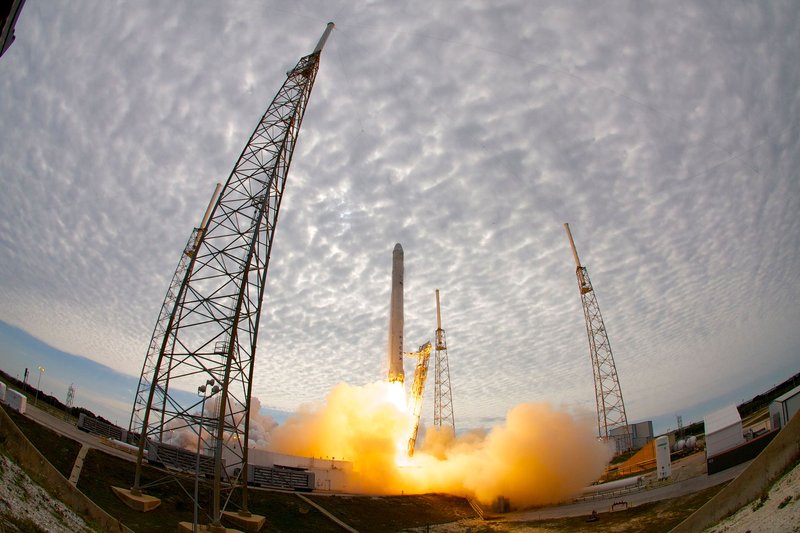
This one is part science, part political theater, and entirely unforgettable. As Zambia gained independence in 1964, a science teacher and former independence fighter named Edward Makuka Nkoloso announced that the new nation would beat the United States and the Soviet Union to the Moon, and then push on to Mars.
He founded the grandly named Zambia National Academy of Science, Space Research and Philosophy and recruited a dozen “Afronauts.” Their training, as the BBC has recounted, involved rolling cadets down a hill inside an oil drum to get them used to disorientation, and swinging them on a rope and cutting it to simulate free fall. The crew was to include a 17-year-old girl named Matha Mwamba, two cats, and a missionary, launched in a copper-and-aluminum rocket Nkoloso called the D-Kalu 1.
It never flew. The funding request he sent to UNESCO went unanswered, Mwamba reportedly got pregnant and left, and the program dissolved. Read literally, it was never going to reach orbit. Read as the work of a man insisting that a newly free African country had every right to dream as big as the superpowers, it lands very differently. Modern artists and filmmakers have spent the last decade reclaiming him as a visionary rather than a punchline.
Thandiwe Mweetwa {#thandiwe-mweetwa}
Field: Wildlife ecology and conservation biology · Known for: Large-carnivore research
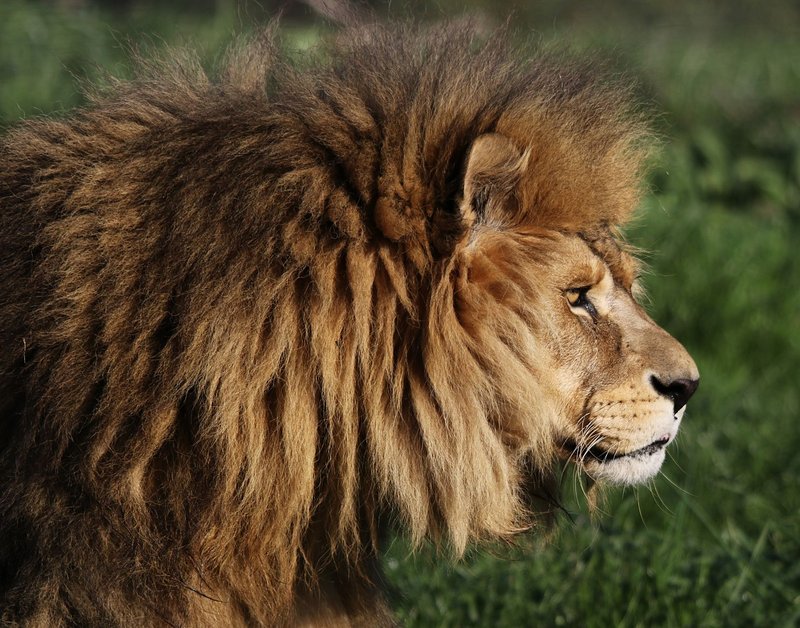
Mweetwa works on the animals most likely to make a tourist’s trip and a farmer’s nightmare: lions, leopards, and African wild dogs. As a senior ecologist with the Zambian Carnivore Programme, she has spent years collaring and tracking big cats in the South Luangwa Valley, building the kind of long-term population data that conservation decisions actually depend on.
She was named a National Geographic Emerging Explorer in 2016, one of the few Zambians to earn the recognition. What sets her apart from a pure field researcher is the education side. She runs programs that bring Zambian schoolchildren into the science of the wildlife on their doorstep, on the bet that the next generation of conservationists has to come from the communities that live alongside the animals, not just from visiting researchers. In a country where human-wildlife conflict is a daily reality near the parks, that local focus is the whole game.
Stanley Fischer {#stanley-fischer}
Field: Economics · Known for: Central banking and macroeconomic theory

Fischer was born in 1943 in Mazabuka, in what was then Northern Rhodesia and is now Zambia. By any measure he is the most globally powerful person on this list. Economics is a social science rather than a lab discipline, but his career has shaped how money moves at a scale no chemist or ecologist touches.
As an MIT professor he wrote a macroeconomics textbook that trained a generation, and he supervised the doctoral work of future Federal Reserve chair Ben Bernanke and future European Central Bank president Mario Draghi. He then went on to run the institutions themselves: Chief Economist at the World Bank, First Deputy Managing Director of the IMF, Governor of the Bank of Israel, and finally Vice Chairman of the U.S. Federal Reserve. A child born in a small Zambian farming town ended up holding the number-two job at the most consequential central bank on Earth.
Roma Chilengi {#roma-chilengi}
Field: Clinical and vaccine research · Known for: Infectious disease trials and public health leadership
If Chibale represents Zambian science abroad, Chilengi represents it at home. A physician and clinical researcher, he built much of his career inside the country running vaccine and infectious-disease trials, including work on the rotavirus vaccines that cut childhood diarrheal deaths, one of the biggest killers of young children in the region.
He became the public face of Zambia’s pandemic response as head of the national public health institute, coordinating COVID-19 testing, data, and vaccination across a country with thin health infrastructure and long distances between clinics. It is unglamorous, logistics-heavy science, the kind that does not produce a single eureka headline. It is also the kind that keeps people alive by the thousand.
Why this list is short, and getting longer {#why-this-list-is-short}
Five names is honest. Zambia’s research base is small, its scientific diaspora is scattered, and the public record on many of its researchers is thin, which is exactly why a clean list is hard to find. Plenty of capable Zambian-born scientists work in agriculture, mining geology, epidemiology, and physics without ever getting a profile written about them.
The shape of the list is worth noticing too. The standout figures cluster around the problems Zambia actually has: malaria and infectious disease, wildlife under pressure, and the economics of a developing nation. That is what good science from a place tends to look like, aimed at the questions on the doorstep rather than borrowed from somewhere else. As the country’s universities and research centers grow, this roster should be a lot longer a decade from now.