Nigeria has roughly 7,900 vascular plant species. Around 100 of them grow nowhere else on Earth — not in neighboring Cameroon, not in Benin, nowhere. That’s a strikingly small endemic count for a country this size, and it tells you something: most of Nigeria’s flora is shared across West Africa, so the species that aren’t are unusually special, often clinging to a single hillside or forest division.
A systematic compilation published in the Journal of Threatened Taxa put real numbers on this. Roughly 91 to 100 strictly endemic species spread across 44 plant families. The family Rubiaceae — coffee’s relatives — dominates the list. By growth form, you’re looking at about 23 trees, 26 herbs, and 22 shrubs, plus a scatter of orchids, ferns, and mosses.
This is the part most articles skip: where these plants actually live. One forest division alone, the Oban Division of Cross River State, holds 41 of them. So we’ll profile twelve named endemics, then map out the hotspots, then talk about why so many are one bad logging season from gone.
Table of Contents
- What “endemic” actually means here
- The 12 endemic plants
- Where Nigeria’s endemics concentrate
- Why these plants are endemic in the first place
- Conservation and threats
- Quick reference table
- FAQ
What “endemic” actually means here
Endemic means a species’ entire natural range falls inside one defined area — in this case, the political borders of Nigeria. It’s not the same as “native.” Plenty of plants are native to Nigeria but also grow in Ghana or Cameroon; those are indigenous, not endemic.
The distinction matters for conservation math. A native species with a wide range can lose a Nigerian population and survive elsewhere. An endemic can’t. When you clear the last forest holding a Nigerian endemic, the species is globally extinct — there’s no backup population across the border. That’s why the 100-ish endemics carry weight far beyond their modest number. The same all-or-nothing logic extends past botany, too — Nigeria’s endemic animals and plants found nowhere else all share this single point of failure.
One wrinkle worth naming: endemism is partly an artifact of where botanists have looked. Several “Nigerian endemics” may eventually turn up in poorly surveyed corners of southwestern Cameroon, which shares the same forest belt. Botanists treat the list as provisional, not gospel.
The 12 endemic plants
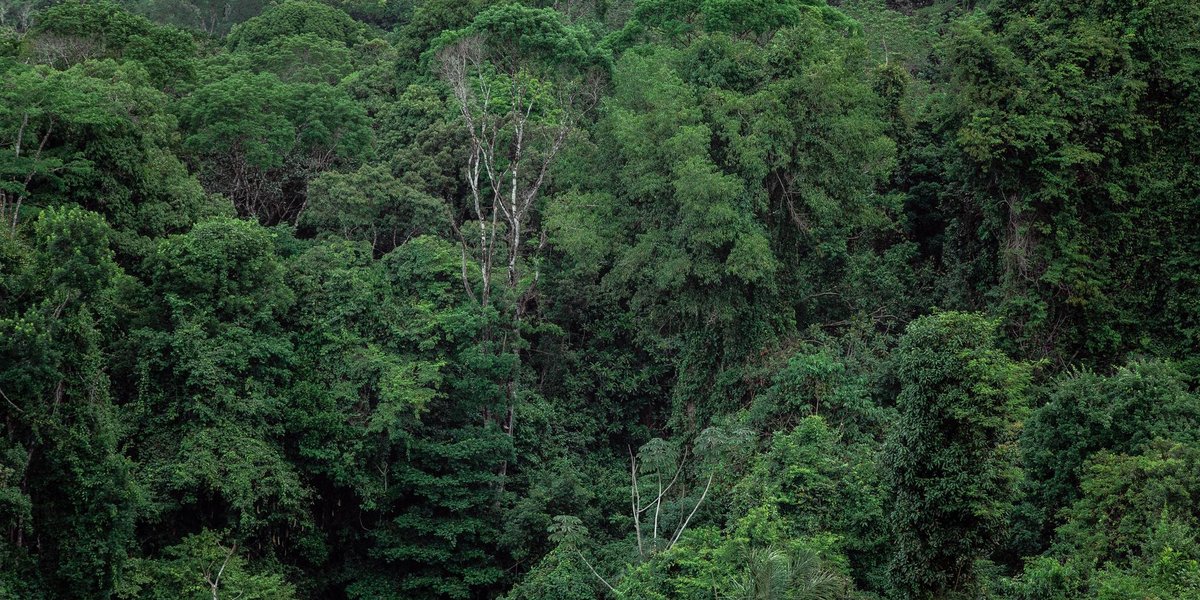
These twelve span the range — towering rainforest trees, understory shrubs, and a couple of plants known from a single hill.
1. Brachystegia kennedyi
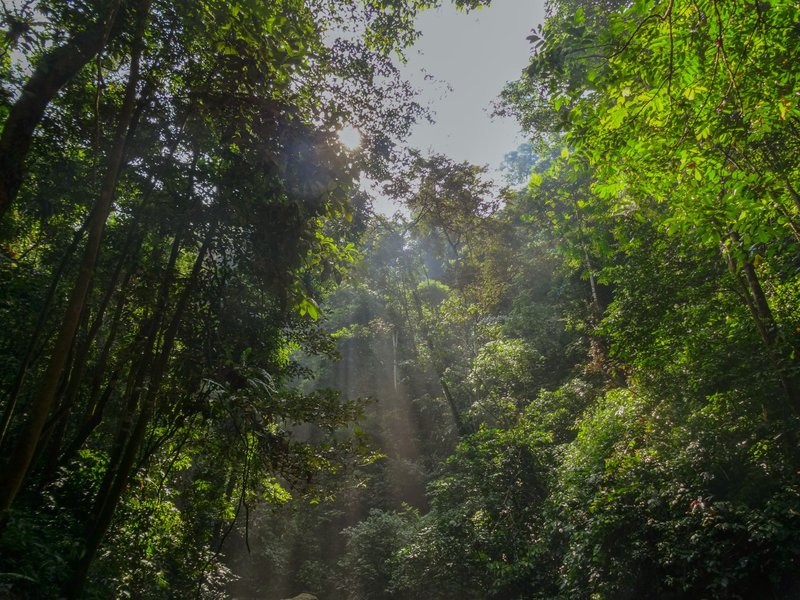
A large forest tree in the legume family, known from the lowland rainforests of southern Nigeria. Its relatives — the Brachystegia “miombo” trees — blanket huge stretches of southern-central Africa, which makes this localized Nigerian cousin a bit of an oddity. It produces the hard, papery seed pods typical of the genus, which split explosively to fling seeds clear of the parent tree.
2. Cola nigerica
A small tree in the same broad group as the kola nut, the stimulant seed chewed across West Africa and once the original flavoring in cola drinks. Cola nigerica is its rare endemic relative, restricted to forest in southern Nigeria. The genus Cola is a hotspot for Nigerian endemism — several Cola species here grow nowhere else.
3. Ancistrocladus letestui
A woody climber that hauls itself through the rainforest canopy using hooked tendrils — “ancistro” literally means hook. The genus drew pharmaceutical attention because several Ancistrocladus species produce naphthylisoquinoline alkaloids with antimalarial and antiviral activity in lab studies. That this Nigerian endemic might carry similar chemistry is exactly the kind of value that vanishes silently when a forest is cleared.
4. Sericanthe testui
A shrub or small tree in Rubiaceae, the coffee family that dominates Nigeria’s endemic list. It lives in the wet forest understory, the shaded layer beneath the canopy where light is scarce and humidity stays high year-round. Like many understory Rubiaceae, it’s easy to walk past and hard to identify without flowers.
5. Mussaenda nigerica
Another Rubiaceae endemic, and a more recognizable one. Mussaenda plants are known for their showy “flags” — a single enlarged sepal that turns leaf-bright white or red to attract pollinators, while the actual flowers stay small. The Nigerian endemic carries the species name to match, and you’ll find it in forest margins where there’s enough light to make the display worthwhile.
6. Ixora nigerica
Ixora will be familiar to gardeners — the genus is grown across the tropics for dense clusters of tubular flowers. The Nigerian endemic version is a wild forest shrub rather than a cultivated ornamental, restricted to native rainforest. It’s a reminder that the manicured Ixora in a hotel lobby has wild relatives quietly going extinct.
7. Calophyllum spp. of Idanre
The Idanre Hills in Ondo State — a dramatic inselberg landscape of bare granite domes rising out of forest — host plants found in few other places. The hills’ isolation, with pockets of forest trapped between rock faces, creates the conditions for local endemism. Idanre is recognized as a distinct botanical hotspot precisely because its terrain isolates populations.
8. Crotonogyne preussii var. nigerica
A spurge-family shrub of the lowland forest. The Euphorbiaceae are a sprawling family ranging from poinsettias to rubber trees, and several have minor endemic forms in Nigeria’s southern forests. This one occupies the same wet-forest niche as the Rubiaceae endemics, sharing ground in the species-packed understory.
9. Begonia of Oban
The Oban Division of Cross River State holds more Nigerian endemics than anywhere else — 41 species by the JoTT count — and several are Begonia. These are small, often succulent-leaved herbs of deep forest shade and stream banks, the kind of plant that needs constant moisture and disappears the moment a forest is opened up and dries out.
10. An endemic orchid of Cross River
Cross River’s forests harbor endemic orchids, many of them epiphytes living on tree branches high in the canopy. Orchids are notoriously specific — tied to particular pollinators, particular fungi in their roots, particular humidity. That specificity is what makes them endemic and also what makes them fragile. Lose the host trees and the orchid has nowhere to anchor.
11. A Calabar-region fern
Beyond the flowering plants, Nigeria’s endemic list includes ferns and mosses concentrated in the wettest southern forests around Calabar. Ferns reproduce by spores and need persistent humidity to complete their life cycle, which pins them to undisturbed forest interiors. They rarely make the headlines, but they’re endemic all the same.
12. Heinsia or Psydrax endemic of the southern forest
Rounding out the Rubiaceae theme, the southern forests hold additional endemic shrubs in coffee-family genera like Heinsia and Psydrax. The repeated appearance of this one family across Nigeria’s endemics isn’t coincidence — Rubiaceae diversifies readily in the African wet-forest understory, throwing off locally restricted species faster than most other groups.
Where Nigeria’s endemics concentrate

The endemics aren’t spread evenly. They cluster hard in a few places, and the geography explains the biology.
Cross River State (Oban Division) is the epicenter. The Cross River forests are part of the Guinean Forests of West Africa biodiversity hotspot, among the most species-rich and most threatened forests on the continent. Oban Division alone accounts for 41 Nigerian endemics. The combination of high rainfall, varied elevation, and relative isolation from the rest of Nigeria’s drier interior makes it an endemism factory.
Idanre Hills (Ondo State) punch above their size. The granite inselbergs create islands of habitat — forest pockets cut off by bare rock — and isolation breeds endemism. Plants stranded on or around these domes evolve in place without gene flow from outside.
The Calabar region in the far southeast, with the country’s heaviest rainfall, holds endemic ferns, mosses, and moisture-loving herbs that can’t survive a dry season.
Notice the pattern: every hotspot is in the wet south or southeast. Nigeria’s north — Sahel, savanna, semi-desert — contributes almost nothing to the endemic list, because those drier, more connected landscapes share their flora freely across borders with Niger and Chad, where the endemic plant list runs even shorter for exactly the same reason.
Why these plants are endemic in the first place
Three forces, mostly.
Forest isolation. During drier climatic periods in Earth’s past, West Africa’s rainforest shrank into scattered refuges where moisture held on. Plants survived in these pockets, evolved in isolation, and didn’t always reconnect when forests expanded again. Cross River was one of those refuges.
Topography. Idanre’s inselbergs and the varied elevations of the Cross River uplands chop the landscape into micro-habitats. A plant on a shaded south face lives in a different world than one a kilometer away on exposed granite.
The Rubiaceae factor. Some plant families are simply prone to throwing off narrow-range species — they speciate fast in the forest understory. Rubiaceae is the standout in Nigeria, which is why it tops the endemic family list. It’s less about Nigeria being unusual and more about which families happened to be sitting in the right place.
Put those together and you get a small but distinctive endemic flora, concentrated where wet forest survived and got chopped into pieces.
Conservation and threats
Here’s the uncomfortable part. The same isolation that created these endemics makes them exceptionally easy to lose.
Nigeria has one of the highest deforestation rates in the world. The southern rainforests — the exact places holding the endemics — face logging, conversion to oil-palm and cocoa, road-building, and population pressure. A species restricted to one forest division has no margin. Clear that division and the species is globally extinct, full stop.
Many Nigerian endemics carry IUCN Red List categories of Vulnerable, Endangered, or worse, and a number are Data Deficient — meaning nobody has the survey work to even assess them. Data Deficient is not reassuring; it often means a species is rare enough that botanists can’t find it.
Cross River National Park and the Oban Hills protected area cover some of the key habitat, which is genuinely the best news in this story. But protection on paper and protection on the ground are different things, and enforcement is patchy. The plants with no economic value to anyone — the understory herbs, the obscure ferns — are the ones most likely to slip away unnoticed, because nobody’s counting them.
The practical takeaway: Nigeria’s endemic flora is a small, geographically concentrated, under-studied group sitting inside one of the planet’s most threatened forest regions. Protecting Cross River and Idanre isn’t just protecting Nigerian biodiversity — for these hundred-odd species, it’s the entire game.
Quick reference table
| Species | Family | Form | Main location |
|---|---|---|---|
| Brachystegia kennedyi | Fabaceae | Tree | Southern lowland forest |
| Cola nigerica | Malvaceae | Small tree | Southern forest |
| Ancistrocladus letestui | Ancistrocladaceae | Liana | Rainforest canopy |
| Sericanthe testui | Rubiaceae | Shrub | Forest understory |
| Mussaenda nigerica | Rubiaceae | Shrub | Forest margins |
| Ixora nigerica | Rubiaceae | Shrub | Native rainforest |
| Calophyllum (Idanre) | Calophyllaceae | Tree | Idanre Hills |
| Crotonogyne preussii var. nigerica | Euphorbiaceae | Shrub | Lowland forest |
| Begonia (Oban) | Begoniaceae | Herb | Oban stream banks |
| Cross River orchid | Orchidaceae | Epiphyte | Cross River canopy |
| Calabar fern | (varies) | Fern | Calabar wet forest |
| Heinsia / Psydrax | Rubiaceae | Shrub | Southern forest |
FAQ
How many plants are endemic to Nigeria? Roughly 91 to 100 strictly endemic vascular plant species, spread across about 44 families. The exact number shifts as botanists revise the taxonomy and survey under-explored areas — a few “endemics” may turn out to also live in neighboring Cameroon.
Which plant family has the most Nigerian endemics? Rubiaceae, the coffee family. It speciates readily in the African wet-forest understory, producing more narrow-range Nigerian species than any other family.
Where do most of Nigeria’s endemic plants live? The wet forests of the southeast, especially the Oban Division of Cross River State, which holds 41 endemics on its own. The Idanre Hills in Ondo State and the Calabar region are the other major hotspots.
Are Nigeria’s endemic plants endangered? Many are. The southern rainforests face severe deforestation, and a species restricted to a single forest can be driven to global extinction by clearing that one place. Several are listed by the IUCN as threatened, and many more are Data Deficient — too rarely seen to assess.
What’s the difference between native and endemic plants? Native plants occur naturally in a region but may also grow elsewhere. Endemic plants grow only in that one defined area. Most Nigerian plants are native to West Africa broadly; the endemics are the small subset found nowhere outside Nigeria’s borders.