Most lists of caves in North Macedonia stop at Vrelo, snap a photo from the tour boat, and call it done. Fair enough — Vrelo is one of the deepest explored underwater caves on Earth and it sits inside the most photographed canyon in the country. But the karst landscape here hides far more than one flooded shaft.
North Macedonia is roughly 80% mountains, and a big chunk of that is limestone. Limestone plus a few million years of slightly acidic groundwater equals caves — hundreds of them, with more than 400 documented across the country. This guide covers eight worth your time, what makes each one specific, and exactly how to reach the headline acts on a day-trip from Skopje.
Table of Contents
- Quick verdict: the short list
- 1. Vrelo Cave
- 2. Peshna Cave
- 3. Cocev Kamen
- 4. Ubava Cave (Matka)
- 5. Slatinski Izvor Cave
- 6. Gorna Slatinska Cave
- 7. Kalishta Cave Church
- 8. Bela Voda Cave
- Cave comparison table
- How to plan a cave day-trip from Skopje
- Safety and seasonal tips
Quick verdict: the short list
If you only have time for one, go to Vrelo — it’s the easiest to reach, sits in Matka Canyon 17 km from Skopje, and you can pair it with a kayak or boat ride. If you want the jaw-dropper that almost nobody photographs, drive to Peshna, which has the largest cave entrance in the Balkans and a ruined fortress wedged inside it. Cocev Kamen is the pick for anyone who likes archaeology with their geology — it’s a volcanic rock with a contested 4,000-year history as a possible megalithic observatory and sanctuary.
Everything else on this list is for the genuinely curious: cavers, history nerds, and people who’d rather skip the tour-boat queue.
1. Vrelo Cave
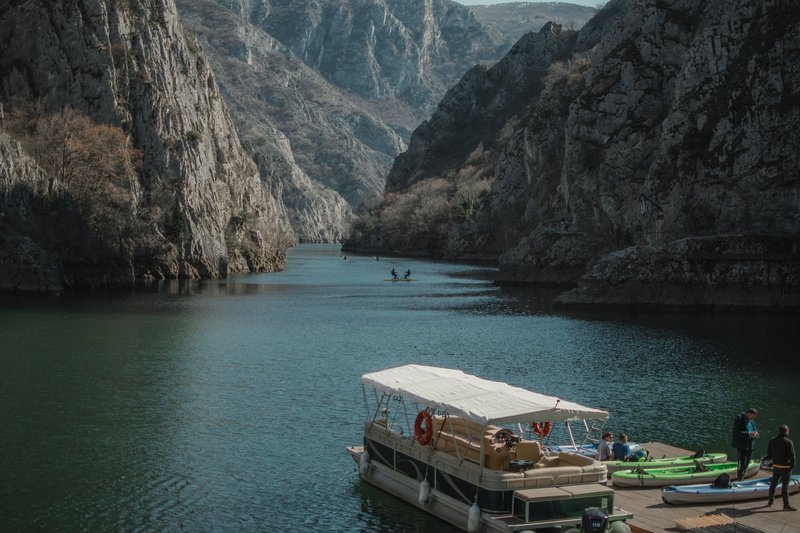
Vrelo sits on the right bank of Matka Canyon, about a 15-minute boat ride from the dam and roughly 17 km southwest of Skopje. The name means “spring,” and the cave is split into a dry upper section open to visitors and a flooded lower section that’s the real headline.
That underwater part is what made Vrelo famous. Diving expeditions have pushed past 240 meters of depth without hitting the bottom, which puts it among the deepest underwater caves on the planet — the exact ranking depends on which survey you trust, but it’s firmly in the global top tier. In 2009 and 2010 it was a finalist in the New7Wonders of Nature campaign, which is how a small Macedonian cave ended up on international ballots.
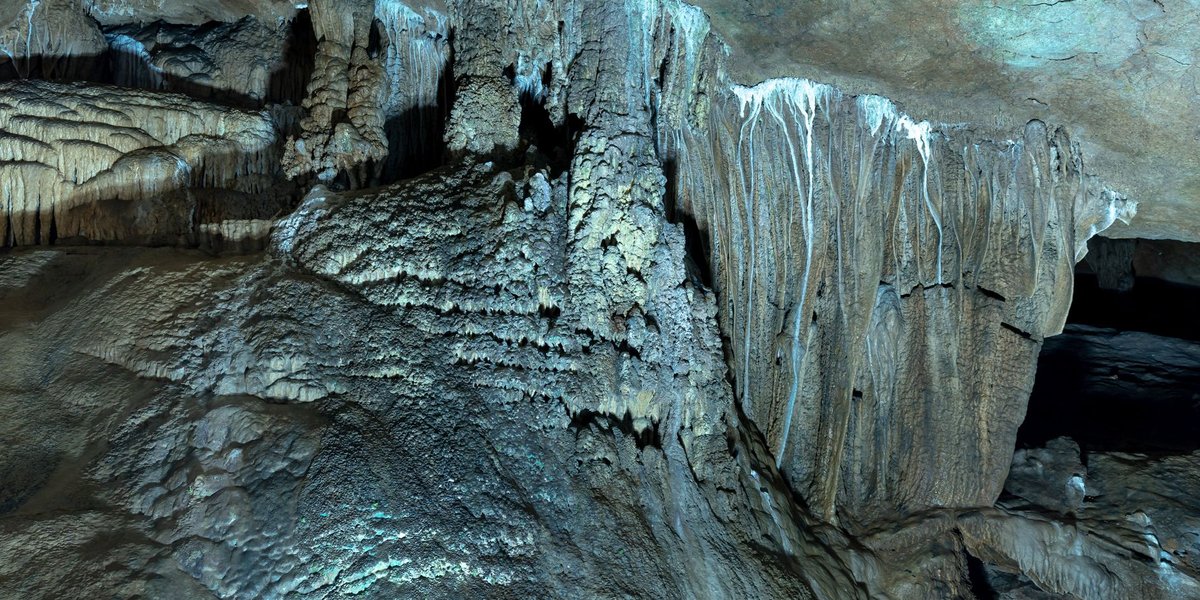
The dry section you actually walk through is compact, maybe 150 meters of passage, with stalactites and a small lake reflecting the formations. It takes about 15 minutes inside. The draw isn’t the size — it’s the setting. You arrive by boat across emerald water with canyon walls rising on both sides.
Visiting: Take bus #60 from Skopje (near the old bazaar) to the village of Matka, then walk 30 minutes along the canyon path to the dam. Boat tours to Vrelo run from the dam area and cost around 400–500 MKD (roughly €7–8) per person. You can also rent a kayak and paddle there yourself, which is cheaper and far less crowded.
2. Peshna Cave
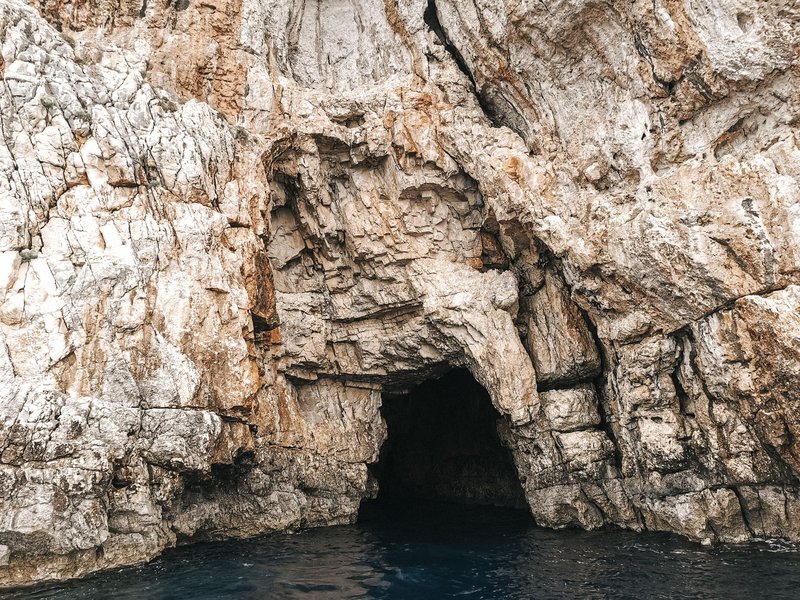
If Vrelo is the famous one, Peshna is the one that makes people gasp and they’ve never heard of it. Located near Makedonski Brod, about a two-hour drive south of Skopje, Peshna has the largest cave entrance in the Balkans — a yawning arch roughly 30 meters wide and 20 meters tall. For perspective, it outscales the show-cave mouths you’ll find across the border among Greece’s better-known caves, where the draw tends to be depth and dense formations rather than the sheer size of the opening.
The genuinely strange part: there’s a fortress inside the mouth. The ruins of a medieval stronghold sit right in the entrance, stone walls built directly into the rock. Local lore ties it to the legendary figure Marko Krale (Prince Marko), the Balkan folk hero whose name is attached to about a hundred landmarks across the region. The walls are real even if the legend is loose.
Behind the entrance, the cave continues into passages that flood seasonally — there’s an intermittent underground river, so the inner sections can be impassable after heavy rain. The entrance chamber alone is worth the drive. Standing under that arch with the fortress ruins above you is the kind of scene that doesn’t show up on the usual tourism circuit.
Visiting: You’ll need a car. Drive to Makedonski Brod, then follow signs toward the village of Devič; the cave is a short, marked walk from the parking area. There’s no fee and no formal facilities, so bring water and decent shoes.
3. Cocev Kamen
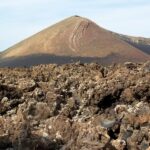
Cocev Kamen (sometimes spelled Cocev Stone) is less a cave than a giant volcanic rock riddled with chambers, niches, and carved steps — and it’s the most archaeologically loaded site on this list. It sits near the village of Šopsko Rudare, in the eastern part of the country toward Kratovo, about 90 minutes from Skopje by car.
Researchers have proposed that the site functioned as a megalithic observatory and a sanctuary for the cult of the Sun, with carved seats and platforms possibly used to track solstices. That interpretation is debated — not every archaeologist buys the observatory claim — but the human modification is undeniable. There are throne-like carvings, artificial niches, and evidence of use stretching back to the Bronze Age and earlier, with finds suggesting occupation as far back as the Neolithic.
What you get on a visit is a hulking dark rock with caves you can climb into, weathered carvings, and a view across the Kratovo-Zletovo volcanic region, which is itself an ancient extinct volcano complex. It’s eerie in the right way — a place that clearly meant something to people for thousands of years.
Visiting: Car required. The site is free and unstaffed. The final approach is a rough track, so a higher-clearance vehicle helps after rain.
4. Ubava Cave (Matka)
Vrelo gets the crowds, but Matka Canyon holds at least ten documented caves, and Ubava (“Beautiful”) is the one serious visitors seek out next. It’s a longer cave than Vrelo’s dry section, with more developed formations, and reaching it usually means a kayak or a guided boat rather than the standard tour.
The Matka area as a whole is a karst showcase. Beyond Vrelo and Ubava, the canyon hides caves like Krshtalna and others that local kayak guides can point you to. If you’ve already done the Vrelo boat ride and want more, asking a Matka kayak outfit about Ubava is the move.
Visiting: Same access point as Vrelo — bus #60 to Matka, then arrange a kayak or a custom boat from the dam. Expect to negotiate; this isn’t a fixed-ticket attraction.
5. Slatinski Izvor Cave
Slatinski Izvor, near Makedonski Brod in the same region as Peshna, is one of North Macedonia’s more significant cave systems for actual caving. It runs several hundred meters and has multiple levels, with an underground stream and well-developed calcite formations.
This is the kind of cave that interests speleologists more than casual tourists — it’s not lit, signposted, or set up for a 15-minute stroll. But it’s notable because it’s one of the longer and more studied systems in the country, and its underground watercourse connects to the broader hydrology of the region. If you’re a caver visiting North Macedonia, this is on the radar.
Visiting: Go with a local caving club or guide. This is not a self-guided walk-in; proper lighting and a knowledgeable lead are non-negotiable.
6. Gorna Slatinska Cave
Also in the Makedonski Brod karst — this corner of the country is dense with caves — Gorna Slatinska is another stream cave known among Macedonian cavers. It features flowing water, narrow passages, and formations that have built up over millennia.
What makes the Makedonski Brod cluster worth knowing as a group: Peshna, Slatinski Izvor, and Gorna Slatinska are all within reach of the same small town. A caver could base themselves there and work through several systems in a few days, something you can’t really do anywhere else in the country with this concentration.
Visiting: Local guide essential. Coordinate through caving contacts in Makedonski Brod.
7. Kalishta Cave Church
Not every cave here is about geology. The Kalishta monastery complex, on the shore of Lake Ohrid near Struga, includes cave churches carved into the limestone cliffs. The most notable is dedicated to the Holy Mother of God, with medieval frescoes painted directly onto the rock walls inside a natural cavern.
This is a different kind of cave visit — quiet, devotional, and tied into the deep Orthodox Christian history of the Ohrid region, which UNESCO recognizes as a World Heritage site for both its natural and cultural value. The cave church of St. Atanasij and the small rock-cut chapels here have been places of worship for centuries.
Visiting: The monastery sits just outside Struga on the Ohrid lakeshore, easy to reach by car or local bus from Ohrid town. Modest dress; it’s an active religious site.
8. Bela Voda Cave
Bela Voda (“White Water”), near Demir Kapija in the south, is one of the country’s richest caves for formations — and one of its most protected. It holds an exceptional density of stalactites, stalagmites, and rarer features like helictites and cave pearls, which is why access is tightly restricted to preserve them.
It’s also an important biospeleological site, home to cave-adapted invertebrate species and a bat population. Because of its scientific value and fragility, Bela Voda isn’t a casual tourist stop — entry is limited and usually requires permission. But it’s the single best example of why North Macedonia’s caves matter beyond tourism: they’re functioning ecosystems and natural archives.
Visiting: Restricted. Access generally requires arrangement with relevant authorities or a research/caving group. Don’t expect to walk up and go in.
Cave comparison table
| Cave | Location | Type | Accessibility | Fee |
|---|---|---|---|---|
| Vrelo | Matka Canyon, 17 km from Skopje | Underwater + dry show cave | Easy (boat/kayak) | ~400–500 MKD boat |
| Peshna | Makedonski Brod | Largest Balkan entrance + fortress | Moderate (car + short walk) | Free |
| Cocev Kamen | Near Kratovo | Volcanic rock / archaeological | Moderate (car, rough track) | Free |
| Ubava | Matka Canyon | Dry show cave | Moderate (kayak/boat) | Negotiated |
| Slatinski Izvor | Makedonski Brod | Stream cave (caving) | Hard (guide only) | Guide cost |
| Gorna Slatinska | Makedonski Brod | Stream cave (caving) | Hard (guide only) | Guide cost |
| Kalishta | Lake Ohrid, near Struga | Cave church | Easy (car/bus) | Free / donation |
| Bela Voda | Demir Kapija | Formation-rich, protected | Restricted (permission) | Varies |
How to plan a cave day-trip from Skopje
The realistic day-trip is Matka Canyon, and it’s an easy one. Catch bus #60 from the stop near Skopje’s old bazaar — it runs several times a day and takes about 35 minutes to the village of Matka. From the last stop, walk roughly 30 minutes along the canyon trail to the dam and the boat dock. Boats to Vrelo leave through the day; a round trip with cave entry runs around 400–500 MKD.
Want more than Vrelo? Rent a kayak at the dam (hourly rates are cheap) and paddle the canyon yourself. That gets you to Vrelo without the tour queue and lets you nose around toward Ubava and the other Matka caves. Budget half a day for the canyon, longer if you kayak.
Peshna and the Makedonski Brod caves are not a public-transport day-trip — you need a car, and the drive is about two hours each way. Make a full day of it: Peshna’s entrance and fortress in the morning, then a stop in Makedonski Brod town. If you’re chasing Cocev Kamen instead, that’s a separate eastern trip toward Kratovo, also car-only and about 90 minutes out.
A simple rule: if you have one day and no car, do Matka. If you have a car and you’re after the dramatic, drive to Peshna.
Safety and seasonal tips
Spring through autumn is cave season. Several of these caves — Peshna, Slatinski Izvor, Gorna Slatinska — have intermittent underground rivers that flood after heavy rain, making inner sections dangerous or impassable. Avoid them right after storms. Matka’s boat tours run most of the year but are most reliable from late spring to early autumn.
Caves stay cold. Even in a 35°C Macedonian summer, cave interiors hover around 10–12°C. Bring a layer, especially for anything longer than the Vrelo walk-through.
The undeveloped caves are genuinely undeveloped. No railings, no lighting, no staff at Peshna, Cocev Kamen, or the caving systems. Wear grippy shoes, carry a headlamp, and for the technical caves (Slatinski Izvor, Gorna Slatinska, Bela Voda) go with a local guide or caving club — not optional, not negotiable. The formations are fragile and so are the bat colonies, so don’t touch the speleothems and keep noise down.
North Macedonia’s caves reward people who look past the one famous boat ride. Start with Vrelo because it’s easy. Stay for Peshna’s impossible arch, Cocev Kamen’s contested history, and the quiet cave churches above Lake Ohrid — the parts of the country’s underground that most visitors never bother to find.