Ask “what are some examples of quarks?” and you actually have two questions bundled together. There are six quarks themselves — the flavors, physicists call them — and then there are the particles those quarks build, which is where most explanations get vague. This covers both, starting with the clean six-flavor list and then moving to the real particles you’ve heard of: the proton, the neutron, and a few exotic ones that only exist for a fraction of a second inside an accelerator.
One thing up front: you’ll never see a quark by itself. Not in a detector, not anywhere. They’re always locked inside bigger particles, and the reason why is one of the stranger rules in physics. More on that below.
Table of Contents
- The Six Quark Flavors
- Quark Charges and Masses at a Glance
- Particles Made of Quarks
- Why You Never See a Quark Alone
- Stable vs. High-Energy-Only Quarks
- Frequently Asked Questions
The Six Quark Flavors
Quarks come in six varieties, grouped into three “generations” by mass. Here’s each one and where it actually shows up.
Up quark — Charge +2/3. The lightest quark and one of the two that make up everyday matter. Every proton and every neutron in your body contains up quarks. If you point at any ordinary object and say “there are up quarks in that,” you’re right.
Down quark — Charge −1/3. The other building block of ordinary matter. Pair it with up quarks and you get protons and neutrons, which means down quarks are in every atom you’ve ever touched.
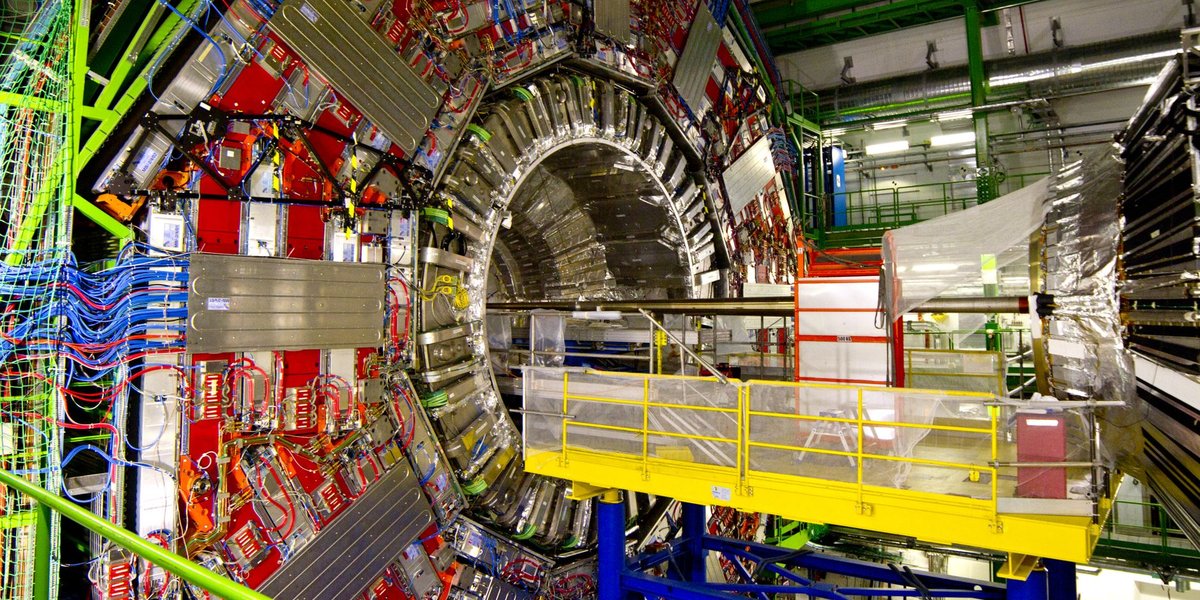
Charm quark — Charge +2/3. Heavier and unstable. You don’t find charm quarks lying around — they appear when particles collide at high energy and vanish almost instantly. The famous example particle is the J/Psi, discovered in 1974, which is a charm quark bound to its own antiquark.
Strange quark — Charge −1/3. Named back when physicists found particles that lived “strangely” long compared to expectations. Strange quarks show up in kaons and in lambda baryons, particles produced in cosmic ray collisions and accelerators.
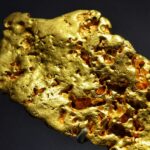
Top quark — Charge +2/3. The heavyweight of the bunch, and the last to be discovered (Fermilab, 1995). It’s so massive — heavier than an entire gold atom — that it decays before it can even bind into a larger particle. So there’s no “top quark particle” to point to; it exists only as a fleeting signature in collision data.
Bottom quark — Charge −1/3. Sometimes called “beauty.” It builds B mesons, which physicists study closely because their decay patterns hint at why the universe has more matter than antimatter.
That’s the full set. Six flavors, three generations, and only the first generation (up and down) sticks around in normal matter.
Quark Charges and Masses at a Glance
This is the table searchers usually want, so here it is in one place. Masses are given in MeV/c² (mega-electronvolts), the standard unit for particle masses, and come from Particle Data Group values.
| Quark | Symbol | Charge | Approx. Mass (MeV/c²) | Generation |
|---|---|---|---|---|
| Up | u | +2/3 | ~2.2 | 1st |
| Down | d | −1/3 | ~4.7 | 1st |
| Charm | c | +2/3 | ~1,280 | 2nd |
| Strange | s | −1/3 | ~95 | 2nd |
| Top | t | +2/3 | ~173,000 | 3rd |
| Bottom | b | −1/3 | ~4,180 | 3rd |
Notice the spread: the top quark is roughly 80,000 times heavier than the up quark. That mass gap is why the heavier flavors are so unstable — nature prefers to decay toward the lightest available state, and there’s a long way to fall.
Each quark also has a matching antiquark with the opposite charge. An anti-up has charge −2/3, an anti-down has +1/3, and so on.
Particles Made of Quarks
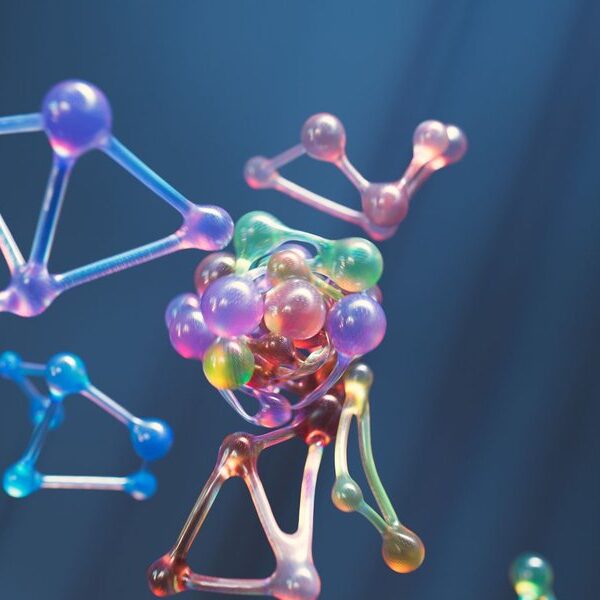
Here’s where the abstract list becomes concrete. Quarks combine into composite particles called hadrons, and these split into two families: baryons (three quarks) and mesons (a quark plus an antiquark). These are the real-world examples worth knowing.
Proton (uud) — Two up quarks and one down quark. Add the charges: +2/3 +2/3 −1/3 = +1. That’s exactly the +1 charge of a proton, and it’s a satisfying check that the quark model holds together. Protons are stable, which is why hydrogen — a single proton — has been sitting around since the early universe.
Neutron (udd) — One up quark and two down quarks. Charges: +2/3 −1/3 −1/3 = 0. A neutral particle, as the name promises. A free neutron decays in about 15 minutes, but locked inside a nucleus it’s stable, which is what lets every element heavier than hydrogen exist. The CERN explainer on the Standard Model lays out how these combinations follow from the underlying rules, and there’s plenty more to the neutral particle itself if you dig into these interesting facts about neutrons.
Pions (π) — The lightest mesons, built from up and down quarks and their antiquarks. A π⁺ is an up paired with an anti-down. Pions are the particles that carry the strong force between protons and neutrons in a nucleus, which earned the prediction a Nobel-worthy place in physics history.
Kaons (K) — Mesons containing a strange quark. They’re the classic “strange particle” and were central to discovering that nature doesn’t always treat matter and antimatter symmetrically.
J/Psi — A charm quark bound to an anti-charm quark. Its 1974 discovery confirmed the charm quark existed and is sometimes called the “November Revolution” in physics because two labs found it within days of each other.
Lambda baryon (Λ⁰, uds) — One up, one down, and one strange quark. It’s a heavier cousin of the neutron and a textbook example of a baryon that includes a second-generation quark.
If you only remember two examples, make them the proton and the neutron. They’re the ones inside every atom, and they’re the cleanest demonstration that quark charges add up exactly the way the model predicts.
Why You Never See a Quark Alone
You can isolate an electron. You can’t isolate a quark. Try to yank a single quark out of a proton and something odd happens: the more you pull, the stronger the force gets, like stretching a rubber band. Eventually you pump in so much energy that the energy itself converts into new quark-antiquark pairs, and instead of a lone quark you get more hadrons.
This is called color confinement, named after “color charge” — the strong-force property quarks carry, which has nothing to do with actual color. The practical upshot: quarks only ever exist bundled into hadrons that are “colorless” overall. It’s the reason every example in the section above is a composite particle, never a bare quark.
Stable vs. High-Energy-Only Quarks
A useful way to sort the six flavors:
- Stable in everyday matter: up and down. These build the protons and neutrons in every atom, so they’re around permanently.
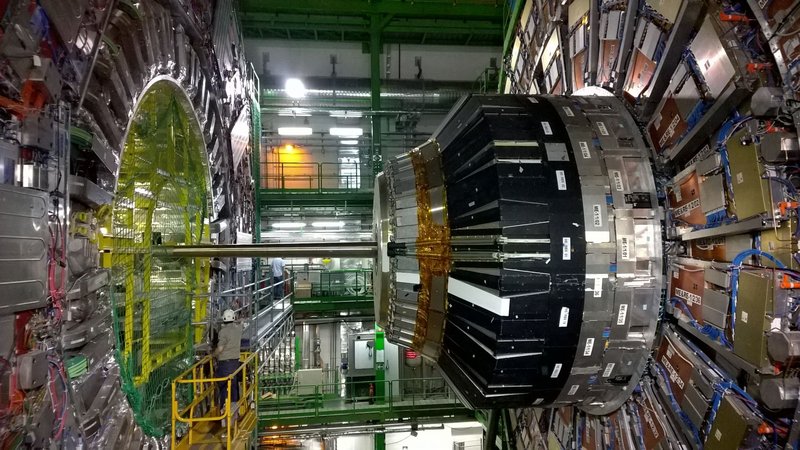
- High-energy-only: charm, strange, top, and bottom. You get these by smashing particles together in accelerators or in cosmic ray collisions in the upper atmosphere. They decay in tiny fractions of a second, cascading down toward up and down quarks.
So when someone asks for “examples of quarks in real life,” the honest answer is that two of them — up and down — are everywhere, all the time, and the other four are rare, brief, and live mostly in physics labs.
Frequently Asked Questions
What are the six types of quarks? Up, down, charm, strange, top, and bottom. They’re grouped into three generations by mass, with up and down being the lightest and the only ones found in ordinary matter.
What particles are made of quarks? Protons (two ups and a down), neutrons (one up and two downs), and a range of others like pions, kaons, the J/Psi, and lambda baryons. Any particle built from quarks is called a hadron.
What is an example of an up and down quark? Every proton contains two up quarks and one down quark; every neutron contains one up and two downs. Since those are in every atom, up and down quarks are the most common examples around you.
Why can’t you see a single quark? Because of color confinement. The strong force gets stronger as you try to separate quarks, so they stay permanently bound inside larger particles. Pulling hard enough just creates new quarks rather than freeing one.
Which quark is the heaviest? The top quark, at roughly 173,000 MeV/c² — heavier than an entire gold atom. It’s so massive it decays before it can bind into a composite particle.
Do quarks have charge? Yes, and unlike most particles their charges are fractional: +2/3 for up, charm, and top; −1/3 for down, strange, and bottom. The charges of the quarks inside a particle add up to that particle’s total charge.