Most lists of “famous people from Mali” are stacked with footballers and musicians, and the scientists get buried somewhere around entry 40. That’s a shame, because Mali’s scientific record runs deeper than almost anywhere else in West Africa. Timbuktu was a university town when Oxford was still finding its feet, and the people on this page are the continuation of that line, not a break from it.
So here are scientists born in Mali whose work actually moved their fields. Real careers, named achievements, and the specific reasons each one matters.
Table of Contents
- Mali’s Scientific Heritage Starts in Timbuktu
- Cheick Modibo Diarra: The Astrophysicist Who Flew NASA Spacecraft
- Ogobara Doumbo: The Man Who Built African Malaria Science
- Abdoulaye Djimdé: Running the Vaccine Trials Now
- The Wider Bench: MRTC and the Researchers Mali Trained
- Why This List Looks the Way It Does
Mali’s Scientific Heritage Starts in Timbuktu
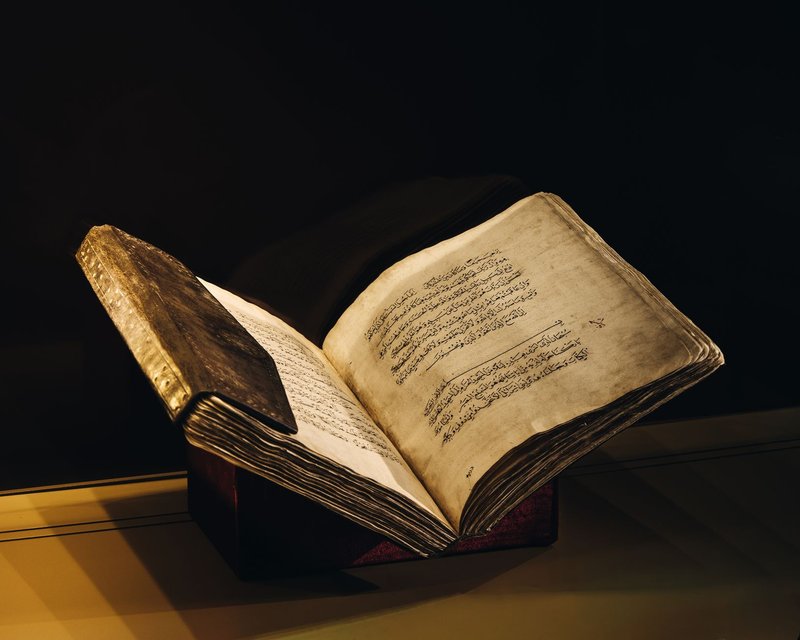
Before you meet anyone living, it helps to know what they inherited. From roughly the 13th to the 16th century, Timbuktu’s Sankoré complex and its network of scholars ran one of the most active centers of learning in the medieval world. Students studied astronomy, mathematics, medicine, and law alongside religious texts.
The proof survived. Private libraries and archives in and around Timbuktu hold an estimated 300,000 to 700,000 manuscripts, some dating back centuries, covering subjects from the movement of the stars to the calculation of inheritance shares. When jihadist groups occupied northern Mali in 2012, local families and librarians smuggled hundreds of thousands of these manuscripts out to Bamako to keep them from being destroyed, an act documented at length by the BBC and other outlets.
The point isn’t nostalgia. It’s that Malian science didn’t start with NASA. It restarted.
Cheick Modibo Diarra: The Astrophysicist Who Flew NASA Spacecraft
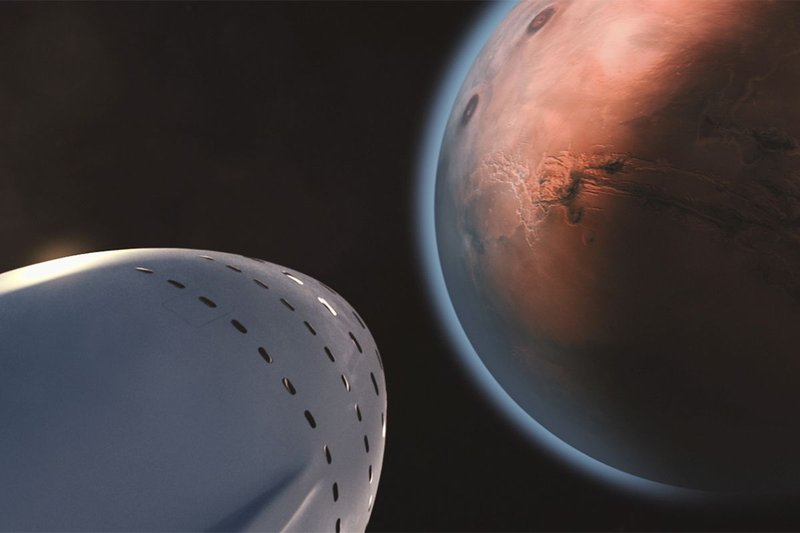
Cheick Modibo Diarra, born in 1952 in Nioro du Sahel, is the name most people reach for when they think of a Malian scientist, and for good reason. He became the first African to work as an astrophysicist at NASA’s Jet Propulsion Laboratory.
After studying mathematics and physics in Paris, Diarra earned a master’s in aerospace engineering and a PhD in mechanical engineering from Howard University. Those years in Paris put him inside a research tradition with its own long roster of scientists born in France, and he carried that grounding back into the work. JPL hired him as an interplanetary navigator, which is exactly the job it sounds like: he worked out the trajectories that put robotic spacecraft where they needed to be, across hundreds of millions of kilometers, with no chance to pull over and fix a mistake.
His missions read like a tour of the solar system. He navigated the Magellan probe to Venus and the Ulysses mission that flew over the Sun’s poles, and he worked on Galileo to Jupiter, Mars Observer, and the Mars Pathfinder mission that landed the Sojourner rover in 1997. NASA later made him director of education and public outreach for the entire Mars Exploration program.
Then he did something most ex-NASA scientists don’t. In 1999 he negotiated part-time status so he could build the Pathfinder Foundation to push science education in Africa, later chaired Microsoft Africa, and in 2012 briefly served as Mali’s prime minister during the crisis. An interplanetary navigator who became a head of government is not a sentence you write twice.
Ogobara Doumbo: The Man Who Built African Malaria Science
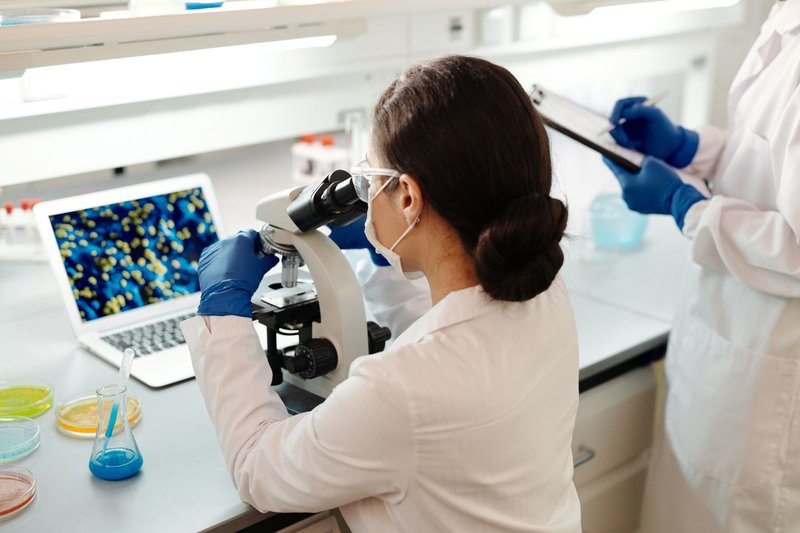
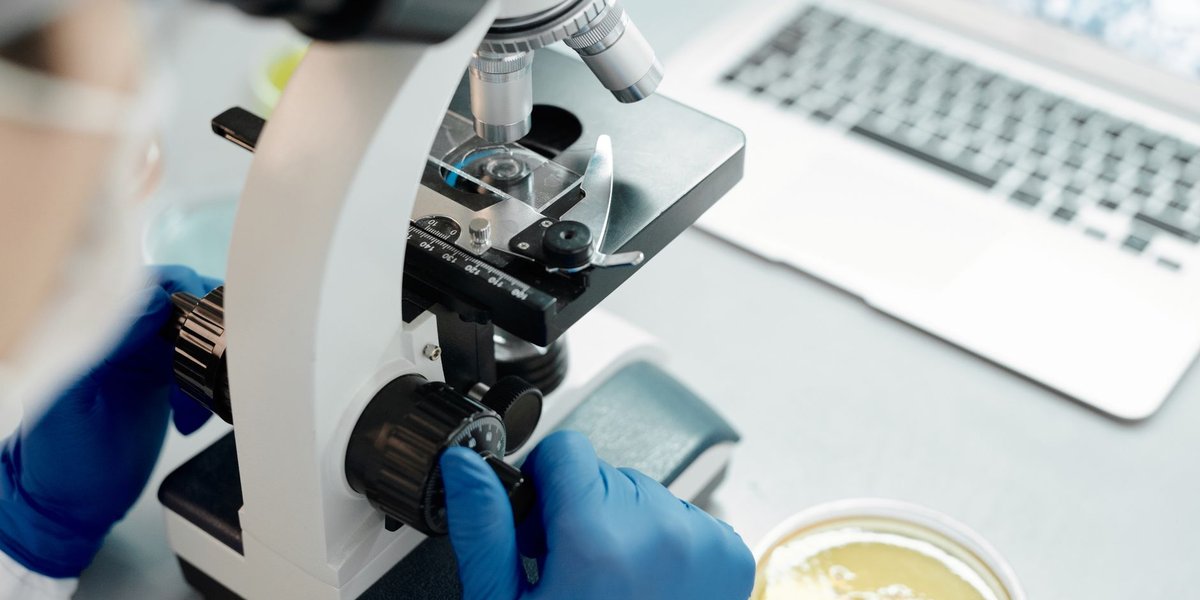
If Diarra is Mali’s most famous scientist, Ogobara “Ogo” Doumbo (1956–2018) may be its most consequential. A physician and parasitologist, Doumbo co-founded the Malaria Research and Training Centre (MRTC) in Bamako and turned it into one of the premier infectious-disease research institutions on the continent.
What made Doumbo different was the model. Plenty of malaria research about Africa happened in labs in Europe and the United States. Doumbo insisted it happen in Mali, run by Malians, in the villages where malaria actually kills children. MRTC ran landmark studies on transmission, drug resistance, malaria in pregnancy, and vaccine candidates, and crucially it trained hundreds of young African scientists who stayed in the field instead of leaving for richer labs.
That training pipeline is the legacy people underrate. When Doumbo died after a short illness in June 2018, the work didn’t collapse, because he’d spent thirty years making sure it wouldn’t. The Smithsonian’s feature on West African malaria scientists, profiling the team he built, exists largely because of the center he created.
Abdoulaye Djimdé: Running the Vaccine Trials Now
Abdoulaye Djimdé is the proof that Doumbo’s plan worked. A molecular biologist and pharmacist, Djimdé heads the Molecular Epidemiology and Drug Resistance Unit at MRTC and took over leadership of the center’s parasite research after Doumbo’s death.
His own specialty is tracking how the malaria parasite, Plasmodium falciparum, evolves resistance to the drugs meant to kill it. That’s not academic. When a frontline antimalarial starts failing, his kind of molecular surveillance is how the world finds out before the failures show up as dead children in clinics.
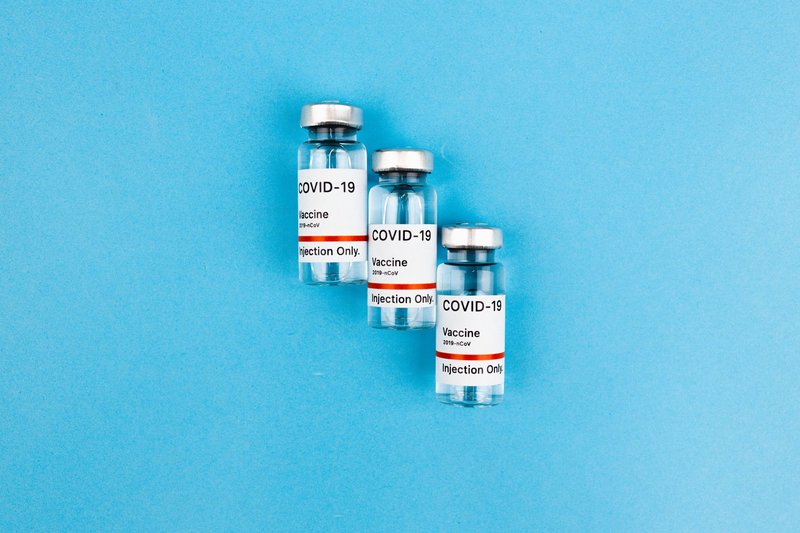
Right now Djimdé and his team are central to testing the R21/Matrix-M malaria vaccine. Mali is one of the phase 3 trial sites, part of a study enrolling thousands of young children across Mali, Burkina Faso, Kenya, and Tanzania to measure how well the vaccine holds up across different malaria seasons. After decades in which the vaccines that protected African children were trialed and approved far away, the ones being tested in Bamako are being run by a scientist born and trained in Mali.
The Wider Bench: MRTC and the Researchers Mali Trained
Single names are convenient for a list, but Mali’s real scientific output is a team sport, and most of it runs through MRTC. The center has produced a deep roster of Malian parasitologists, entomologists, immunologists, and clinicians whose names rarely make English-language headlines but who author the studies those headlines summarize.
A few patterns are worth naming:
- Entomology and vector control. Mali sits in some of the most intense malaria transmission on Earth, which made it a natural home for research on mosquito behavior, insecticide resistance, and bed-net effectiveness.
- Drug-resistance surveillance. Beyond Djimdé’s unit, MRTC has long fed data into the global picture of which antimalarials still work where.
- Training as export. Researchers trained in Bamako now work across West Africa and beyond, which means Mali’s scientific influence is larger than its own borders.
That reach is easiest to see in neighboring countries; the same pattern shows up just down the coast among the scientists born in The Gambia, where small populations still feed into the wider West African research network.
The honest gap: women scientists from Mali are badly underrepresented in the easily searchable record, in science generally and in English-language coverage specifically. That’s a reporting failure as much as a reality, and a future version of this list should fix it.
Why This List Looks the Way It Does
Notice the shape. Two fields dominate: spaceflight, through one extraordinary individual, and infectious-disease research, through an entire institution. That’s not an accident of who’s famous. It reflects where Mali’s scientific energy actually concentrated, one global outlier in astrophysics, and a sustained, homegrown program in the disease that matters most to the people living there.
Mali’s intellectual story didn’t start in 1997 with a rover on Mars or in the 1990s with a lab in Bamako. It started with scholars copying astronomy treatises by hand in Timbuktu, and the manuscripts that families risked their lives to save are the receipt. The scientists on this page are what that tradition looks like when it’s pointed at the modern world.