The Gambia is the smallest country on the African mainland — a thin strip of land hugging the Gambia River, surrounded almost entirely by Senegal. What it lacks in size, it has quietly been building in scientific output for decades, largely anchored by the MRC Unit The Gambia at the London School of Hygiene & Tropical Medicine, one of Africa’s oldest and most respected research centers, established in 1947.
That institution — and the culture of serious research it helped seed — produced many of the scientists on this list. Others found their path through international training, diaspora networks, and the kind of determination that turns limited resources into unexpectedly significant careers.
Here are 10 scientists born in The Gambia who’ve made real contributions to science.
Table of Contents
- 1. Tumani Corrah
- 2. Sidat Yaffa
- 3. Saikou Yahya Bah
- 4. Ousman Bajinka
- 5. Ahmadou Lamin Samateh
- 6. Abdoulaye Diabaté
- 7. Momodou Jasseh
- 8. Kalifa Bojang
- 9. Nfamara Jaiteh
- 10. Bakary Sonko
1. Tumani Corrah {#tumani-corrah}
Tumani Corrah is arguably the most internationally recognized Gambian scientist alive. A professor of medicine and infectious disease, he spent years at the MRC Unit The Gambia and later became a leading figure in HIV/AIDS, tuberculosis, and malaria research across sub-Saharan Africa. He was knighted in 2009 for services to medicine — one of very few African scientists to receive that recognition from the British Crown.
What makes his work particularly important is its focus on diseases that disproportionately kill people in low-income countries. His research on TB-HIV co-infection helped inform treatment protocols that are still in use across the region. He was also instrumental in positioning African scientists as capable leaders of their own research programs, not just field assistants to European investigators.
2. Sidat Yaffa {#sidat-yaffa}
Sidat Yaffa is one of West Africa’s most cited voices on climate-smart agriculture and land use. Based at the University of The Gambia, he has published extensively on how smallholder farmers in the Sahel can adapt to erratic rainfall, soil degradation, and shifting growing seasons — the exact pressures that threaten food security across the region.
His work sits at the intersection of agronomic science and climate policy. He has contributed to IPCC-adjacent working groups and collaborated with research networks across Senegal, Mali, and Guinea-Bissau. In a country where agriculture is the primary livelihood for most of the population, that kind of applied research has direct consequences.
3. Saikou Yahya Bah {#saikou-yahya-bah}
Saikou Yahya Bah is a bioinformatician whose research career has taken him across West Africa and into global computational biology networks. His work focuses on genomic data analysis related to infectious disease — using large-scale sequencing data to understand how pathogens spread, mutate, and respond to treatment.
Bioinformatics is a field where most African institutions have historically been excluded due to infrastructure and training gaps. Bah’s standing in this space — recognized in the 2025 AD Scientific Index — reflects both personal accomplishment and a broader shift toward African researchers leading computational science on the continent.
4. Ousman Bajinka {#ousman-bajinka}
Ousman Bajinka is a medical researcher and lecturer at the University of The Gambia with a focus on biomedical science, particularly the mechanisms of infectious diseases at the molecular level. His publication output spans virology, host-pathogen interactions, and medical education — unusual breadth for a researcher working within the resource constraints of a small West African university system.
He was also recognized in the 2025 AD Scientific Index, which ranks researchers by citation impact and scientific output. For a Gambian academic to appear on that index is notable — it requires genuine, measurable contribution to the global research literature, not just institutional affiliation.
5. Ahmadou Lamin Samateh {#ahmadou-lamin-samateh}
Ahmadou Lamin Samateh served as The Gambia’s Minister of Health but built his career as a public health physician and researcher first. His scientific work centered on improving health systems delivery and maternal and child health outcomes in sub-Saharan Africa.
He represents a type of scientist common in low-income countries: the researcher-administrator whose influence operates at both the bench and the policy table. His ability to translate clinical research into health policy made him an effective advocate for evidence-based governance in a country still building its health infrastructure.
6. Abdoulaye Diabaté {#abdoulaye-diabate}
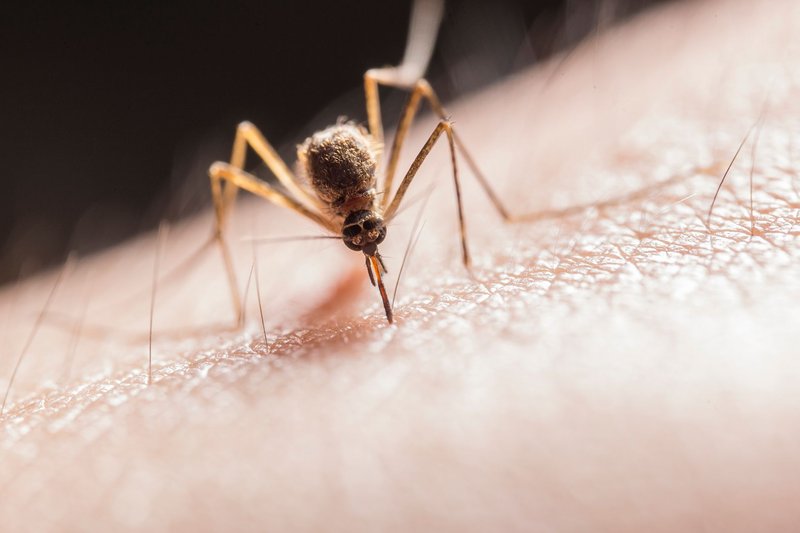
Abdoulaye Diabaté is a Gambian-born entomologist and malaria researcher whose career has been anchored at Institut de Recherche en Sciences de la Santé (IRSS) in Burkina Faso. He has become one of the foremost experts on mosquito behavior and vector control in West Africa, with specific expertise in Anopheles gambiae — the primary malaria-transmitting mosquito species.
His research has included work on genetic control approaches, including sterile insect technique and gene drive concepts — methods that aim to suppress mosquito populations at the genetic level rather than through repeated chemical application. That line of research has attracted significant attention from the Gates Foundation and international malaria control partnerships.
7. Momodou Jasseh {#momodou-jasseh}
Momodou Jasseh is an epidemiologist who has spent much of his career at the MRC Unit The Gambia, working on child and adolescent health in rural Gambian communities. His research focuses on mortality surveillance, vaccination efficacy, and the epidemiology of infectious diseases in resource-limited settings.
Surveillance work sounds less exciting than clinical trials, but it’s foundational — without good population-level data on who is dying from what, it’s impossible to allocate public health resources effectively. Jasseh’s contribution to the Gambian Health and Demographic Surveillance System (HDSS) has helped make The Gambia one of the better-documented low-income countries in terms of population health trends.
8. Kalifa Bojang {#kalifa-bojang}
Kalifa Bojang is a clinical researcher at the MRC Unit The Gambia with a long track record in malaria vaccine and drug trials. He has been a principal or co-investigator on multiple large-scale trials, including work related to the RTS,S malaria vaccine — the first malaria vaccine recommended by the WHO for broad use in children.
Vaccine trials conducted in The Gambia have historically been globally significant because the country provides a population with high natural malaria exposure — making it an important site for testing candidate vaccines under real-world transmission conditions. Bojang has been central to that work for decades.
9. Nfamara Jaiteh {#nfamara-jaiteh}
Nfamara Jaiteh is a social scientist and public health researcher who has published on malaria prevention, community health behaviors, and the social determinants of disease in The Gambia and the wider West African region. His work bridges quantitative epidemiology and qualitative community research — an approach that often produces more actionable findings than either method alone.
His research on bed-net use and household-level malaria prevention has contributed to understanding why interventions that work in clinical trials sometimes underperform in field conditions. That gap — between efficacy and effectiveness — is one of global health’s persistent problems, and Jaiteh’s work has helped map it.
10. Bakary Sonko {#bakary-sonko}
Bakary Sonko is an immunologist at the MRC Unit The Gambia whose research focuses on infant immune development and vaccine responses in early life. His work has particular relevance for understanding why some childhood vaccines are less effective in sub-Saharan Africa than they are in high-income countries — a discrepancy that has puzzled vaccine researchers for years and has significant implications for global immunization programs.
Sonko’s research has explored nutritional and environmental factors that shape immune competence in infants — contributing to a growing body of evidence that vaccine performance can’t be separated from the broader context of child health and early-life exposures.
The Larger Picture
These ten scientists didn’t emerge from nothing. The MRC Unit The Gambia provided a research infrastructure that most small low-income countries simply don’t have — a place where local scientists could be trained, employed, and mentored without having to permanently relocate to Europe or North America.
The University of The Gambia, established in 1999, has added a second institutional anchor, producing researchers like Yaffa and Bajinka who’ve built careers within the country. That matters: science built in a place tends to ask questions relevant to that place.
The Gambia still faces real challenges — brain drain is persistent, research funding is overwhelmingly foreign-sourced, and the domestic academic ecosystem is still developing. But the scientists on this list demonstrate that high-quality scientific work is being done there, and has been for generations.
33 Science covers the people, discoveries, and institutions shaping science around the world. For more profiles of scientists from underrepresented regions, explore the rest of the site.