Table of Contents
- The Quick Rankings
- United States
- China
- Russia
- India
- Japan
- Germany
- Canada
- France
- Brazil
- South Korea
- How Countries Are Counted
- The Bigger Picture
Counting power plants sounds straightforward until you realize there’s no single global registry that tracks all of them. What we do have is data from the International Energy Agency, the U.S. Energy Information Administration, and the IAEA — each covering different slices of the picture. Put it all together, and a clear hierarchy emerges.
The Quick Rankings
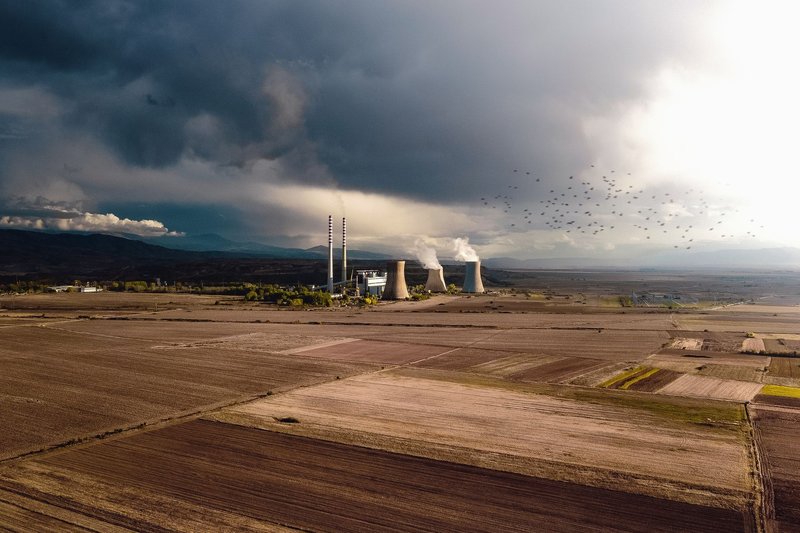
The countries leading in sheer number of power generating facilities — accounting for coal, gas, nuclear, hydro, solar farms, and wind installations — are almost entirely the same ones with the largest populations and highest industrial output. That’s not a coincidence.
| Country | Est. Total Installed Capacity (GW) | Notable Strength |
|---|---|---|
| China | ~3,300 | Solar, wind, coal, hydro |
| United States | ~1,300 | Natural gas, coal, nuclear |
| India | ~950 | Coal, solar expanding rapidly |
| Russia | ~280 | Hydro, nuclear, gas |
| Japan | ~340 | Gas, nuclear (partially offline) |
| Germany | ~260 | Wind, solar, gas |
| Canada | ~160 | Hydro dominant |
| France | ~140 | Nuclear dominant |
| Brazil | ~220 | Hydro dominant |
| South Korea | ~145 | Nuclear, coal, gas |
Note: Installed capacity figures are approximate and combine all generation types. Individual plant counts vary widely depending on whether small distributed installations (like rooftop solar arrays counted as “plants”) are included.
United States
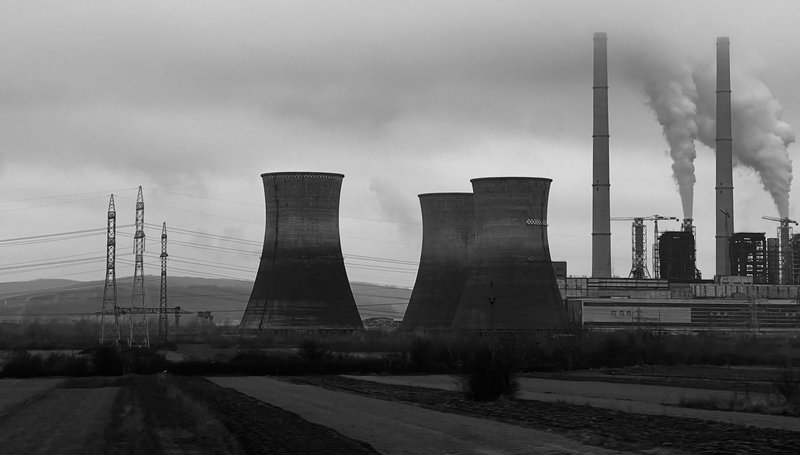
The U.S. has over 11,000 power plants when you include natural gas peakers, coal stations, nuclear facilities, large hydro dams, and utility-scale solar and wind farms. That number drops to roughly 6,000 if you filter for plants with significant generating capacity.
Natural gas dominates the fuel mix, accounting for around 43% of total generation. The country operates 93 commercial nuclear reactors — second only to France by share of grid — across 54 sites. The grid itself is massive and fragmented: three largely separate interconnections (Eastern, Western, and the Texas ERCOT grid), each with its own regulatory complexity.
The U.S. leads globally in natural gas power plant count because the shale revolution made gas cheap enough to displace coal at scale. Many older coal plants were converted or retired, while new combined-cycle gas plants came online across the Southeast and Great Plains throughout the 2010s.
China
China has added more power plant capacity in the last 20 years than any country in history. Its total installed capacity surpassed 3,000 GW in 2024, a figure that’s larger than the U.S., European Union, and India combined.
The scale is genuinely hard to process. China completes roughly one large coal plant every two weeks in some years — while simultaneously installing more solar and wind capacity than the rest of the world put together. It has 56 operating nuclear reactors and another 20+ under construction. The Three Gorges Dam alone generates as much electricity as about 18 standard coal plants.
Wind and solar additions have been accelerating dramatically. In 2023, China added over 200 GW of solar alone — more than its total solar capacity was in 2021.
Russia
Russia runs one of the world’s most geographically distributed grids, which makes sense given the country spans 11 time zones. Hydroelectricity accounts for about 20% of total output, with huge stations on the Volga, Yenisei, and Ob river systems.
The country operates 36 nuclear power units and exports reactor technology internationally through Rosatom, making it a significant force in global nuclear plant construction. Gas-fired thermal plants handle the bulk of the rest — not surprising given Russia’s position as one of the world’s largest natural gas producers.
India
India is in the middle of one of the most aggressive energy buildouts happening anywhere. Coal still dominates (about 70% of generation), and the country has a large fleet of thermal plants in various states of age and efficiency. But the shift is underway: India has set targets for 500 GW of non-fossil capacity by 2030.
Solar expansion has been particularly rapid in Rajasthan and Gujarat, where utility-scale solar farms are being built at a pace that rivals China. India currently operates 22 nuclear reactors, with several more under construction.
The number of individual power plants in India is hard to pin down precisely because it includes thousands of small captive power plants operated by industrial facilities — steel mills, chemical plants, textile factories — that generate electricity for internal use and sometimes sell surplus to the grid.
Japan
Japan’s power plant situation is unusual because of what happened in 2011. Before the Fukushima disaster, nuclear accounted for roughly 30% of the country’s electricity. Most of Japan’s 33 operable reactors went offline after the disaster and stayed that way for years. The country pivoted hard to LNG imports and ramped up gas-fired capacity to compensate.
As of 2024, about 12 reactors have restarted, with more approvals pending. Japan has a large installed base of gas and coal plants that exist specifically to cover the nuclear gap — a fleet that wouldn’t be as large if the reactors had stayed online.
Germany
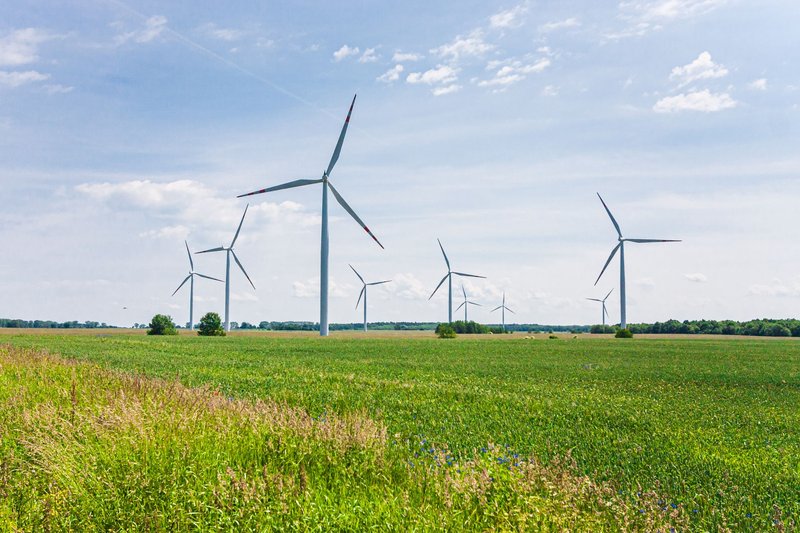
Germany closed its last three nuclear plants in April 2023, a decision that was controversial from an emissions standpoint. The country now relies heavily on natural gas, hard coal, and an enormous renewable fleet — roughly 70 GW of solar and over 65 GW of wind capacity.
Germany has one of the world’s largest per-capita renewable energy infrastructures. The Energiewende (energy transition) policy, which has been running since the early 2000s, created financial incentives that pushed thousands of wind turbines and solar installations onto the grid. Germany also has an unusually large number of small biomass and biogas plants distributed across its agricultural regions.
Canada
Canada generates about 60% of its electricity from hydropower — one of the highest shares in the world for a large economy. The province of Quebec alone has more hydro capacity than most countries. Massive facilities like the Robert-Bourassa generating station and the Churchill Falls plant in Labrador rank among the largest hydro installations in the Western Hemisphere.
The remaining generation comes from nuclear (primarily in Ontario), natural gas, and a growing wind fleet in the prairies. Coal has been largely phased out federally, though some provinces continue operating thermal plants.
France
France runs the most nuclear-intensive grid of any major economy. Nuclear power accounts for roughly 70% of its total generation — a policy choice made in the 1970s after the oil crisis, when France decided to minimize fossil fuel dependence by building a large standardized reactor fleet.
EDF operates 56 reactors across 18 nuclear power stations. In raw plant count, France isn’t near the top — it has relatively few coal or gas plants because nuclear covers the baseload. But by nuclear reactor count, France is second only to the United States, and by nuclear share of the grid, it’s first by a wide margin.
France has also been expanding its offshore wind capacity and recently committed to building six new EPR2 reactors, with plans for more beyond that.
Brazil
Brazil is one of the world’s most hydro-dependent large economies. The Itaipu Dam on the Brazil-Paraguay border is one of the largest operational hydroelectric plants in the world by annual generation. The Belo Monte complex in the Amazon, when fully operational, adds another 11 GW. Brazil’s generation profile reflects the country’s broader endowment of natural resources, which include some of the world’s largest freshwater river systems.
The challenge for Brazil is that this hydro dependency creates vulnerability: drought years — which have become more common — can force the country to fire up expensive natural gas and diesel peakers to cover the shortfall. This has driven investment in wind (particularly in the northeast, where consistent trade winds blow) and solar.
South Korea
South Korea has a relatively small geographic footprint but high energy intensity from its manufacturing and semiconductor industries. The country relies on nuclear for about 30% of its electricity, coal for another 30%, and gas for most of the rest. It operates 26 nuclear reactors.
Unlike Germany, South Korea reversed a previous decision to phase out nuclear and is now expanding its reactor fleet, partly on energy security grounds and partly because of the high cost of imported LNG.
How Countries Are Counted
The number of “power plants” a country has is genuinely ambiguous, which is why you’ll see wildly different figures depending on the source. The key variables:
What counts as a “plant”? A large coal station is obviously one plant. But is a 10 MW rooftop solar installation on a warehouse a plant? What about a wind farm with 200 individual turbines? The EIA counts utility-scale facilities (1 MW and above) as individual plants, but other datasets aggregate turbines into projects.
Nameplate capacity vs. actual output. A country can have thousands of small solar installations with enormous combined capacity but relatively modest actual annual generation due to capacity factors (solar panels produce full power only when the sun shines).
Grid-connected vs. captive. Industrial self-generation (plants that power a factory) may or may not be counted depending on the dataset.
The Bigger Picture
The countries with the most power plants are also, almost without exception, the countries with the largest economies and populations. China and the United States account for a disproportionate share of global installed capacity — together, probably 45–50% of total global generation capacity. According to the IEA, global electricity demand is projected to roughly double by 2050, driven primarily by electrification of transport and heating.
The composition of those plants is shifting fast. Solar and wind additions have outpaced fossil fuel additions globally every year since 2019. Countries like India, which currently has a coal-heavy fleet, are building out renewables at a pace that could substantially change their generation mix within a decade.
What won’t change is the basic geography: large, industrialized, populous nations will continue to have the most power plants, because electricity demand tracks closely with economic activity and standard of living. The question isn’t who will lead in plant count — it’s what fuels those plants will use.