Argentina has more than 50 volcanoes, but most of them are extinct cones that haven’t done anything for tens of thousands of years. The number that actually matters — volcanoes that have erupted in recorded history or still vent gas and shake the ground — is much smaller. Around half a dozen, depending on where you draw the line between “active” and “dormant.”
That distinction trips people up. A volcano isn’t active just because it looks dramatic. It’s active because it has erupted recently in geological terms (roughly the last 10,000 years) or shows ongoing signs of life: seismic swarms, gas plumes, ground deformation. By that standard, here’s what’s genuinely live in Argentina right now, where each one sits, and whether you can get anywhere near it.
Table of Contents
- Why Argentina has volcanoes at all
- Quick comparison table
- Copahue
- Planchón-Peteroa
- Tupungatito
- Lanín
- Llullaillaco
- San José
- Can you actually visit them?
- Monitoring and safety
TLDR
The most active volcano in Argentina is Copahue, on the Neuquén–Chile border, which erupted as recently as 2024 and is closely monitored. Planchón-Peteroa and Tupungatito are also genuinely active and sit on the Chilean frontier. Lanín is a stunning, climbable cone that’s technically active but quiet. Llullaillaco, at 6,739 m, is the highest historically active volcano on Earth. Most of these straddle the Chile border because that’s where the active volcanic arc runs — most of Patagonia and the Pampas are volcano-free.
Why Argentina has volcanoes at all
Argentina’s volcanoes exist because the Nazca Plate is sliding underneath the South American Plate along the Pacific coast. That subduction melts rock at depth, and the magma rises to build the Andes — including its line of active volcanoes. This is the same engine that powers the much larger volcanic chains in neighboring Chile.
The catch for Argentina is geography. The active volcanic arc runs right along the spine of the Andes, which is the international border. So Argentina’s truly active volcanoes are almost all border volcanoes, shared with Chile, strung along the western edge of provinces like Neuquén, Mendoza, and Salta. Head east into Patagonia or the central plains and you’ll find old, eroded volcanic fields like the Payún Matrú complex, but nothing that’s about to erupt.
That’s why the count feels slippery. Wikipedia’s list of volcanoes in Argentina runs long, but most entries are dormant or extinct. Nearly all the active ones are stratovolcanoes — the classic steep, layered cones that dominate any list of the world’s prominent volcanic mountains — and they’re the short list that volcanologists actually watch.
Quick comparison table
| Volcano | Elevation | Type | Last eruption | Region / Border |
|---|---|---|---|---|
| Copahue | 2,997 m | Stratovolcano | 2024 | Neuquén / Chile |
| Planchón-Peteroa | 4,107 m | Stratovolcano complex | 2018–2019 | Mendoza / Chile |
| Tupungatito | 5,682 m | Stratovolcano | 1986 | Mendoza / Chile |
| San José | 5,856 m | Stratovolcano | 1960 | Mendoza / Chile |
| Lanín | 3,776 m | Stratovolcano | ~560 BCE (Holocene) | Neuquén / Chile |
| Llullaillaco | 6,739 m | Stratovolcano | 1877 | Salta / Chile |
Copahue — the one that’s actually erupting
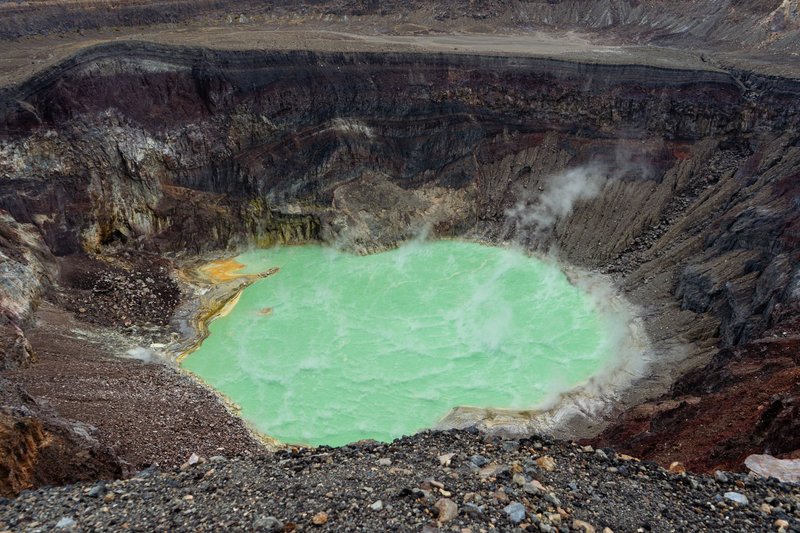
Copahue is the headline. It’s a 2,997-meter stratovolcano on the Neuquén–Biobío border with a crater lake that turns acid-green from the dissolved sulfur and chlorine churned up from below. When people ask which volcano in Argentina is active, this is the honest answer: it has erupted repeatedly in the 21st century, with significant ash-and-gas eruptions in 2012, 2013, and again with renewed activity through 2024.
What makes Copahue distinctive is the hot-springs town at its foot — Caviahue-Copahue — built specifically around the volcano’s geothermal output. People soak in sulfurous mud baths fed by the same plumbing that occasionally throws ash into the sky. The Smithsonian’s Global Volcanism Program tracks Copahue as one of the most consistently restless volcanoes in the southern Andes. When it acts up, Argentine and Chilean authorities issue cross-border alerts and sometimes evacuate the spa town.
If you want a volcano that earns the word “active,” Copahue is it.
Planchón-Peteroa — the quiet ash-thrower
Planchón-Peteroa is a complex of overlapping cones straddling the Mendoza–Maule border, topping out around 4,107 meters. It doesn’t produce lava fountains or big dramatic eruptions. What it does is grumble: phreatic explosions that punch through groundwater and crater glaciers, sending up ash plumes without much warning. It had exactly this kind of activity in 2018 and 2019, dusting nearby areas with fine gray ash.
That style of eruption — relatively small but unpredictable — is the dangerous kind for aviation and for the handful of people who venture into the high valleys around it. It’s remote, glaciated, and not a casual destination.
Tupungatito — Santiago’s quiet neighbor
Tupungatito sits near the much taller (and extinct) Tupungato, in the high Andes on the Mendoza–Chile border at 5,682 meters. It’s one of the closest active volcanoes to Santiago, which is why Chilean monitoring keeps a close eye on it. It last erupted in 1986 with minor ash emissions, and it continues to vent gas from its summit craters.
For Argentina, Tupungatito matters mostly as a border presence. It’s deep in inhospitable high-altitude terrain — there’s no road, no village, no tour. It’s a name on the monitoring lists rather than a place anyone visits.
Lanín — the beautiful one you can climb
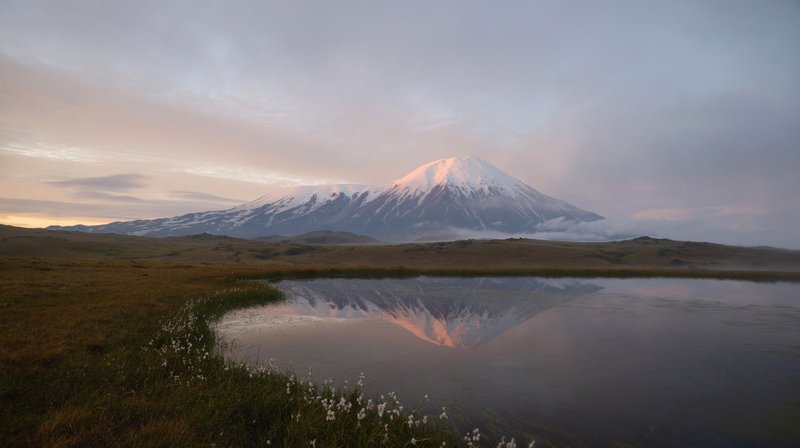
Lanín is the postcard. A near-perfect 3,776-meter cone draped in snow and ice, it anchors two national parks — Lanín on the Argentine side, Villarrica on the Chilean — and it’s the volcano most Argentines picture when they think of the word. It’s classified as active because its last eruptions fall within the Holocene, but it’s been quiet for a very long time and shows no current signs of unrest.
Which is exactly why it’s the one you can actually climb. From the Argentine side, guided ascents leave from the Mamuil Malal pass area, and the route is a serious two-day high-altitude trek requiring crampons, an ice axe, and a registered guide — but no technical climbing. The summit gives you a 360-degree view across the Andean lake district. Among Argentina’s active volcanoes, Lanín is the one built for visitors rather than monitoring stations.
Llullaillaco — the highest active volcano on Earth
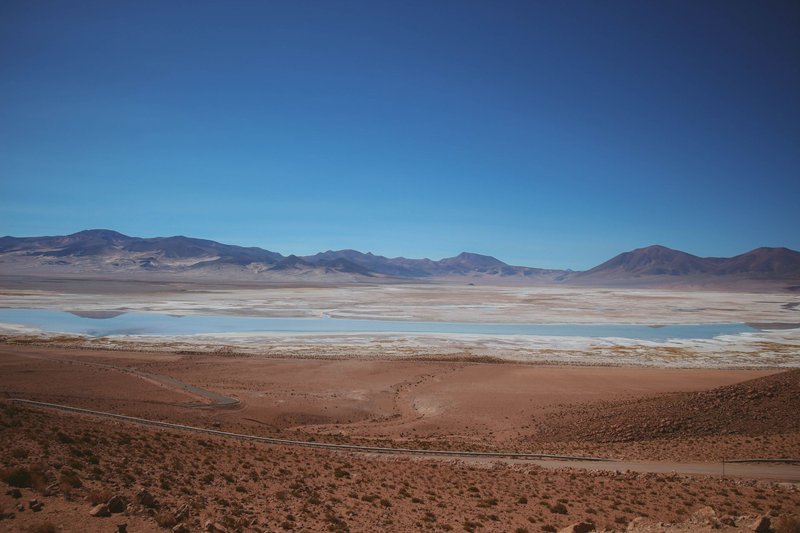
Llullaillaco, on the Salta–Antofagasta border, is the record-holder: at 6,739 meters, it’s the highest historically active volcano in the world. Its most recent confirmed eruptions came in the 19th century, with the last in 1877. It sits in the Puna de Atacama, one of the driest, highest, most lifeless deserts on the planet.
Llullaillaco is also archaeologically famous. In 1999, a team found three remarkably preserved Inca child mummies near its summit — the “Children of Llullaillaco,” part of a capacocha sacrifice — now studied and displayed in Salta. The combination of extreme altitude, brutal aridity, and that history makes it one of the most singular volcanoes anywhere, even if it’s far too remote and demanding for casual visitors. Climbing it is a serious high-altitude mountaineering expedition.
San José — the border stratovolcano
San José rounds out the list at 5,856 meters on the Mendoza–Chile border. It’s a stratovolcano with documented historical eruptions, the last around 1960, and it still vents fumarolic gas. Like Tupungatito and Planchón-Peteroa, it’s a high, remote frontier volcano — significant to monitoring agencies, irrelevant as a destination. It’s here for completeness: it’s part of the genuinely active set, not a dormant cone.
Can you actually visit them?
Short version: one of them, comfortably.
- Lanín is the visitable one. Guided summit climbs and lower-altitude hikes run out of Lanín National Park near Junín de los Andes. You’ll want a permit, a guide, and decent fitness, but it’s an established trek, not an expedition.
- Copahue you can get close to — not to climb during unrest, but the Caviahue-Copahue thermal resort sits right at its base, and in calm periods there are guided walks up toward the crater rim. Check current alert status before going; access closes when activity spikes.
- Llullaillaco is technically climbable but it’s a remote, high-altitude expedition launched from the Salta puna, not a weekend trip.
- Planchón-Peteroa, Tupungatito, and San José are essentially off-limits to ordinary travelers — high, glaciated, roadless, and on a contested-feeling stretch of border. These are for the monitoring networks, not tourism.
If your goal is to stand on or near an Argentine active volcano, point yourself at the Neuquén lake district: Lanín to climb, Copahue to soak beside.
Monitoring and safety
Argentina’s volcanoes are watched by SEGEMAR (the national geological survey) together with Chile’s SERNAGEOMIN, since most of the dangerous ones are shared. Because so many sit directly on the border, alerts are usually coordinated between both countries, and the USGS and Smithsonian feed into the global picture for aviation and research.
The practical takeaway: Argentina is not a country at constant volcanic risk. The active volcanoes cluster along a single western line, far from the major population centers in Buenos Aires and the Pampas. Copahue is the one to keep an eye on — it’s the most likely to erupt in any given year, and the only one with a town close enough to feel it. Before visiting any of them, check the current alert level, because “active” and “erupting today” are not the same thing, and with these volcanoes the gap between the two can close fast.