Here’s the surprising part: Uzbekistan, a country the size of California with deserts, mountains, and one of the worst ecological disasters on the planet, has zero endemic mammals. No endemic birds either. No endemic amphibians. For a place this large and this geographically varied, that’s almost weird.
But scroll down a level — to the things most people walk right past — and the picture flips. The country hosts geckos that exist in exactly one valley. Stone loaches swimming in a single river system. Spiders, beetles, and roughly seven hundred plant species that grow nowhere else on Earth. Endemism in Uzbekistan isn’t about charismatic megafauna. It’s about the small, the overlooked, and the geologically stranded.
This guide walks through what’s actually endemic to Uzbekistan, why the big animals didn’t make the cut, and where the real biological treasure is hiding.
Table of Contents
- The Quick Answer
- Why No Endemic Mammals or Birds?
- Endemic Reptiles: The Fergana Geckos
- Endemic Fish
- Endemic Invertebrates: Spiders and Insects
- Endemic Plants
- The Fergana Valley: A Biodiversity Island
- What Threatens These Species
- The Takeaway
The Quick Answer
If you just want the count, here it is.
| Taxonomic group | Endemic species | Notable example |
|---|---|---|
| Mammals | 0 | — |
| Birds | 0 | — |
| Amphibians | 0 | — |
| Reptiles | ~4 | Alsophylax ferganensis (Fergana gecko) |
| Fish | A handful | Endemic stone loaches |
| Insects | ~30 | Various beetles, weevils |
| Arachnids | ~27 | Endemic spiders |
| Plants | ~700+ | Juniper-belt and saxaul flora |
The vertebrate story is thin. The invertebrate and plant story is rich. That split tells you almost everything about how endemism works in Central Asia, and we’ll get to why in a moment.
Why No Endemic Mammals or Birds?
The short version: Uzbekistan doesn’t have an ecosystem of its own.
Endemism — a species being found in one place and nowhere else — needs isolation. An island, a mountain range no animal can cross, a lake cut off from every other lake. The species gets trapped, breeds among itself for thousands of generations, and drifts into something genetically distinct.
Uzbekistan has none of that at the scale a mammal or bird operates. The country shares all six of its ecoregions — the Kyzylkum desert, the Tian Shan and Pamir-Alai foothills, the floodplains of the Amu Darya and Syr Darya — with Kazakhstan, Turkmenistan, Tajikistan, and Kyrgyzstan. The Kyzylkum doesn’t stop at a border; it bleeds into Turkmenistan. A saiga antelope or a desert lark doesn’t recognize the line on the map, and more importantly, neither does evolution.
A bird can fly across the Tian Shan. A wolf can walk from the Pamirs into Tajikistan. For a large, mobile animal, Central Asia is one connected stage. So while Uzbekistan has plenty of rare and threatened species — the saiga, the goitered gazelle, the markhor — they’re shared with neighbors, not exclusive. That’s the difference between rare and endemic, and it trips up a lot of “wildlife of Uzbekistan” articles. The same logic plays out next door, where the endemic species of neighboring Kyrgyzstan cluster in the country’s high mountain pockets rather than its open, shared lowlands.
The animals that get stranded are the ones that can’t travel: a gecko that lives under specific rocks, a fish locked in one drainage, a beetle tied to one plant. Small range, small body, big endemism.
Endemic Reptiles: The Fergana Geckos
This is where it gets genuinely exciting, because some of these species were described to science only recently.
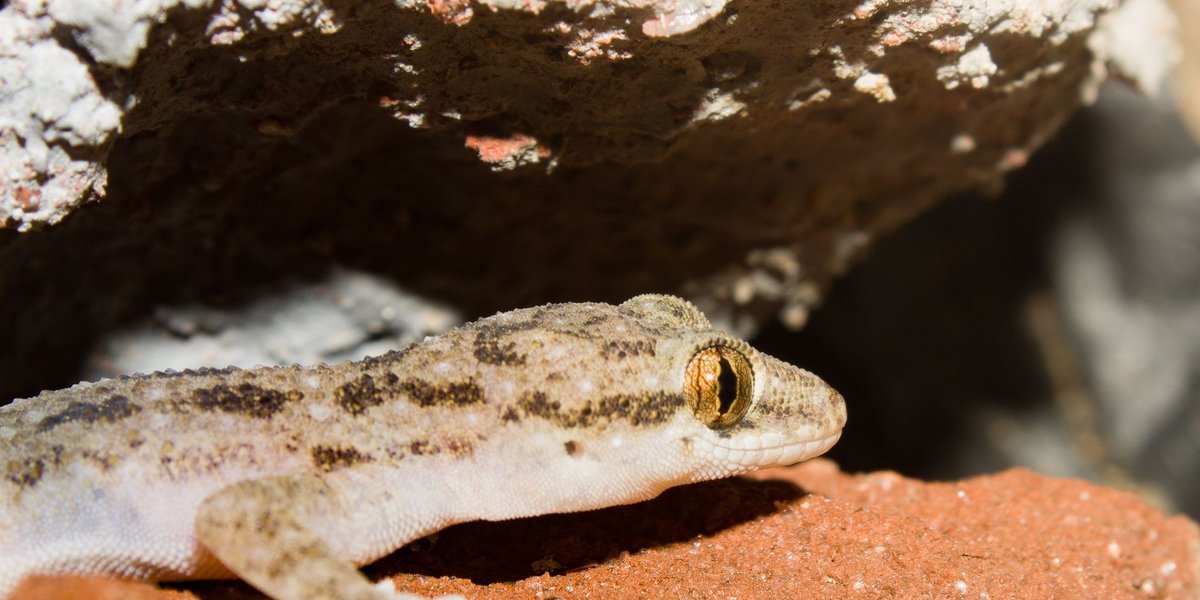
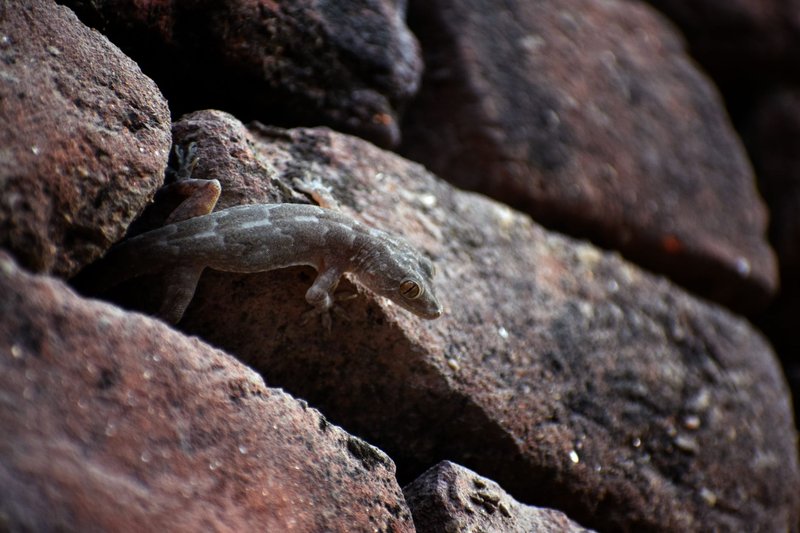
The Fergana Valley is home to Alsophylax ferganensis, the Fergana even-fingered gecko, a small nocturnal lizard adapted to the valley’s clay and loess soils. It belongs to a genus of tiny ground geckos built for arid Central Asia — pale, delicate, active after dark, and easy to miss unless you’re looking with a headlamp.
For years the gecko populations in the Fergana Valley were lumped in with widespread Central Asian species. Then closer genetic and morphological work split them apart, revealing that what looked like one widespread gecko was actually several narrowly distributed ones — including forms restricted to the Uzbek portion of the valley. A 2023 study in the journal ZooKeys formally described new Alsophylax species from the region, including taxa named in the emilia and related lineages, confirming that the Fergana Valley’s herpetofauna was more endemic and more fragmented than anyone had documented. You can read the peer-reviewed work on Fergana Valley herpetofauna for the full taxonomic detail.
That’s the kind of discovery that should reframe how you think about Uzbek wildlife. The endemics aren’t relics we’ve known about for a century. Some were hiding in plain sight, misidentified, until the last few years. There are almost certainly more.
In total, Uzbekistan counts roughly four endemic reptile species, nearly all of them small lizards or geckos tied to specific desert or valley microhabitats. No endemic snakes of note, no endemic tortoises — just these low-profile specialists.
Endemic Fish
Fish are natural endemics because water systems trap them. A fish in the Syr Darya can’t walk overland to the Amu Darya, and if a population gets isolated in a tributary, it has nowhere to go.
Uzbekistan’s endemic fish are mostly stone loaches — small, bottom-dwelling fish of the genus Triplophysa and its relatives, the kind that hug the gravel in cold mountain streams. Several are restricted to single river systems draining the Tian Shan and Pamir-Alai. They’re not flashy. Most are a few centimeters long, mottled brown, and look like every other loach to the untrained eye. But genetically they’re locked to their home drainage.
The brutal irony is that Uzbekistan’s fish endemism sits inside one of the planet’s most damaged aquatic regions. The Aral Sea — once the fourth-largest lake on Earth — has all but vanished, and the rivers that feed it have been bled dry by cotton irrigation. The United Nations has documented the Aral Sea’s collapse as one of the most dramatic human-caused environmental disasters in modern history. Endemic fish in a country whose signature water body is dying is a precarious thing.
Endemic Invertebrates: Spiders and Insects
Here’s where the real numbers live. Uzbekistan hosts roughly 27 endemic arachnids and around 30 endemic insects — far more than all its endemic vertebrates combined.
This makes sense once you accept the isolation logic. A spider’s entire world might be one hillside. A flightless beetle tied to a single host plant might never travel more than a few hundred meters in its life. For an animal that small, the gaps between mountain ranges and the patches of specialized desert habitat are functionally oceans. They get stranded constantly.
The endemic insects skew toward beetles and weevils — groups notorious worldwide for tight host-plant relationships and explosive local diversification. The endemic spiders are scattered across families, often described from just a handful of specimens collected in one locality. Most of these species don’t have common names. They have a Latin binomial, a type locality, and a line in a checklist. That’s the honest texture of invertebrate endemism: vast, real, and almost entirely unfamous.
If anyone ever tells you Uzbekistan has “no unique wildlife,” point them here. The country’s biological signature is written in chitin.
Endemic Plants
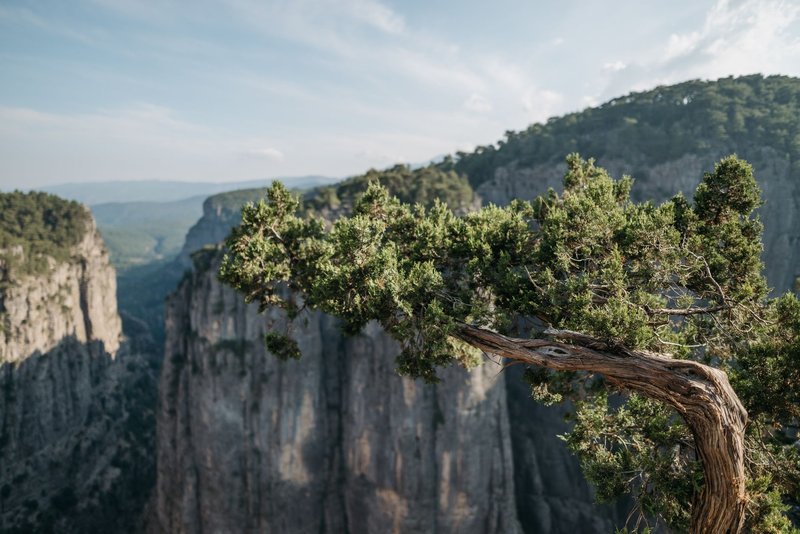
Plants are the headline act. Uzbekistan has roughly 3,700 native plant species, and an estimated 20% are endemic to the country or the immediate region — that’s somewhere north of 700 plants found nowhere else. If you want the species-by-species breakdown, there’s a full catalog of the endemic plants of Uzbekistan covering the desert, steppe, and mountain flora named here.
Several patterns drive it:
- Juniper-belt flora. The mid-elevation slopes of the Tian Shan and Pamir-Alai carry forests of archa (Central Asian juniper). The understory and the specialized plants of this belt include numerous narrow endemics, isolated by elevation the way island species are isolated by water.
- Saxaul and desert specialists. The Kyzylkum desert hosts plants adapted to extreme salinity and heat — saxaul shrubs and a suite of salt-tolerant herbs, some with very limited ranges.
- Mountain microclimates. Tight valleys and isolated massifs create pockets where a single species can diverge from its lowland cousins.
Tulips deserve a special mention. Central Asia, including Uzbekistan, is part of the wild tulip’s ancestral homeland, and several wild tulip species in the region are narrowly distributed. The cultivated tulips that built the Dutch flower trade trace back to wild ancestors from exactly this part of the world — a connection Kew Gardens has documented in its work on tulip origins. The flower the Netherlands is famous for is, at its root, a Central Asian mountain plant.
The Fergana Valley: A Biodiversity Island
One place keeps coming up, and it deserves its own section.
The Fergana Valley is a roughly bowl-shaped lowland ringed almost entirely by mountains — the Tian Shan to the north and east, the Pamir-Alai to the south. The only real opening is a narrow gap to the west where the Syr Darya exits. Geographically, it behaves like an island. Surrounded by high ground, with a distinct climate and soil regime, it’s exactly the kind of enclosed basin where species get trapped and diverge.
That’s why the recently described geckos came from here, and it’s why the valley keeps yielding surprises. An animal that can’t cross a 3,000-meter ridge is, for evolutionary purposes, living on an island in a sea of rock. Give it enough time, and it becomes something new. The same mountain-locked pattern shapes the endemic plants of neighboring Tajikistan, where well over 90% of the country sits above 1,000 meters and elevation does the isolating work.
The valley is also one of the most densely populated agricultural regions in all of Central Asia, split between Uzbekistan, Kyrgyzstan, and Tajikistan and packed with cotton fields and orchards. So the same isolation that created the endemics now squeezes them — pristine habitat is scarce, and what remains is fragmented by farmland. It’s a biodiversity island under intense pressure.
What Threatens These Species
The forces working against Uzbekistan’s endemics are blunt and well known.
Water diversion. The Soviet-era decision to irrigate cotton on a massive scale drained the Amu Darya and Syr Darya and killed the Aral Sea. Endemic fish lose their drainages; wetland and riparian plants lose their footing.
Habitat conversion. The Fergana Valley and other fertile lowlands are wall-to-wall agriculture. Geckos, beetles, and ground flora don’t compete well with cotton.
Thin protection. Many of these species — especially the invertebrates and the newly described reptiles — have no formal conservation status because no one has assessed them. You can’t protect what isn’t on a list, and a huge share of Uzbekistan’s endemic invertebrates have never been evaluated by the IUCN Red List. Researchers working in the region have repeatedly called for expanded protected areas and proper assessments, particularly for the Fergana herpetofauna.
The pattern is familiar across Central Asia: the megafauna gets the attention and the funding, while the truly irreplaceable species — the ones that exist in exactly one valley — go uncounted.
The Takeaway
Uzbekistan breaks the usual expectation. There are no endemic mammals to put on a poster, no endemic eagle for the national flag. By the standard a tourist brochure cares about, the country looks unremarkable.
But endemism doesn’t care about size or charisma. It rewards isolation, and Central Asia isolates the small things beautifully: geckos in a mountain-ringed valley, loaches in a single river, hundreds of plants stranded by elevation and salt. Some of these species were named to science in the last few years. Plenty more are surely waiting in the Fergana Valley and the juniper belt, undescribed, sitting in exactly one place on Earth.
That’s the real story of endemic species in Uzbekistan. Not the animals you’d photograph on a safari — the ones you’d need a headlamp, a net, and a very good field key to find.