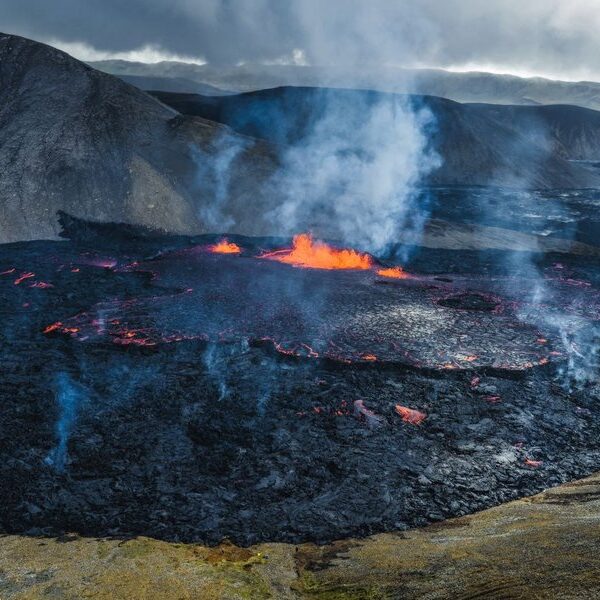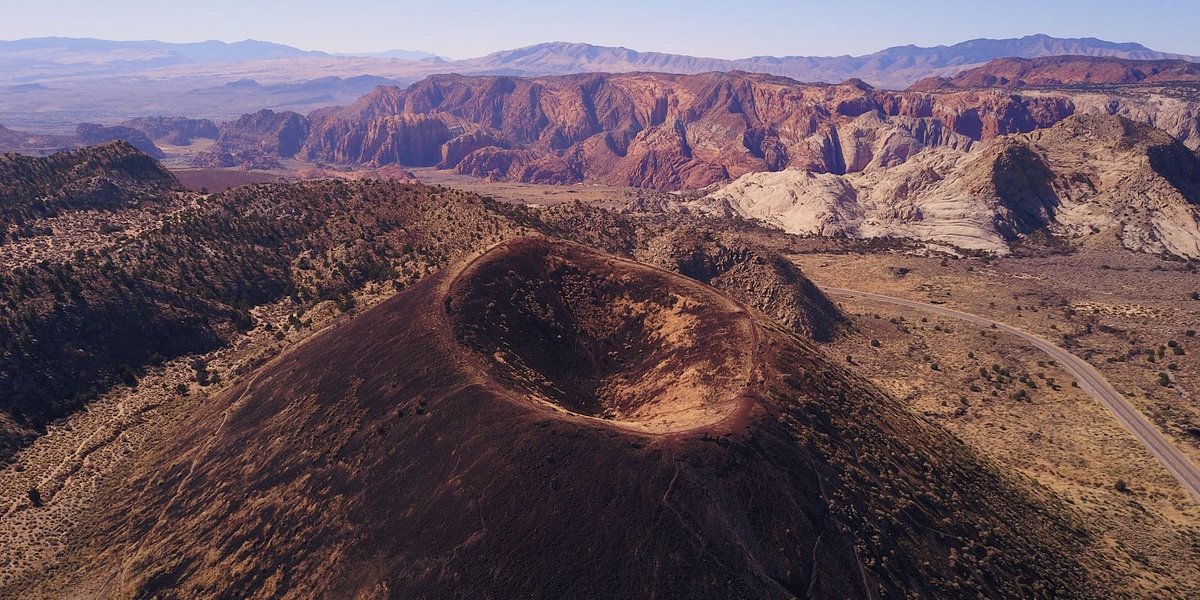
Short answer: no, Bulgaria has no active volcanoes. Nothing has erupted here in millions of years, and nothing is going to. So if you searched this hoping to catch lava, sorry.
The longer answer is more interesting. Bulgaria sits on a chunk of crust that got crushed, folded, and torn apart as the African plate ground north into Europe. That collision built the country’s mountains, and for a stretch of roughly 80 to 30 million years, it built volcanoes too. Those volcanoes died long ago. But their skeletons are everywhere once you know what to look for: a pyramid-shaped hill in a river gorge, the hexagonal stone columns the locals carved into tombstones, the dark cliffs above Sofia where the city goes to ski.
This is the full list of what’s left, where to find it, and what you’re actually looking at when you get there.
Contents
- Are there active volcanoes in Bulgaria?
- A 60-second geology primer
- 1. Kozhuh — Bulgaria’s textbook volcano
- 2. Adatepe — the columnar-jointed quarry
- 3. Vitosha — Sofia’s volcanic-plutonic giant
- 4. The Eastern Rhodope volcanic zone
- 5. Srednogorie & the Chelopech-Panagyurishte belt
- 6. Bulgaria’s volcanic caves
- Can you actually visit these?
Are there active volcanoes in Bulgaria?
No active volcanoes. No dormant ones either, in the technical sense — “dormant” implies a volcano that could plausibly wake up, and none of Bulgaria’s qualify. Every volcanic feature in the country is extinct, with its last eruptions dating to the Cretaceous and Paleogene periods, tens of millions of years before humans existed.
Bulgaria isn’t on a current plate boundary that produces magma, which is why. The country does get earthquakes — the 1904 Krupnik quake was one of Europe’s strongest of the 20th century — but seismic activity and volcanism aren’t the same thing. Those quakes come from faults still adjusting under the Balkans, not from rising magma.
So the volcanoes here are geology, not geography you’d evacuate from. Think of them as fossils made of rock instead of bone.
A 60-second geology primer
You’ll see two kinds of “volcanic” rock on this list, and the difference matters for what each site looks like.
Volcanic (extrusive) rock cooled fast, at or near the surface, after magma erupted as lava or ash. It’s fine-grained because crystals didn’t have time to grow. Andesite and rhyolite — the two names you’ll bump into most in Bulgaria — are this type.
Plutonic (intrusive) rock cooled slowly, deep underground, in a magma chamber that never reached the surface. It’s coarse-grained, full of visible crystals. Granite is the famous example. Over millions of years, erosion strips away everything above it, and the hardened chamber gets exposed as a mountain.
A few Bulgarian sites — Vitosha especially — are technically “volcano-plutonic,” meaning you can see both the erupted material and the frozen plumbing underneath. That’s geologically rich. It also means calling them “volcanoes” is a bit loose, but it’s the honest shorthand.
One more term worth knowing: columnar jointing. When a thick lava flow cools and contracts, it cracks into regular polygonal columns, usually five or six sided. You’ve seen the famous version at Giant’s Causeway in Ireland. Bulgaria has its own, and people have been quarrying it for centuries.
1. Kozhuh — Bulgaria’s textbook volcano
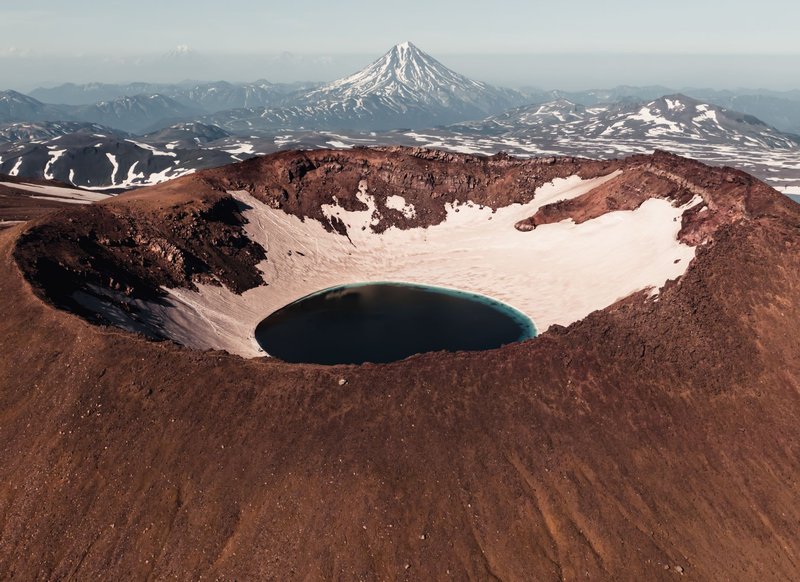
If you want the one site that most clearly looks like a volcano, go to Kozhuh. It’s a roughly 281-meter pyramid of hill rising out of the flat Petrich valley in the far southwest, near the Greek border and the village of Rupite.
Kozhuh is an extinct volcano of Pliocene-to-Neogene age, built mostly of trachyte and andesite — lavas that erupted here several million years ago. What makes it a destination rather than just a lump of rock is everything around it. Hot mineral springs bubble up at its base, a leftover of the deep heat that once fed the volcano, and the water reaches scalding temperatures. The hill is riddled with caves, some of them volcanic, and it’s a protected area for the rare reptiles and birds that like the warm, dry microclimate.
There’s a cultural layer too. The Bulgarian mystic Baba Vanga lived at Rupite at the foot of Kozhuh and built a church there; the spot draws a steady stream of visitors who come for reasons that have nothing to do with geology. The ruins of the Roman city of Heraclea Sintica sit nearby. So Kozhuh ends up being volcano, spa, pilgrimage site, and archaeological dig stacked on one hill.
Bring water and decent shoes. The climb is short but exposed, and in summer the same heat that makes the springs pleasant makes the hillside brutal.
2. Adatepe — the columnar-jointed quarry
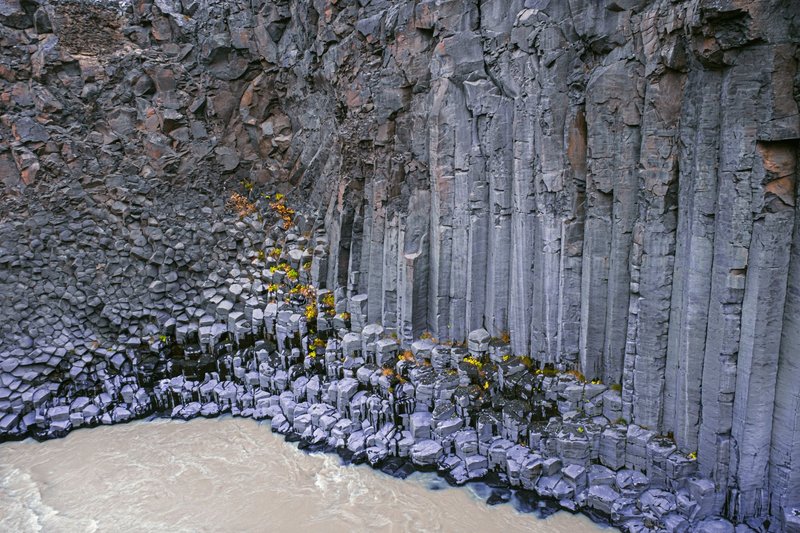
Near the village of Adatepe in the Eastern Rhodopes, by the town of Kardzhali, there’s a hill that’s been giving up stone for a very long time. Adatepe is an extinct volcanic formation famous for its columnar jointing: rhyolite and tuff that cooled into clean polygonal columns, the same physics as Giant’s Causeway, just a different rock.
This is one of the most-cited volcanic localities in Bulgaria precisely because the structure is so clear. The Eastern Rhodopes saw intense volcanic activity during the Paleogene, around 30 to 40 million years ago, and Adatepe is where that history is easiest to read in the field. Generations of locals quarried the columns for building stone and, notably, for grave markers — the natural pillars made ready-cut headstones.
The site has been recognized for its geological value and shows up in Bulgaria’s lists of protected natural landmarks. If you’re the kind of person who wants to put a hand on the actual contraction cracks of a 35-million-year-old lava flow, this is the trip.
3. Vitosha — Sofia’s volcanic-plutonic giant
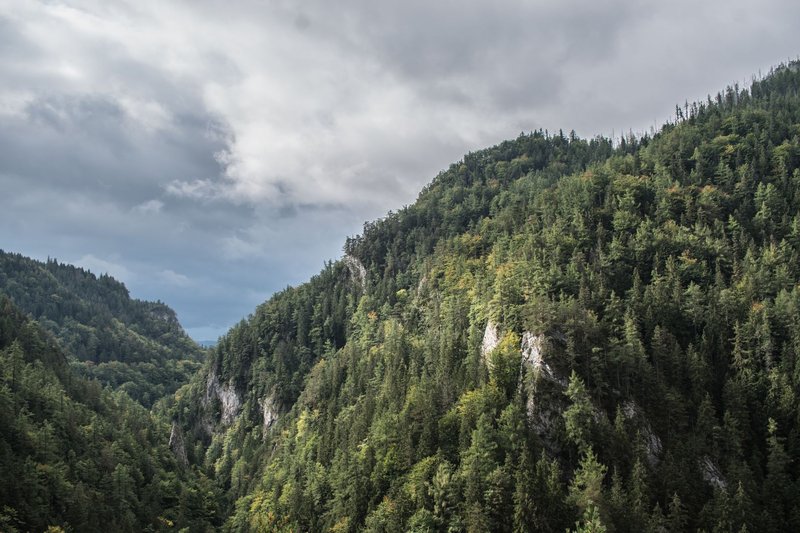
Most of Sofia’s two million residents look at an extinct volcanic system every single day and never think about it. Vitosha, the mountain that fills the city’s southern skyline, is a volcano-plutonic massif — its core is a body of igneous rock that formed during the Late Cretaceous, part of the same magmatic episode that dotted central Bulgaria with volcanoes roughly 70 to 90 million years ago.
Vitosha is more plutonic than purely volcanic. The mountain is built largely of monzonite and syenite, coarse intrusive rocks that crystallized at depth and were later uncovered by erosion. That deep origin is exactly why the peak, Cherni Vrah, tops out above 2,290 meters of hard, resistant stone.
The mountain’s signature feature is its “stone rivers” (kamenni reki) — long streams of car-sized boulders running down the slopes, formed as the igneous rock weathered and tumbled over the ages. The Zlatnite Mostove (“Golden Bridges”) moraine is the best-known. Vitosha is a designated nature park, the oldest in the Balkans, and Sofia residents ride a chairlift up to hike, ski, and picnic on it. It’s the most accessible volcanic system in the country, sitting at the edge of a national capital. Vitosha Nature Park’s official materials walk through the geology if you want the full breakdown on site.
4. The Eastern Rhodope volcanic zone
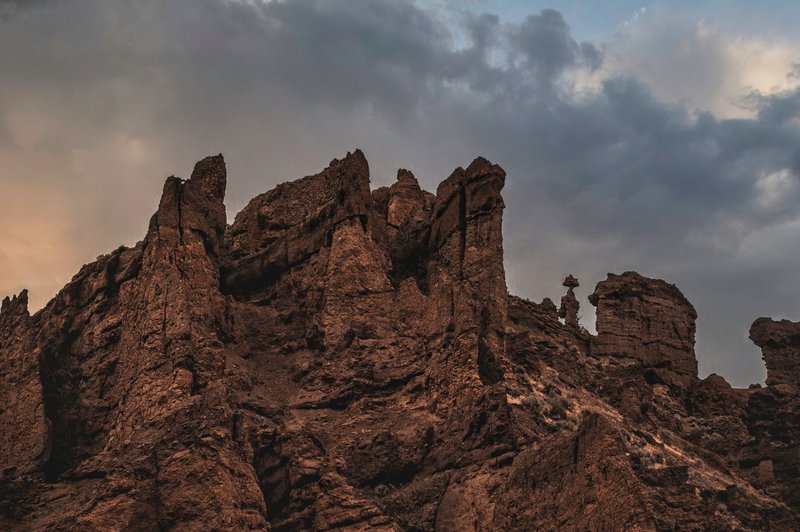
Adatepe isn’t an outlier. It’s one node in a much bigger volcanic province, the Eastern Rhodope Mountains, where Paleogene volcanism reshaped a huge area around modern Kardzhali. Roughly 30 to 40 million years ago, as the crust here stretched and thinned, magma poured out in repeated eruptions of andesite, rhyolite, and thick ash.
That history left a landscape of surreal eroded rock. The Stone Wedding (Kamennata Svatba) near Zimzelen is a cluster of pale, person-sized rock pillars sculpted from volcanic tuff — soft compacted ash that wind and water carve easily. The pyramids of Stob, though formed in sedimentary rock, and various “stone mushroom” formations across the Rhodopes all trace back to the same era’s volcanic and volcanic-sedimentary deposits being weathered into shapes.
For the casual visitor, the Eastern Rhodopes are the place to see the aftermath of volcanism without needing a geology degree — the rocks did the explaining for you. For students, the region is one of the most-studied Cenozoic volcanic terrains in southeastern Europe, with a stack of published research on its calc-alkaline lavas.
5. Srednogorie & the Chelopech-Panagyurishte belt
This one you visit for the ore, not the view. The Srednogorie zone runs east-west through central Bulgaria and represents a Late Cretaceous volcanic arc — a chain of volcanoes that erupted around 90 million years ago as oceanic crust subducted beneath the region.
That arc matters economically. The hot, mineral-rich fluids that circulated through those ancient volcanoes concentrated copper and gold, and the Chelopech and Panagyurishte ore district is one of Europe’s significant copper-gold mining regions as a result. Chelopech is a working mine. The volcanic rocks here — andesites and their altered equivalents — are the host that made the deposits possible.
You won’t hike a scenic cone at Srednogorie. What you get instead is the clearest example in Bulgaria of why extinct volcanoes are worth caring about: they build the deposits that build economies. The link between Late Cretaceous arc volcanism and the copper-gold here is well documented in the geological literature, including studies published through outlets like the Geological Society.
6. Bulgaria’s volcanic caves
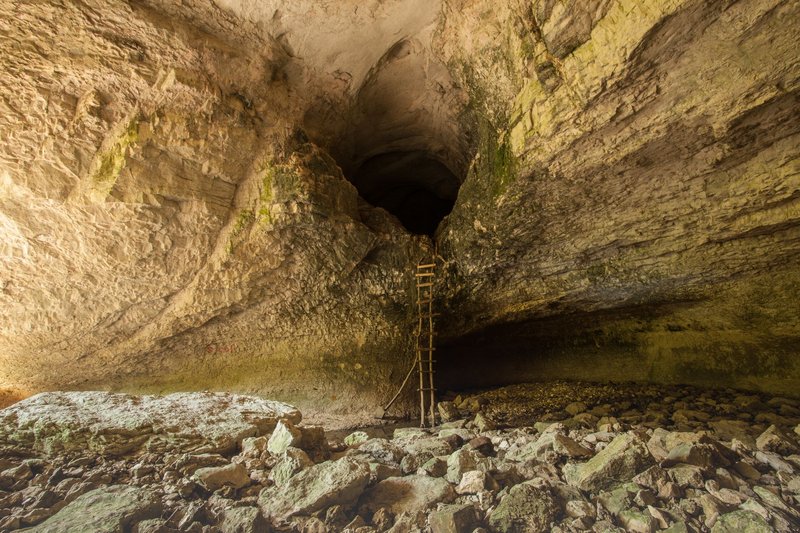
Bulgaria has thousands of caves, and the overwhelming majority are limestone karst caves dissolved out by water. But a small, distinct set formed in volcanic rock — cavities, gas bubbles, and weathered hollows in the country’s andesites and tuffs, scattered mostly through the volcanic terrains of the south.
These volcanic caves are ecologically valuable out of proportion to their size. Several appear in Bulgaria’s Red Data Book as habitats, because their stable temperatures make them prime bat roosts and shelters for cave-adapted species you won’t find above ground. The caves around Kozhuh and through the Eastern Rhodopes are the ones most often cited.
They’re a niche entry, admittedly. Most aren’t developed for tourism the way the famous karst caves like Magura or Devetashka are, and some are protected specifically to keep people out and bats undisturbed. But they round out the picture: Bulgaria’s volcanic past didn’t just build hills, it hollowed out homes for living things.
Can you actually visit these?
Most of them, yes — and that’s the appeal. Here’s the honest rundown:
- Easiest: Vitosha. There’s a chairlift, marked trails, and a metro ride from central Sofia gets you to the base. You can be standing on extinct volcanic rock an hour after breakfast.
- Worth the drive: Kozhuh and the Eastern Rhodope formations (Adatepe, the Stone Wedding) cluster in the south near Kardzhali and Petrich. Pair them with the region’s other sights and you’ve got a proper geology road trip.
- For specialists: Srednogorie’s ore belt and the volcanic caves. Less to look at casually, more to understand if you came for the science.
None of it requires technical climbing or special permits for the main sites. Decent shoes, water, and a tolerance for southern Bulgarian summer heat will cover you.
The thing nobody tells you up front, the one this whole list exists to fix: Bulgaria’s volcanoes aren’t a tourist headline because they don’t erupt. But standing in a quarry of 35-million-year-old hexagonal columns that someone’s great-grandfather cut into a headstone — that’s a better story than another smoking cone you can only photograph from a fence anyway.