Ethiopia gave the world Lucy, the 3.2-million-year-old skeleton that rewrote the human family tree. It also gave the world the scientists who keep finding things like her. The roster below skips the padding and the recycled Wikipedia phrasing. You get 18 people born in Ethiopia, grouped by what they actually study, with the one discovery or invention that earns each of them a spot.
A pattern shows up fast: most of them did their defining work abroad. Emperor Haile Selassie I University (now Addis Ababa University) opened in 1950, and for decades the path to a research career ran through the United States, Britain, or France. That diaspora route shaped almost every name here, and it’s worth keeping in mind as you read.
Table of Contents
- At a Glance
- Paleoanthropology
- Computer Science and AI
- Agriculture and Plant Science
- Chemistry and Materials
- Aerospace and Engineering
- Medicine and Public Health
- Rising Stars
- The Diaspora Pattern
At a Glance
| Scientist | Born | Field | Known for |
|---|---|---|---|
| Berhanu Abegaz | 1945 | Chemistry | Natural-product chemistry, AAS leadership |
| Sossina Haile | 1966 | Materials science | Solid acid fuel cells |
| Segenet Kelemu | 1957 | Plant pathology | Forage-grass disease research, AWARD |
| Gebisa Ejeta | 1950 | Plant breeding | Striga-resistant sorghum, World Food Prize |
| Aklilu Lemma | 1935–1997 | Public health | Endod molluscicide for schistosomiasis |
| Kitaw Ejigu | 1948–2006 | Aerospace | NASA Space Station chief engineer |
| Tilahun Yilma | 1944 | Veterinary virology | Recombinant rinderpest vaccine |
| Rediet Abebe | 1991 | Computer science | Algorithms and inequality |
| Timnit Gebru | 1982 | AI ethics | Facial-recognition bias research |
| Heman Bekele | 2008 | Invention | Soap-based skin-cancer treatment concept |
| Yohannes Haile-Selassie | 1961 | Paleoanthropology | Ardipithecus and early hominin fossils |
| Zeresenay Alemseged | 1969 | Paleoanthropology | “Selam,” the Dikika child |
| Solomon Assefa | 1979 | Nanophotonics | On-chip optical interconnects at IBM |
| Tebello Nyokong | 1951 | Chemistry | Photodynamic cancer therapy (born in eSwatini, raised partly in Ethiopia) |
| Mulugeta Bekele | — | Physics | Statistical and nonequilibrium physics |
| Tsegaye Habtemariam | 1944 | Veterinary informatics | Computational epidemiology |
| Asfaw Beyene | — | Mechanical engineering | Renewable-energy systems |
| Eleni Gabre-Madhin | 1964 | Agricultural economics | Ethiopia Commodity Exchange |
Paleoanthropology
Ethiopia’s Afar region is the most important fossil ground in the study of human origins, so it makes sense that two of the field’s leading figures were born here.
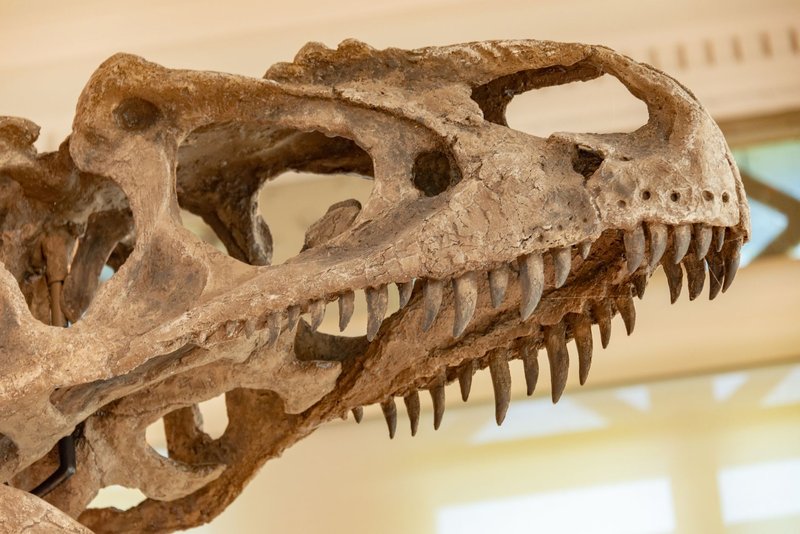
Yohannes Haile-Selassie (born 1961, Adigrat) led the team that described Ardipithecus kadabba and later worked extensively on Ardipithecus ramidus, the 4.4-million-year-old “Ardi.” In 2019 his team announced a near-complete 3.8-million-year-old cranium of Australopithecus anamensis, a find that pushed back the known facial anatomy of our ancestors and complicated the tidy ladder many textbooks still draw. He directed the Cleveland Museum of Natural History’s physical anthropology department for years and now runs the Institute of Human Origins at Arizona State. His 2019 Nature paper on the MRD cranium is the citation people reach for.
Zeresenay Alemseged (born 1969, Axum) found “Selam” in 2000 at Dikika: the fossil skeleton of an Australopithecus afarensis child who lived around 3.3 million years ago, older than Lucy and far more complete in places no Lucy bone survived. The press called her “Lucy’s baby,” which is charming and slightly wrong, but the find gave the first good look at how a young afarensis grew. Alemseged now teaches at the University of Chicago and keeps excavating Dikika.
Computer Science and AI
This is the field where the diaspora generation is most visible, and where two Ethiopian-born women have shaped how the rest of us argue about technology.
Timnit Gebru (born 1982, Addis Ababa) co-authored the 2018 “Gender Shades” study showing that commercial facial-recognition systems misclassified darker-skinned women at rates up to 34 percentage points worse than lighter-skinned men. The finding moved companies to audit their models and moved regulators to pay attention. Her 2020 departure from Google, after a dispute over a paper on the risks of large language models, became one of the defining episodes in the AI-ethics field. She now runs the Distributed AI Research Institute.
Rediet Abebe (born 1991, Addis Ababa) works at the intersection of algorithms and social inequality, asking how computational tools can be turned toward poverty and discrimination rather than away from them. She was one of the first two Black women to earn a computer science PhD from Cornell, co-founded Black in AI with Gebru, and was named a Junior Fellow of the Harvard Society of Fellows. Her research treats inequality as a formal optimization problem without pretending the math is neutral.
Tsegaye Habtemariam (born 1944) belongs to an earlier computing generation. A veterinarian by training, he built one of the first serious programs in computational epidemiology at Tuskegee University, using models to predict how diseases spread through animal populations decades before “data science” was a phrase.
Agriculture and Plant Science
For a country where farming employs most of the population, it’s fitting that Ethiopia’s agricultural scientists have arguably saved the most lives.
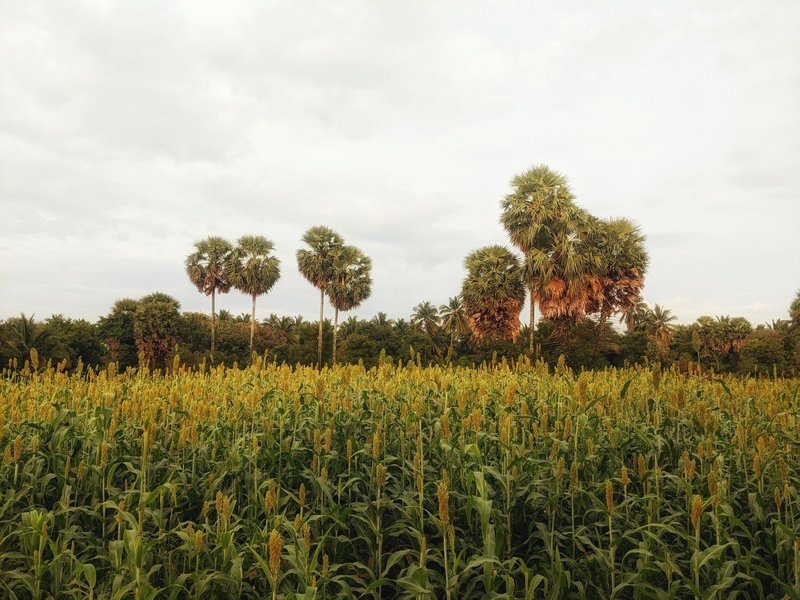
Gebisa Ejeta (born 1950, Wollega) bred the first sorghum hybrids resistant to both drought and Striga, the parasitic witchweed that strangles cereal crops across Africa. The varieties spread to millions of hectares and raised yields fourfold in some regions. He won the 2009 World Food Prize for it, and the U.S. National Academy of Sciences elected him a member. His work is the rare case where a single plant breeder’s output shows up in national food-security statistics.
Segenet Kelemu (born 1957, Finote Selam) studies the molecular biology of forage-grass diseases and the microbes living inside plants. She was the first woman from her region to earn a college degree, became Director General of the International Centre of Insect Physiology and Ecology in Nairobi, and won the 2014 L’Oréal-UNESCO For Women in Science award for Africa and the Arab States. She left a tenured U.S. position to do her work on African soil, which she has said was the point.
Eleni Gabre-Madhin (born 1964) is an agricultural economist rather than a bench scientist, but her contribution is hard to leave off. She designed and founded the Ethiopia Commodity Exchange in 2008, building market infrastructure that let smallholder farmers get fair prices and reliable buyers. It’s applied science of a different kind: economics turned into plumbing.
Chemistry and Materials
Sossina Haile (born 1966, Addis Ababa) invented the solid acid fuel cell, a device that uses a class of compounds nobody had seriously considered as electrolytes. Her cells operate at intermediate temperatures and could make hydrogen power cheaper and more durable. She holds a chair at Northwestern, was elected to the National Academy of Engineering, and her family story is its own epic: her father, Getatchew Haile, was a renowned scholar of Ethiopian manuscripts who fled the Derg.
Berhanu Abegaz (born 1945) spent his career on the natural-product chemistry of African medicinal plants, isolating and characterizing compounds from species that Western chemistry had ignored. He later served as Executive Director of the African Academy of Sciences, where much of his impact came from building the continent’s research institutions rather than any single molecule.
Tebello Nyokong is usually claimed by both eSwatini, where she was born in 1951, and Ethiopia, where she spent part of her childhood. Her work on phthalocyanine dyes underpins a form of photodynamic cancer therapy that kills tumor cells with light instead of chemotherapy. She is one of Africa’s most cited chemists, and the dual claim is a fair reflection of how tangled diaspora and regional identities get in this part of the world.
Aerospace and Engineering
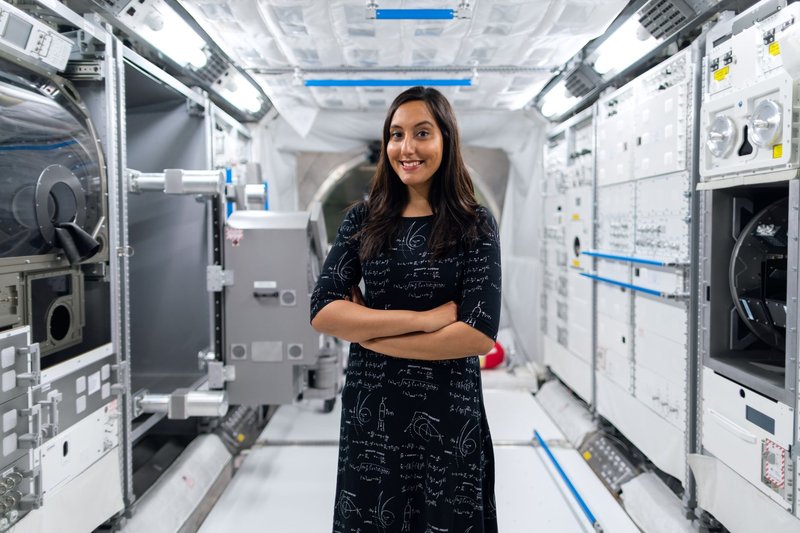
Kitaw Ejigu (born 1948, Nekemte) rose to chief of spacecraft and satellite systems engineering at Rockwell, where he worked on the International Space Station and shuttle programs for NASA. He held several patents and, late in life, founded an opposition political party aimed at his home country. He died in 2006, but for a generation of Ethiopian students he was proof that the path led all the way to orbit.
Solomon Assefa (born 1979) is a nanophotonics researcher at IBM who developed on-chip optical interconnects, technology that moves data inside computers using light rather than electrical wires. MIT Technology Review named him one of its top young innovators in 2011. He later became Vice President of IBM Research for Africa, helping stand up the company’s first research lab on the continent.
Asfaw Beyene is a mechanical engineer specializing in renewable-energy systems and thermodynamics, with a long faculty career at San Diego State. His applied work on wind and energy efficiency is the kind of unglamorous engineering that decarbonization actually runs on.
Medicine and Public Health
Aklilu Lemma (born 1935, Gondar; died 1997) noticed something everyone else had walked past: women washing clothes with the berries of the endod plant downstream had fewer snails in the water, and snails carry schistosomiasis. He developed endod into a cheap, locally grown molluscicide to fight the parasitic disease that infects hundreds of millions. The work was overlooked for years before he and collaborator Legesse Wolde-Yohannes won the Right Livelihood Award in 1989. It remains a model of science built from local observation rather than imported assumptions.
Tilahun Yilma (born 1944, Addis Ababa) developed the first recombinant vaccine against rinderpest, the cattle plague that caused catastrophic famines across Africa. His genetically engineered vaccine was cheap, heat-stable, and a real contributor to the disease’s eradication in 2011, only the second disease ever wiped out after smallpox. He was elected to the U.S. National Academy of Sciences and ran the veterinary virology lab at UC Davis.
Rising Stars
The next generation is already on the board, and a couple of them are very young.
Heman Bekele (born 2008, Addis Ababa) was named TIME’s 2024 Kid of the Year at fifteen for designing a bar of soap intended to deliver an inexpensive skin-cancer treatment. It started as a science-fair project and turned into a working prototype he’s developing with university researchers. Whether it clears clinical trials is years away, but the idea, cheap delivery of an existing cancer drug through something as common as soap, is exactly the kind of lateral thinking the field needs more of.
Mulugeta Bekele represents the scientists who stayed. A physicist at Addis Ababa University, he works on statistical and nonequilibrium thermodynamics and has spent decades training the country’s homegrown physics talent. His name shows up less in Western press precisely because he built his career at home, which is its own kind of contribution.
The Diaspora Pattern
Read back through the list and the geography tells a story. Lucy and Selam came out of Ethiopian ground, but most of these scientists made their names in Cleveland, Chicago, Davis, Evanston, Nairobi, and Yorktown Heights. That’s not an accident, and it’s not entirely a triumph. It reflects decades when Ethiopia couldn’t yet fund frontier research, and a brain drain that countries across Africa are still working to reverse.
The hopeful part is the direction of travel. Kelemu left a tenured U.S. job to run a research center in Kenya. IBM put Assefa in charge of building its first African lab. Addis Ababa University, the campus where this all started in 1950, now graduates PhDs in fields its founders could only point students toward. The list of scientists born in Ethiopia is getting longer, and more of the work is happening where the scientists were born.