Armenia is a country of roughly three million people, smaller than Belgium, wedged between the Black and Caspian seas. It has produced an astrophysicist who rewrote how we think star clusters form, the man whose machine you lie inside when a doctor needs to see your brain, and a medieval monk who calculated the circumference of the Earth from a hilltop. That is a strange amount of scientific firepower for a place most people would struggle to find on a map.
Here is the part most lists get wrong: “Armenian scientist” and “scientist born in Armenia” are not the same thing. Plenty of brilliant people are ethnically Armenian but were born in Tbilisi, Beirut, Boston, or Moscow. This list is stricter. Everyone below was born inside the borders of historical or modern Armenia — in Yerevan, Gyumri, Ani, or a village in the highlands. That filter cuts the list down, but it makes it honest.
We’ve grouped them by discipline rather than dumping them in one long alphabetical heap, because a mathematician and a virologist don’t belong in the same paragraph just because their surnames both end in “-yan.”
Quick Reference Table
| Name | Field | Born | Known for |
|---|---|---|---|
| Anania Shirakatsi | Mathematics & astronomy | c. 610, Shirak | Earth is a sphere; first Armenian math textbook |
| Viktor Hambardzumyan | Astrophysics | 1908, (Tbilisi-born — see note) | Stellar associations; Byurakan Observatory |
| Benik Markarian | Astrophysics | 1913, Shahumyan | Markarian galaxies |
| Grigor Gurzadyan | Astrophysics & space | 1922, Bagaran | Space telescopes from orbit |
| Mkrtich Yeremiani | Mathematics | 1920s, Armenia | Function theory |
| Sergey Mergelyan | Mathematics | 1928, Simferopol (see note) | Mergelyan’s theorem |
| Artashes Shahinyan | Mathematics | 1906, Ardvin | Function theory school |
| Norair Sisakian | Biochemistry | 1907, Talin | Space biology, cosmonaut nutrition |
| Levon Orbeli | Physiology | 1882, Tsaghkadzor | Evolutionary physiology |
| Andranik Iosifyan | Electrical engineering | 1905, Tsmakahogh | “Father” of Soviet electromechanics |
| Artem Alikhanian | Physics | 1908, Elizavetpol (see note) | Cosmic ray research, Aragats station |
| Abraham Alikhanov | Physics | 1904, Ganja (see note) | Soviet reactor physics |
| Paris Herouni | Radiophysics | 1933, Yerevan | Antenna-telescope; ancient observatory research |
| Yuri Oganessian | Nuclear physics | 1933, Rostov-on-Don (see note) | Element 118, oganesson |
A note on honesty: a few names above carry asterisks because their birthplaces sit outside modern Armenia’s borders, in territories that were historically Armenian or in the wider Caucasus. Where that’s the case, we’ve flagged it in their entry rather than quietly pretending Gyumri and Ganja are the same place. The eleven without caveats were unambiguously born on Armenian soil.
Astrophysics: The Byurakan School
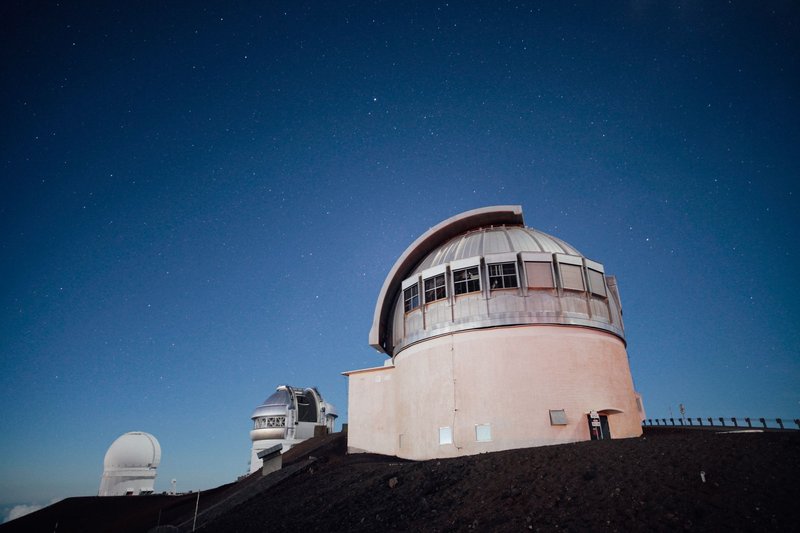
Armenia’s strongest claim to scientific fame is the sky. A single observatory on the slopes of Mount Aragats became one of the most important centers of 20th-century astrophysics, and the men who built it were born within a few hours’ drive of it.
Viktor Hambardzumyan — The Star Cluster Heretic
Hambardzumyan is the giant. In 1947 he proposed something that sounded absurd at the time: that certain loose groupings of hot young stars, which he named “stellar associations,” were physically flying apart, not holding together. The implication was radical. If they were dispersing, they had to be young — astronomically speaking, born yesterday — which meant star formation was an ongoing process, not a one-off event at the dawn of the universe. He was right, and it reshaped the field.
He founded the Byurakan Astrophysical Observatory in 1946 and ran it for decades, training a generation of astronomers. His theoretical work on the dynamics of stellar systems and the nature of cosmic energy sources made him a two-time president of the International Astronomical Union. Note the asterisk, though: Hambardzumyan was actually born in Tbilisi, Georgia, to an Armenian family. He’s on this list because Byurakan is his life’s work and he is inseparable from Armenian science, but the strict birthplace test puts an honest flag on him.
Benik Markarian — The Galaxies With His Name On Them
Markarian, born in the village of Shahumyan, did the kind of work that gets your surname permanently attached to objects in the sky. In the 1960s he led a survey at Byurakan looking for galaxies with an unusual excess of ultraviolet radiation — a sign of intense activity in their cores. The catalog he produced lists more than 1,500 of them, and astronomers still call them Markarian galaxies. Markarian 421 is one of the brightest active galactic nuclei in the sky and a favorite target for studying jets blasting out of supermassive black holes. Not bad for a list of UV-bright smudges.
Grigor Gurzadyan — Telescopes In Orbit
Gurzadyan, born in Bagaran, took Armenian astrophysics off the ground. He designed and built ultraviolet space telescopes that flew on Soviet orbital stations in the 1970s, including instruments aboard the Orion observatories on Salyut-1. Observing in ultraviolet from orbit means escaping the atmosphere that blocks those wavelengths — a necessity for studying hot stars. He was, in effect, doing space-based astronomy before most of the world had the rockets for it.
Mathematics: The Function Theorists
Anania Shirakatsi — The Seventh-Century Scientist
Start here, because Shirakatsi predates everyone else on this list by roughly 1,300 years. Born around 610 in the Shirak province, he wrote Ashkharhatsuyts, a geography of the known world, and Tvabanutyun, the first surviving Armenian mathematics textbook — complete with arithmetic problems, fractions, and a multiplication table. He argued that the Earth is a sphere and floated in space like “an egg yolk in the middle of the egg,” at a time when that was far from settled science. He also worked out a calendar and studied the movement of celestial bodies. There’s a crater on the Moon named after him, which is a fitting place to put a man who insisted the cosmos was orderly and measurable.
Sergey Mergelyan — A Theorem At 22
Mergelyan proved a result in complex analysis so clean that it became a standard tool: Mergelyan’s theorem, on approximating functions by polynomials on compact sets. He defended his doctoral dissertation in 1949 at the age of 22, which is the mathematical equivalent of going pro out of high school. The asterisk: he was born in Simferopol, Crimea, to an Armenian family, and built his career in Yerevan and Moscow. Strictly, not born in Armenia — but his work anchored the Armenian mathematical school, so he earns a mention with the flag attached.
Artashes Shahinyan — The School-Builder
Shahinyan, born in Ardvin, is less famous than the theorem-namers but arguably more important to Armenia itself. He essentially founded the country’s school of function theory and mathematical analysis, training the mathematicians who trained the next generation. Mergelyan was among his students. Some scientists make a single brilliant discovery; others build the institution that makes a hundred discoveries possible. Shahinyan was the second kind.
Medicine, Biology, and Physiology

Norair Sisakian — Feeding Cosmonauts
Sisakian, born in Talin, was a biochemist who founded space biology in the Soviet program. He worked out the nutritional and metabolic problems of keeping a human alive in orbit — what cosmonauts should eat, how the body’s chemistry behaves in weightlessness. Yuri Gagarin’s food on the first crewed spaceflight in 1961 traced back to Sisakian’s lab. He studied plant respiration and enzyme chemistry on the side, the kind of foundational biochemistry that doesn’t make headlines but underpins everything.
Levon Orbeli — Physiology Under Stress
Orbeli, born in Tsaghkadzor, was a student of Ivan Pavlov and became one of the Soviet Union’s leading physiologists. His major contribution was the concept of evolutionary physiology — studying how the nervous system and bodily functions adapted across evolutionary history. He also did pioneering work on how the body performs under extreme conditions, including high altitude and deep-sea pressure, research with obvious military and aviation applications in his era. A crater on the far side of the Moon carries his name too; Armenia’s scientists are oddly well-represented on the lunar map.
Physics and Engineering
Andranik Iosifyan — The Man Who Electrified Soviet Space
Iosifyan, born in the village of Tsmakahogh, is often called the father of Soviet electromechanics. He designed the electric motors and power systems that ran inside spacecraft and missiles, and he was a chief architect of the Meteor weather satellite program. If a Soviet machine in the 1960s needed something to spin, point, or generate power in a hostile environment, there’s a good chance the design traced back to his institute. He held dozens of patents and built an entire engineering discipline around precision electrical machines.
Artem Alikhanian — Cosmic Rays On A Mountaintop
Alikhanian built a high-altitude cosmic ray station on Mount Aragats, putting detectors at over 3,200 meters to catch particles raining down from space before the atmosphere could absorb them. The Aragats research station he established still operates today, studying cosmic rays and the particle showers triggered by thunderstorms. His birthplace, Elizavetpol (modern Ganja), sits in present-day Azerbaijan, in territory that was historically mixed — hence the flag — but his life’s work is stamped onto an Armenian mountain.
Paris Herouni — The Telescope That Was Also An Antenna
Herouni, born in Yerevan, designed a remarkable instrument: a mirror radio-optical telescope on Mount Aragats that doubled as a high-precision antenna. He was also the scientist who put forward the controversial claim that the prehistoric stone arrangement at Carahunge (Zorats Karer) functioned as an ancient observatory, comparing it to Stonehenge. That theory is disputed by archaeologists, and we’re not endorsing it — but it tells you something about a radiophysicist who looked at a field of standing stones and saw an instrument.
Yuri Oganessian — The Living Element
Here’s a distinction almost no scientist gets: Yuri Oganessian is one of only two people in history to have a chemical element named after them while still alive. Element 118, oganesson, was officially named in 2016 in his honor. Oganessian led the team at Dubna that synthesized some of the heaviest elements ever made, pushing the bottom edge of the periodic table into territory that exists for milliseconds before decaying. The asterisk applies — he was born in Rostov-on-Don, Russia, to an Armenian family — but you do not leave the man with an element named after him off a list of Armenian scientists. The periodic table now ends, quite literally, with an Armenian name.
Why Such A Small Country Punches So Hard
A few patterns explain the density. Armenia developed an early literary culture — its own alphabet since the 5th century — which made it a place that valued written knowledge long before most of its neighbors. Under the Soviet system, Armenia became a designated hub for specific high-prestige sciences: Byurakan for astrophysics, Yerevan for mathematics and physics, with serious state funding and institutes that concentrated talent rather than scattering it.
And there’s the diaspora effect working in reverse here. The scientists above mostly stayed and built institutions on Armenian soil — observatories, research stations, mathematical schools — that then exported their influence outward. A mountain, an observatory, a function theory department: these things compound over generations.
If you came here looking for the obvious names and found a seventh-century monk, a man with an element named after him, and a satellite engineer instead, that’s the point. The famous-Armenian-scientist lists tend to recycle the same three faces. The actual record, filtered down to people genuinely born on this small patch of the Caucasus, is deeper and stranger than the headline version.