Kuwait sits on roughly 6% of the world’s proven crude oil under a country smaller than New Jersey. That single fact shapes almost everything else about its resources — what it has in abundance, what it desperately lacks, and the uncomfortable tension between the two. Because here’s the thing most overviews skip: the same country with one of the largest oil endowments on Earth has essentially no fresh water and almost no farmland. Kuwait is rich and parched at the same time.
This is the full inventory — oil, gas, water, soil, fish, and the unglamorous minerals that quietly keep the place standing.
Table of Contents
- The Quick Picture
- Oil: The Resource That Built the Country
- Natural Gas
- Water: The Resource Kuwait Doesn’t Have
- Arable Land and Agriculture
- Livestock and Fisheries
- Minerals and Construction Materials
- The Sustainability Problem
The Quick Picture {#quick-picture}
Before the deep dive, here’s everything in one table.
| Resource | Key figures | Why it matters |
|---|---|---|
| Crude oil | ~101.5 billion barrels proven; ~6% of world reserves | ~90% of government revenue, ~40%+ of GDP |
| Natural gas | ~1.78 trillion cubic meters proven | Mostly associated gas; Kuwait still imports LNG to meet demand |
| Fresh water | Effectively none renewable; <0.1% of land is surface water | Nearly all drinking water comes from desalination |
| Arable land | ~0.6% of total land area | Heavy reliance on food imports |
| Fisheries | Shrimp, zubaidi (pomfret), hamour | Small but culturally and commercially significant |
| Minerals | Limestone, gypsum, sand, clay, salt | Feed cement and construction, not export markets |
The pattern jumps out fast. One column is enormous. The rest range from modest to nonexistent. Kuwait is a one-resource economy that has spent decades trying, with mixed success, to not be.
Oil: The Resource That Built the Country {#oil}
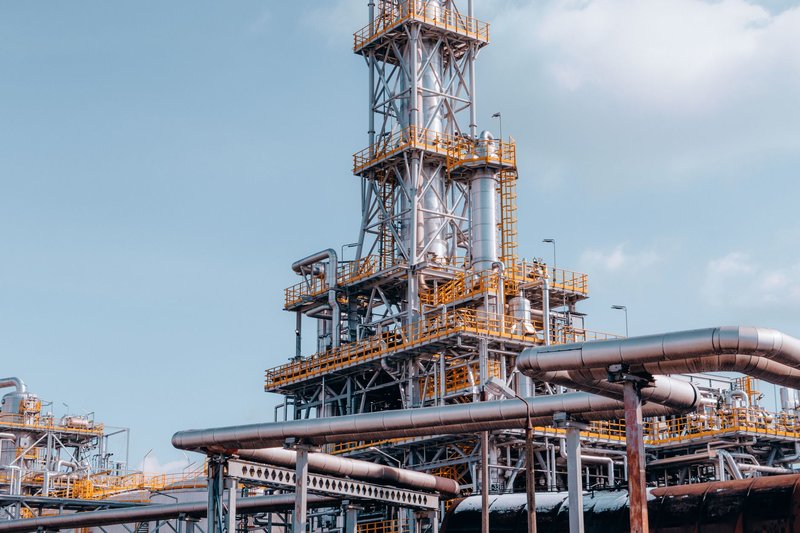
Everything starts here. Kuwait holds proven crude reserves of roughly 101.5 billion barrels, which puts it consistently in the global top six and gives it a share of world reserves somewhere around 6%. At current production rates — hovering near 2.4 to 2.7 million barrels per day depending on OPEC+ quotas — those reserves would last well over a century. Few countries can say that.
The crown jewel is the Burgan field in the southeast, discovered in 1938 and brought into production in 1946. Burgan is the second-largest conventional oil field ever found, behind only Ghawar in neighboring Saudi Arabia. A single field has supplied the bulk of Kuwait’s output for the better part of 80 years. According to the U.S. Energy Information Administration, Kuwait’s production is heavily concentrated in these legacy southern fields, with newer development pushing north toward the Ratqa and Abdali areas near the Iraqi border.
The economic dependence is staggering and worth stating plainly. Oil and refined products account for roughly 90% of government revenue and the overwhelming majority of export earnings. When crude prices crashed in 2014 and again in 2020, Kuwait ran budget deficits despite sitting on one of the world’s largest sovereign wealth funds. A country this rich is still that exposed to a single commodity’s price chart.
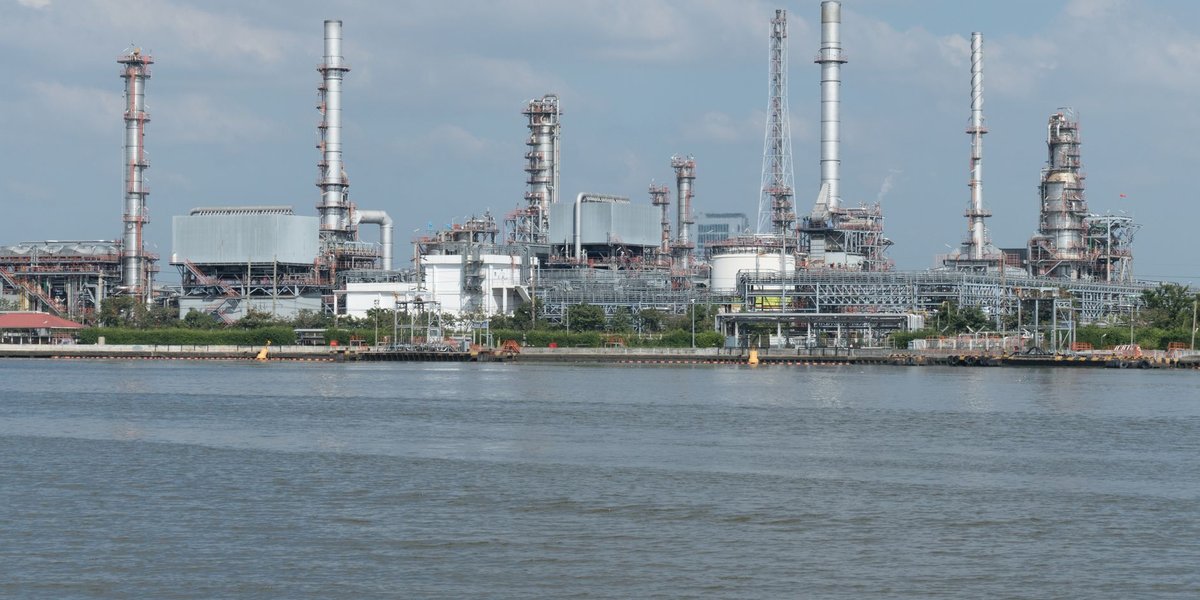
State control runs deep too. The Kuwait Petroleum Corporation and its subsidiaries — KOC for upstream, KNPC for refining — own the entire value chain. There’s no privately owned oil sector to speak of. The 615,000-barrel-per-day Al-Zour refinery, fully operational by 2023, is among the largest single-site refineries on the planet and signals where the strategy is heading: capture more value by refining at home instead of just shipping crude.
Natural Gas {#natural-gas}
Kuwait’s gas story is less impressive than its oil story, and that catches people off guard. Proven natural gas reserves sit around 1.78 trillion cubic meters — a respectable figure, but most of it is associated gas, meaning it comes up alongside oil rather than from dedicated gas fields. That creates a structural problem. Gas output is tethered to oil output. Cut oil production and you cut gas with it.
The result is genuinely odd for a Gulf petrostate: Kuwait is a net importer of natural gas. Domestic demand — driven by power generation and the brutal cooling load of summers that regularly clear 50°C — outpaces what the country pulls from its own wells. Kuwait built an LNG import terminal at Al-Zour and signed long-term supply deals to keep the lights and air conditioning on.
There’s upside on the horizon. The Jurassic gas fields in the north hold non-associated reserves that could change the equation, but they’re technically difficult — deep, sour, high-pressure formations that cost a fortune to develop. Whether Kuwait closes its own gas gap depends largely on how aggressively it commits to those northern fields.
Water: The Resource Kuwait Doesn’t Have {#water}
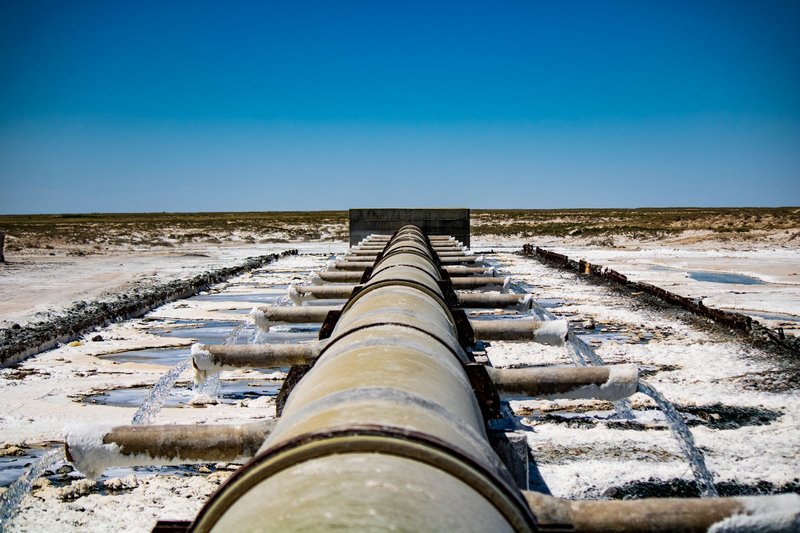
Now the other side of the ledger. Kuwait has, by any reasonable measure, no renewable fresh water. There are no permanent rivers, no lakes, and rainfall averages around 100 to 150 millimeters a year — desert-grade scarcity. The country is one of the most water-poor on Earth on a per-capita basis.
So where does the water come from? Two places. The first is groundwater, and it’s largely brackish — the aquifers at Raudhatain and Umm Al-Aish in the north hold the only meaningful fresh groundwater, and they’re small. Most of the groundwater Kuwait pumps is too saline to drink without treatment and gets used for irrigation and industry.
The second source, and the one that actually matters, is desalination. As Fanack Water documents, Kuwait was a desalination pioneer — it built its first major plant in the 1950s and now produces the large majority of its municipal water by removing salt from Gulf seawater. The dependence is near-total. If the desalination plants stopped, the country would have days of stored supply, not weeks.
That’s an extraordinary thing to sit with. A nation runs its entire freshwater supply on energy-hungry industrial plants powered by the same hydrocarbons that fund the state. Water and oil aren’t just both resources here. They’re locked together. Burning one is what makes the other drinkable.
Arable Land and Agriculture {#arable-land}
Kuwait’s soil is mostly sand and gravel, its climate is hostile, and its water is borrowed from the sea. Unsurprisingly, almost nothing grows. Arable land makes up roughly 0.6% of the country’s total area, one of the lowest figures anywhere.
What farming exists is concentrated and intensive — greenhouses, hydroponics, and irrigated plots in areas like Wafra and Abdali in the south. These produce tomatoes, cucumbers, dates, and leafy greens, often using treated wastewater or brackish groundwater to stretch the limited supply. It’s clever agriculture done under genuinely bad conditions, but it’s a rounding error against national demand.
The consequence is one of the highest food-import dependencies in the world. Kuwait imports the strong majority of what it eats. Food security, for a country this wealthy, comes down to logistics and trade relationships rather than its own land — which is exactly why agricultural land, however scarce, still counts as a strategic resource worth protecting.
Livestock and Fisheries {#livestock-fisheries}
The desert supports limited pastoral activity. Sheep, goats, and camels graze the sparse vegetation, and there’s a domestic poultry and dairy industry, but as with crops, output covers only a fraction of consumption.
The sea is the more interesting story. Kuwait’s Gulf waters and the rich mudflats of Kuwait Bay support a fishery that punches above its economic weight in cultural terms. The prize catches are shrimp — the basis of a commercial industry with a defined season — and finfish like zubaidi (silver pomfret), considered a delicacy and priced accordingly, and hamour (grouper). Pearl diving was the backbone of the pre-oil economy until cultured pearls collapsed the trade in the 1930s, and the shift from pearls to petroleum is essentially the story of modern Kuwait in one sentence.
The fishery faces real pressure now: overfishing, Gulf pollution, and habitat loss from coastal development have squeezed stocks, and Kuwait imports a good share of its seafood too. Still, fishing remains a living industry and a link to the country’s maritime identity that oil never replaced.
Minerals and Construction Materials {#minerals}
Kuwait isn’t a mining country in any conventional sense — no metal ores, no precious minerals, nothing you’d export. What it does have are industrial minerals that feed construction, and in a country that has rebuilt and expanded its cities at speed, that’s not nothing.
The list is practical: limestone and gypsum for cement, sand and gravel as aggregate, clay for bricks, and salt harvested from coastal evaporation. As AZoMining notes, the mineral sector is geared almost entirely toward domestic construction rather than export, with cement production being the standout activity. Limestone deposits supply the cement plants; the rest gets dug, crushed, and used close to where it’s found.
These resources don’t show up in GDP headlines, but they’re the difference between importing every bag of cement and producing it locally. For the unglamorous business of pouring concrete in a fast-growing Gulf state, the minerals under the sand earn their keep.
The Sustainability Problem {#sustainability}
Pull back, and Kuwait’s resource profile is a set of dependencies that all point the same direction. Roughly 90% of government revenue comes from a finite hydrocarbon. Nearly all drinking water comes from desalination powered by that same hydrocarbon. Most food is imported because there’s no land or water to grow it. Take away the oil money and the whole structure wobbles.
The threats are concrete, not theoretical. The Raudhatain and Umm Al-Aish aquifers — the only fresh groundwater — are being drawn down faster than the rare rains recharge them. Desalination is energy-intensive and dumps hypersaline brine back into a shallow, slow-flushing Gulf that’s already among the saltiest seas on the planet, with knock-on effects for the fisheries. And the global energy transition puts a long-term question mark over the demand for the one resource that funds all of it.
Kuwait knows this. The Kuwait Vision 2035 plan, alongside the sovereign wealth managed by the Kuwait Investment Authority — the world’s oldest sovereign wealth fund, founded in 1953 — is an explicit bet on diversifying away from raw crude. Progress has been slow, and oil’s share of the economy hasn’t meaningfully shrunk. But the recognition is there, and it traces back to a contradiction the country has lived with from the start: Kuwait has more oil than almost anyone and less water than almost everyone, and managing the gap between those two facts is the real resource challenge of the century ahead.